
Tokyo Tower and Zojoji: A Two-Hour Walk at Ground Level
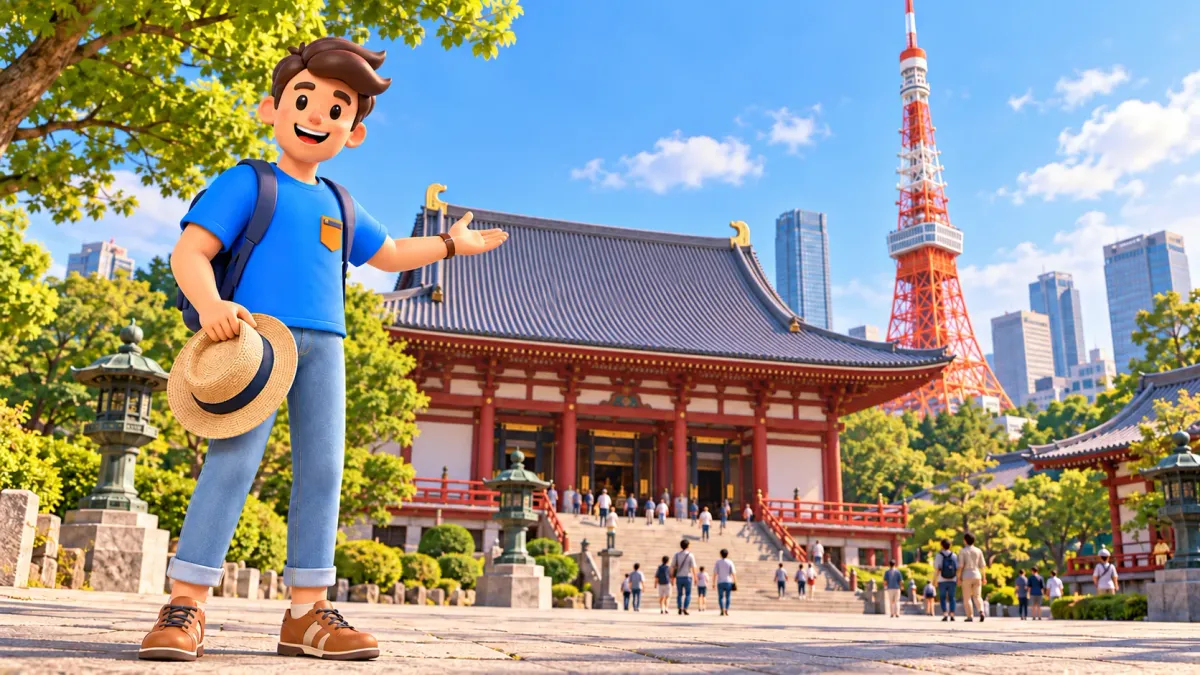
For a couple of hours around Tokyo Tower and Zojoji, begin on the temple's eastern approach, enter by the currently permitted route, spend time with the main hall, then use a short section of Shiba Park before approaching the tower outside. The connection is the attraction: a Buddhist temple, public greenery and an unmistakable modern landmark occupy the same small part of Tokyo.
This is a walk at ground level. Going up the tower is a separate choice requiring extra time and the appropriate ticket. Two hours is a planning estimate for a selective visit, including pauses and local transitions, rather than a timed promise. Travel to the area, a full meal and a paid cultural interior need additional room in your day.
A short walk with three different scales
Think of the outing as three changes of attention. At Zojoji, notice the religious place and its approach. In the park, let the city recede for a short pause. Near the tower, look at the structure from below and decide whether that is the right ending for today. You can appreciate all three without collecting every nearby sight.
For a version that is more convenient to use throughout your trip, let RoadMe develop a personal itinerary around your dates, interests and pace. Try planning the day in the app so the temple, an outdoor pause and any optional tower visit fit the time you actually have.
| Stage | Suggested allowance | Main purpose |
|---|---|---|
| Eastern approach and current gate passage | About 15 minutes | Find the permitted entrance without stopping in the narrow passage |
| Zojoji main hall and surroundings | About 35 minutes | A selective religious and architectural visit |
| Short Shiba Park section | About 25 minutes | Greenery and a pause |
| Tokyo Tower exterior | About 25 minutes | See the structure from ground level |
| Local walking and crossings | About 20 minutes overall | Connect the stages at an unhurried pace |
Move time between these blocks according to your interest. Someone interested in Buddhist architecture may prefer longer at the temple and a shorter park pause. Someone tired after a museum morning may do the opposite. Keep the tower ascent outside this allocation, otherwise the simple walk becomes an uncertain queue followed by a rushed temple visit.
Arrive at the eastern approach with a clear meeting point
Choose your journey to the area before beginning the two-hour allowance. Daimon and Hamamatsucho can suit an approach from the east, but their entrances and exits are different places. Agree on a specific public meeting point near the temple approach rather than just naming a station. Follow current crossing signals when moving toward the temple.
You will see different names around the area: the district, the park, the temple and the tower are connected but are not interchangeable navigation targets. Start with Zojoji's eastern approach, then identify the entrance that is currently in use. A landmark visible above buildings is useful for orientation, but it does not identify a safe route across every street.
Sangedatsumon: allow for the restoration
The temple's historic Sangedatsumon gate is undergoing conservation. At the October 23, 2026 check, Zojoji's notice described a protective construction enclosure and a narrow passage beneath the gate. It specifically asked people to keep moving and give way. Do not arrive expecting the complete uncovered facade familiar from older photographs.
Treat this stage as an approach, rather than a place to stand in the passage composing a picture. Observe from a permitted position with sufficient space, then continue. Temporary directions at the site take priority over the route described here. If the arrangement has changed, use the indicated alternative entrance instead of trying to reproduce an old itinerary.
Conservation is part of the story of a historic place. You do not need an unobstructed gate to understand that the temple has an architectural past. Keep the gate's name as a point of orientation, while accepting the appearance and circulation that the work requires. The main hall and the next stages still give the walk its purpose.
Zojoji: look at a religious place before a skyline
Once inside the permitted area, make the temple your subject before searching for the tower behind it. Zojoji belongs to the Jodo school of Buddhism and has a connection with the Tokugawa family. That short context is enough to explain why the precinct deserves attention in its own right, rather than serving only as a foreground for a photograph.
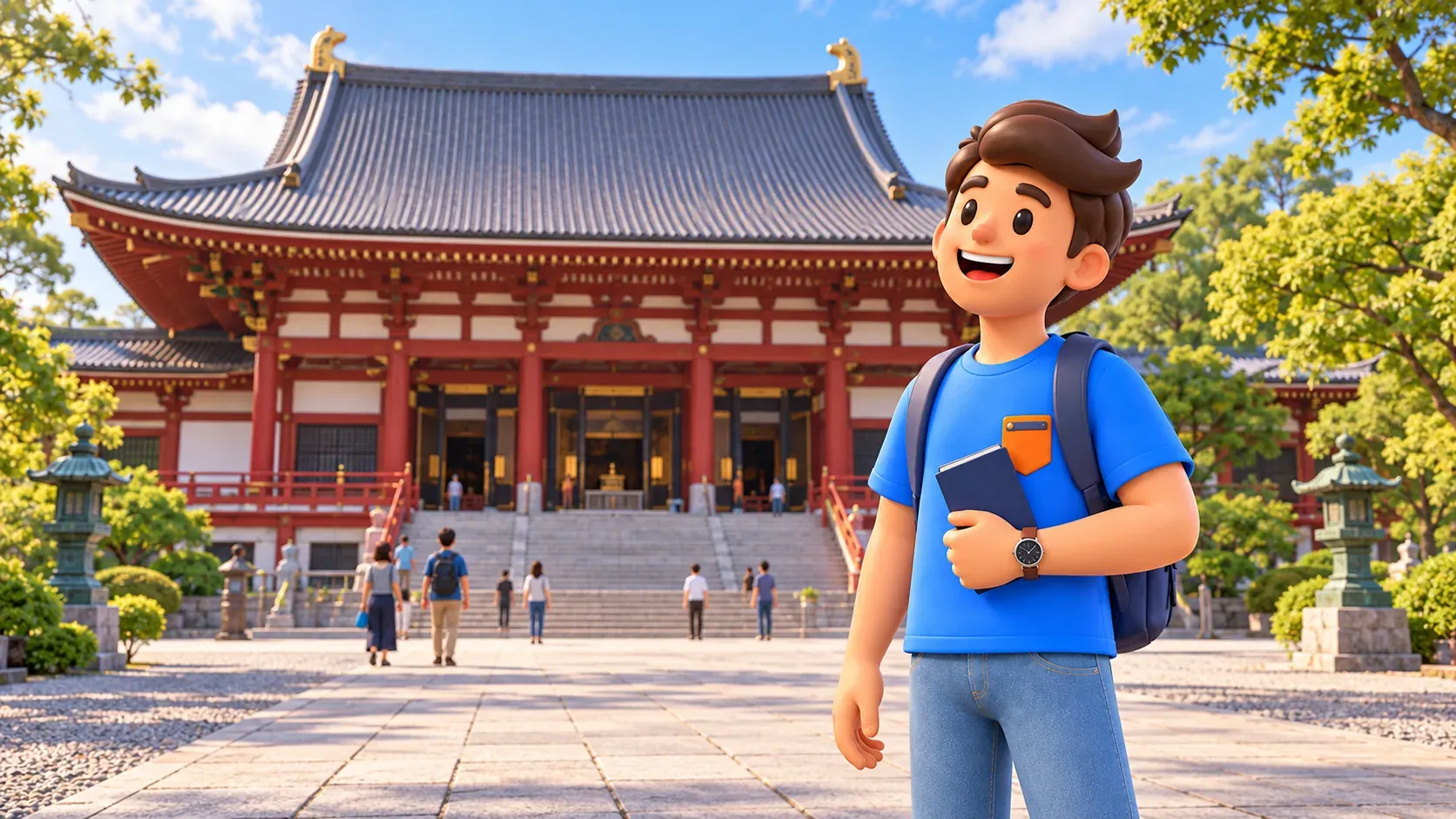
Begin with the approach to the main hall. Notice the roof, the width of the building and the way people move toward worship. Give religious activity room. You may simply observe respectfully; taking part in a ritual is not required to make the visit meaningful. Follow the temple's directions about entering, shoes and photography whenever they apply.
The main hall is a reconstruction, not an untouched survival of the Edo period. This distinction keeps the view honest without requiring a complete account of the temple's history. A place can carry older religious traditions in a newer building. Look at what is present today instead of assigning the same age to every roof and wall.
Keep the main hall visit selective
If the hall is open to visitors when you arrive, give it a short, attentive visit. Access to grounds does not mean every interior is available at every hour. Services, ceremonies and local instructions may change what you can do. An exterior visit remains a complete part of this route when the hall is unavailable or you prefer to remain outside.
Do not treat the temple's gallery or the Tokugawa burial area as automatic extras included in the thirty-five minutes. Those are distinct visits with their own access conditions and, where applicable, admission. If either is your main interest, check its current arrangements and give it a separate block rather than borrowing time invisibly from the rest of the walk.
Choose one architectural detail and one impression of the atmosphere before leaving. This simple limit helps avoid both extremes: rushing across the precinct for a photograph, or reading every panel until the rest of the outing disappears. The route offers a first encounter, leaving room for a more focused cultural visit on another occasion.

Shiba Park: make a small green pause
Continue to a nearby public section of Shiba Park using the available pedestrian paths. The park occupies several pieces around the temple area; it is not one enclosed garden with a single mandatory circuit. Choose a short section that works with your onward direction toward the tower. There is no need to cross the whole district to justify a park stop.
The metropolitan park's ordinary grounds are freely accessible, while particular facilities have separate conditions. Keep your plan to public paths and a suitable place to pause. A sports area, a managed facility and the temple grounds do not share one universal rule just because greenery connects them visually. Observe current barriers and any event arrangements.
Use the change in scale. After looking at a broad hall and a tall landmark, notice a tree canopy, the shade along a path or an ordinary bench. A short rest belongs in a city itinerary. It helps you enjoy the next stage with attention rather than treating every open minute as a gap that needs another attraction.
In warm weather, keep water and the weather in mind; in rain, shorten this outdoor pause. Do not expect a reserved bench, a particular flower display or a guaranteed empty lawn. The useful choice is the one that suits conditions now. Leave more elaborate walks through every named feature of the park for a different outing.
Approach Tokyo Tower from ground level
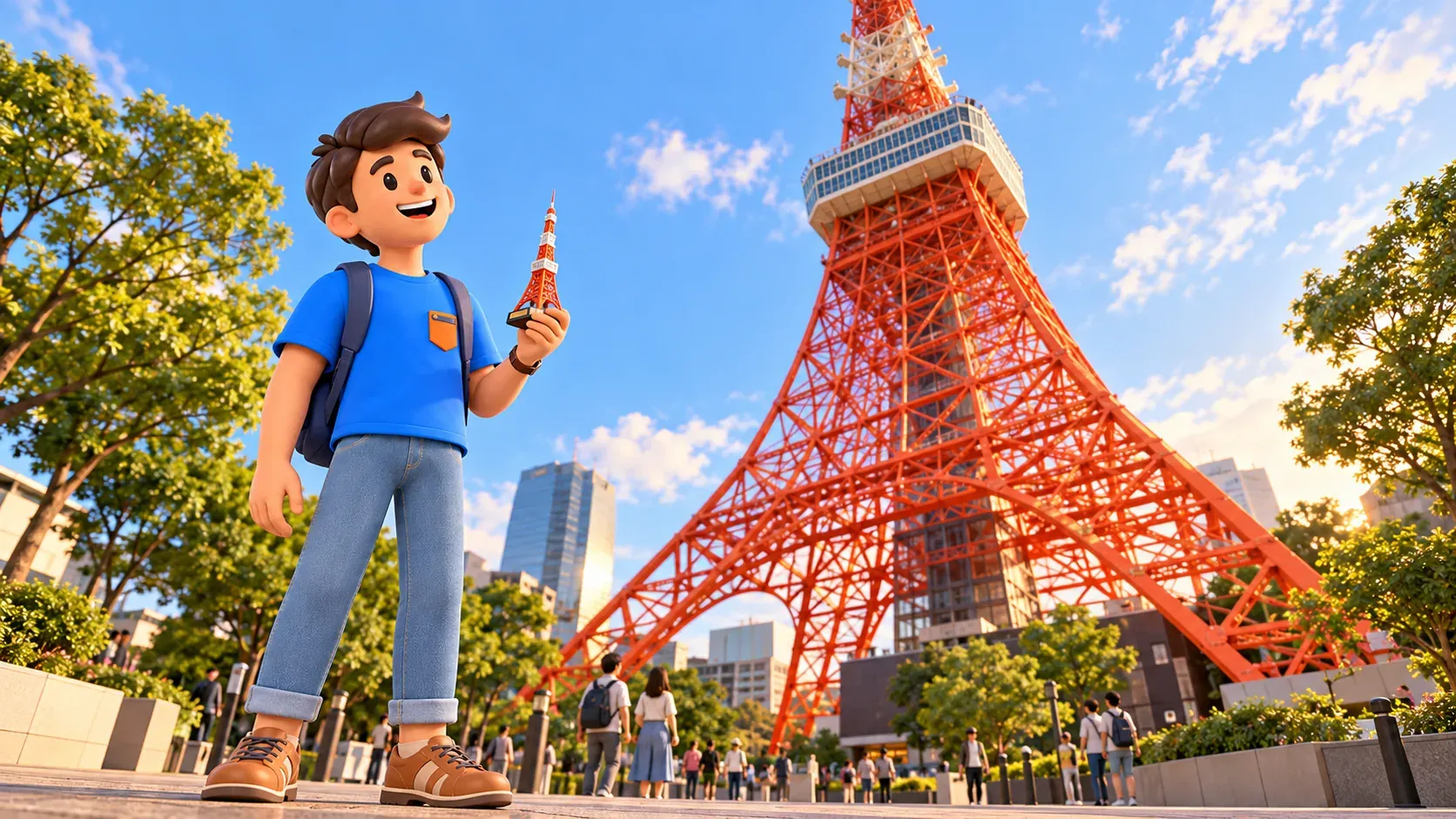
Continue toward Tokyo Tower by the currently available public route. The structure stands separately from the temple: the familiar layered view does not mean the tower is built on the hall. As you move nearer, its proportions change. A distant outline becomes a lattice of members, supports and openings, giving the final stage a different visual subject.
The operator gives the tower's height as 333 metres. You do not need to climb it to appreciate the effect of that scale from below. Find a legal pedestrian position with room to stand, look up briefly, then lower your gaze to the base and its relationship with the surrounding streets. Keep clear of vehicle movements and building entrances.
A wide view and a close detail can be enough. Resist the temptation to keep stepping backward until the whole tower fits in the frame. Streets and other visitors still matter more than the image. If the available angle includes trees, buildings or people, let them show the landmark's urban setting rather than treating them as mistakes.
Choose separately whether to go up
If seeing the tower outside feels like a satisfying ending, finish there. If the observation visit is the main reason you came, make a deliberate longer plan. The Main Deck and the Top Deck Tour are different options with their own arrangements; an exterior walk does not include admission to either. Check the operator's current tickets, hours and operating notices for your chosen date.
Leave room for entry procedures, waiting, the visit itself and your onward journey. Do not make a precise promise that an observation visit can always be added in a spare twenty minutes. Weather and operating conditions can affect the experience. The decision should reflect your interest in elevated views, rather than a feeling that approaching the tower obliges you to buy a ticket.
When you want the tower visit to fit a wider Tokyo trip, RoadMe makes planning much easier by developing your personal programme around interests, dates and preferred pace. Use the app to give the observation visit proper room alongside culture, outdoor time and rest.
Finish with an onward journey that suits your day
Choose the actual station or next destination from the tower area before setting off again. Akabanebashi may suit some journeys, while another station may suit yours better. The route ends near the tower and is not automatically a loop back to your starting exit. Include the final walk to transport when planning a fixed appointment later.
For a shorter version, keep the temple approach, a selective look at the main hall and one exterior tower view; reduce the park pause. For a longer version, add one properly planned interior visit or a meal. The walk already has a clear shape: a religious place, a small green interval and a landmark seen from the city beneath it.


