
Temple or Shrine? Read Tokyo’s Visible Details
In Tokyo, a Buddhist temple and a Shinto shrine can stand close together and share familiar-looking roofs, lanterns and counters offering amulets. The first useful distinction concerns religious tradition: Sensoji is a Buddhist temple, while Meiji Jingu and Nezu Jinja are Shinto shrines. That distinction helps explain details, but it does not turn every visible object into an infallible identification test from a photograph.
Start with the name and the site's own explanation. Then notice the entrance, the approach and behaviour at the place of prayer. Building colour, water facilities and visitor numbers are not reliable answers on their own. This is a way to read scenes you may already recognise, without a complete history of Japanese religions or a demand to visit all three places in one day.
Begin with tradition rather than appearance
Buddhist temples concern Buddhist figures such as buddhas and bodhisattvas; at Sensoji, Kannon is central. Shinto shrines enshrine kami. At Meiji Jingu, the enshrined figures are Emperor Meiji and Empress Shoken. For a first visit, recognising the direction of worship and the identity of the particular place is more useful than placing everything under an undifferentiated label of Japanese temple.
Using temple and shrine consistently makes this distinction visible in English. Name endings such as ji and dera often help identify Buddhist temples, while jinja and jingu indicate Shinto shrines. Treat them as useful clues for a map, rather than a complete rule for every possible name. When uncertain, a short official introduction is more dependable than guessing from a roofline or a stone lantern.
With RoadMe, you can shape a personal programme around your interests and pace, perhaps comparing one temple and one shrine on different days. Try choosing a few details to notice so that each visit becomes more than another photograph beside an entrance.
A torii marks a boundary
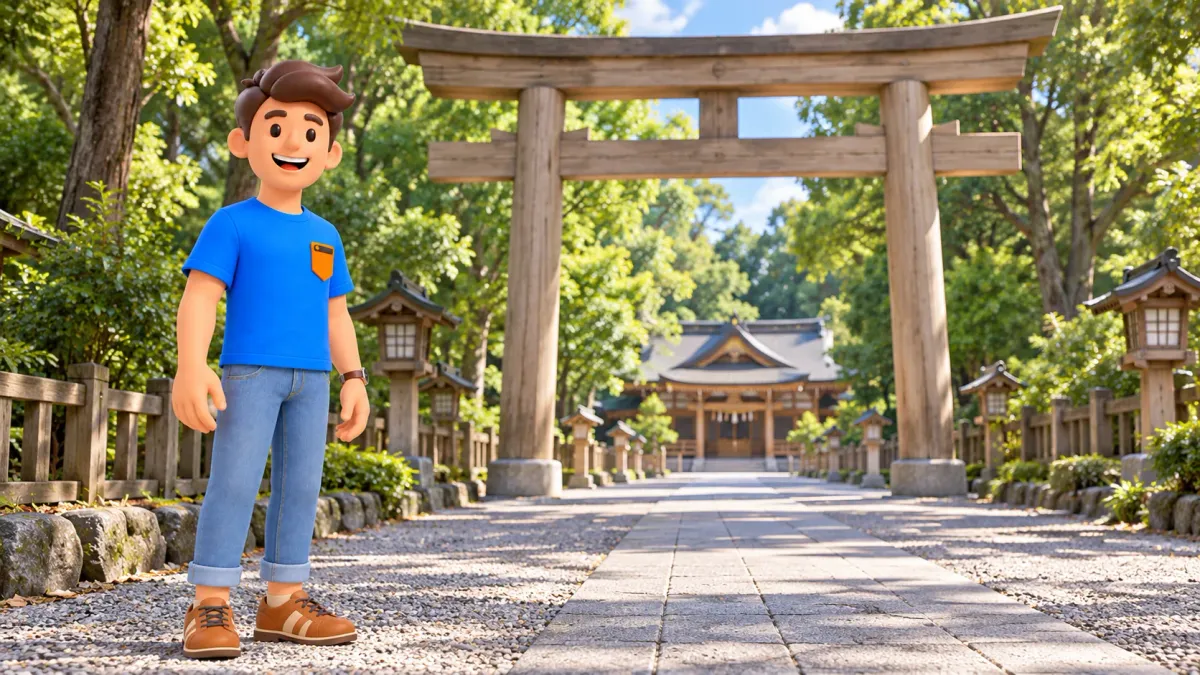
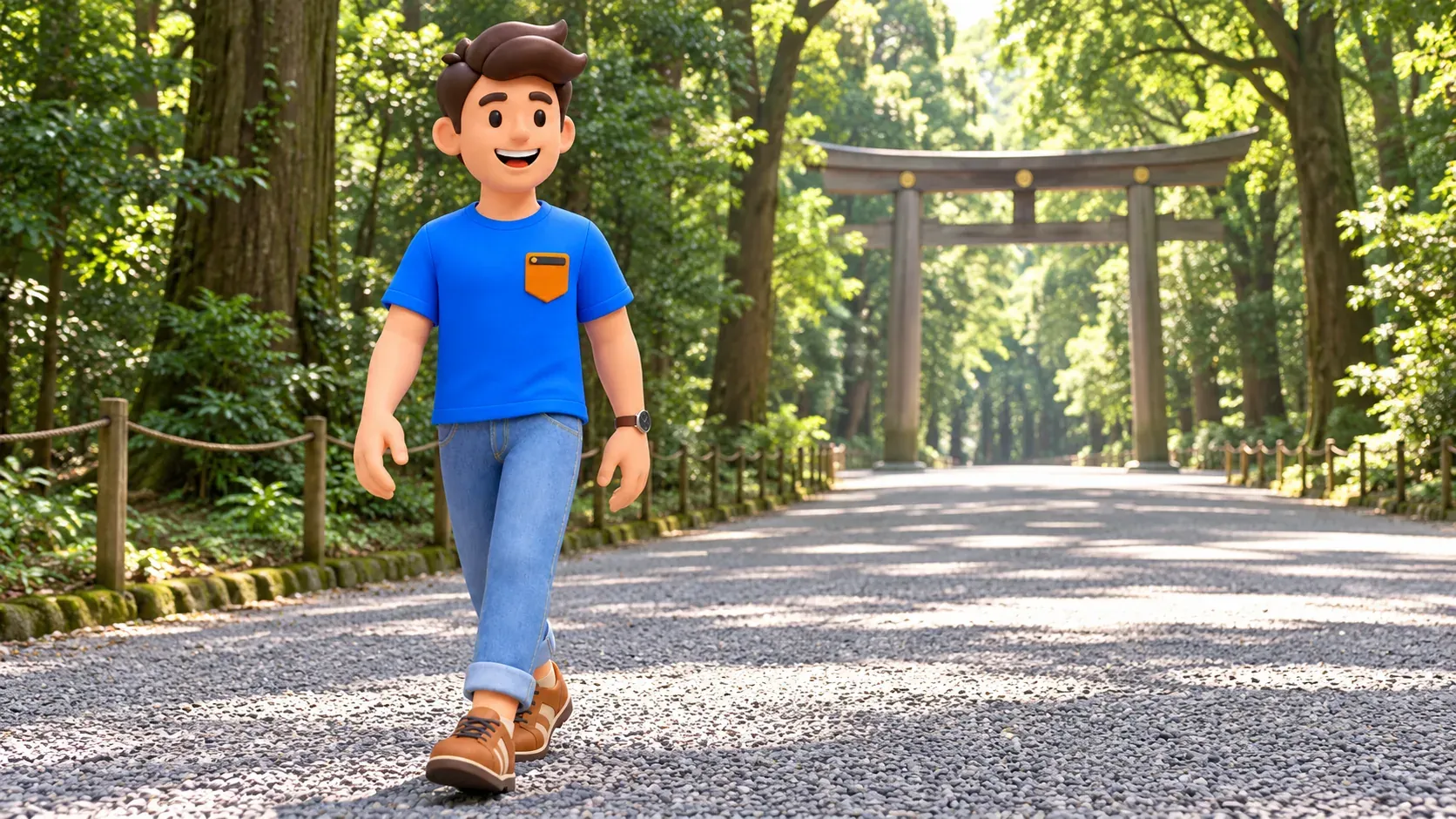
A torii is a characteristic shrine gateway marking the transition into sacred space. It normally consists of two supports and crosspieces rather than a complete room above the opening. The large wooden torii at Meiji Jingu make an immediate point: a shrine need not be bright red. The gateway's meaning concerns a boundary and a direction of approach, rather than one compulsory colour.
Before entering, notice how people alter their pace. At Meiji, visitors bow at the torii as a sign of respect. Do not remain in the middle of the opening for a lengthy observation, however. It is still a place of movement. Step aside within permitted space to see the same detail without making other people's visit the background to your architectural investigation.
Large temple gates can have substantial roofs, enclosed volumes and guardian figures. At Sensoji, Kaminarimon and Hozomon help articulate a sequence of approach. That does not mean every roofed gateway must be Buddhist: shrines can have complex gates too. Read a structure together with the site's name and wider arrangement, rather than forcing a single feature to settle every question.
Sensoji: read the temple approach
In Asakusa, Sensoji centres on Kannon, the bodhisattva of compassion. The temple's own account explains that its principal sacred image is hidden from ordinary view. Do not promise yourself a sight of the main statue merely because you enter the main hall. Access to an interior and access to the central object of worship are different matters, often compressed into one misleading sentence in brief travel descriptions.
The approach already shows how gates, a shopping street and a courtyard organise gradual arrival. The pagoda helps identify a Buddhist architectural setting, but its presence does not mean every storey is open to visitors. You can understand the arrangement from permitted public areas without expecting entry to every building, floor and inner room you see on the map.
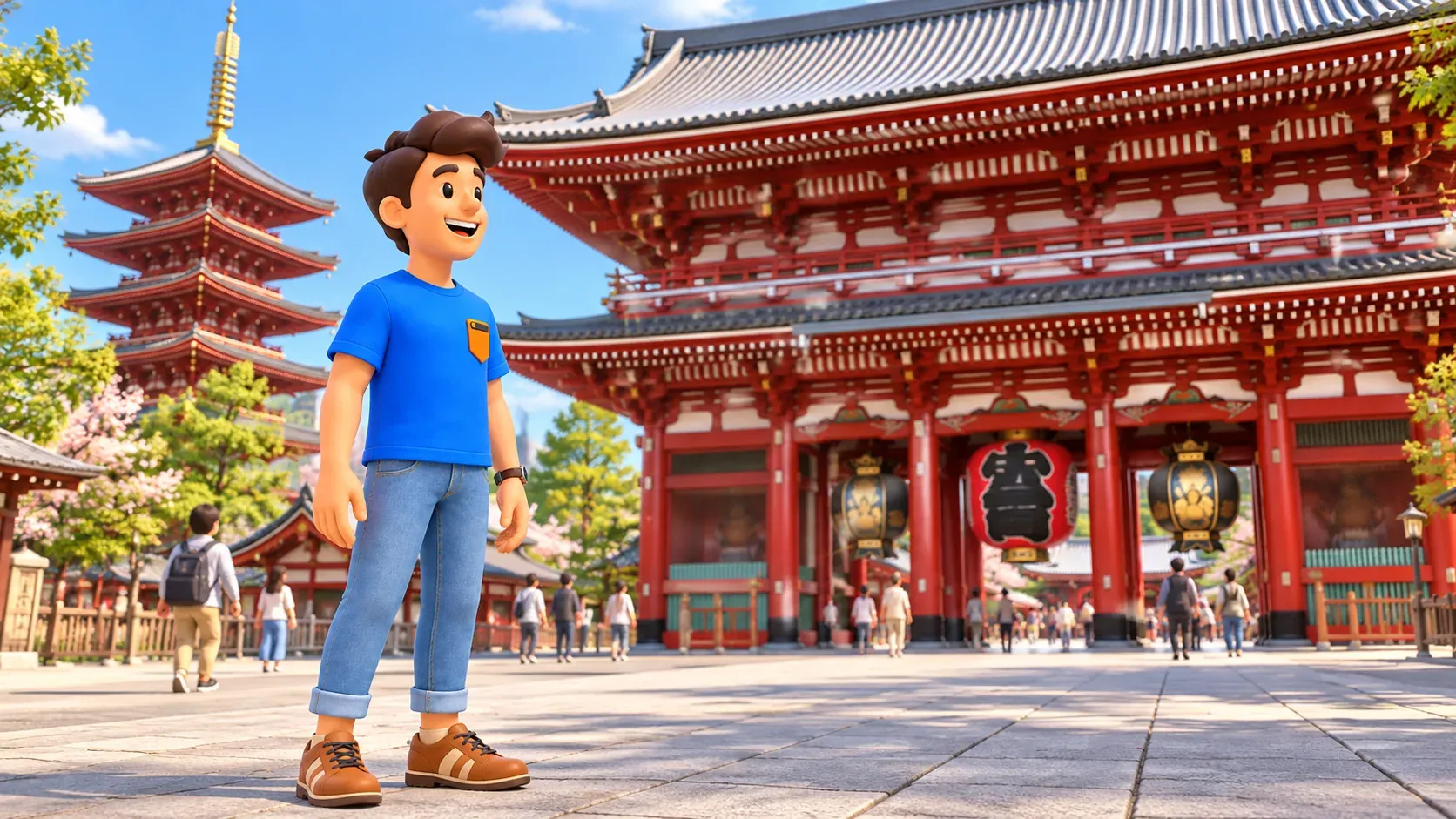
Do not assume every visible building dates from the temple's foundation. Sensoji's present main hall, for example, was rebuilt in 1958 after wartime destruction. The age of a religious tradition and the age of a particular structure are different. That distinction does not diminish the place. Continuity can involve reconstruction and support from worshippers, rather than the uninterrupted survival of every original piece of timber.
Meiji: a shrine does not have to be red
Meiji Jingu offers a different spatial lesson: a wooded approach, large torii and a courtyard before the place of prayer. Proximity to the busy city does not remove the religious status of its grounds. This is more than a park with decorative gates. The official rules ask visitors to preserve the dignity of the place, remain on paths and take no plants, branches or other natural objects from the forest.
The main shrine lies beyond an additional walk from the entrances. A nearby station does not put you immediately at the place of prayer. Gate times vary by month. For a cultural comparison, you do not need to add the museum and Inner Garden automatically; those have separate conditions. The entrance boundary, length of the approach and the point where people stop to pray already provide enough to observe.
Photography follows specific rules too. Meiji expressly prohibits photos and videos at the main sanctuary where people pray. A permitted picture of a torii does not create blanket permission to record every space or visitor. If you want to remember a distinction, write a note after leaving. Observation without a camera can be more accurate than trying to document every gesture during someone else's prayer.
Nezu: a similar colour does not imply the same tradition
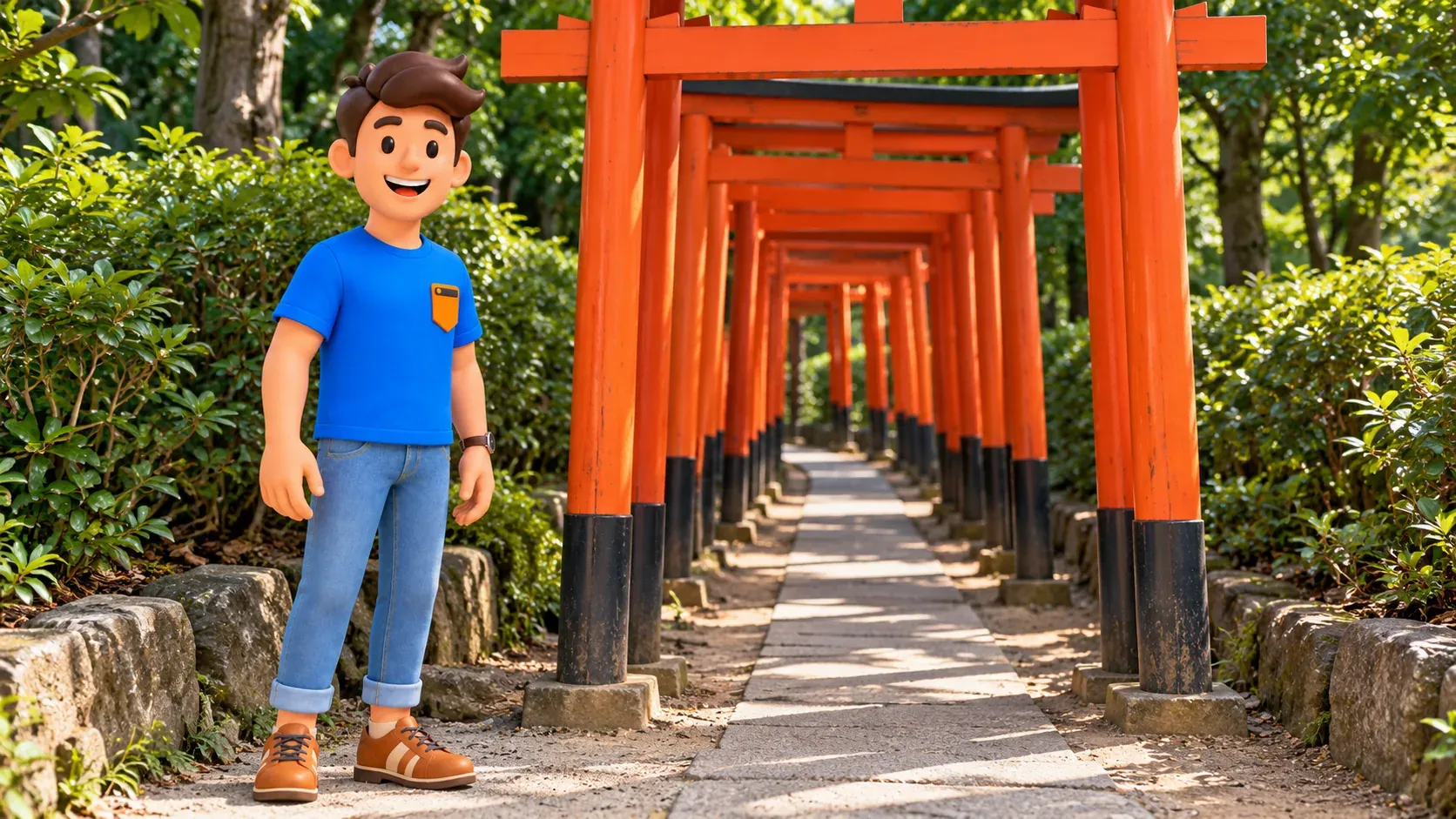
Nezu Jinja is useful as a Shinto example with colourful buildings and a sequence of smaller torii leading towards Otome Inari. The red colour may recall Asakusa, but it does not place both complexes in the same religious category. Find the name of the particular part and notice the role of its approach. Smaller shrines can exist within the grounds of a larger shrine.
Do not hold up a narrow torii passage to obtain a photograph without anyone else in it. This is a route used during visits, rather than a purpose-built photo tunnel. Nor should flowers become a year-round promise. Nezu is known for spring azaleas; another date brings another seasonal appearance. Gateways and spatial arrangement are enough for this comparison without making a particular bloom compulsory.
Water appears in both traditions
A facility for cleansing hands is not a reliable way to identify a temple or shrine from one picture. Water can occur at both. Read the local instruction first: arrangements change and ladles may be absent. Do not mime a remembered action with equipment that is not there, or assume a different arrangement of water must be an error by the place itself.
Meiji's current Japanese page describes cleansing both hands, rinsing the mouth with water held in cupped hands, and cleansing the hands again. The general lesson is to follow the local arrangement. Where ladles are used, do not put your lips against one. Do not turn ritual water into a drinking fountain or use it to wash personal belongings. Understanding an object does not require changing its intended use.
Do not transfer shrine clapping to a temple
At Meiji, the ordinary sequence includes an offering, two bows, two claps, quiet prayer with joined hands and a final bow. This describes an official local sequence, rather than a compulsory pattern for every religious site in Japan. Other shrines may have their own instructions. The explanation at the actual place matters more than confidence gained by correctly repeating a gesture once elsewhere.
Sensoji's official website invites worshippers at the main hall to join their hands in the Buddhist prayer position. Do not add claps merely because you have seen them at a Shinto shrine. A guest can also observe quietly without performing a religious act for a video. Respectful presence and avoiding disruption already help preserve the ordinary atmosphere of the visit.
The size of an offering is not a correctness test. Meiji's official explanatory text notes that reverence matters, rather than a recommended amount. You do not need one supposedly magical coin as a compulsory ticket to prayer. If you do not understand a particular box or service, establish its purpose rather than applying one assumed rule to every counter in the grounds.
Tablets and seals need context
Wooden ema tablets, amulets and goshuin seals do not by themselves answer every question about a site's tradition. Related visitor objects occur in different religious contexts. Notice where and why they are received, rather than just their appearance in a souvenir photograph. Offices can also have their own service times, ending before general access to the surrounding grounds finishes.
Use RoadMe to make a personal plan that fits your interests and pace, leaving time to read explanations and observe calmly. Try taking one question to each visit: the entrance boundary, a prayer gesture or the role of a small object.
Do not treat the presence of different details as a contradiction requiring an instant correction to your classification. Buddhism and Shinto in Japan have a long history of interaction. A single site can retain complex connections, subsidiary buildings and different layers of worship. For a first visit, it is more accurate to identify the main tradition and the particular feature than to proclaim a completely pure example without exceptions.
Apply the distinction on your next visit
Choose one temple or shrine that fits comfortably into your day. Before arriving, establish its proper name, main tradition and current rules. On site, observe the entrance, the approach to the prayer space and one object to the side. This builds a connected impression rather than a collection of gateways whose names will be difficult to recall once the trip is over.
Comparison can continue another day. Sensoji, Meiji and Nezu are in different parts of Tokyo, and this article does not propose a short walk joining them. Hours, seasons, services and events can affect access. The useful outcome is learning to recognise a place's purpose before photographing its best-known details. A familiar roof or red gateway can then begin to tell a more precise story.


