
Nihonbashi in Two Hours: Bridge, Trading Streets and a Shrine

For two hours in Nihonbashi, start with the bridge that gives the district its name, look at the road marker replica beside it, then continue north to Nihombashi Mitsukoshi and the Mitsui Main Building. Finish at small Fukutoku Shrine among the newer commercial buildings. The route connects a river crossing, trading streets and a quiet religious stop without requiring a shopping list.
Choose daylight and start after the department store opens if you want a brief look inside. Two hours is a planning estimate for a selective walk, not a measured guarantee. Travel from your accommodation, a full meal, an exhibition and extensive shopping all need separate time. The suggested finish is the Muromachi area near Mitsukoshimae, rather than a loop returning automatically to the starting bridge.
Read a trading district through a few connected places
The useful thread is how a district can keep its commercial identity while its buildings and surroundings change. The bridge establishes the location, the department store shows a public-facing version of commerce, the Mitsui facade gives it institutional scale, and the shrine changes the rhythm. Each has a different purpose within a compact walk.
For a personal version that is much more convenient to use, prepare your available time in RoadMe: the app develops an itinerary around your dates, interests and preferred pace. Try it before setting out so architecture, browsing and a quieter shrine visit fit your own Tokyo trip.
| Part of the route | Suggested time | Focus |
|---|---|---|
| Nihonbashi Bridge | About 25 minutes | The crossing and its visible details |
| Road marker replica | About 10 minutes | A brief roadside observation |
| Nihombashi Mitsukoshi | About 30 minutes | Exterior and a selective optional indoor look |
| Mitsui Main Building | About 20 minutes | Architecture from public streets |
| Fukutoku Shrine | About 20 minutes | A small Shinto place in the business district |
| Transitions | About 15 minutes overall | Finding crossings and keeping the route connected |
Use those portions flexibly. Browsing can become shorter if the bridge interests you more. The main building is an exterior stop, not a promise of touring working offices. A museum visit is not hidden inside the architecture allowance. The aim is a readable introduction to the district, not the completion of every cultural and commercial opportunity nearby.
Start at the real bridge, with today's surroundings in view
Locate Nihonbashi Bridge itself before beginning. A district name, station name and bridge position are different navigation targets. Choose your arrival exit according to the actual first stop and leave the journey outside the two-hour allowance. If meeting someone, agree on a specific public place beside the bridge rather than an indistinct station area.
The current bridge is a two-arched stone structure completed in 1911. It is not the wooden crossing shown in older images of Edo. That distinction helps you notice layers of history without needing a full chronology. Look at the stonework and proportions you can see now, then connect them to the surrounding working city.
An elevated expressway remains part of the setting, while works toward moving the road underground affect the district's development. Do not expect an unobstructed old bridge beneath an empty sky. Read current pedestrian signs and barriers. The short walk should respond to the place as it is, not to a future rendering or an edited photograph.
On the bridge, choose a few details rather than a perfect frame
Use the pedestrian side and stop where other people can pass. Start with the whole crossing, then select a detail in the stone, metalwork or decorative figures that attracts your attention. A small observation can make the bridge more memorable than waiting for a photograph in which every car and modern structure disappears.
The river and road have different lines of movement. Notice where your view follows the water and where it meets the street. This is a useful first impression of Nihonbashi as a practical urban connection. You do not need to make every visible feature a historical lesson to appreciate that role.
If temporary arrangements restrict a preferred viewpoint, use another permitted position or shorten the stop. Do not turn barriers into a puzzle to get around. A bridge visit is still worthwhile when you can see only part of the structure clearly. Keep the next stages of the route available instead of spending the whole outing seeking one ideal angle.
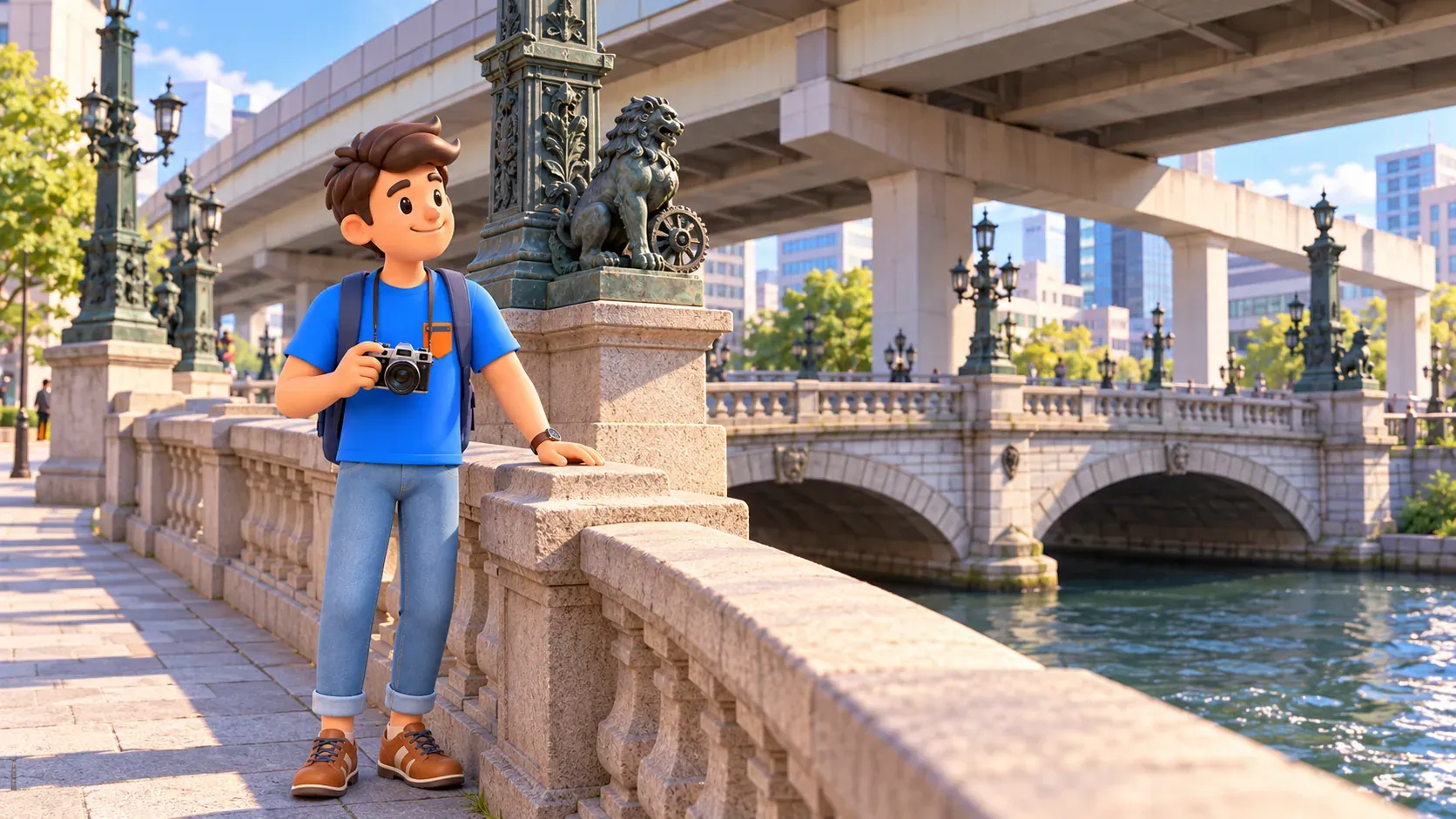
See the road marker replica from the northwest bridgehead
The original road origin marker is in the roadway, not a normal pedestrian photo stop. For this route, use the replica in the small public space at the northwest bridgehead. Keep the distinction clear: the object you can examine conveniently beside the bridge is a replica, while the working marker belongs to the road itself.
A brief look is enough here. The marker explains why the bridge has a role beyond crossing a river, but this walk does not attempt a complete history of Japan's road network. Read the information that is accessible from pedestrian space and keep the topic as a short connection between location and the district's broader importance.
Do not step into traffic to see the original or treat a gap between vehicles as an opportunity. There is no need for that action to complete the visit. If the roadside area is temporarily unavailable, leave this detail out. The bridge, trading streets and shrine still make a coherent route.
Walk north with the commercial street as part of the experience
Continue north toward the Muromachi cluster, using current pedestrian crossings. The route works because the places belong to a compact urban area, not because every entrance appears in a straight line. Look up from the navigation at suitable stopping points and notice how large facades, shopfronts and ordinary movement occupy the same streets.
Decide whether you want to browse or simply observe. Both are valid. A short city walk does not require buying a souvenir, and a shopfront can be an architectural or social detail rather than an instruction to enter. Keep a limited purpose for each indoor pause so the route does not quietly become a different shopping afternoon.
If you want a particular purchase, allow it its own time. Finding a department, comparing products and completing a transaction may take longer than the thirty-minute cultural browsing block. Being honest about that choice is better than preserving the two-hour title while removing the bridge and shrine in practice.
Mitsukoshi: choose one view of the department store
Nihombashi Mitsukoshi is the public-facing commercial stop. Begin with its exterior and the way the entrance meets the street. If it is open and you want to go inside, choose one limited section or a short look at the building's public spaces. You do not need to cover every floor to understand the scale of the place.
At the October 23, 2026 check, the official store information listed opening from 10 a.m., with closing times varying by floor and facility. Check the current schedule when you need a particular section. A restaurant, food floor and upper sales floor do not automatically share identical hours. An exterior route remains possible when your intended indoor section is unavailable.
Let details such as material, display and circulation give the visit a purpose. Compare the formality of the public entrance with the ordinary work of shopping around you. This is a place in use, not a museum reconstructed for visitors. Follow photography and circulation instructions, leaving customers and staff room to move.
Food can be tempting, but a queue or a meal changes the schedule. Choose a small pause only if it fits the remaining time, and follow the facility's rules about where purchases can be eaten. A full lunch belongs after the route or in a deliberately longer version. The district does not become less interesting if you leave without bags.
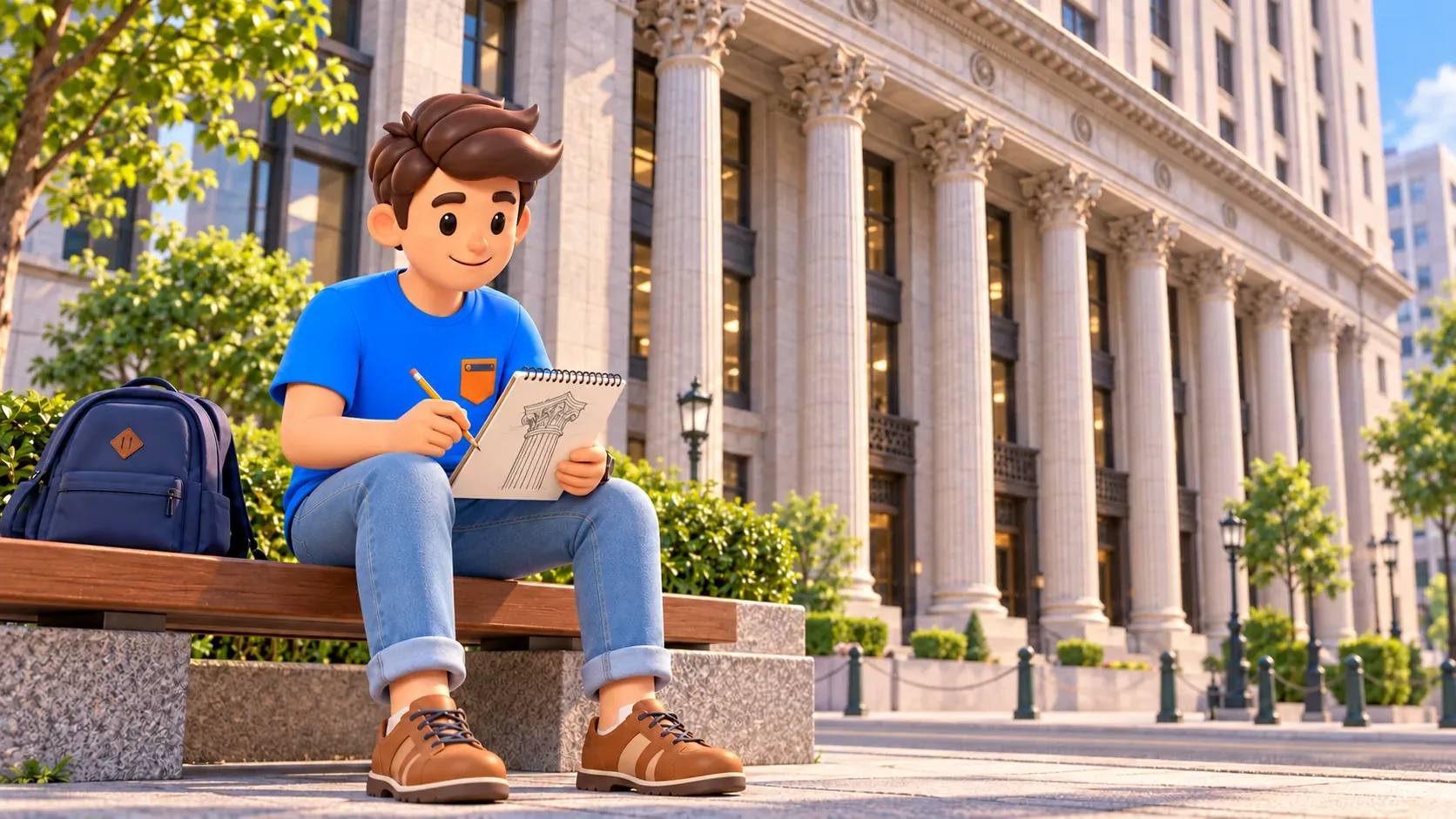
Mitsui Main Building: the street is the viewing space
Continue to the Mitsui Main Building and make the facade, rather than an assumed interior, the subject. The building was completed in 1929 and remains in use. That is useful context for the walk: this architectural landmark is also part of an operating commercial city, so visiting it does not mean entering all its working spaces.
From public pavement, look at the strong columns, the rhythm of the facade and the relationship between its lower and upper parts. Take a position that gives you space to see without blocking a doorway. An architectural visit can be thoughtful while remaining outside; a closed office entrance does not remove the value of the stop.
If a museum, exhibition or other publicly advertised interior interests you, check its own dates, tickets and entrance and give it another block. Do not add it as though it were a free extension of twenty minutes looking at the building. The route's cultural value does not depend on making every historic facade into an interior tour.
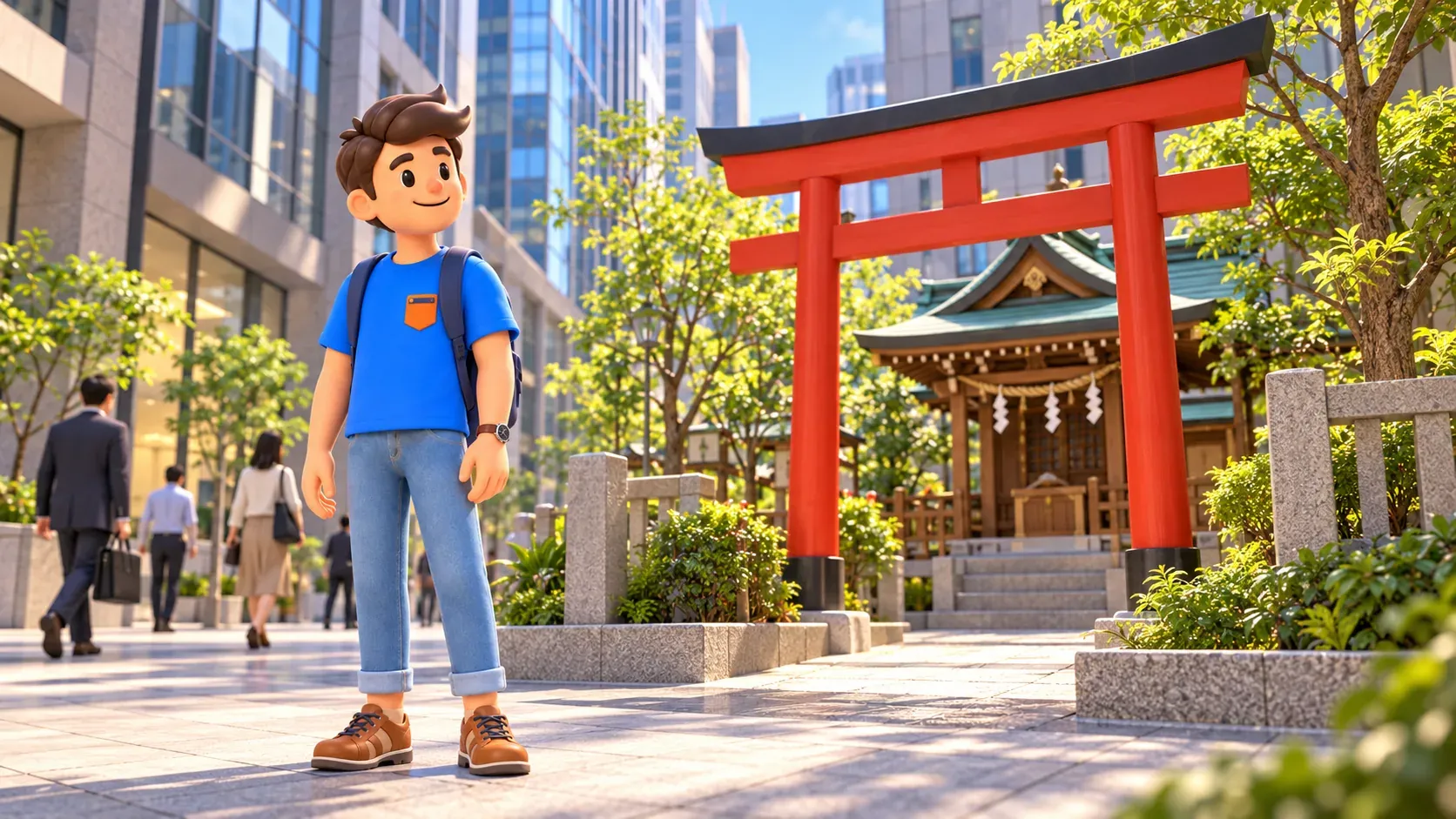
Fukutoku Shrine: a smaller scale among commercial buildings
Finish near Fukutoku Shrine in the Muromachi area. Its small Shinto setting changes the scale after broad commercial facades. Approach as a religious place rather than simply a contrast photograph between a torii and modern buildings. Keep worshippers' paths clear and follow the shrine's own guidance about photographs and participation.
The shrine's official information distinguishes access for worship from the staffed counter. At the October 23, 2026 check, the counter and goshuin reception were listed as 10 a.m.–5 p.m.; this is not a promise that every service or interior is available whenever the grounds can be visited. If a particular religious service matters, confirm its own conditions.
Let the stop remain simple. Look at how the approach and surrounding space create a pause within the business district. You do not have to buy an amulet or take part in a prayer to understand that change in rhythm. Nor does an association with good fortune make a visit a guarantee of any practical outcome.
To give this mix of city history and quiet space a personal place in your trip, organize the day in RoadMe, where your interests, dates and pace shape the itinerary. The app makes it much more convenient to connect architecture, time indoors and rest without carrying several competing lists.
End near Muromachi instead of adding another district automatically
At the end, choose your actual return or onward connection from the Muromachi area. Mitsukoshimae and other nearby stations have different entrances and routes; check the one you need. Returning to the original bridge is an additional choice. A two-hour plan should have a clear finish rather than leave its last walk uncounted.
In rain, reduce exposed observation and choose a short indoor pause only within confirmed opening conditions. If shopping becomes the priority, extend the visit openly. If architecture matters more, shorten browsing and retain the street views. These adjustments keep the same neighborhood readable without pretending all interests require the same amount of time.
Leave the full story of road origins, a museum session or a longer commercial exploration for another visit. This walk already has a complete sequence: a crossing, a roadside detail, trading architecture and a small shrine. Its strength is recognizing their relationship while leaving enough attention to notice the city between them.


