
Three of Moscow’s Seven Sisters in a day, with transfers
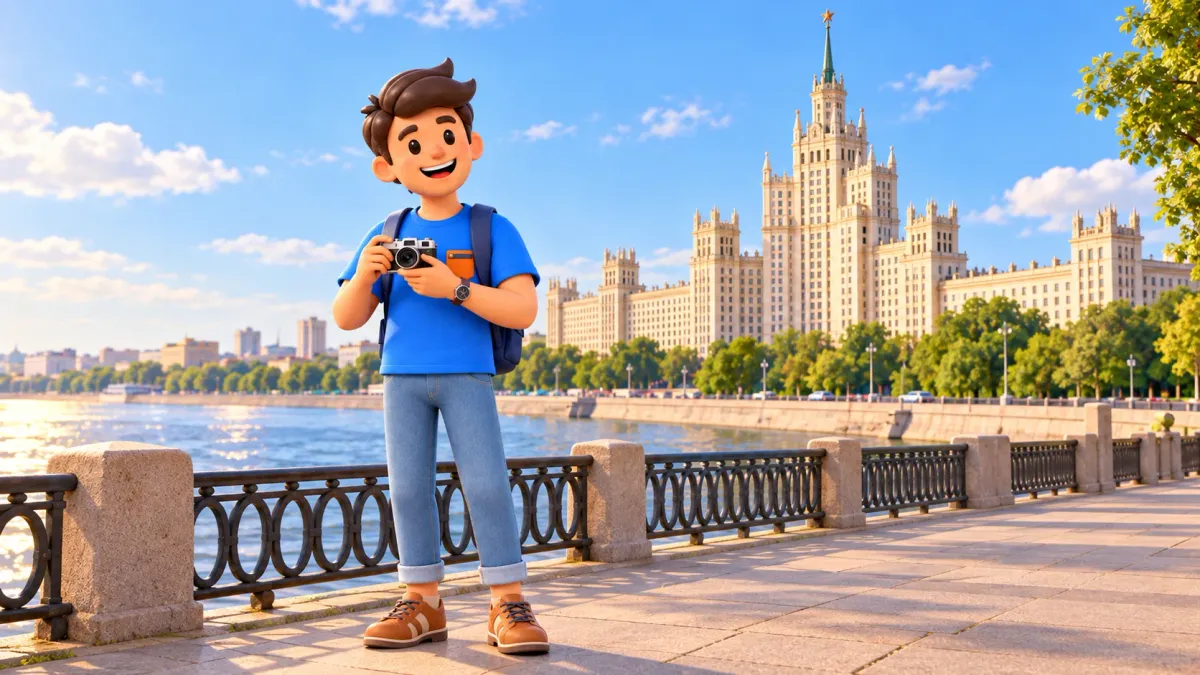
Moscow’s Stalin-era high-rises become more interesting when you compare their surroundings as well as their spires. One addresses a river, another shapes a square, and a third stands against the movement of a major city road. Three buildings are enough for a coherent day: the residential tower on Kotelnicheskaya Embankment, the apartment building on Kudrinskaya Square and the Foreign Ministry on Smolenskaya-Sennaya Square. Transfers connect three different urban settings without making all seven buildings a compulsory collection.
The core plan is exterior observation from public streets. Allow approximately four to five hours for approaches, two journeys, stops and food. This is an editorial planning estimate, not a measured itinerary or a promise under every traffic condition. With limited daylight or poor weather, choose two buildings. Free access to residential stairwells, government interiors and rooftops is not part of the outing. You can understand the architecture from outside without treating entry as the measure of a successful visit.
Give three stops a comfortable rhythm
A useful order is Kotelnicheskaya Embankment, Kudrinskaya Square, then Smolenskaya-Sennaya Square. Begin with the open river setting, continue to a residential building beside a square, and finish after a break at the administrative tower near the Garden Ring. Plan public transport between districts using the current network on your travel date. Walking approaches still matter: a metro journey does not deliver you directly to the façade, and the final section can change the day’s practical timing.
To make this day personal, try RoadMe: the app plans a trip around your interests, dates and preferred pace. Architectural stops, transfers and rest can be arranged to suit your own visit rather than a fixed collection of addresses.
As an initial scale, allow thirty to forty minutes at each building, roughly half an hour to an hour for each journey with approaches, and around another hour for food and flexibility. These estimates help size the programme, rather than control it minute by minute. If you enjoy careful photography or reading about architecture, use the longer end. Avoid filling every apparently spare minute with another place before discovering your actual pace at the first stop.
Kotelnicheskaya: start with the river and the outline
The residential high-rise stands near the confluence of the Yauza and Moskva rivers, at 1/15 Kotelnicheskaya Embankment. Its main post-war high-rise element was completed in 1952. For this outing, the most useful point is how a large building works in a river setting, rather than a detailed construction chronology. The waterside context gives space to appreciate the outline before you try to examine every detail close to a wall.
Choose your approach from a current map. Taganskaya or Kitay-Gorod can be useful transport orientations, depending on your starting point and intended viewpoint. Find a public location offering a coherent impression of the building, then compare its central vertical with the extended lower wings. You do not have to circle the entire complex. A distant outline and a closer façade already provide two distinct observations of the same residential monument.
Watch embankment traffic and use proper crossings. Wanting both water and spire in a photograph does not justify standing in the road or going beyond barriers. If work or trees interrupt a particular view, choose another permitted public position. Do not build the entire day around reproducing a single photograph found online. A different perspective or light can still communicate the essential relationship between a large building and its setting.
A residential building remains a place to live
At Kotelnicheskaya, distinguish exterior viewing from any separate cultural visit inside the complex. A museum or cinema programme, if you choose one, has its own arrangements and duration. Its ticket does not give free access to residential floors. Interiors are not necessary for the three-building plan. Adding one substantial visit is better balanced by reducing the number of architectural stops than by removing the meal break and assuming every transfer will be effortless.
Instead of listing famous residents, take one question: how does the scale of this large building relate to a person on the embankment? Look at the entrance level, then at the top. Ceremonial appearance and everyday habitation coexist. A handsome façade or a story about a well-known neighbour cannot establish the layout of every apartment. Nor does it verify the many colourful anecdotes repeated in sightseeing lists without clear evidence.
Before the first transfer, check the next address and the convenient transport approach from where you actually stand. Do not head automatically for the station whose name you know best. Your chosen viewpoint may be on another side of a large complex. Take a small break before travelling if helpful. The beginning of the day should not use every reserve of energy searching for one perfect wide photograph when two different settings are still ahead.

Kudrinskaya: see the building as part of a square
The next anchor is 1 Kudrinskaya Square. This is another residential high-rise, designed by Mikhail Posokhin and Ashot Mndoyants with engineer Mikhail Vokhomsky. The context changes: instead of water, you are looking at the relationship between a building, a square and surrounding streets. Barrikadnaya and Krasnopresnenskaya metro stations are useful orientations. Choose the actual exit and crossings from a current map, rather than a remembered photograph taken by somebody else.
Look first at the central element and lower side volumes. Then shift attention to the square. Where is it comfortable to stop? How does the view change as you move along public space? What interrupts the close perspective? These questions prevent the day becoming three repetitions of “see a spire and leave”. Compare the particular urban setting instead of feeling obliged to decide immediately which of all seven buildings is the most beautiful.
Entrances and apartments are not a freely accessible museum display. Remain in public areas, do not block people entering, and do not ask residents to open a door for a photograph. A confirmed special tour would need its own verification. Without it, the exterior visit remains complete. Ordinary activity around a major monument is part of its character, rather than an inconvenience that needs to disappear before you can take the correct architectural picture.
Protect the break and the second journey
After Kudrinskaya, assess your energy and take the planned pause. You have already compared a riverside tower and a square setting. If the day ends here, the outing has still worked. Do not add the zoo, planetarium and another museum simply because they appear nearby. Each requires its own time. Choose food according to your actual location and preferences, without feeling you need a historically appropriate restaurant to keep the architectural theme intact.
If you want to shorten the programme, you can change the stops in your personal RoadMe plan and give more time to what interests you. Try keeping a comfortable pace and a proper rest instead of making one more high-rise compulsory.
For the final stop, travel towards Smolenskaya-Sennaya Square by the option that works from your current position. Check the complete journey, including the approach to transport, any interchange and the exit to the correct side of the street. You could walk part of this western central connection if you prefer, but that changes the physical load. It is not an invisible extra section. Travel time remains part of the programme whichever mode you choose.
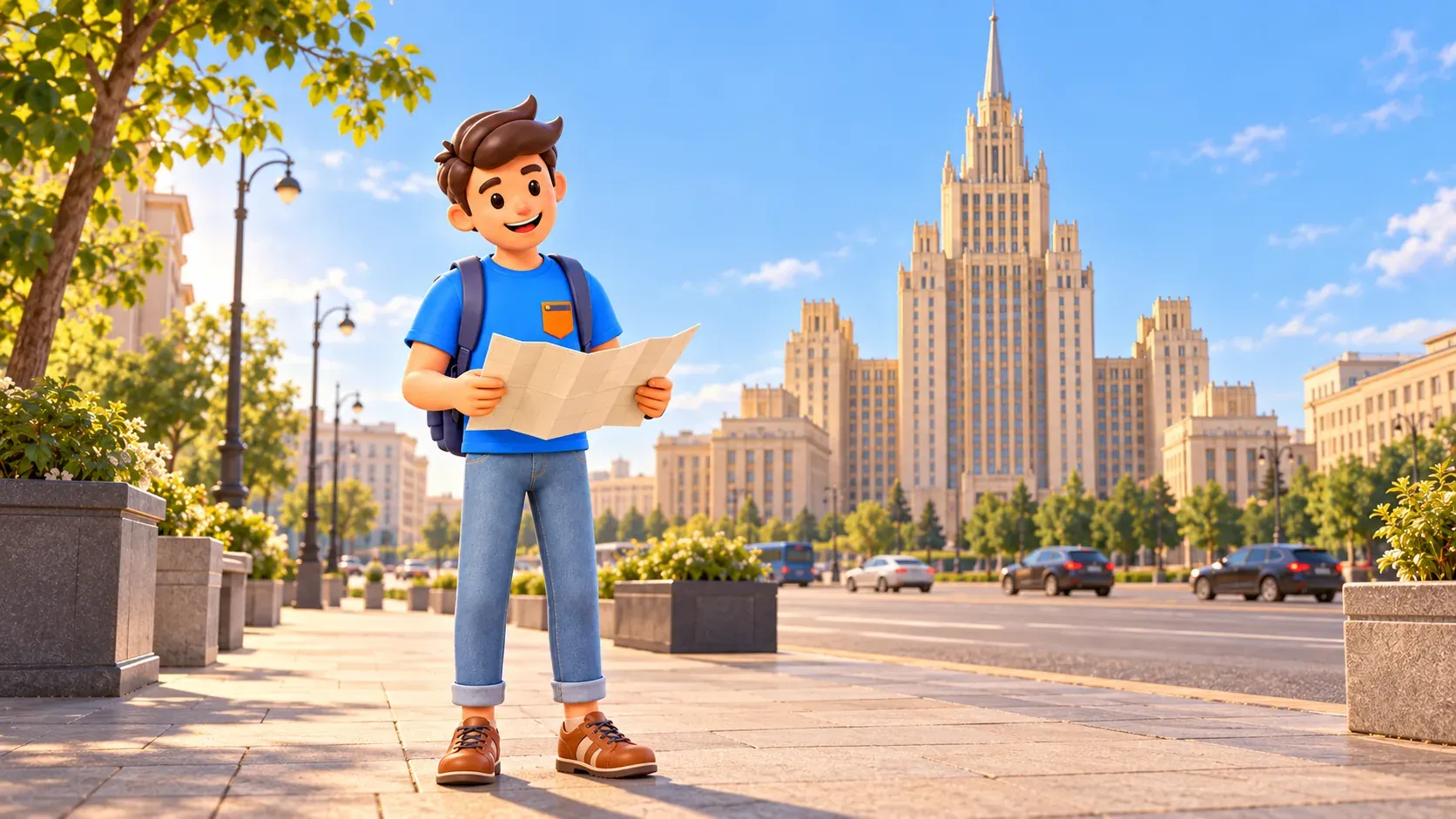
The Foreign Ministry: a tower beside a major road
The ministry’s official orientation is 32/34 Smolenskaya-Sennaya Square. Do not substitute the consular department’s address in Neopalimovsky Lane for the principal high-rise: these are different places. The Smolenskaya metro area is a useful exterior approach, with the final route checked on the current map. Establish the side of the street and a safe crossing before allowing the scale of the façade to draw your attention away from traffic.
At this stop, compare the vertical mass with the movement of the larger city. Kotelnicheskaya offered water and space; Kudrinskaya added a square and a residential setting; here, the main road and administrative function matter. See the overall silhouette from an available public point, then select one detail visible without approaching a service entrance. You do not need to stand at the doors for a long time to understand the building’s role in its surroundings.
The plan includes no departmental interiors and promises no tourist entry. Follow restrictions and instructions on site, choosing another permitted viewpoint around work or barriers. Do not transfer a hotel’s visiting arrangements to an administrative high-rise because both belong to a famous architectural group. Shared family resemblance does not create one ticket, an identical schedule or a universal observation platform available at every one of the seven buildings.
Why all seven would make a different day
The Seven Sisters are distributed across Moscow rather than grouped in one neighbourhood. Moscow State University on Leninskie Gory, the hotels and the buildings towards Red Gates involve different geography. Save them for other days when you already have a reason to be nearby. Replacing a stop with Hotel Ukraina creates another programme with its own approach. It is a substitution, rather than an unnoticed fourth event added to a day that already has its own rhythm.
Keep exterior sightseeing separate from viewing Moscow from above. Interest in spires does not establish access to the top of any of these three buildings. If a panorama is your main goal, choose and verify a specific working platform first, then reduce the architectural plan around that visit. This avoids the false expectation that every prominent tower comes with a tourist lift and that upper-floor entry can simply be arranged at the door.

Finish according to weather and energy
After the ministry, finish in the Smolenskaya area or choose one small neighbouring stroll if you still want to walk. A substantial Arbat itinerary should not be added automatically. Three buildings have already supplied enough material for comparison. You can simply recall which setting made the strongest impression: the open riverside, the square or the busier city road. That answer is more useful than counting photographs or stations visited during the afternoon.
In rain, strong wind or cold, shorten outdoor stops and retain two buildings. In comfortable weather, extend one walking section rather than increasing the number of transfers. With children, look for repeated steps in the building volumes and compare them with an ordinary house, without turning the day into an examination on dates. Before leaving, check transport, weather and phone charge. The plan stays clear when every stop has its own observation and both travel and rest have their own time.


