
Tai Po half-day: the old railway and market town
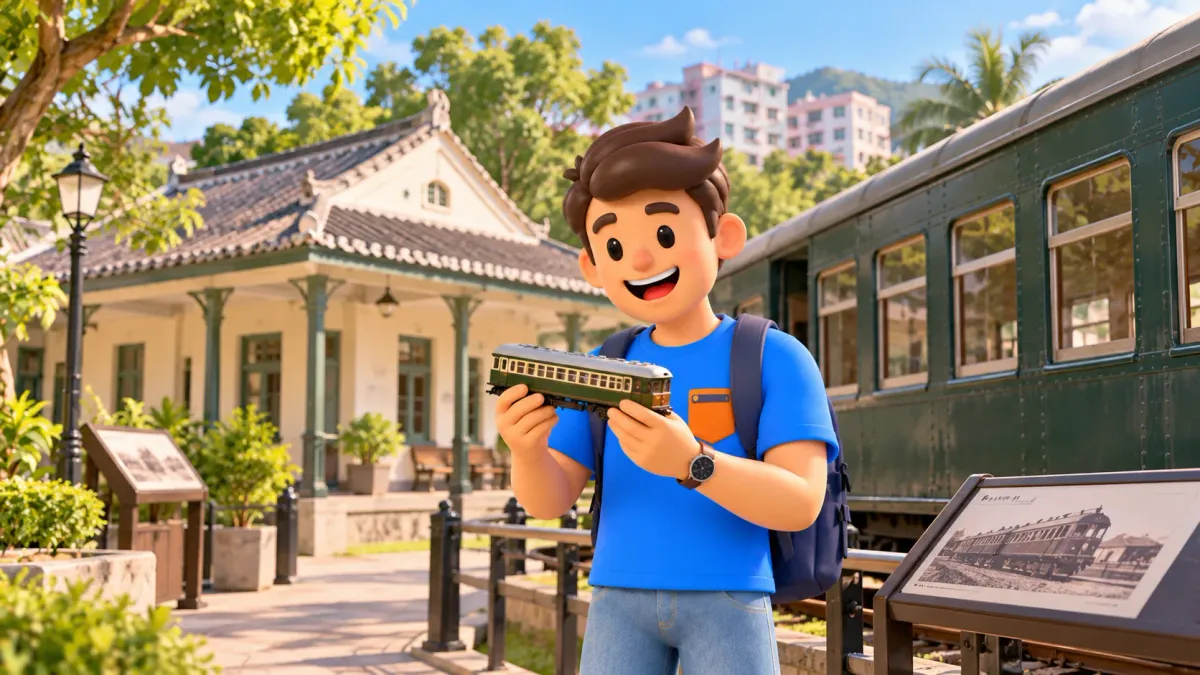
Tai Po is rewarding when approached through three ordinary urban questions: how people arrived, where they traded and where the community handled shared business. An old railway station, Man Mo Temple and Kwong Fuk Bridge connect those ideas without requiring Hong Kong's biggest landmarks. The relationship between the stops matters more than the size of any individual monument.
Allow roughly three to four hours for the core route, including links and food. This is a planning estimate, not a measured track. Green Hub in the Old Tai Po Police Station is a separate optional extension; with it, leave around four to five hours and check visiting arrangements beforehand. The main walk is complete without it.
The route moves from railway to market streets
Begin at the Hong Kong Railway Museum, continue to Man Mo Temple on Fu Shin Street, then walk towards Kwong Fuk Bridge over the Lam Tsuen River. The museum provides the main cultural visit, the temple a shorter encounter with community history, and the river a more open finish. Each stop need not become a complete guided tour.
Use RoadMe to turn this idea into a personal plan around your interests and available time. Planning the wider trip in the app makes it easier to place history, neighbourhood walks and rest in a comfortable sequence.
If trains are the reason for coming, give the museum most of your attention. If everyday life interests you more, save energy for the street and temple instead of reading every technical label. Travellers drawn to reused historic buildings may prefer a planned Green Hub extension. The underlying route remains the same while its emphasis can change.
This is an urban walk, not a trail through a preserved village. Historic places sit among contemporary homes, shops and transport. There is no need to mentally remove the present to discover the past. Part of Tai Po's interest is seeing how a former station and a temple remain within the ordinary activities of a living district.
The old station and today's MTR station are different places
The Railway Museum occupies the old Tai Po Market station building, erected in 1913 and opened as a museum in 1985. Its low architecture and traditional pitched roof differ from the grand terminal image many travellers expect. Consider it as local infrastructure: trains connected the district to other places while the station organised arrivals and departures.
The current Tai Po Market MTR station is not inside this museum building. Plan transport to the museum's actual address rather than following the shared name alone. The operator also provides an approach from Tai Wo station. Which works best depends on your accommodation and onward journey, not automatically on the name of the historic railway stop.
Start with the smaller things that made a journey possible: the ticket office, signalling, equipment and images of the earlier railway. Then move to rolling stock. A large coach becomes more meaningful as part of a system in which people and objects needed particular roles, rather than simply an attractive old vehicle standing apart from its context.
A useful question is what a passenger did before boarding. Where would they establish the direction, buy a ticket or wait? You need not invent individual biographies to appreciate the station's organisation. Comparing it with today's MTR journey makes the past approachable without knowing every locomotive model or each stage of the line's development.
Expect a railway museum, not a scheduled heritage ride
Much of the collection is outdoors. Historic locomotives, coaches and equipment are displayed as museum material, so do not build the outing around an assumed train departure. Access to particular coaches and rooms follows current arrangements, not whatever appears in an older visitor photograph. Looking closely is the main experience; a ride is not promised by this plan.
For a focused visit, choose two scales: a complete coach and a smaller technical detail. First notice length, windows and construction, then examine a device whose purpose you can understand. With children, compare older transport to the train you used today. What looks familiar, and what seems to work differently? The comparison creates a shared conversation without a long lesson.
There is no need for a technical examination. If detailed diagrams do not appeal, the station's architecture and the general form of the rolling stock already supply a theme. If railways fascinate you, reduce the later stops instead. Real interest is more valuable than giving every place an identical share of time and leaving just when curiosity becomes strongest.
Information checked in October 2026 lists free admission and usual hours of 10am to 6pm. Tuesday is the closure day except public holidays, with closure also on the first two days of Lunar New Year. Check changes for your date. Because of its outdoor areas, the museum is not an entirely indoor fallback for every kind of weather.
Visitors requiring an easier entrance can contact staff about access through the vehicle entrance on On Fu Road. Confirm relevant assistance beforehand. Reaching the museum grounds does not establish the same access inside every historic coach: preserved transport and a modern gallery present different spatial constraints. Consider the actual spaces you want to use rather than one general accessibility label.
Man Mo Temple: worship and shared decisions
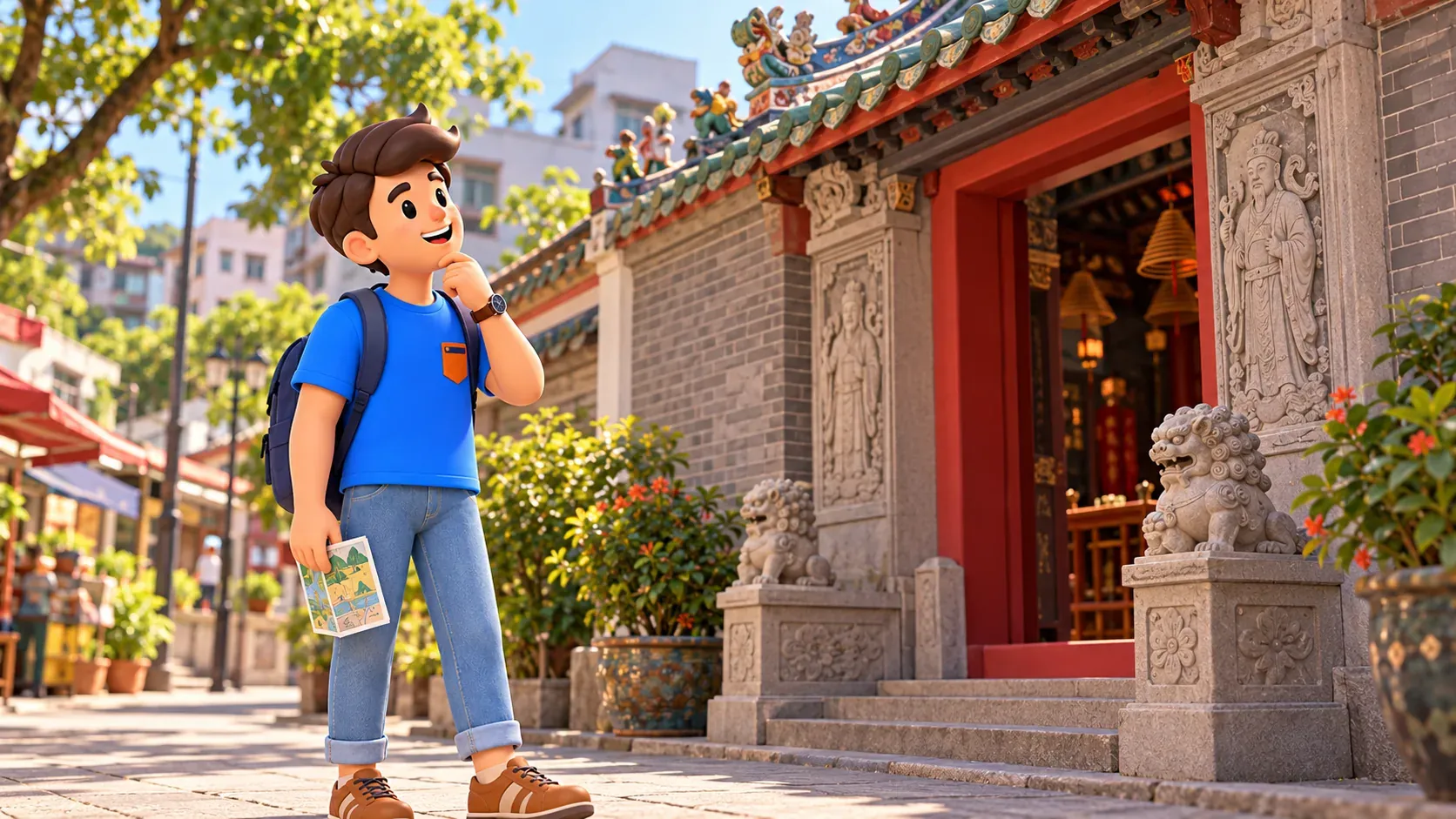
After the museum, continue to Man Mo Temple on Fu Shin Street. This is the Tai Po temple, distinct from the better-known place of the same name in Sheung Wan. A shared dedication does not make them one building or entrances to a common complex. Here, the important connection is to the local market town.
The temple opened in 1892 with donations from the Tsat Yeuk community. It served meetings and arbitration as well as worship. That combination helps explain the district: a religious place could also support the management of shared affairs. A market needed more than goods and routes; people also needed ways to settle questions between them.
Man Cheong, associated with literature, and Mo Tai, associated with martial qualities, are worshipped here, with impartiality relevant to community affairs. You do not need to decode every symbol to appreciate how dedication and social role can connect. This small historical context makes the stop more meaningful than a photograph of the entrance alone.
Look at the grey brickwork, pitched roofs and carved entrance details. The layout includes two halls and a courtyard, but actual interior visiting depends on access and current activities. Give worshippers space when devotion is taking place. Quiet observation from a permitted position is better than occupying a central passage to create a perfectly symmetrical photograph.
Fu Shin Street and Kwong Fuk Bridge reveal connections
Leave some time for the ordinary street after the temple. You do not need a compulsory purchase or the oldest possible shop to recognise the market setting. Signs, compact trading spaces and the movement of shoppers and deliveries show that the street still serves everyday life. Treat it as a place where people work rather than a ready-made photographic set.
The historic market-town name Tai Wo appears in the temple's story. Do not automatically equate it with today's Tai Wo station or read it as an instruction about where to leave a train. Historical, transport and contemporary place names can overlap while doing different jobs. For navigation, use the actual destination and current mapping rather than a name in isolation.
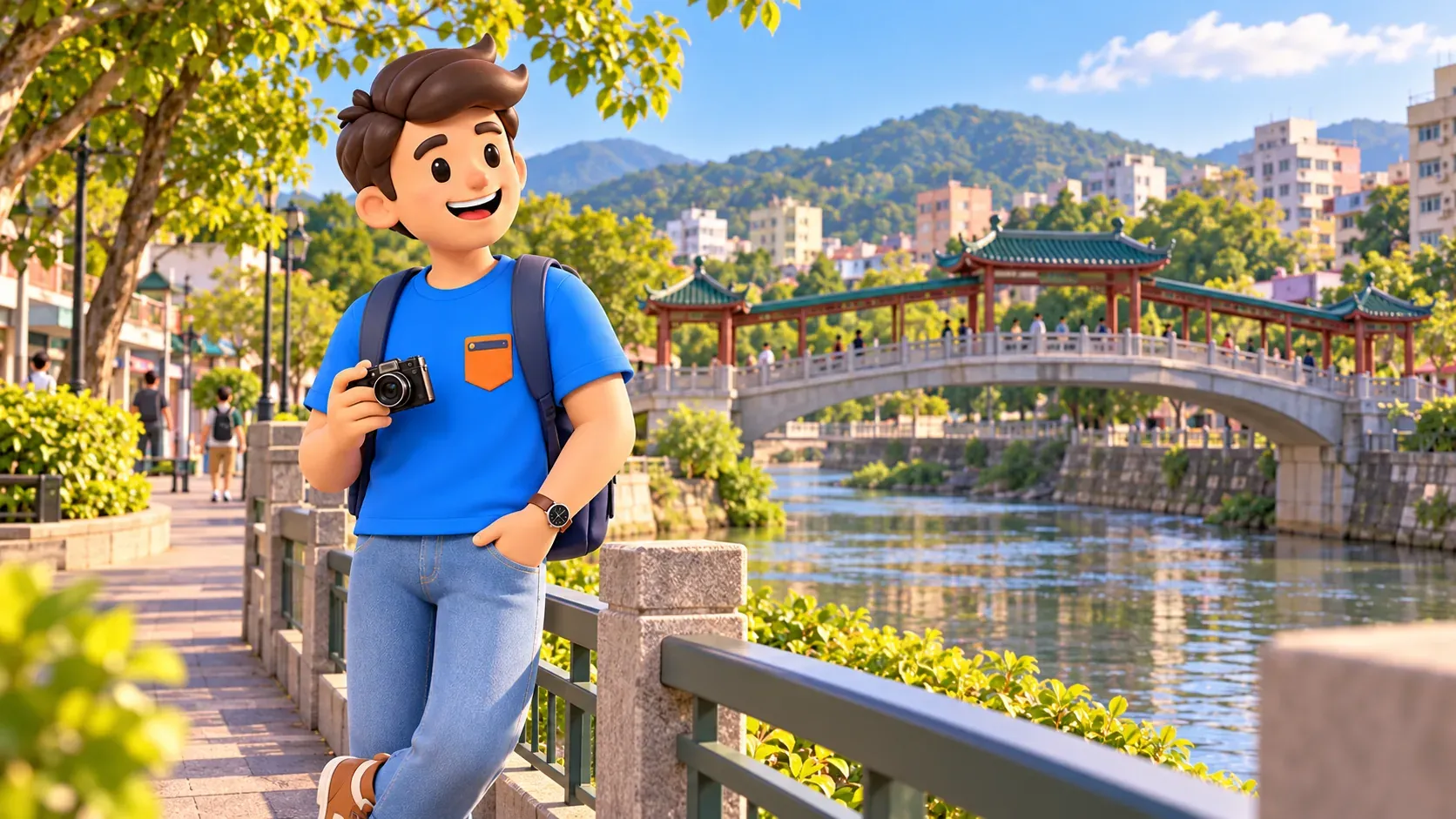
Kwong Fuk Bridge crosses the Lam Tsuen River and provides a transition from the tighter street to a more open waterside. The present pedestrian bridge uses traditional Chinese styling, and its location has changed in the past. Do not treat today's structure as an untouched nineteenth-century crossing. The story of connecting the banks is longer than the visible construction.
On or beside the bridge, consider which routes it connects. How does the river divide movement, and where do people cross now? This is a simple way to read the town through infrastructure. The old station began the same theme at a different scale: railway travel joined farther places, while a bridge enables a short everyday connection.
Season and weather change the waterside experience. Flowering trees in someone else's photograph do not promise the same scene throughout the year. There is no need to reproduce a familiar image. Shade, reflections or the normal flow of people may better describe the day you actually visit. For the core half-day, this is already a reasonable place to finish.
Choose the Green Hub extension in advance
The Old Tai Po Police Station, associated with 1899, now operates as Green Hub, linking heritage with ecological living. It adds another way to think about an old building: preserving walls while giving them a contemporary community purpose. The idea may particularly appeal if you enjoy seeing factories, schools or other historic places adapted to new roles.
Green Hub is separate from the compact museum, temple and bridge sequence. Add it when you want this particular visit and accept the extra link. Do not expect a chance café stop immediately beside the river turn. For a three-to-four-hour outing, finishing the core route is sensible; the extension deserves its own margin rather than a rushed final arrival.
The operator recommends advance online booking for self-guided visits because capacity is limited. Usual opening is 10am to 5pm, with last admission at 4:30pm; Tuesdays and special dates are closed. Guided tours are a separate option. Do not transfer the Railway Museum's public-holiday Tuesday exception to Green Hub without checking its own arrangements.
For the wider journey, RoadMe can create a personal plan around the subjects you enjoy and the time you have. It is a convenient way to decide which extensions belong in your trip and give them space alongside walks and rest.
If you want more than architecture, explore a suitable programme beforehand. The ecological theme concerns practice and everyday choices, not simply an attractive garden. Admission to a building does not imply participation in every activity or access to all rooms. Choose a specific opportunity and follow venue rules, including where eating is permitted, rather than assuming the whole site is interchangeable.

Food, weather and an uncomplicated finish
Leave real time for lunch between visiting and returning. The district is easier to enjoy when finding a table, reading a map and deciding whether another building is still possible are not all happening at once. A suitable menu, seating and comfortable access can matter more than reaching one famous address that complicates the rest of the outing.
In heat or rain, judge the outdoor sections separately. Museum grounds, streets and riverside do not become a fully sheltered route because some rooms are available. Follow current venue arrangements during serious weather warnings. With a wheelchair or pushchair, confirm the museum entrance, temple approach and entire urban connection separately, according to the spaces you intend to visit.
For other days, use the three-day Hong Kong plan. Tai Po needs only one comfortable half-day to connect train, market and river into an understandable urban story. Green Hub can remain a separate visit if its programme turns out to match your interests more closely.


