
Symphony Park: Architecture and Sculpture in Two Hours
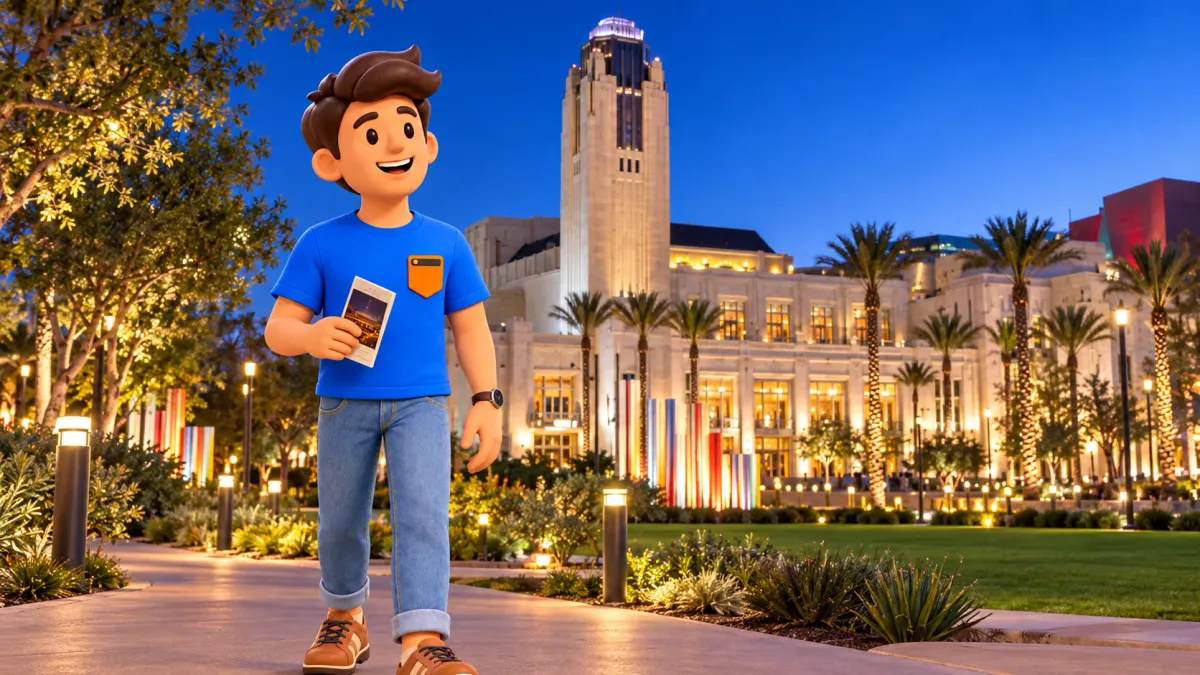
Symphony Park gives a short Las Vegas walk a clear visual theme: stone, color and curved metal. Around The Smith Center, a few buildings and outdoor artworks make it possible to slow down without needing a full day of museums or a long list of attractions.
This route begins with the exterior of The Smith Center, continues to Pipe Dream and a park pause, then adds a view of the Cleveland Clinic Lou Ruvo Center for Brain Health. Allow about two hours for looking, photographs, crossings and rest. That is a planning allowance rather than a measured navigation time, and it excludes transport, a concert, a tour or a full meal.
Keep the outing compact and outdoors
RoadMe makes this idea much easier to use by developing a personal route around your interests, available time and pace. The app can work the whole trip into a plan, giving architecture, art or a performance the space that suits your visit.
Use The Smith Center at 361 Symphony Park Avenue as your first anchor. Its main building, the nearby sculpture and the surrounding public paths provide a manageable introduction. The Lou Ruvo complex at 888 West Bonneville Avenue supplies a different architectural language for the final part, if you still want another stop.
Think of the park as the pause within the route, rather than another destination to complete. You do not need a fixed number of photographs or a visit to every nearby building. A short outing works best when you give a few contrasts enough attention to become memorable.
Follow currently permitted public paths and designated crossings between the places you choose. This remains part of a functioning urban area, with entrances, traffic and changing uses of space. Temporary works or event arrangements may affect your preferred approach, so keep enough flexibility to shorten a section without losing the main idea.
Begin with The Smith Center’s stone and lines
The Smith Center opened in March 2012. Its Indiana limestone and Art Deco influences create a strong, ordered presence, with a bell tower that provides a useful visual anchor. From a comfortable public viewpoint, notice the balance between the larger mass of the building and its more detailed surfaces.
First look at the overall composition before trying to identify individual features. Which lines guide your eye upwards? Where does the entrance become clear? How does a pale surface respond to sunlight compared with a shaded recess? These simple observations make the façade approachable without a specialist vocabulary.
Move only where access is permitted and where you can avoid blocking arrivals. A performing arts venue has people using its entrances for practical reasons, especially around an event. Looking carefully from a little farther away can reveal more of the composition than standing immediately beside the door.
Do not assume an exterior walk includes a view inside Reynolds Hall or another performance space. A concert ticket, confirmed tour or other authorized visit has its own arrangements. The building remains a worthwhile stop from outside, so the route does not depend on an unplanned doorway being open.
Read Pipe Dream as a visual rhythm
Pipe Dream, near the center’s east side, changes the mood from pale stone to bands of color. Tim Bavington’s painted steel pipes translate Aaron Copland’s Fanfare for the Common Man into visual form. The work was installed in 2011, adding a musical idea to the outdoor setting before the center opened.
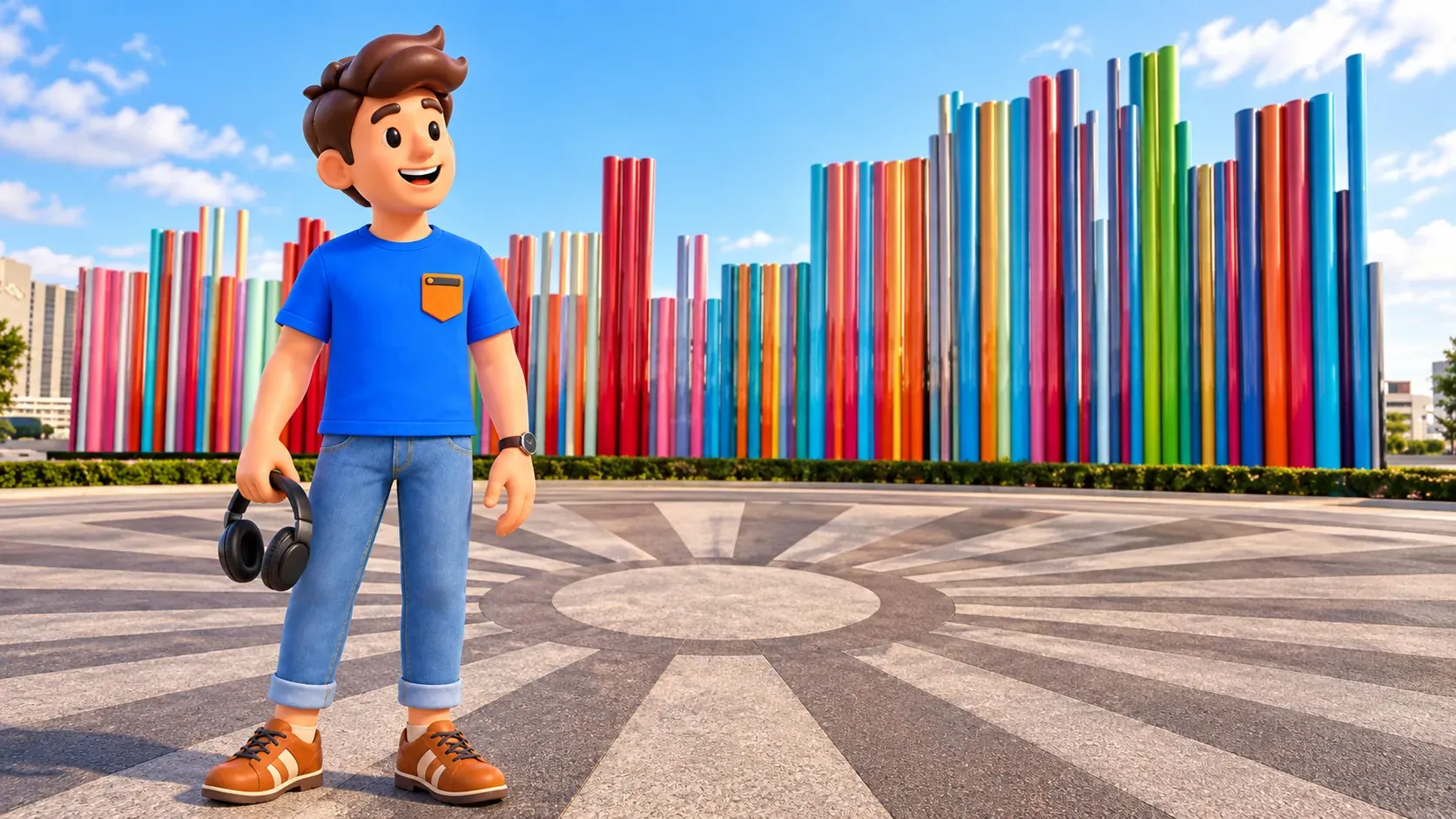
You do not have to know the composition to enjoy the sculpture. Start with the rise and fall of the pipes, then notice where a color repeats or a height changes. A long arrangement can be read as a sequence rather than one shape, encouraging your eye to move along it.
Try a second look from another permitted position. The relationship between separate pipes may become clearer, while the colors and background change their emphasis. You can think of this as finding a different way to look at the same work, without needing to identify a precise musical note.
The sculpture is not an instrument for visitors to strike or climb. Let its connection with music remain an idea to observe. For a photograph, keep enough surrounding space to explain its setting and avoid obstructing others. A few considered frames are usually more satisfying than a long session spent searching for an entirely empty background.
Let the park provide a real pause
After the sculpture, use an available permitted place to stop rather than immediately adding another attraction. The park’s paths and planted setting help change the pace. Check the actual shade and seating you find on the day, instead of assuming every part of the outing will offer the same comfort.

Take a moment to compare the first two stops. The Smith Center’s façade and the colored pipes both use repetition, but the effect is different. One may feel ordered and architectural, the other closer to a changing rhythm. Your impression need not match anyone else’s for the comparison to be useful.
This is an especially good place to decide how much more you want to do. If the walk is a quiet interval in a busy itinerary, the first building and sculpture can already be enough. Keeping the next stop optional helps the outing remain a pleasure rather than a small obligation.
Bring water and plan around the temperature. A green setting does not guarantee a continuous shaded route, and reflected light can remain strong around pale or metallic surfaces. In hot conditions, shorten the outdoor section or choose a more comfortable time, leaving a proper indoor break elsewhere in your day.
Continue to the Lou Ruvo building for a change of form
The Cleveland Clinic Lou Ruvo Center for Brain Health presents a sharply different exterior, designed by Frank Gehry. The complex was completed in 2010. Its curling metal-clad forms make an expressive contrast with the straighter lines you have just seen, offering a natural final comparison for a short architecture walk.
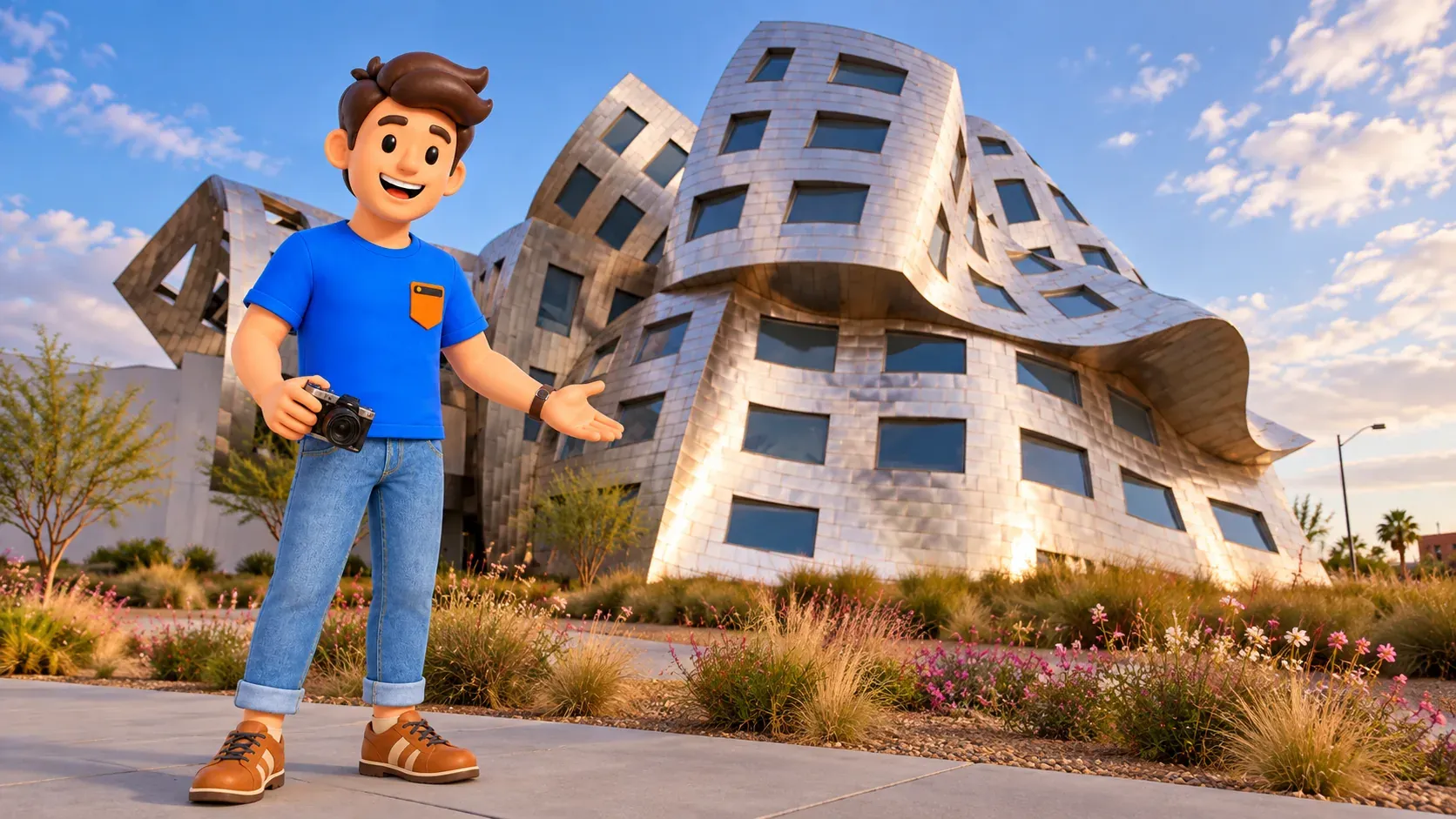
Begin with the broad outline rather than searching for the most dramatic close-up. Notice how curves turn light and shadow across the surface and how openings interrupt the metal. A slight change of viewpoint can alter what looks heavy, light, folded or open. You do not need to settle on one metaphor for the building.
The familiar sculptural exterior belongs to a complex with medical and event functions. This route is an outside architectural view, without a promise of entry into the clinic, event space or private grounds. Use public permitted positions and keep patient, staff and service access clear.
Photograph the architecture rather than the people arriving for appointments. An interesting building does not make visitors’ personal circumstances part of the sightseeing experience. A broad exterior frame can express the design without approaching doors, looking through windows or interrupting anyone’s use of the place.
End this part when the contrast feels clear. You have moved from stone and ordered lines to color and then curved metal. There is no need to inspect every elevation or add unrelated nearby landmarks to make the route feel complete.
Add a performance only as a separate plan
A Smith Center performance can make a rewarding continuation if the program matches your interests and tickets are available. Choose the event first, then work backwards from its entry requirements and start time. A two-hour exterior walk is not a substitute for the time needed to arrive, enter and enjoy the show.
If you plan to finish at the venue, reversing part of the sequence may make sense. Keep the medical building’s exterior view earlier and leave The Smith Center for your final approach. The route is an idea to fit your actual day, rather than a fixed order worth defending against your own booking.
Give dinner or a substantial meal its own allowance as well. Trying to include several outdoor stops, a meal and a performance in the same short window can remove the relaxed quality that makes this area appealing. Fewer stops often create a better experience when an evening commitment is fixed.
RoadMe can develop the wider journey into a personalized plan, balancing architecture with the cultural experiences you most want. It is a more convenient way to organize priorities and time across the whole trip, while keeping a pace that feels comfortable.
Make the comparisons your own
This walk suits visitors who enjoy a small number of things seen carefully. With children or companions less interested in architecture, keep one question at each stop: which shape stands out, which color repeats or which material changes most in the light? Simple observations invite participation without turning the outing into a lesson.
If you prefer photographs, choose a different purpose for each one. An overall façade can show scale, a section of pipes can show rhythm, and a broader view of the metal building can show its shape. You do not need the same pose or a complete record at every stop to preserve the experience.
For travelers who need frequent seated breaks or short distances, choose fewer places and check present conditions before leaving. Public paths alone do not establish suitability for every individual need. A comfortable visit to the center’s surroundings may be a better choice than extending the route simply because another striking building is nearby.
Finish with one contrast that stayed with you. Symphony Park works well as a modest chapter of a Las Vegas trip: several distinct ways of shaping public space, enough context to look more closely and time to enjoy the differences without rushing.


