Which Strasbourg museum should you choose if you only have time for one?
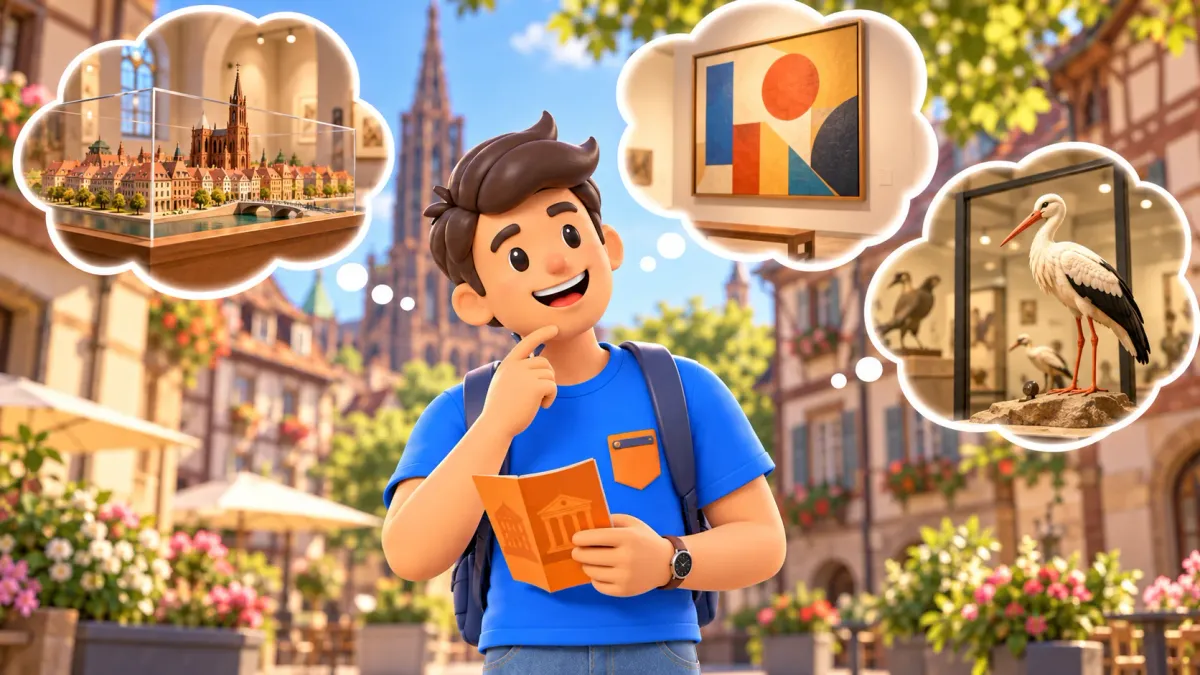
If you have time for one museum in Strasbourg, consider the Historical Museum for an introduction to the city itself. Choose the Œuvre Notre-Dame Museum if the cathedral has particularly caught your imagination. For painting, consider Fine Arts or the Museum of Modern and Contemporary Art; for drawing, Tomi Ungerer; for nature, the Zoological Museum. Your interests should decide.
One museum can be the main visit of the day. Give it a nearby walk and some rest, and leave other collections for another trip. These six directions help you choose a subject and fit it into Strasbourg without working through the entire museum list.
Start with what you want to understand
Ask what attracts you now: residents’ lives, medieval sculpture, painted light, experiments with form, expressive lines or the living world. This is more useful than a general intention to visit a good museum. It connects the choice with something you have already noticed in the city.
Consider how you enjoy looking, too. Some visitors like reading around one object; others prefer comparing images, noticing colour or discussing a discovery with a child. A celebrated collection may require a different mood and attention span from the ones you bring today. Choose a visit you can enjoy at your own pace.
RoadMe makes it much easier to build a personal day around your interests, working out a route for your dates, pace and budget. Try giving it a favourite theme so your museum, walk and rest become part of a complete trip plan.
| What interests you? | Consider |
|---|---|
| How Strasbourg lived and changed | The Historical Museum |
| The cathedral and Upper Rhine art | The Œuvre Notre-Dame Museum |
| European painting | The Fine Arts Museum |
| Experiments with form and materials | The Museum of Modern and Contemporary Art, MAMCS |
| How drawings tell stories | The Tomi Ungerer Museum |
| Animals, ecosystems and scientific observation | The Zoological Museum |
City history and the art of the cathedral
The Historical Museum: understand Strasbourg through its people
This is a useful first choice if you want to connect different impressions of Strasbourg. The museum occupies the former butchers’ building, constructed in 1587–1588. Its setting already recalls a centre shaped by trade, crafts and everyday work, with familiar monuments surrounded by a working urban world.
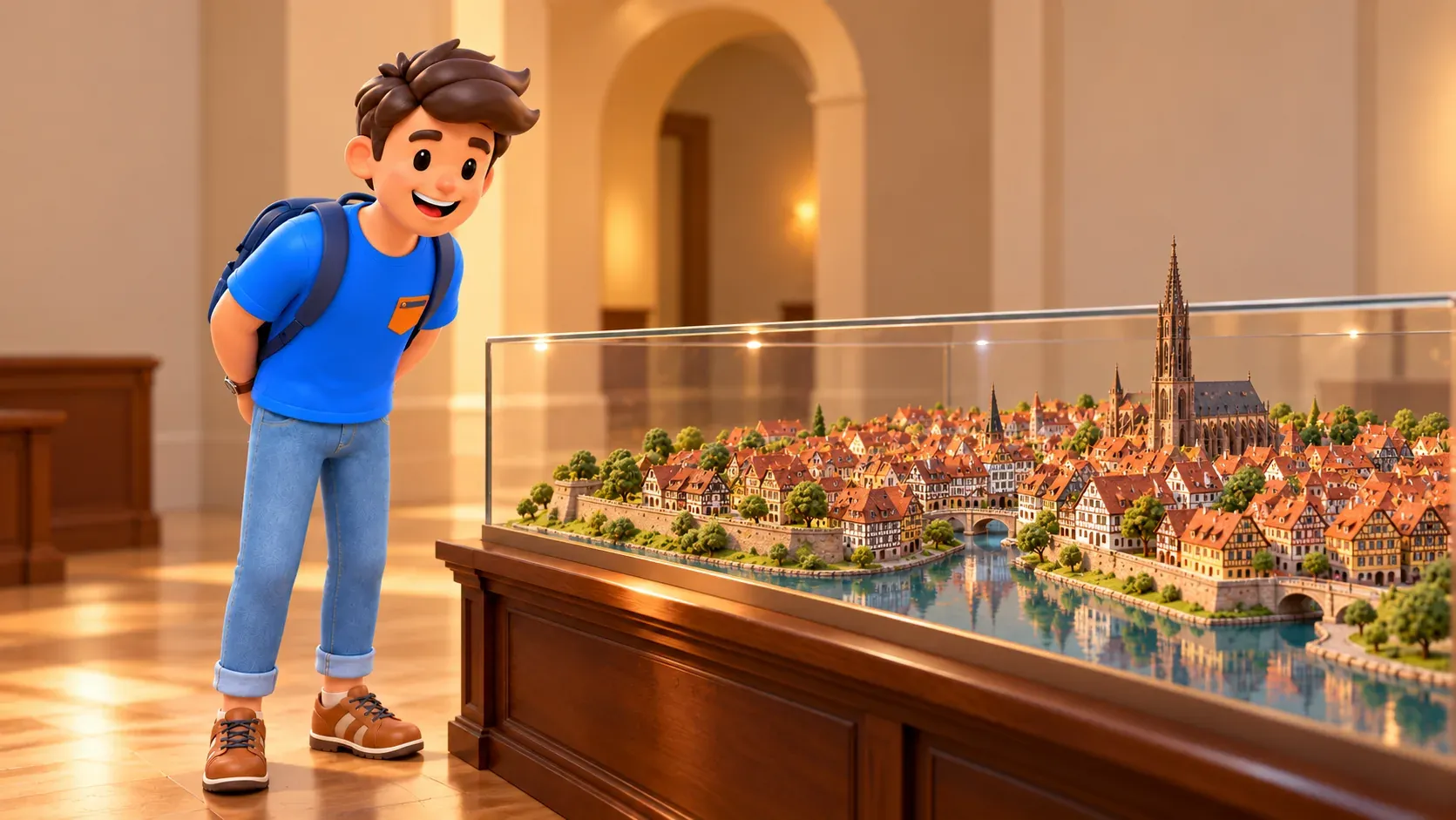
The collections trace the city from the Middle Ages to the creation of European institutions. Objects raise questions about living conditions, social roles and civic symbols. The three-dimensional city plan of 1727 is particularly helpful for relating neighbourhoods, waterways and fortifications. Afterwards, an outdoor walk can become more attentive to how the town fits together.
For a short visit, follow one thread: daily life, changing borders or water and the city. You need not read every explanation to leave with a clear idea. A few questions that continue outside can be a satisfying result.
Œuvre Notre-Dame: continue your encounter with the cathedral
If you wanted a closer look at carved faces and drapery outside, this museum answers that interest. Its medieval and Renaissance collections focus on the Upper Rhine, with original cathedral sculptures playing an important role. Objects become readable at a scale that is difficult to achieve from the square below.
Look at a turned head, the movement of a figure or the treatment of a surface, then recall the larger façade. The historic museum buildings strengthen the connection with the city’s artistic environment. This is a separate museum opposite Palais Rohan, with its own entrance and visiting arrangements.
Our walk around the cathedral quarter makes a useful partner. Discover the setting first or return after the collection with a more focused eye. The platform ascent and clock presentation remain separate plans.
European painting and a modern view
Fine Arts: light, space and the human figure
The Fine Arts Museum in Palais Rohan suits time spent with paintings. Its European collection runs from early painting to 1870. You can concentrate on portraits, landscapes or still lifes, comparing how artists create depth, describe fabric or faces, and make light visible.
The collection has its own difficult history of rebuilding after serious losses. Its interest includes the city’s effort to preserve art as well as the succession of periods. For a limited visit, choose a few works that hold your attention. One carefully observed detail may stay with you longer than a hurried list of famous names.
A palace address does not automatically include all its museums or historic interiors. Rohan houses separate collections. Here the choice is painting; if antiquities or furnished palace rooms matter more, identify that particular museum before planning the visit.
MAMCS: explore changing ideas of art
The Museum of Modern and Contemporary Art covers creation from 1870 to the present. It suits visitors interested in comparing painting, sculpture, photography and work that uses space. Begin with a simple observation about colour, line or material before turning to the explanation.
The light-filled building beside the Ill opened in 1998 and contributes to the experience. Its large scale contrasts with the smaller houses of the old town. Modern art here takes different forms, and the displays and temporary exhibitions change. You do not need to expect every work to be abstract or approach everything in the same way.
This choice fits the western side of the centre, the waterways and Covered Bridges. If you want movement and open space after galleries, the setting makes sense. The museum becomes the centre of a walk rather than an extra stop between distant districts.
Drawing and nature offer other ways to look
Tomi Ungerer: a story in a few lines
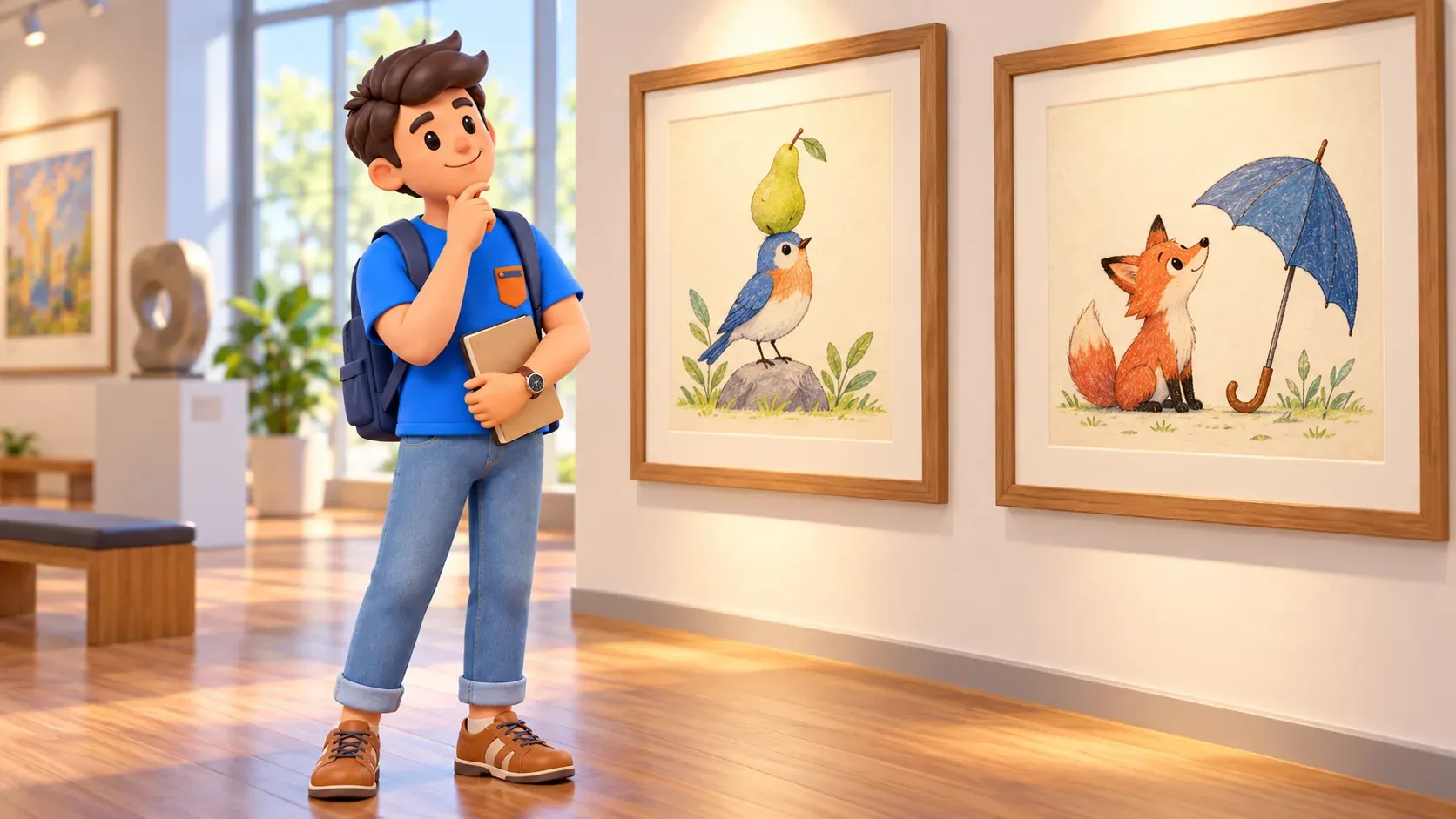
Choose the Tomi Ungerer Museum for illustration, books, posters and visual humour. The Strasbourg-born artist’s gifts to his home city formed the collection’s basis. The museum also serves as an international centre of illustration, making the conversation broader than one artist’s biography.
Notice how a pose gives a character personality and how a few lines suggest a whole situation. An image can extend words or argue with them. Afterwards, that attention may follow you into the city: signs, book graphics, silhouettes and small expressive details become easier to notice.
This is not exclusively a children’s museum. Ungerer’s work includes satire, advertising and material for adult audiences. The collection rotates, so establish what is currently presented. For a family visit, choose suitable sections and activities around the child’s interests rather than relying only on a familiar children’s author’s name.
Zoological: how collections help us understand life
The Zoological Museum suits an interest in animals, biodiversity and scientific observation. It reopened after renovation in September 2025. Its renewed approach brings historical collections together with explanations of ecosystems and contemporary ways of engaging with the subject.
The collection’s origins connect with naturalist Jean Hermann’s cabinet. That history helps explain how individual specimens became a scientific resource. Body forms, similarities between species and preservation methods offer questions to follow. This is a natural history museum, with specimens and interpretation at the heart of the encounter.
It is in the university area east of the cathedral quarter. Treat the approach as a separate part of your plan, then choose a relaxed continuation nearby. With a child, one manageable question about nature can work better than a demand to examine the entire collection.
Check the day and the sections available
Your interests make the first choice, but the calendar can change it. Under schedules checked in October 2026, the Historical, Œuvre Notre-Dame, MAMCS, Tomi Ungerer and Zoological museums normally close on Mondays. Fine Arts closes on Tuesdays. Weekday opening includes a midday break, so do not assume continuous admission through lunchtime.
Check holidays and particular restrictions for your actual date. For early November 2026, the announced municipal museum closures on 1 and 11 November matter. If Monday is your only free day, our Monday plan for Strasbourg provides a separate way to organise the visit.
Some notices are easily misunderstood. The Alsatian Museum is closed for works at the time of checking. Fine Arts has closed upper galleries, which does not mean the main museum is closed. Rohan’s Decorative Arts Museum has a partial closure from 21 September to 19 November 2026, so an ordinary visit to the palace apartments cannot be assumed.
Rotations and loans also alter what is displayed. Confirm a specific painting separately if it is your reason for travelling. A broader museum choice works best when the theme remains appealing without one famous object. Read ticket conditions for the selected museum rather than assuming entry to every neighbouring collection.
Give one museum a realistic share of the day
Roughly 60–90 minutes can frame a focused introduction to your chosen subject. This is an editorial estimate for part of the display, excluding queues, entry procedures and travel. It does not promise a complete visit. Reading extensively, joining an activity or looking carefully at a temporary exhibition needs more time.
Choose a small outcome in advance: understanding the city model, comparing two carved figures, noticing different treatments of light or following one natural process. This makes it easier to decide where to linger. Your attention need not be distributed evenly across every room.
Afterwards, leave 20–30 minutes for rest and perhaps 45–60 minutes for a nearby outdoor area. With short local connections, that can form an estimated two-to-three-hour programme. A long meal, substantial waiting and journeys from or back to your accommodation are additional.
Let the next walk give the collection context
After the Historical Museum, Œuvre Notre-Dame or Fine Arts, stay around the cathedral quarter and nearby water. After MAMCS, head towards the Covered Bridges and Petite France; our walk through that district helps choose a continuation. After Tomi Ungerer, the Place de la République area is a natural option; after Zoological, consider the university surroundings.
RoadMe works out a complete personal route or trip plan around your interests and available time. The app makes it much more convenient to connect your museum with suitable districts, walks and rest across your days.
The purpose is to give the museum experience an urban setting. Sculpture draws attention to carved surfaces; illustration to silhouettes; history to traces of earlier occupations. You do not immediately need another collection to make the visit worthwhile. Sometimes walking a familiar street with a new question is enough.
Make the final choice personal
With no strong preference, consider the Historical Museum as a way to understand Strasbourg itself. With an established interest, trust it: a love of drawing or nature may matter more to you than a first introduction to civic chronology. Then check the calendar and keep enough attention for that one visit.
A satisfying museum day leaves a specific discovery: how a carved figure works, why the city changed or how scientists compare species. That is enough for your chosen collection to become a personal part of the trip and influence the walk that follows.