
Strasbourg Engineering Walk: Bridge, Lock and Ice Works
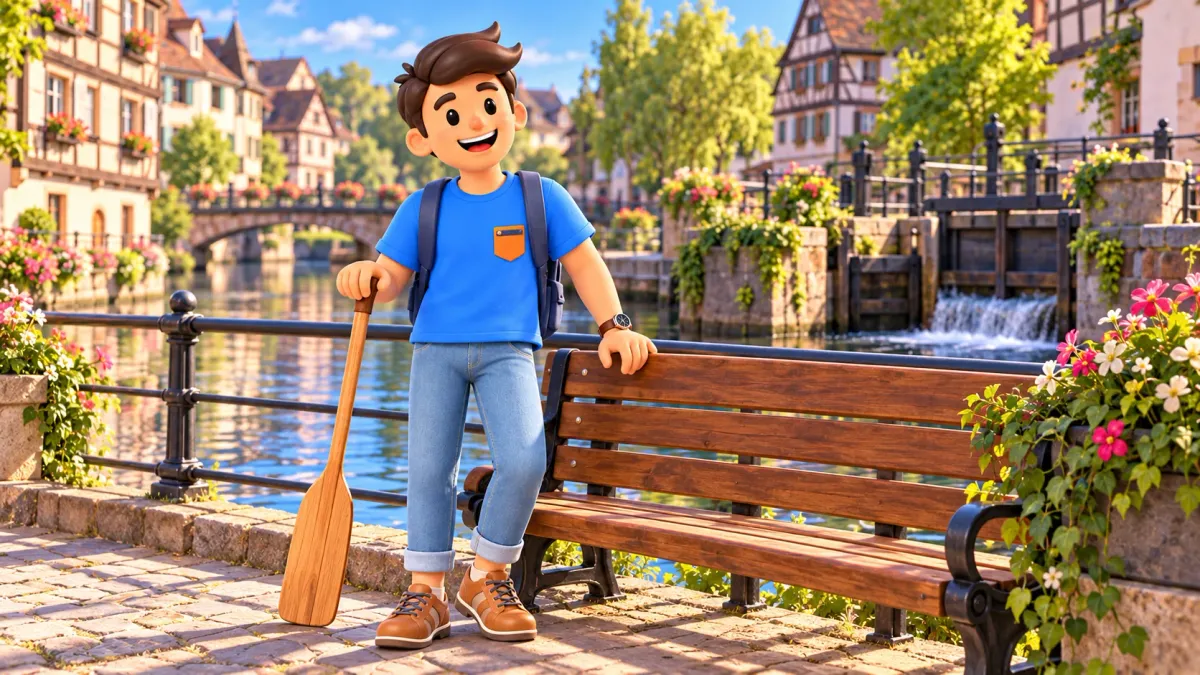
In Petite France, it is easy to notice only timber framing and reflections. Another story lies within the familiar view: a bridge clears a channel, a lock helps a boat cross a difference in water level, and an old ice factory recalls how river power supported artificial refrigeration.
This walk connects Pont du Faisan, the former Anciennes Glacières buildings and the nearby Petite France navigation lock. Allow roughly 75–90 minutes for the outdoor version, including observation and a pause. This is a planning estimate rather than a measured walking time. Seeing the historic ice machinery inside requires separate confirmed access and additional time.
Plan a compact engineering walk
Start at Pont du Faisan in the Rue des Moulins area. Continue to the former ice works, now within the Hôtel Régent Petite France complex, and finish by the neighbouring navigation lock. The places are close together: observation, rather than long transfers, accounts for much of the time.
RoadMe makes it much easier to work out a personal plan for this walk or a whole trip, matching your interests, dates, pace and budget with suitable stops. Try shaping a day around what you enjoy, with room to watch and rest.
The core walk introduces outdoor structures and the setting of the factory. The preserved machines themselves are inside the hotel complex. A hotel operating around the clock does not establish unrestricted public access to its industrial heritage.
Neither the bridge nor the lock provides a scheduled show for pedestrians. Their layout can make sense even when a boat is not passing. If an approach is restricted, use an available public alternative; a closed bank is no reason to continue through a service area.
Pont du Faisan: a crossing that moves sideways
Pont du Faisan is also known as the Pont Tournant, or swing bridge. It solves an apparently simple problem: people need to cross the channel while vessels need to follow it. A fixed low crossing would obstruct some river traffic.
The span turns in a horizontal plane, freeing the water passage. This differs from a lifting bridge: the deck does not rise high above the channel but temporarily changes its position when viewed from above. Afterwards the pedestrian connection returns.
The structure belongs to the nineteenth century and has undergone subsequent renewal, including renovation in 1999. Working infrastructure cannot be understood only through the age of every plank or metal part. Its historic function survives through maintenance, replacement and coordinated operation.
From a public bank, look for the boundary between the fixed approach and the movable deck. Railings, joints and the span's position help you distinguish the crossing from the banks. You do not need to see a hidden mechanism to understand the result.

If the bridge begins to turn
During an actual operation, remain behind the restrictions and follow staff instructions. The crossing is cleared before space becomes available for a boat. A clear position on the bank is more useful for observation than a tight group beside the moving edge.
Notice that more than metal or timber changes position. The pattern of movement changes too: some people wait, others choose another path, and a vessel proceeds by water. A small structure coordinates two different urban flows.
Avoid arranging an appointment just beyond the bridge on the assumption that crossing takes only seconds. Working infrastructure may involve a wait. However, you need not wait indefinitely for another rotation: two different engineering stories remain on the walk.
The old ice works: a factory behind the view
The next subject is the Anciennes Glacières de Strasbourg on Rue des Moulins. The site is now part of the Régent Petite France hotel complex, with historic equipment preserved inside. An exterior stop introduces the production site and its relationship with the river rather than revealing the complete machinery.
Ice production developed in former mill premises at the end of the nineteenth century; the factory installation dates to 1897. Expansion followed in 1903 and 1912. This part of the river already had a history of supplying mechanical power, and the new enterprise used that inheritance.
Food traders, brewers and butchers needed ice. Before domestic refrigerators became widespread, keeping goods cold required different arrangements for production, storage and delivery. The factory therefore belongs to the history of everyday food supply as much as to the history of machines.
Consider the ordinary need behind the equipment: food must remain usable, trade continues daily, and temperature does not follow the market's timetable. Ice production turned that need into an organised technical process. Picturesque water was also part of the city's economy.
How river power relates to artificial cold
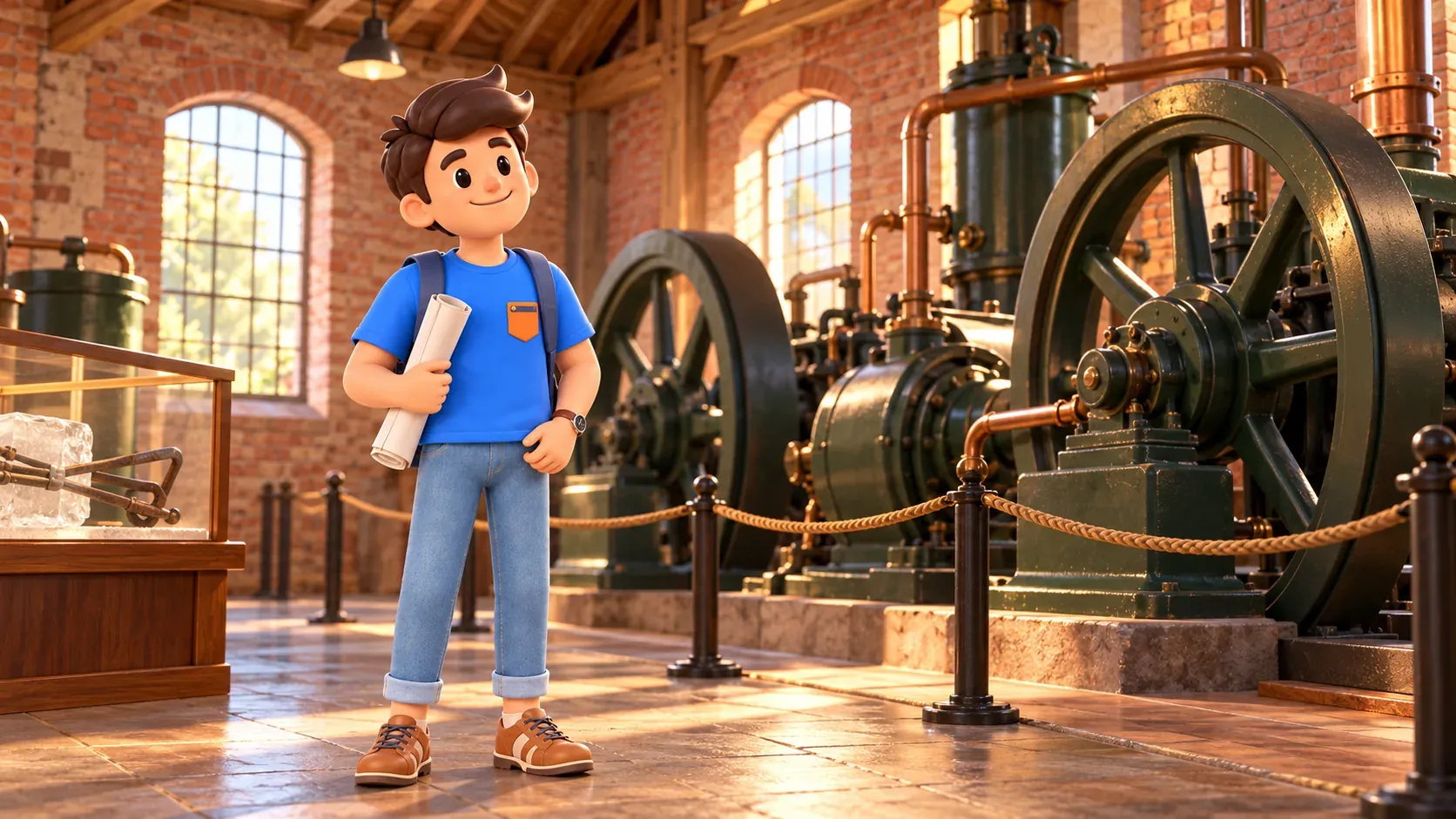
Using river energy should not be confused with freezing the river itself. The preserved installation includes hydraulic turbines, generators and refrigeration equipment. Water supplies movement and energy, while producing cold involves a separate system of machinery.
For a first introduction, think in three parts: the energy source, its transmission and the refrigeration equipment. A turbine uses moving water, a generator produces electricity, and compressors and condensers form part of the refrigeration chain. These are different jobs within one enterprise.
On a confirmed visit, you need not identify every pipe immediately. Start with the main groups of equipment, using the host's explanation. Their different housings and connections become easier to understand once their broad tasks are clear.
Behind the apparent complexity is a familiar urban result: ice for preserving food. Connecting a large machine with ordinary life makes industrial heritage rewarding even for visitors who have little interest in detailed technical drawings.
When can you see the ice machinery inside?
Plan interior viewing only after confirming an actual offer for your date. Special visits take place, including heritage-day openings, but an old programme does not establish permanent public access. Check the format, meeting point and conditions with the organiser.
A confirmed visit becomes a separate part of the day, with its own duration. Do not fit it automatically into the original 75–90 minutes. Without confirmation, the outdoor route remains meaningful, but it would be misleading to promise a full look at the equipment.
Access conditions matter particularly for visitors with limited mobility or a pushchair. Special programmes note stairs and narrow passages. Ask about the actual visit beforehand rather than drawing conclusions from the presence of a modern hotel in the building.
Preserved machinery does not imply continuous ice production or an obligatory demonstration during a tour. Ask the host about any operation. Seeing industrial heritage and watching a complete production process are different experiences.
The Petite France lock: change level, not the bridge
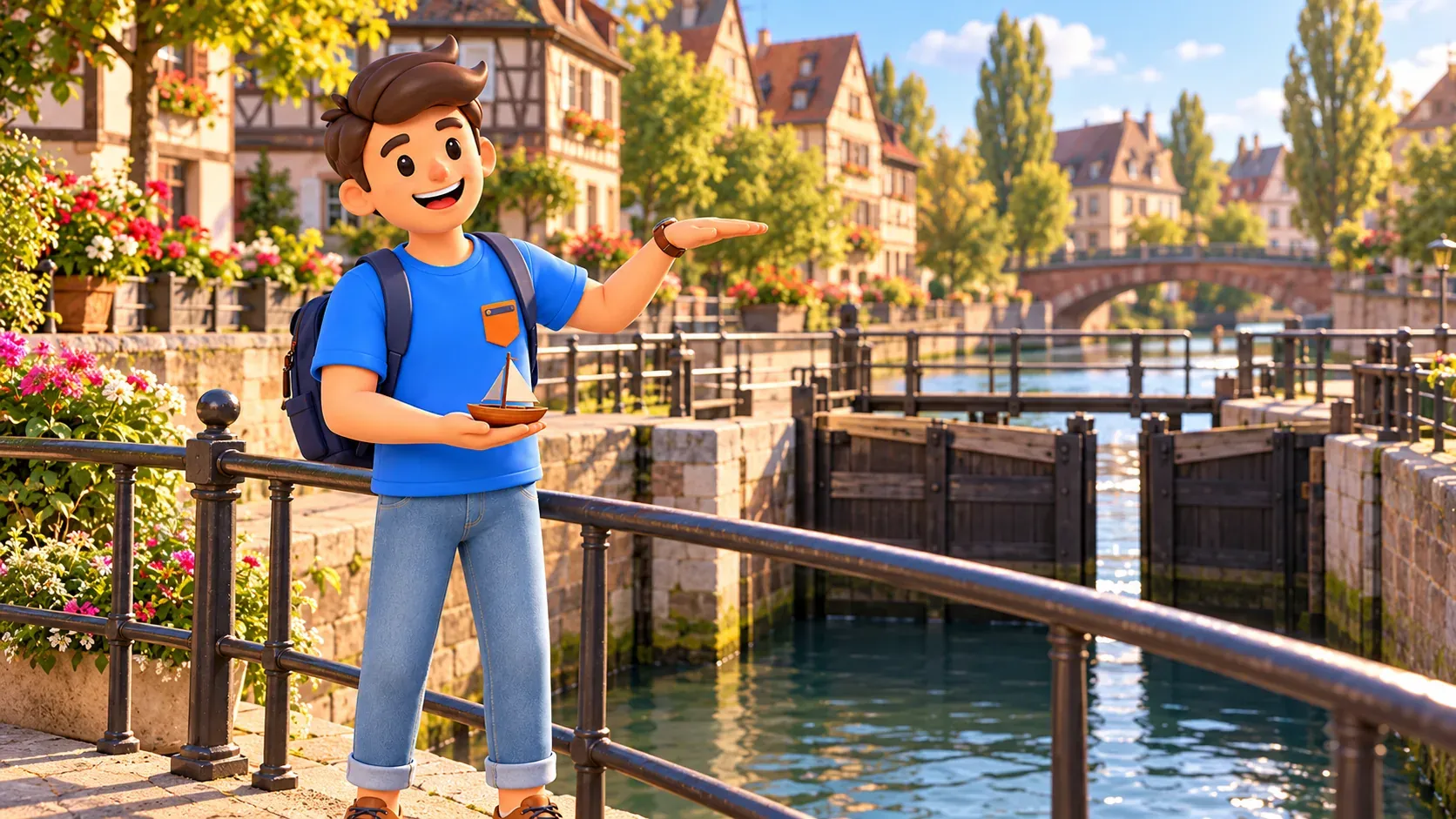
At the neighbouring lock, attention moves from industry to navigation. This is lock A beside the former ice works. Strasbourg has other water structures, so the word “lock” without a location can lead you to a different place.
Gates separate a chamber from adjoining sections of channel. Once a vessel enters, the water level inside changes until it matches the required side. The boat moves vertically with the water before continuing through the open exit.
The principle does not require a separate crane to lift the entire vessel. An enclosed stretch of water, gates and controlled water exchange do the work. That is why a lock and a swing bridge solve different problems despite standing close together.
Find the chamber boundaries and the gates from the available public side. Even without a passing boat, you can identify the division of water into controlled sections. Maintenance, river conditions and vessel movements determine the actual operation.
Watch a lock passage without rushing
If a passage happens during your visit, follow the sequence: entry, isolation of the chamber, change of level and exit. You need not see an entire cycle to grasp the principle. Keep the water's movement distinct from the neighbouring pedestrian bridge's rotation.
Choose a fixed feature on the opposite side as a visual reference for a vessel's changing height. Stay away from the edge and from technical equipment. Specialists operate the structure; your walk remains observation from public space.
A quiet moment without a boat is still useful. Imagine the chamber as a small part of the channel that can temporarily be separated from the rest. This simple mental exercise reveals an engineering structure within familiar city water.
Three jobs in one watery setting
At the end, try naming three actions: clear a passage, obtain energy, change a level. They correspond to the bridge, the industrial site and the lock. Water connects their histories, but each structure has its own function.
The neighbourhood is therefore more than a stationary backdrop. Some systems continue working, while others preserve an industrial memory within a building's new use. A change of purpose does not erase the earlier relationship between architecture and river.
For another view of nearby structures, save the fortifications, bridges and Vauban Dam walk. There, water relates primarily to defence; here, movement and urban production lead the story.
Keep the outing comfortable for your group
With children, one question per stop is enough: what moves, where does energy come from, why does the boat change height? The outing need not become a physics examination. Everyday words and visible results provide a useful starting point.
Try continuing your plans in RoadMe. The app helps work out a personal trip around your interests, whether engineering, history or waterside walks, making it easier to combine your group's preferences, rest and the overall pace of the day.
Leave room for crowds, a wait at the bridge and a short break. Wet surfaces and narrow passages affect comfort. With a pushchair or difficulty walking, check the actual available path rather than relying only on how close the places appear.
The core outdoor walk requires no boat ticket. A separate cruise, an interior visit or a café stop has its own conditions and costs. If neighbourhood views are your main interest, consider the Petite France walk.
Finish by the lock once its purpose becomes clear. There is no obligation to wait for another boat. A short circuit between three nearby places already reveals the movement, energy and everyday engineering behind Strasbourg's postcard view.


