
St Paul’s to Tate Modern: an Architecture Walk Across the Thames
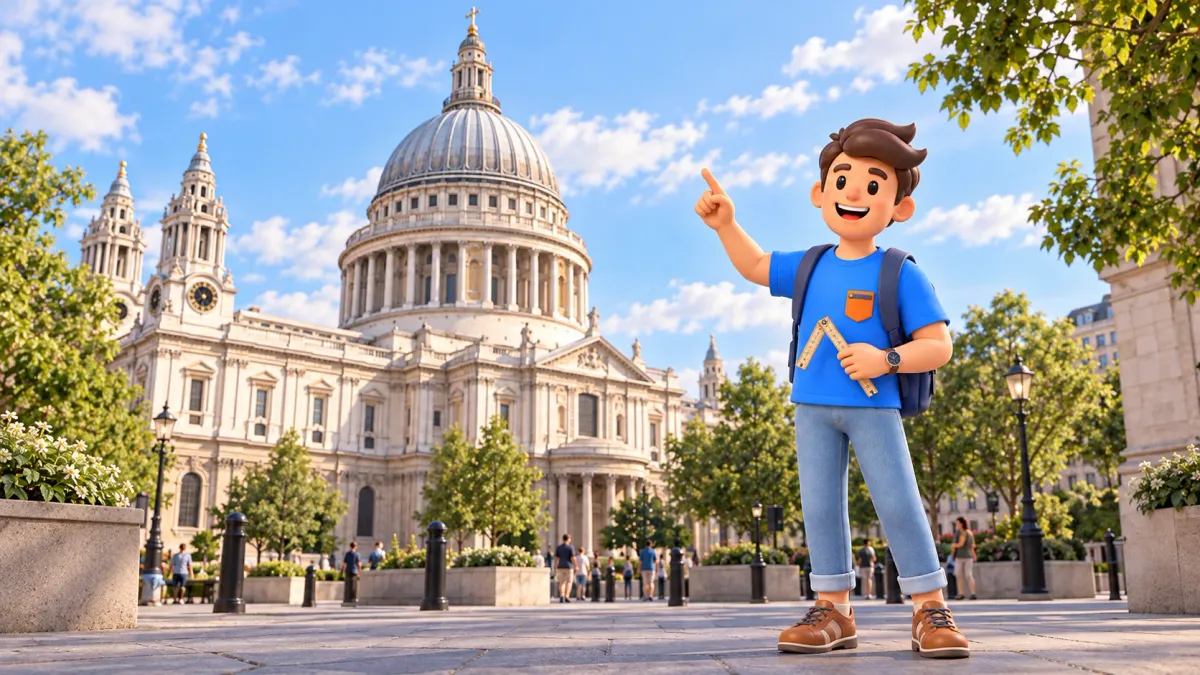
For a short walk connecting two different faces of London, start outside St Paul’s Cathedral, cross the Thames on Millennium Bridge and finish at Tate Modern. The route moves from pale stone and a great dome to a low steel crossing and a former power station. Allow around an hour and a half to two hours for the outdoor version, with time to look and pause.
The direct connection is much quicker than that. This is a small architectural outing, rather than a way to fill the same period with continuous walking. A full cathedral visit, a dome climb or time in Tate’s galleries needs an additional allowance. Decide which experience matters most before placing a later reservation on the other side of the river.
Choose the outdoor walk first, then add an interior
Begin around St Paul’s public exterior and make your way towards its southern side. Follow the available public route towards Peter’s Hill, using the pedestrian crossings for Cannon Street and Queen Victoria Street. Continue to the northern approach of Millennium Bridge, cross to Bankside and finish around Tate Modern’s riverside exterior. The bridge provides the link; you do not need a second crossing or a long riverside extension.
With RoadMe, it is much more convenient to develop this outline into a personal London day or trip based on your interests, dates, pace and budget. The app helps you plan the whole programme, giving cathedral history, modern art and time outdoors the balance that makes sense for you.
Allow roughly a kilometre including movement around the buildings and viewpoints. This is an editorial estimate, not a measured walking track. A useful division is half an hour around the cathedral, half an hour for the approach and bridge, and half an hour outside Tate, with extra room for a short pause. Transport to the start, onward travel and any indoor visit are additional.
Keep the route’s simple direction in mind: cathedral, river crossing, gallery building. It is easy to use nearby names as reasons to add another museum, rooftop or market, but every extension changes the outing. Three well-observed places can form a complete experience. If one interior is your priority, give it its own time instead of expecting the outdoor schedule to absorb it.
Look at St Paul’s as a building made for the skyline
Start with a broad view from an available public pavement or open space. Notice how the dome rises above the lower body of the cathedral, and how columns and repeated openings give the stonework rhythm. Then move closer to a detail you can see comfortably from ground level. You do not need to identify every architectural term to appreciate the contrast between the large shape and its smaller parts.
The present cathedral belongs to the rebuilding that followed the Great Fire of London in 1666. Christopher Wren’s design became one of the City’s defining forms; the new St Paul’s was officially declared complete in 1711. That history gives the opening stop a story of rebuilding, rather than simply an impressive backdrop. The building was made through the work of many people, not an architect’s drawing alone.
For this walk, the exterior is the main encounter. An indoor visit has a different scale and purpose: the cathedral floor, crypt and dome galleries cannot all be treated as a passing glance. If you want that experience, plan it before the walk or give the day a larger time allowance. A dome climb also changes how much energy you may want to spend on the rest of the outing.
St Paul’s is a working cathedral. Normal sightseeing is ticketed and operates from Monday to Saturday, subject to the actual calendar. Sunday is for worship and private prayer rather than ordinary sightseeing. Services are free to attend, but they are not a substitute for a sightseeing ticket or an opportunity to tour during worship. Check the date-specific arrangements if entering is important to your day.
Let Peter’s Hill make the transition to the river
From the cathedral area, use the public pedestrian route towards Peter’s Hill and the Thames. The main-road crossings are part of the journey, so follow the current pedestrian signals and arrangements at Cannon Street and Queen Victoria Street. A line between two landmarks on a map is not a promise of uninterrupted pedestrian space. Keep enough attention for the ordinary city between the grand views.
As the street opens towards the crossing, compare the cathedral’s vertical emphasis with the low line ahead. The bridge is a useful destination in its own right, not merely the quickest way to reach the gallery. If you are walking with children or someone who prefers fewer stops, choose one place for a look back and one place on the bridge, rather than stopping every few steps.
The approaches involve changes of level. This outline does not certify a fully step-free connection, and a convenient stair is not the only access question to check. If you need a route avoiding steps, confirm the actual public ramp approaches and your station connections before setting out. Leave room in the day for the connection that suits you, rather than assuming everyone will follow the same shortcut.
Cross Millennium Bridge and look in both directions
Millennium Bridge is a steel pedestrian crossing linking the City around St Paul’s on the north side with Tate Modern at Bankside on the south. It opened in June 2000. Its low structure leaves the river and the buildings prominent, which makes the change between the two banks easy to read. Compare the fine lines of the bridge with the much larger architectural masses at either end.
As you cross southwards, Tate’s brick building becomes your destination. At a suitable place, pause briefly and look back towards St Paul’s. The cathedral now belongs to a longer urban view, with the bridge drawing your eye towards it. You have not added another landmark, but you have changed the way you see the first one. That is one of the rewards of walking this short connection.
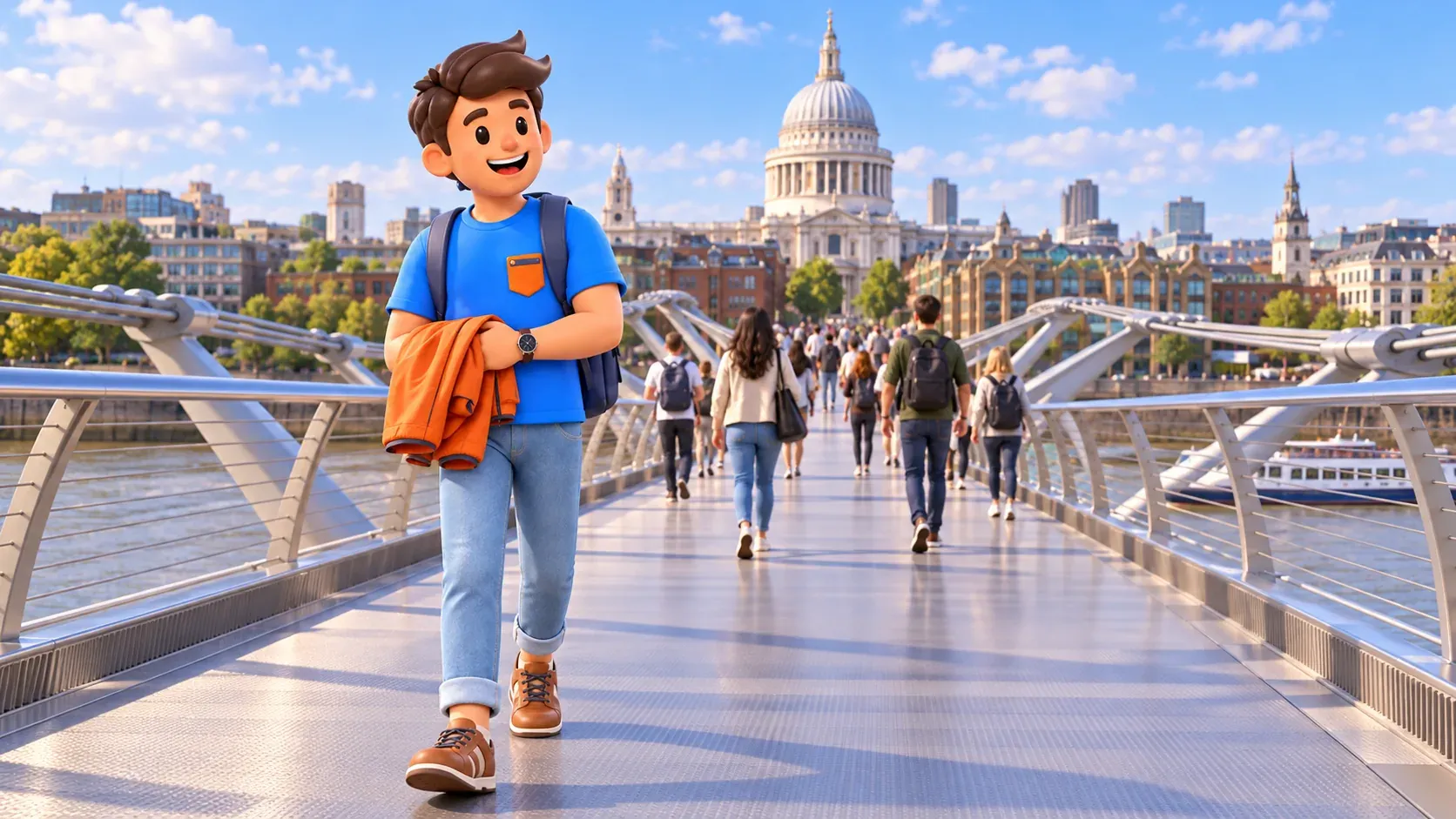
Leave space for people continuing across, and step aside before concentrating on a photograph. Wind and rain can make a pause less comfortable, so choose clothing for the forecast rather than for the distance alone. Check current bridge notices before travelling; an outdoor crossing remains subject to temporary arrangements. Do not build a tightly timed reservation around a photograph that depends on an empty walkway.
Recognise the power station inside Tate Modern’s architecture
On the southern bank, give Tate Modern’s exterior time before looking for an entrance. Broad brick walls and the powerful industrial outline form a different kind of monument from the cathedral. The change of material is part of the route’s story. Stone, steel and brick have each helped shape a public place, with different proportions and different relationships to the river.
Herzog & de Meuron converted the former Bankside Power Station into Tate Modern, which opened in 2000. The project worked with the existing building’s scale rather than replacing it with an entirely new museum shell. The Turbine Hall is central to that transformation. Understanding the earlier use gives the gallery more meaning, even if your visit today stops outside.
A later extension by the same practice followed in 2016. Its new geometric form and brick treatment add another layer to the site. Keep those stages distinct: the original conversion and the later addition are related, but they are not the same moment. You do not need to inspect every side of the complex to notice that a museum can continue changing after its first opening.

Choose one architectural detail to compare with the cathedral: the way a wall catches light, the scale of a doorway or the rhythm of repeated surfaces. This is a simple way to stay interested without turning the walk into a technical lecture. People in the same group may notice different things. Let those observations become part of the pause, rather than racing to agree on the best photograph.
Add a focused gallery visit if you have more time
Entry to Tate Modern’s collection is free for everyone. Exhibitions have separate arrangements, and the gallery recommends booking for them. Free collection access should not be read as a promise that every exhibition or event is included. Check the programme and conditions for the experience you want. Bags are checked on arrival, so leave additional time for entering rather than assuming you will walk directly into a room.
For a first taste, you could add around sixty to ninety minutes for a focused look at part of the collection. That is an editorial planning suggestion, not enough time to claim the whole gallery. Choose a small section from the current displays and let a few works hold your attention. There is no need to follow a fixed checklist of famous names whose works may not be on view.
Prepare a more useful personal itinerary with RoadMe, giving modern art, historic architecture and rest the weight that suits your interests. Planning the wider trip in the app makes it easier to decide which day deserves a longer gallery visit and where this short crossing fits naturally.
Check the gallery’s actual opening information for your date before arranging that extra visit. If you prefer to remain outdoors, the walk is already complete at the building. Neither choice needs to be justified by how many rooms you have seen. The useful question is whether you want another kind of attention now, or whether a river view and a break would suit the day better.
Finish with a pause rather than another compulsory stop
A short refreshment break can give the three places time to settle into one memory. If you choose a café, allow for its own opening hours, available seating and the time needed to order. A full meal belongs outside the short route budget. You can also simply pause in an available public space without making a purchase or searching for a particular riverside table.

For onward travel, check the connection from your actual finishing point and any access requirements. If you would like another cultural riverside walk on a different occasion, our London Eye to National Theatre route gives the western South Bank its own time. Adding it in full means extending the day. St Paul’s, Millennium Bridge and Tate Modern already tell a coherent story across the Thames.


