
Sparrow Hills and Luzhniki: Choose Your Moscow Panorama Walk
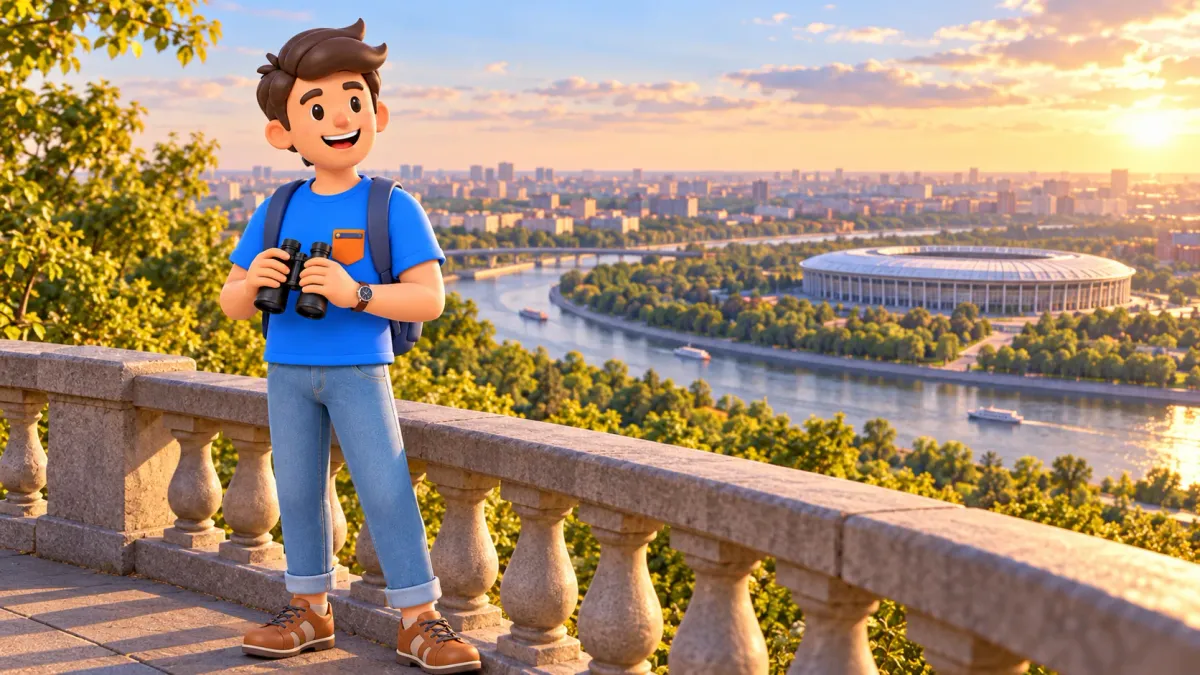
Sparrow Hills and Luzhniki make an attractive pair, but their relationship can be misleading on a map. Above are a broad city view and Moscow State University’s main building; below are the river, embankments and a sports complex on the other bank. Appearing together in a panorama does not make them a short, level walk. Choose the character of your outing before connecting the sights.
This article offers two complete options. The upper walk focuses on the viewing area and university architecture from outside. The lower walk focuses on the riverside around Luzhniki. Join them only with enough time and a suitable connection. The cable car is a separate choice subject to actual operation and ticket conditions, rather than a guaranteed section of every itinerary.
For immediate visits, note a dated restriction: the operator announced that the cable car is closed for planned maintenance from 19 to 27 October 2026. Choose an independent upper or lower walk during that period. After those dates, confirm actual reopening before relying on a ride.
Choose the hilltop or the riverside first
Allow about two to three hours for the upper area with stops, or roughly one and a half to two and a half for a short walk along the available Luzhniki embankment. A combined outing deserves around four to five hours with connections and a pause. These are editorial estimates, not measured walking times. Queues, weather and your chosen transport affect the result.
Try RoadMe for a personal route or day-by-day trip plan shaped around your interests, dates and pace. Using a programme that already combines viewpoints, architecture and riverside walks is much more convenient and efficient in Moscow than joining individual addresses while you are out.
For a short visit, one option is enough. If the main wish is to see Moscow from above, do not spend half your energy on an obligatory descent. If you want an easygoing time by the water, begin on the Luzhniki side and save the hilltop for another day. Choose the experience rather than a checklist of neighbouring objects.
Decide where you will finish before starting. Your useful metro entrance, another transport stop and the next meeting place may lie in different directions. Plan the return as well as the attractive middle of the outing. With young children, limited mobility or an already busy morning behind you, choose a smaller version and confirm its actual approaches.
The viewing area: understand the landscape
At the upper viewpoint, begin with the overall picture. The river separates a wooded slope from a broad sporting landscape, with layers of city beyond. Follow the bend in the water to connect the fragments. The panorama becomes a story about Moscow’s terrain and organisation, rather than a test of how many famous silhouettes you can name.
Before photographing, spend a few minutes finding your own subject. Look first at the nearest levels: slope, river and Luzhniki. Then move your attention farther away. Compare the stadium’s open scale with the denser city fabric behind it. Those relationships remain interesting without promising that every distant landmark will be identifiable during your visit.
Visibility depends on weather and air conditions. A particular tower may not stand out equally well every day. Mist or low cloud can move your interest towards closer forms and the university’s architecture. The viewpoint does not need to provide a perfect postcard to justify a thoughtful stop. Changing light can produce a different, equally personal impression.
Stand safely within the available area, leave circulation space and do not cross barriers for a photograph. Wind can be more noticeable here than on neighbouring streets. Decide whether you want to linger or continue the upper walk. A brief pause with a clear impression is preferable to waiting uncomfortably for ideal light while everyone grows cold.
Moscow State University: an exterior architectural focus
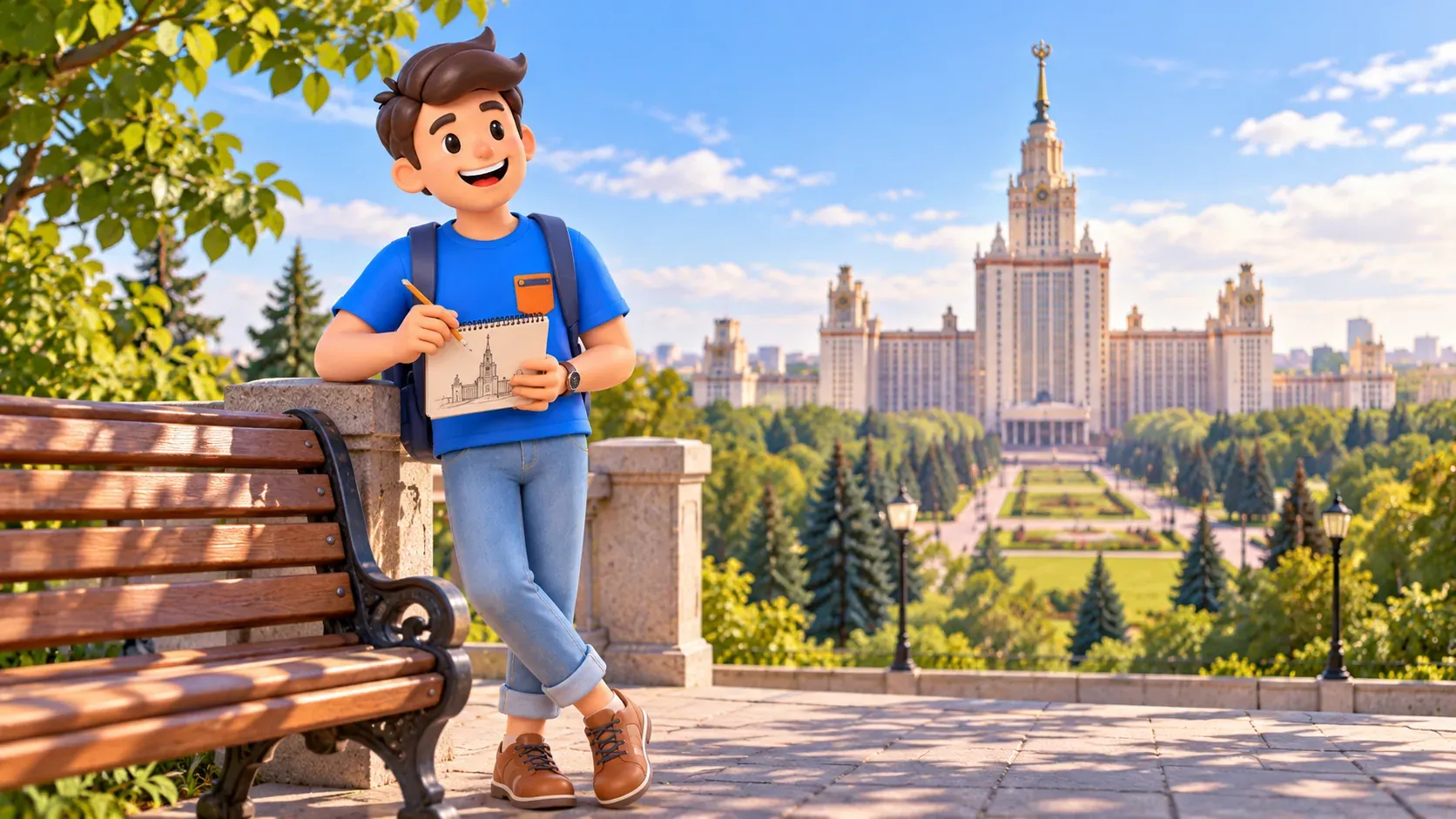
University life on Lenin Hills began in 1953. The main building offers a different scale from the river and stadium below: a tall central section and extensive side volumes form a substantial architectural ensemble. This short history helps you see a university complex rather than simply another well-known Moscow high-rise. Its educational function matters to the meaning of the place.
For this walk, use exterior views from publicly available approaches. Entry to teaching, residential and service areas is not included. Do not plan on freely entering or reaching an observation floor. A university museum or another interior requires its own confirmed visiting format and time; the presence of a famous building does not establish general tourist admission.
Begin with the overall symmetry, then choose one detail: the relationship of the central vertical to the wings, repeated windows or the scale of a formal approach. Moving changes your reading. From a distance the building acts as one sign; closer views reveal complexity. You need not circle the entire complex to understand that difference.
The distance between the university view and the main overlook also belongs in the day. This is an upper walk, rather than one position with several photographs around it. Follow permitted paths and check a useful return. If architecture is the priority, you can finish here comfortably and leave the embankment for a separate visit.
The change of level needs a decision
The upper viewing area and the riverbank occupy different levels. A short map line does not describe effort or the accessibility of a particular path. A descent can seem easy at first, while returning uphill requires something else. Plan the direction and do not treat every line through woodland as a prepared tourist trail.
The escalator gallery connects the Kosygina Street area with Vorobyovy Gory metro station on the hillside side. It helps negotiate part of the change in level, but it is not the cable car and does not carry you across to Luzhniki. Confirm its operating access and approaches for your day. A convenient structure does not remove the remaining walking sections.
If walking, use a currently available public route on permitted paths. Rain and winter conditions differ from summer photographs. For an accessible journey, confirm the whole route, including the beginning, end and crossings, rather than relying on an escalator somewhere in the middle. Choosing a single level can preserve the pleasure of the outing without turning it into an exercise in endurance.
Luzhniki Embankment: the panorama at river level
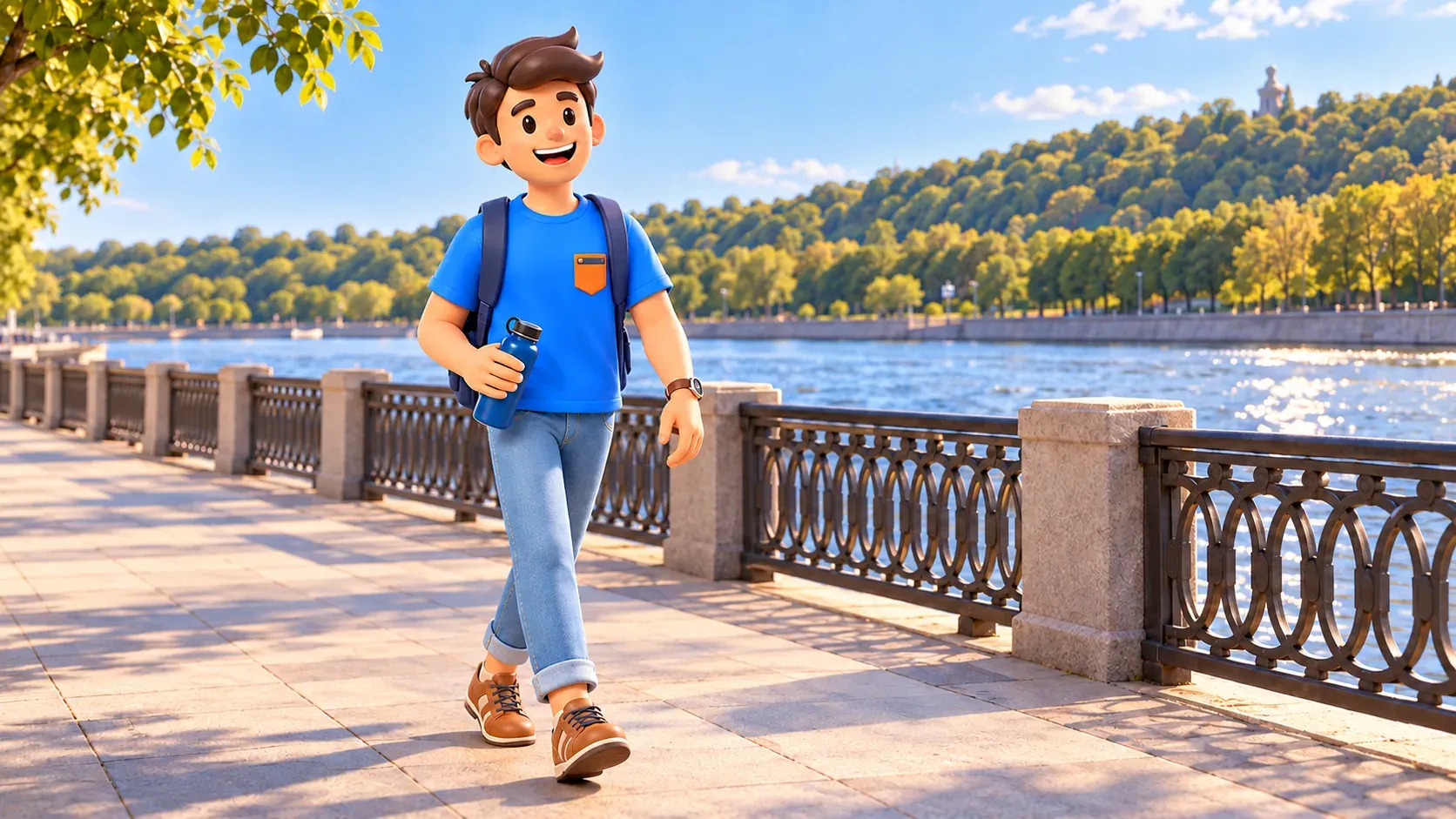
Build the lower version from the Luzhniki side. Choose an available exit and embankment section, then walk beside the water in a direction compatible with your return. The wooded slope now stands across the river, and the city appears through closer layers. You retain the panoramic subject while enjoying an ordinary riverside stroll instead of looking from above.
Use pedestrian space and leave designated lanes to their intended users. Walkers, runners and cyclists move at different speeds. A riverside pause is more pleasant when it does not obstruct circulation. This matters especially with a child, a group photograph or a longer stop to study the opposite bank. Choose the place for the pause as carefully as the view.
You do not need a long compulsory circuit of all the sports facilities. Decide where to turn back or continue towards transport. A bench and a view of the slope can provide a proper ending. The lower route offers space and air; its success does not depend on covering every object you could see earlier from the hilltop.
Luzhniki: history outside, events separately
The sports complex opened in 1956, and its history includes the 1980 Olympic Games. The Grand Sports Arena communicates that scale even from outside. Reaching the stands is unnecessary for noticing how a major building organises the space around it and differs from the smaller, informal stops along the water. A little historical context makes the exterior more meaningful.
Ordinary access to available grounds is not a ticket inside the arena. A match, concert, tour or visit to a sports facility has separate conditions. Major events can change entrances, access and permitted paths. Check current notices and avoid promising an unrestricted circuit at the precise time the area is being prepared for an event.
If an event is your main reason to come, organise the walk around it: keep the exterior section short and leave time for the correct entrance and ticket checks. If you want quiet, read the calendar and consider another date. The sporting history remains interesting, while the actual atmosphere depends on what is happening that particular day.
The cable car: connect the walks only after checking
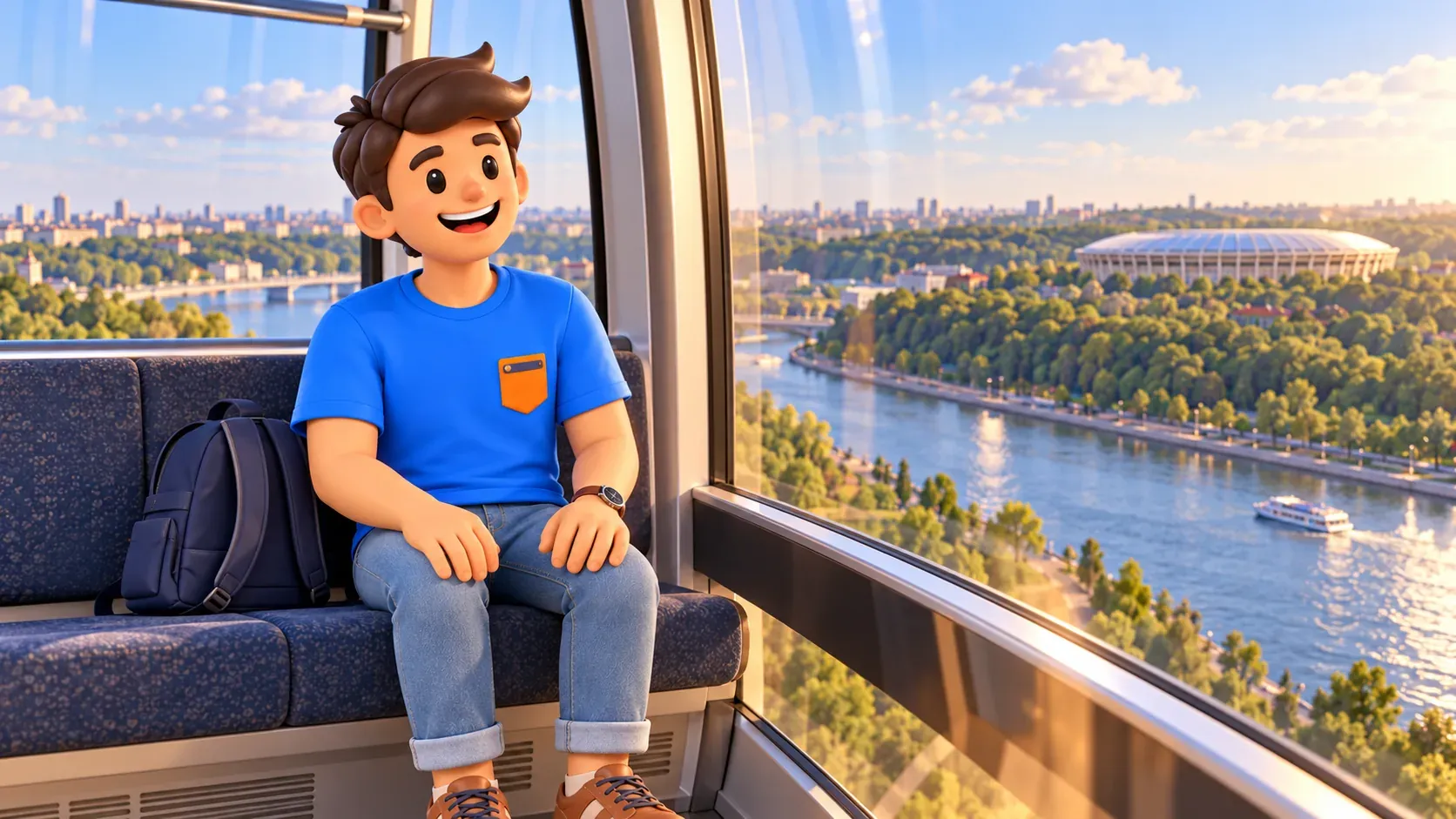
The cable car connects the upper Sparrow Hills side with Luzhniki across the river. It can be an experience in itself and a way to join your chosen walks. Confirm operation, direction, one-way or return ticket and conditions for your companions. Technical and weather changes mean it should not become an unavoidable, guaranteed link in your day.
Distinguish cable-car stations from the metro station with a similar name. The operator identifies the upper station as Vorobyovy Gory and the sports-complex side as Luzhniki. Do not automatically include the intermediate Novaya Liga as a normal passenger stop. Its access needs separate current confirmation, and this basic plan makes no promise of leaving there.
RoadMe makes it easier to use a complete personal trip plan that combines your interest in panoramas, architecture and walks with your dates and pace. Try the app for a suitable order to the day, while leaving confirmation of the cable car’s operation as a short check with its actual operator.
The metro bridge and a useful finish
Vorobyovy Gory metro station is associated with the Luzhniki metro bridge, and its exits lead towards different riverbanks. That matters more than similar names on a map. Follow current signs for either the hillside or Luzhniki. Do not treat the metro platform as an unrestricted public crossing independent of transport entry and fare rules.
Finish at a useful transport entrance rather than returning merely to recreate the start. If the cable car is unavailable, preserve one complete option instead of rushing to find any crossing. Two levels and two banks can belong to different days. A good view, an exterior architectural focus and an unhurried pause already make a memorable outing.


