
Spandau in half a day: old town, Citadel and the Havel
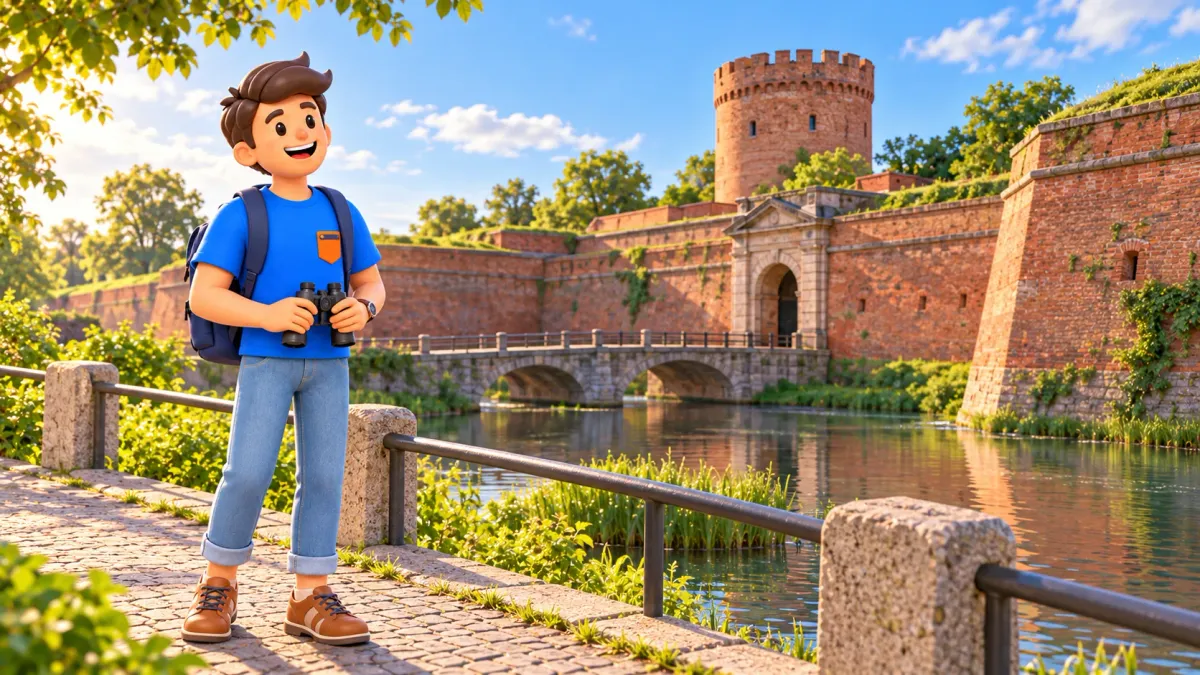
Give Spandau about four hours on the ground, with travel from your Berlin neighbourhood counted separately. Walk through the old town to the Citadel, choose one exhibition inside, and return beside the Havel. Bahnhof Spandau and the neighbouring U Rathaus Spandau make a useful starting and finishing area. The plan combines a walk, one meaningful museum visit and a break. It does not promise every building in the fortress, a tower climb and a river cruise in the same afternoon.
The attraction is the change of scale. Shopping streets give way to small squares and older brickwork; beyond them stand defensive walls and buildings now used for culture. The waterfront opens the view again afterwards. You do not need to add a forest excursion or a second major museum to make this feel like a distinct Berlin outing. Leaving some attention between stops helps the different settings register. Spandau works particularly well when you want a coherent half day rather than another collection of unrelated highlights.
A four-hour route from Spandau station
From Bahnhof Spandau, walk towards the town hall and through the pedestrian centre to Gotisches Haus at Breite Straße 32. Continue to Reformationsplatz and St. Nikolai, then head north towards Kolk/Behnitz using designated crossings over Am Juliusturm. Follow public pavements across the Havel on Juliusturmbrücke to the Citadel entrance at Am Juliusturm 64. After the visit, cross back to the western bank, join the accessible riverside route at Lindenufer and walk south before returning to the station area. Follow current signs where local connections change.
RoadMe makes it much more convenient to develop a personal trip plan around your interests, dates and preferred pace, giving Spandau the time you actually want. Try planning your Berlin days in the app so fortress architecture, museum visits and riverside breaks form a thoughtful journey.
Allow 15 minutes from the station, 35 for the old town, 20 for Kolk and 20 to reach the fortress. Give the courtyard and one exhibition 90 minutes, followed by a 25-minute break, 20 minutes for the return towards the river and waterfront stroll, and 15 back to the station. These total 240 minutes and are editorial estimates, not a measured track. Short movements within each section are included. There is no separate reserve: a queue calls for a smaller exhibition visit or a longer outing, not rushing every remaining stage.
Build the day around admission to the Citadel. Its ordinary hours are Friday to Wednesday, 10am–5pm, and Thursday, 1pm–8pm, with last admission half an hour before closing. On Thursdays, starting the old-town walk nearer midday makes more sense than expecting a morning fortress visit. Holidays and major events can change hours and admission arrangements, so consult the special-opening notice for your date. A late permitted entrance is also not enough time for the visit described here; leave room for your chosen exhibition before closing.
Read the old town through small details
Do not hurry straight from the town hall to the fortress. Let the pedestrian streets establish the ordinary life of the area: shops, people doing errands, different building ages and a square opening between narrower passages. You are not entering an uninterrupted medieval film set. An older facade becomes more interesting when seen among everyday neighbours. Look for changes in wall material and building proportions rather than expecting every house to have the same age or style. The walk needs curiosity more than an exhaustive architectural checklist.
Gotisches Haus is one of the anchors drawn from our original collection of places. The fifteenth-century brick house at Breite Straße 32 now accommodates tourist information. An exterior look is enough for this route: notice the openings, the brickwork and the shape of the frontage. If the interior is open and you want to enter, use part of your old-town allocation. The plan does not assume round-the-clock indoor access. A short look gives the house a clear role without turning the walk into a detailed account of every room and alteration.
Pause at St. Nikolai on Reformationsplatz. The medieval Gothic church gives the square a different scale from the shopping frontages on the way. Looking from outside is included; entering depends on actual access and respect for worship. A church-tower ascent has its own arrangements and is not silently added to these four hours. Decide whether a tower is a real priority before setting out. Choosing one substantial indoor or elevated visit is often more satisfying than promising yourself everything and watching the clock throughout the old town.
A simple observation game can give this section more character. Choose one detail at eye level and another above your head: perhaps a doorway or a patch of masonry below, then a gable line or window higher up. Compare choices with your companion at the next pause. You do not need a long historical briefing to remember a street in your own way. Leave space for people using doors and shopfronts while you look, and keep photography brief enough that the walk still feels shared.

Kolk and Behnitz: a quieter change of pace
North of the pedestrian centre, Kolk/Behnitz introduces a smaller street pattern. Cross the broad Am Juliusturm at a designated point, then slow down again among the narrower passages and low buildings. Twenty minutes allows a short introduction, provided you are not also stopping for a meal or making a separate photography session. There is no need to search every lane. This is a lived-in setting, so keep entrances clear and let the ordinary scale of the neighbourhood supply the interest rather than staging an elaborate scene.
The useful contrast is spatial: street width, the closeness of water, the size of the houses and the feel of the paving. There is no need to settle a contest over which corner is oldest. If uneven surfaces are uncomfortable, shorten the small loop and select an appropriate open connection towards the bridge. Every side lane is optional. A route remains complete when it suits the people walking it; requiring everyone to cover the same paving for the sake of a checklist rarely adds much to the experience.
Cross the Havel to the Citadel
Return from Behnitz towards Am Juliusturm and follow public pavements and crossings to Juliusturmbrücke. The fortress is separate from the old-town core, and the water helps make that change of purpose tangible. Use the main approach to Am Juliusturm 64 and the visitor signs. Do not treat a green bank or an apparent waterside shortcut as an alternative entrance. If a local connection is restricted, follow the signed access and allow time for the entrance procedure rather than trying to recover minutes by walking around a barrier.
The essential historical relationship is straightforward: the Renaissance fortress incorporates earlier structures, including the Juliusturm. You can read that layering without memorising every designer or date. Look at the difference between a defensive boundary and a building now entered for an exhibition. Two questions are enough for a first visit: how does the site use water, and how has a military enclosure become a cultural destination? They give the stop a focus while leaving room for whatever catches your attention once you are inside.
Choose one exhibition within the fortress
Ninety minutes inside means orientation, the courtyard and one exhibition. Ordinary paid admission covers the museums, exhibitions and Juliusturm, while major events can apply the organiser’s separate conditions. A tower climb is optional and must share your available time and energy. If the elevated view becomes the main attraction, reduce the exhibition visit accordingly. If a museum subject matters more, do not leave it only the last few minutes after mechanically circling the courtyard. Seeing fewer rooms with attention is a reasonable way to use a combined ticket.
For an interest in urban memory, consider “Enthüllt. Berlin und seine Denkmäler” in the Proviantmagazin, the former provisions store also included in our source collection. It examines monuments removed from public space and the meanings they acquire in a museum. Choose a few objects and read their accompanying explanations. The useful question is how something once intended for a public square becomes evidence for historical interpretation. You do not need to recount the whole exhibition, or agree on one reaction as a group, to have a worthwhile visit.

Alternatively, select another available exhibition that matches your interests and leave the monuments for a separate visit. Several cultural spaces share the Citadel; a complete survey in ninety minutes would be an unrealistic promise. Agree on the part you want to see together and a meeting point before separating. Museum fatigue can arrive even in a small building when every label feels compulsory. One clear subject, a handful of objects and enough time to think will usually make a stronger memory than a hurried procession through unfamiliar rooms.
Take a break, then return to Lindenufer
Keep about twenty-five minutes for a rest after the exhibition. Use an available bench or a venue with space; a particular menu, price or queue-free table is not part of the plan. A full lunch needs extra time. Then follow the public approach back across the bridge to the old-town side of the Havel. Moving from an exhibition to water gives the visit a useful change in rhythm. You do not need to find another museum immediately for the day to feel substantial.
Lindenufer runs along the Havel below the old town. Follow an available southbound stretch and gradually make your way back towards the station. Boats and landing stages add movement, but a boat tour has its own departure time and duration and is not included in the four-hour outline. If you want longer beside the water, extend the walk deliberately and tell your companions. A view, a bench and a few minutes without another task can be a satisfying ending in themselves, rather than merely the gap before the next attraction.

Make the half day fit your company
The Citadel operator lists accessible exhibition areas, including the Proviantmagazin. That does not make every staircase, the tower and the entire approach automatically step-free. Match your chosen room, old-town paving and available entrances to actual needs. In rain, shorten outdoor loops and spend longer in one exhibition; if the group has had enough reading, do the reverse and preserve the river pause. The main story survives either choice: everyday town life, defensive architecture, contemporary cultural use and water. The route is a framework, not an obligation to move identically in every condition.
With RoadMe, developing your whole trip day by day around your interests and pace is easier and more efficient. Try preparing your journey in the app so an unhurried Spandau outing fits naturally among your other Berlin experiences, with proper space to rest.
If you have only a few Berlin days, decide what attracts you most here: the smaller old-town scale, fortress architecture or a particular exhibition. That helps you judge whether this outing belongs in this trip or a future one. Our first-time Berlin planning guide can help shape the wider visit. For now, one connected half day is enough: small streets prepare the eye, the Citadel supplies the main subject, and the Havel offers a calm return.


