
Half a Day in SoHo: Façades, Drawing and Unusual Art

Half a day in SoHo works well as a slow look at its façades with one art space chosen around your interests. The Drawing Center offers exhibitions centred on drawing; Walter De Maria's Earth Room and Broken Kilometer offer two very different encounters with material and space. You do not need to visit all three to understand why this part of Manhattan remains interesting beyond its shops.
Use the streets around Wooster, Greene, Broome and Spring as your outdoor framework. Then choose the one interior experience that is open on your date and most appeals to you. That choice matters at present: at the 17 October 2026 check, The Drawing Center's galleries were temporarily closed for installation, with the next exhibition announced for 23 October.
A half-day plan with one main art stop
Allow roughly three to four hours for unhurried streets, one art stop and a food or rest break. The walking can remain around one to two kilometres, depending on the chosen art space and detours. These are editorial planning allowances rather than a measured route or a required museum duration. A brief installation visit can leave more time outdoors; a longer drawing exhibition changes the balance.
Choose the art stop before fixing the order. The Drawing Center is at 35 Wooster Street, Earth Room at 141 Wooster Street, and Broken Kilometer at 393 West Broadway. They occupy different parts of the same small district. A shared neighbourhood does not give them identical access conditions, and one address should not be confused with another branch of an institution elsewhere in New York.
To shape a city or trip plan around architecture, unusual art and your preferred pace, try RoadMe: the app prepares a personal day-by-day programme based on your interests. It is a more convenient way to connect suitable walks and breaks than organising every recommendation separately.
Dia lists regular hours for both installations as Wednesday to Sunday, noon to 3pm and 3:30pm to 6pm, with holiday exceptions. The half-hour pause is useful to notice before setting out. Do not read a simple noon-to-six listing as uninterrupted access, and recheck the current information for your travel date.
Build the street walk around your chosen opening rather than arriving at a locked door and hoping to fill the gap. You might begin outdoors before lunch and enter one installation afterwards. If you prefer a drawing exhibition, confirm that the galleries are open and give that visit the larger part of the afternoon. Neither version needs a second neighbourhood.
Look above the shopfronts
SoHo's upper façades reward slower attention. Look for repeated columns, window bays and cornice details above the changing ground-floor retail. Cast-iron components could be made in foundries and assembled on site, allowing ornament to be repeated. The visual effect can resemble carved stone, even when the material and construction method are different.
Start near Broome and Wooster Streets, walk east to Greene Street, north towards Spring, then west towards Wooster again. This gives a compact framework for comparing fronts rather than a building-by-building checklist. Extend towards Prince Street or your chosen art address only if it serves the day. Street crossings and the actual entrance matter more than completing a perfect rectangle.
Choose one repeated detail and follow it across a façade. Then look at the neighbouring building: are the windows equally broad, are the columns as slender, does the cornice cast the same depth of shadow? You do not need to identify every alloy or style to make useful comparisons. Paint colour alone is not a reliable explanation of a whole building.
Stop before looking upwards, and leave entrances and shop access clear. A photograph can frame a small pattern rather than an entire street. Do not touch or test historic surfaces to prove what they are made from. The object of the walk is observation, not a material experiment on someone else's property.
Earth Room: a very different use of a city interior
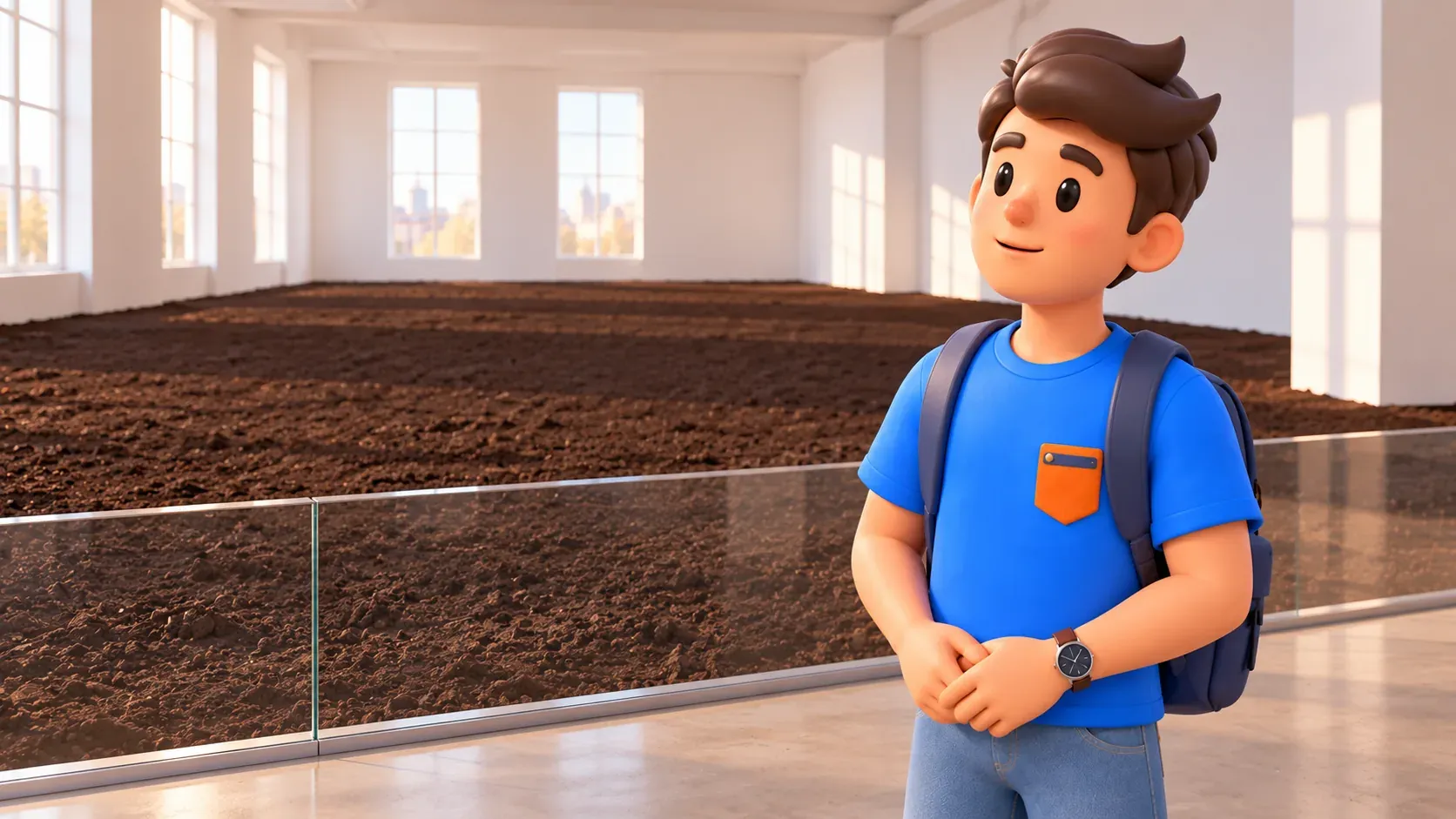
Choose The New York Earth Room if you are curious about a room transformed by an unexpected material rather than a gallery of separate pictures. Walter De Maria created the work in 1977. Earth fills a white interior at 141 Wooster Street, creating a striking contrast with the commercial street outside.
Keep the description simple before visiting. Instead of trying to decide whether you are supposed to admire or solve it, notice how the material changes your sense of an ordinary room. It is an artwork to encounter from the visitor area, not a garden path to walk through or an interactive soil display. Follow the caretaker's directions and the boundary around the work.
As an initial personal allowance, a short installation stop might occupy around fifteen to thirty minutes, with separate time for arrival and access. That is an editorial suggestion, not an official required duration. Some visitors will prefer longer observation; others will discover that the outdoor architecture is more their interest. Neither response needs to be corrected by adding more art stops.
The site is on an upper floor with access arrangements that include an entrance step and a ramp available on request. If those conditions matter for your visit, contact the site or inform the caretaker as directed by Dia. An elevator does not make every part of an approach automatically step-free. Plan the practical question before treating the stop as confirmed.
Broken Kilometer: look at rhythm rather than collect objects
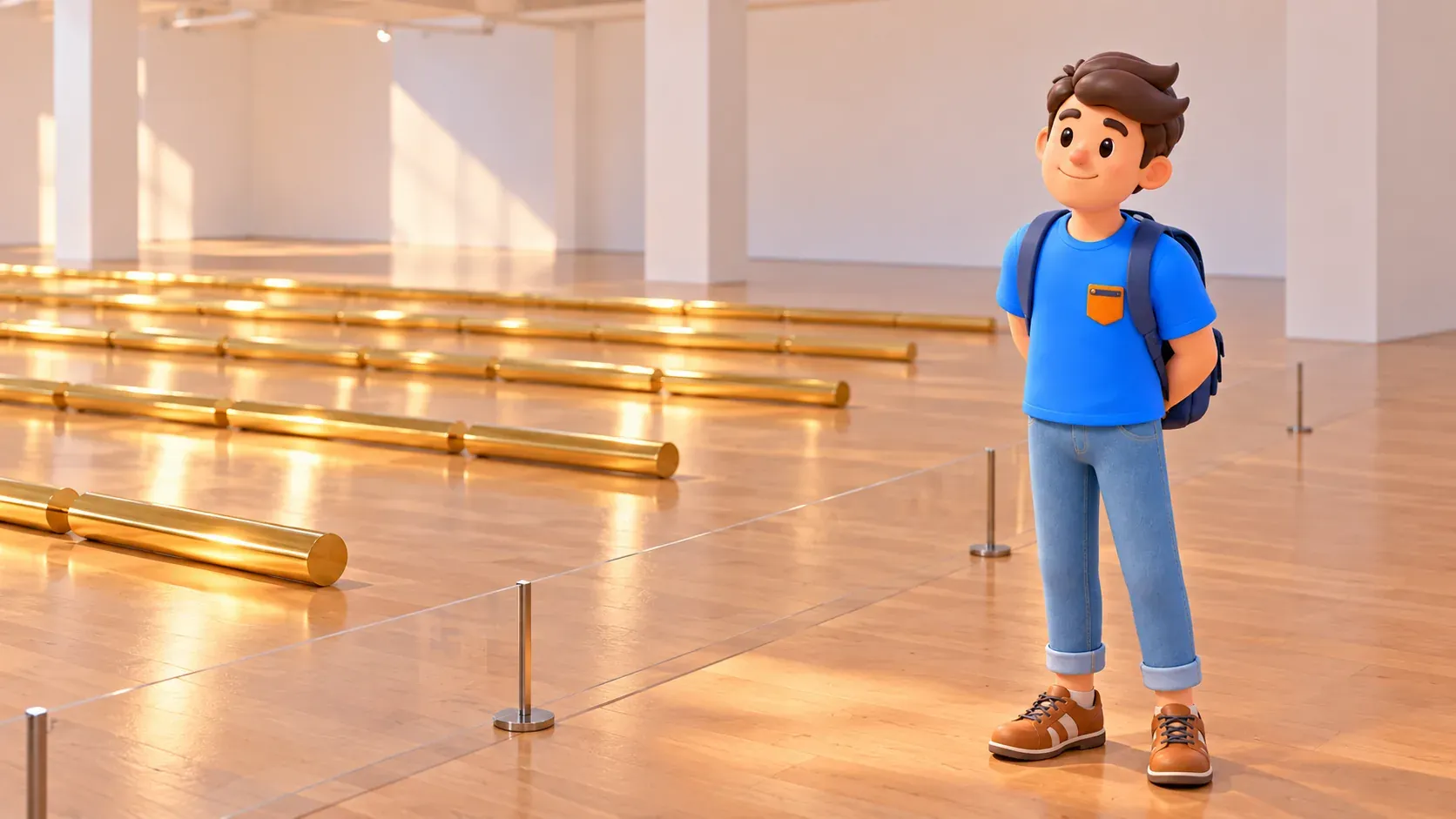
Broken Kilometer, at 393 West Broadway, is the alternative if ordered forms and the relationship between parts interest you. De Maria's 1979 work uses five hundred brass rods arranged in parallel rows. Laid end to end, their total length would be one kilometre. The title points to that relationship; you do not walk along a kilometre-long corridor.
The useful comparison with the street is repetition. Outside, repeated façade elements organise windows and ornament; inside, similar elements create a different sense of distance and rhythm. You do not have to count the entire work to look at it attentively. Let a change of viewpoint within the permitted visitor area do the work rather than stepping among the rods.
Give this stop its own choice in the plan, rather than assuming that two installations by one artist should always be visited together. A second visit can be worthwhile if you actively want the comparison and have checked the time. It is optional, and should replace some other part of the half-day rather than silently occupying the food break.
Dia describes three entrance steps and states that this site is not wheelchair accessible. Its ground-floor location should not be translated into a promise of level entry. For either installation, ask staff about current photography instructions instead of relying on old visitor reports. Access and conduct are practical conditions, not evidence of whether you will enjoy the artwork.
The Drawing Center: choose a specific exhibition
At 35 Wooster Street, The Drawing Center focuses on drawing as a broad and active artistic medium. Founded in SoHo in 1977, it presents changing exhibitions rather than one permanent room that remains the same on every visit. Look at the subject of the exhibition before choosing it as your main stop.
The distinction is practical. Interest in architectural façades does not automatically mean that every drawing show will appeal equally. Read the exhibition description and ask whether its subject suits the kind of afternoon you want. You may prefer works on paper to a single installation, or find that an unusual use of earth or metal is the more compelling choice.
If your ideal SoHo afternoon combines street architecture with the art that actually interests you, use RoadMe to prepare a personal plan around those preferences. A connected programme makes it easier to fit a focused neighbourhood visit into the wider trip without assembling every day from fragments.
At the 17 October 2026 check, the galleries were closed for installation. The institution announced the opening of Form, Shadow, Motion on 23 October, with an opening reception on the preceding evening. A reception is not the same thing as the ordinary exhibition visit. For a later trip, consult the current exhibition and visitor information rather than assuming this temporary notice still applies.
Once the galleries are open, a first planning allowance of around an hour to an hour and a half can suit a focused exhibition visit, adjusted to the show and your interest. This is not a guaranteed duration. If the galleries are closed or the programme does not appeal, choose the outdoor walk and one available Dia site instead of treating the address as a compulsory stop.

Leave room for a pause and a clear finish
Place food or a seated break near the streets you are already exploring. There is no need to cross a large part of Manhattan to make the half-day feel complete. Check the waiting situation before committing to a restaurant, and keep some flexibility if an art visit has taken longer than expected.
If you have less time, choose a few blocks of façades and one interior. If you have more, spend it on the same streets or the selected exhibition before extending the geography. Shopping can be part of the visit, but give it its own time rather than allowing queues and browsing to erase the art stop you came for.
For a wet day, reduce the outdoor circuit around the available main visit and the food break. Neither an installation nor a commercial shop should be treated as an unlimited waiting room. If access needs or temporary closures rule out the intended interior, an architecture-only walk on another suitable day remains a legitimate choice.
Visitor conditions were checked on 17 October 2026. Recheck openings before your own date. A satisfying SoHo half-day can end with one clear artistic idea and a better eye for the façades overhead, rather than a long list of doors you rushed through.


