
A slow Abu Dhabi day: museum, park and waterfront

A slower day in Abu Dhabi can have a clear shape without a crowded timetable: one museum, a little greenery and time beside the water. Start with Qasr Al Hosn, pause for a meal and rest, then consider Family Park 2 near the Corniche and a short promenade segment. Leave the rest of the day open.
This central-city plan suits a gap between bigger sightseeing days, an arrival after which you want gentle exploration, or a trip where looking closely matters more than seeing everything. “Slow” describes the pace you choose. It does not promise that a public museum, park or waterfront will be silent or empty.
Give the day one anchor and two lighter possibilities
Make Qasr Al Hosn the main experience. The park changes the atmosphere afterwards, while the water offers a simple finish. These parts have different jobs, so you do not need to give them equal time. If the museum becomes the day's highlight, shorten the later blocks rather than hurrying away from something you enjoy.
To make an unhurried trip easier to organise, try RoadMe. The app works through a complete personal itinerary around your interests, dates, pace and budget, giving the experiences you care about enough room while keeping meals, rest and the wider holiday in balance.
The central area keeps the theme coherent, but individual entrances and crossings still matter. Plan the real links for your group. A nearby location pin does not require walking every connection, and using a short suitable vehicle journey can preserve the relaxed character when an outdoor approach does not appeal.
Start according to admission, not an imagined early hour
Check the museum's current opening and admission for your date before choosing breakfast and departure. Different days can have different visiting opportunities. There is no benefit in arriving early merely because an itinerary traditionally begins in the morning. A calm start should lead to an entrance that is actually available.
Allow for the journey from your accommodation, finding the correct visitor arrival and getting oriented. Keep that separate from time spent with the museum. If you are staying far from the centre, the first journey may be the largest connection of the day; let that influence the departure and return rather than ignoring it.
Carry what makes the outing comfortable without turning it into an expedition. A manageable bag, water used according to venue rules and the information for your chosen admission are more useful than a large collection of things you have to manage at every pause. Keep the day easy to begin and easy to leave.
Qasr Al Hosn: let the older city set the subject
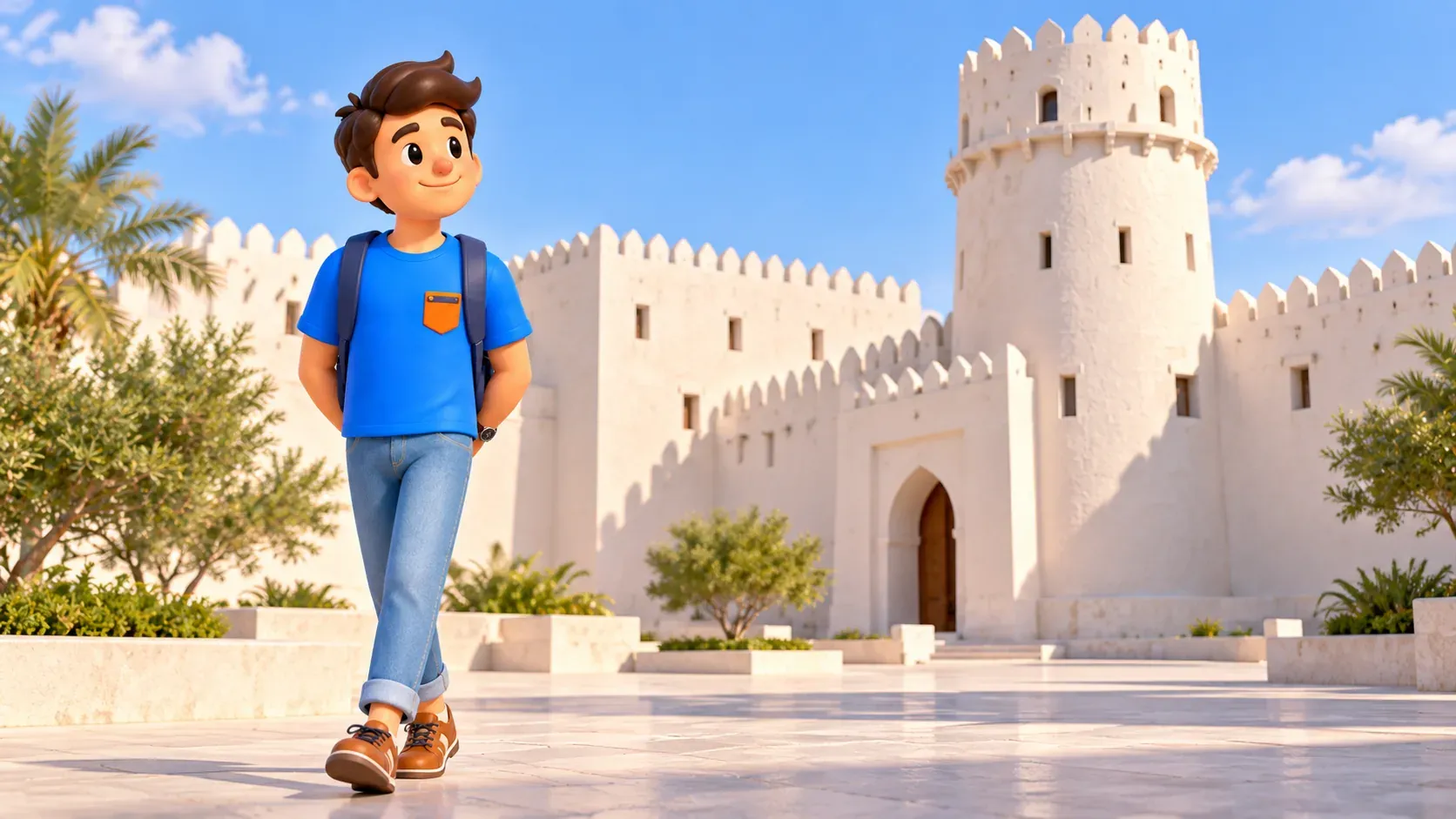
The fort and palace ensemble now serves as a museum of Abu Dhabi's history, with the Al Nahyan family's story woven into that account. Its older defensive forms provide a different starting point from the modern skyline. The value of the visit is understanding change, rather than simply adding a white fort to your photographs.
Choose one thread as you follow the current displays: settlement, the relationship with the sea, or the transformation of daily life. Let the actual interpretation guide you. You do not need a specific object to be present, and you do not need to read every panel for the visit to have a coherent subject.
When something catches your attention, look before reading, then look again afterwards. Ask what the information changed in your understanding. One object, room or view approached this way can be more memorable than a continuous circuit in which your attention is already on the next doorway.
Allow around ninety minutes to two hours for a selective museum visit as an editorial planning estimate. A booked activity or a deeper interest may need more. Museum admission is its own choice; nearby cultural buildings and outside spaces should not be treated as automatically included in every ticket or visit.
Use the architecture to connect past and present
Give a little attention to the white walls, openings and the relationship between low historic forms and the city around them. You can notice depth, proportions and shadow without turning the outing into a technical lesson. The architecture offers another way to remember the museum's subject after leaving the displays.
Keep the distinction between what you see and what the interpretation explains. A quiet-looking courtyard does not prove that the place was always quiet; a restored surface does not tell its whole history at a glance. The interesting part is how a present-day encounter helps you ask better questions about the older city.
The surrounding cultural area contains other worthwhile visits, but proximity alone is not a reason to add them. Save a place that genuinely interests you for a different outing, or consciously replace the museum if another subject matters more. The slower plan depends on protecting one main visit from a growing chain of extras.
Make lunch and rest part of the experience
After the museum, choose a meal according to the group's appetite and the day's conditions. Confirm the actual venue and its availability rather than assuming a particular table is waiting beside an exit. A simple comfortable meal is enough. There is no requirement to turn every pause into another destination with its own reputation.
Sit long enough to change attention. Talk about one thing from the museum, put the camera away or simply enjoy being still. A genuine break differs from the few minutes spent waiting for transport while planning the next admission. It gives the second half a fresh beginning.
If the day is hot or the group wants a longer pause, choose an appropriate indoor setting or return to your accommodation. Reconsider the later outing afterwards. The museum can remain a complete experience even when the park and water become a separate short evening plan rather than a continuous afternoon walk.
Family Park 2: choose greenery without another programme
Family Park 2, also known as Family Park B, introduces an ordinary public green space near the Corniche. Its role in this day is a change of texture: trees, lawns, people spending time outside. You are not arriving for another full guided experience or trying to reproduce a particular event.
Choose a short path and a place to sit according to what is available. Roughly thirty to forty-five minutes can be a first planning allowance, not a minimum to complete. You might spend most of it seated. A park stop does not need a long circuit, exercise target or list of facilities to justify itself.
Use the correct park location, since similarly named sections can be confused. Do not base the outing on a particular playground installation or an announcement about another section. For families, ordinary supervision and the group's own interests should determine the stop rather than a promise that every child will enjoy the same activity.

Keep the connection to the water a real choice
The Corniche belongs to the wider waterfront area, but the park is not a guarantee of direct beach access or a simple crossing at every edge. Check the actual public paths and permitted crossings between the chosen park exit and promenade. If the link is awkward for your group, change the segment or use a suitable transfer.
Make the waterfront an optional continuation, not a reward that must be earned after the park. You can choose the park alone, or omit it and go directly to a selected promenade stretch after resting. The idea is to preserve a useful change of atmosphere without forcing all three names into the day.
Conditions matter more than a fixed hour. Later light can be attractive while heat and humidity remain noticeable. Decide by the actual day and the people travelling. A short comfortable look at the sea contributes more than a long outing everyone is enduring because a plan says evening should be pleasant.
The Corniche: enjoy a small piece of a long waterfront
Pick a modest promenade section with a clear arrival and departure. Around thirty to forty-five minutes is an editorial allowance for a short stroll and a pause, not a measured route. Choose where to turn before setting off. You do not need to cover the entire waterfront to feel that you have spent time beside the sea.
Let the view be the activity for a while. Notice reflections, changing light or the contrast between people moving along the promenade and the open water beyond. You may take a few photographs, then stop. A quiet pace allows small observations to become the memory instead of merely the background to another destination search.
A promenade visit is separate from beach entry, swimming, hired equipment or a private venue. None is needed for this finish. If you want one of those experiences, arrange it on its actual terms and give it time of its own rather than assuming it comes with an ordinary waterside walk.

Keep enough freedom to finish well
Agree on a simple end point and a practical return. If you still have energy, enjoy the remainder without immediately filling it. A free hour can mean an unplanned conversation, reading at your accommodation or an earlier meal. Space between experiences is part of why this particular day feels different from an ambitious sightseeing circuit.
RoadMe makes a slower pace convenient across the whole trip: the app develops your personal programme around what interests you and how you like to travel. Let it work through the complete itinerary, so a restful city day fits naturally between the bigger experiences.
At the end, keep one memory from each part you chose: a museum question, a moment among trees, a view over the water. That is enough for a full day in Abu Dhabi. The aim is to leave with a clearer impression of the city and some energy for tomorrow.


