
From Shibuya Crossing to Shoto: A Two-Hour Walk

Shibuya offers a useful contrast for a short walk: leave the famous crossing behind and move towards residential Shoto, finishing beside a small pond. Begin with the station area's urban scene, make a brief stop at Hachiko, and continue to Nabeshima Shoto Park. Keep the Toguri Museum of Art as a separate choice based on your interests and its calendar.
Allow around two hours for the outdoor version, including stops and a rest. This is an editorial planning estimate, not a measured walking time. A substantial museum visit adds time and deserves more than the last few available minutes. The point is a gradual change of attention, from a city's collective movement to smaller details in a quieter setting.
Plan a walk that changes its pace
This outing suits travelers who want recognizable Shibuya without spending every spare moment among large screens and dense crowds. The central scene is deliberately brief; the journey towards the park matters next. Choose daylight to see the streets and water clearly. An evening entertainment program calls for another pace and a different set of decisions.
RoadMe makes this idea much easier to use as part of your trip: the app develops a personal day-by-day plan around your dates, interests, budget and pace. Give Shibuya's busy center, a gentler walk and a suitable museum a practical place in a journey planned for you.
| Part | Purpose | How to use it |
|---|---|---|
| Shibuya Crossing | Experience the center's movement | A brief opening scene |
| Hachiko | Meet a neighborhood symbol | A short stop if conditions suit |
| Streets towards Shoto | Notice a change of scale | The connecting walk |
| Nabeshima Shoto Park | Water, greenery and rest | The main quieter section |
| Toguri Museum | Look closely at ceramics | Optional, with extra time |
Decide beforehand whether the museum matters to you. If it does, check the exhibition and visiting day first: its calendar creates the main restrictions. Otherwise, the walk remains complete. Movement, a brief personal story, changing surroundings and a waterside pause already give it shape. An extra interior is not required to make the experience count.
The crossing: see the movement and keep going
At the station, follow current signs towards Hachiko Square and the crossing. Shibuya is complicated inside, so every exit carrying the neighborhood name is not equally convenient. Staff instructions and temporary routes take priority over an old description. JR recommends the South Gate as an alternative to the congested Hachiko Gate; follow the navigation available on your day.
The crossing offers more than size. Pedestrian movement becomes a shared urban scene: the signal changes, people walk in several directions, then vehicles take their turn. One ordinary crossing helps you experience the pattern. You do not need repeated circuits or a paid viewpoint above it to understand why the place catches attention.
Cross on the permitted signal and continue with the flow. If you want to watch for longer, move to a clear area of sidewalk. Take photographs after crossing, once you are no longer standing in the route. That simple choice preserves the scene's natural rhythm and lets you observe without making other pedestrians negotiate around your camera.
Do not expect an empty square or a picture without people. Their presence is part of the point. Notice one detail, such as the way the crowd spreads at the edge or the sound after the signal changes. Carry that small observation into Shoto, where the background and the space between people will feel different.

Hachiko: a short stop with a personal story
The Hachiko statue stands by the station, close to the opening urban scene. The story of a dog continuing to wait after his owner's death made it a symbol of loyalty. That meaning is enough for this walk. It adds a personal dimension to a place otherwise easily treated as a transport interchange or a recognizable background.
Approach according to conditions: people may be meeting friends while other visitors wait for photographs. If it is crowded, look from a little distance and continue. A queue for a compulsory portrait can consume more time than the whole opening section you intended. Seeing the monument remains worthwhile even when you leave without posing beside it.
Discuss the story after moving out of the passage. In a group, try one simple question: why did a small monument become a meeting point in such a mobile place? You do not need a lengthy biography to respond. Notice how a personal story sits beside everyday journeys, errands and the familiar experience of waiting for someone.
After this stop, turn your attention to the western part of the outing. Returning for one more crossing photograph is optional. If your group separates, agree on a clear meeting place before moving. In the dense center, that is more useful than trying to spot one another through raised phones and an uninterrupted stream of pedestrians.
Towards Shoto: notice the changing scale
Walk from central Shibuya towards Nabeshima Shoto Park using actual pedestrian routes and comfortable crossings. This direction takes you towards a residential area rather than extending into Harajuku or Meiji. Check the park's position and open passages as you go. A straight line between places does not justify cutting through a private courtyard.
As you leave the station, notice building sizes, entrances, trees and how far you can hear a neighboring street. The change need not happen at one precise corner: larger and smaller pieces of city can alternate. That gradual shift makes the walk interesting. Shoto becomes part of the same Shibuya rather than an entirely separate stage set.
A special list of attractive private homes is unnecessary. Observe a residential neighborhood from public streets, keeping away from windows and gates. Respectful distance still allows you to see scale: a facade's proportions, a strip of planting or shade on the pavement is enough. A rewarding walk does not require entering spaces where other people live.
If progress is slower than expected, reduce window stops and preserve time for the park. The main change of pace comes from a pause rather than extra addresses. With a stroller or limited mobility, choose suitable crossings and check gradients beforehand. A short line on a screen does not itself guarantee a comfortable route on the ground.
Nabeshima Shoto Park: pause beside the pond
The park is small, so do not expect a grand country garden. Its value is nearby water, greenery and the chance to stop moving for a while. A pond and waterwheel create a different scene after the crossing. Follow open paths, leave space for other visitors and find somewhere comfortable to pause instead of pursuing one compulsory photo position.
The site has a tea plantation history: the Nabeshima family opened one in 1876 and sold tea under the name Shoto. This short fact helps explain the name and gives the park a connection to earlier land use. Observe what is available today; the walk does not promise a surviving plantation or a tea ceremony.
Park admission is free. Weather and the actual condition of paths influence comfort more than formal availability. Sit where space is available, keeping children's play areas free from an adult photo session. A few calm minutes by the water can be enough: reflections and small movements may be more rewarding than checking every corner for completeness.
Compare one thing with the beginning of the walk, perhaps the distance your eye travels or the number of separate sounds you can hear. This is personal observation, not a promise of absolute silence. A public park includes children, conversations and ordinary neighborhood activity. Here, calm means a different scale of city life rather than the absence of other people.
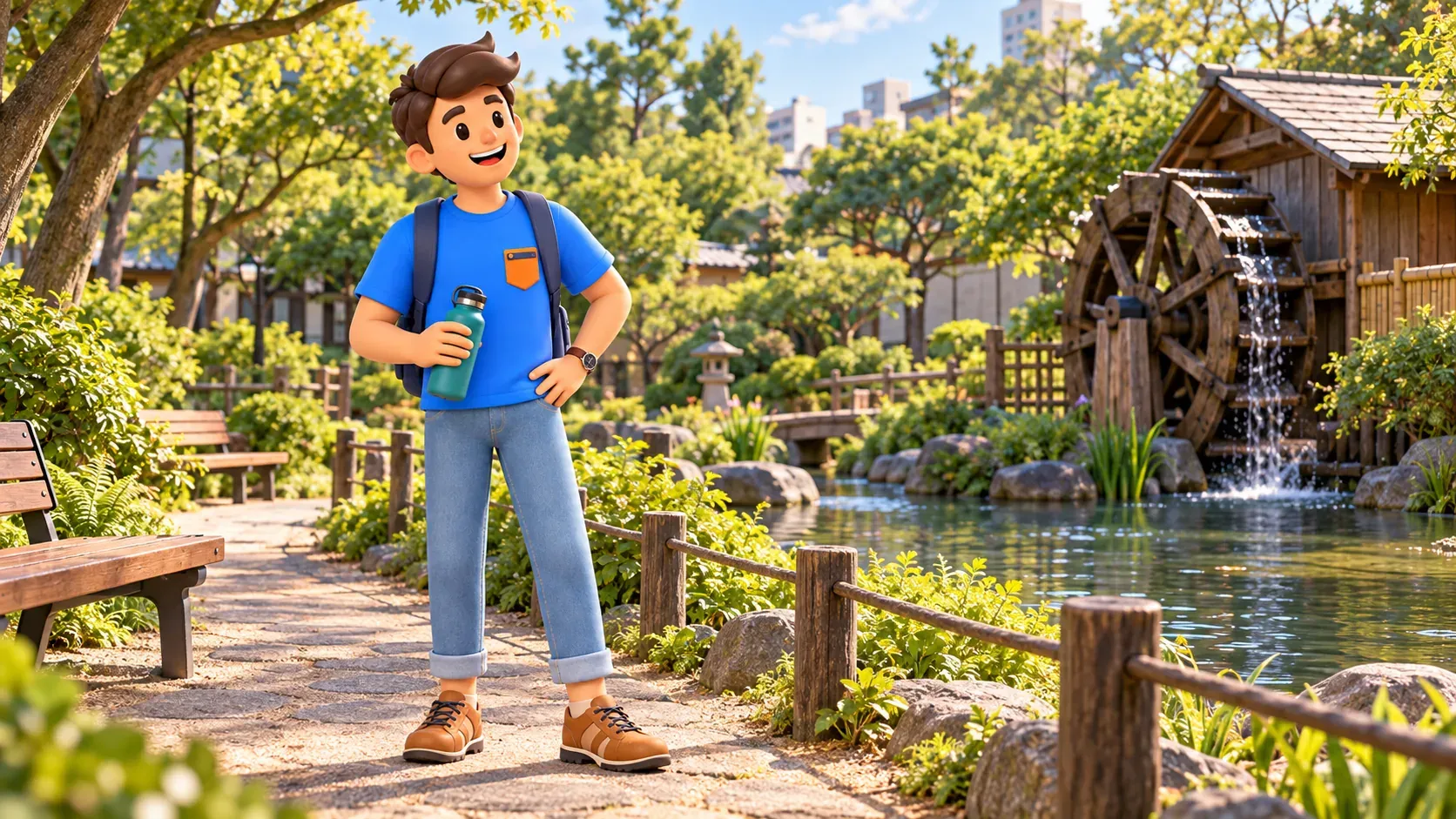
A pause between the walk and the museum
After the park, decide whether you still have attention for art. If you are tired, the basic route has already worked; you can eat or head towards transport. If the museum interests you, give it a proper stretch of time. Do not turn it into another door to enter just before closing so the day looks fuller.
To connect a lively center, quieter streets and art, try a personal travel program in RoadMe. The app develops your trip around your interests and pace, making the walk much more convenient to use when cultural visits, rest and the other days of your journey work together.
Choose food according to the hour, available seats and your group's needs. This outing does not require a famous restaurant. A long queue can break the gentler second section, so a straightforward, timely pause makes sense. Keep some attention for the journey afterwards: your transport choice should follow the real final stop rather than automatically returning to the original station.
Toguri Museum: ceramics as an optional extension
The Toguri Museum suits visitors who want to look at the shape and decoration of objects. East Asian ceramics, including Imari and Nabeshima, form the collection's core. This offers another way of looking after the large urban scene: attention moves to surfaces, outlines and spaces between details. You do not need specialist knowledge to choose one object and examine it patiently.
Usual hours are 10:00–17:00, extended to 20:00 on Fridays and Saturdays, with entry ending half an hour earlier. Monday, Tuesday, exhibition changes and New Year restrict visits; holiday exceptions apply. Admission is paid. Check the calendar for your date and the exhibition conditions before making the museum essential to the whole outing.
Ceramics of Saga and Nagasaki is announced for October 7–December 20, 2026. Other dates need the corresponding current announcement. A collection name does not mean every object whose image you find is always on view. Choose your visit around the actual program rather than expecting a particular piece seen in someone else's photograph.
Inside, begin with an overall outline, then look at how decoration relates to form. Compare two available pieces through one feature without trying to learn an entire classification. Follow photography rules and keep the required distance from cases. This museum section is about attentive observation rather than handling ceramics or joining a practical workshop.
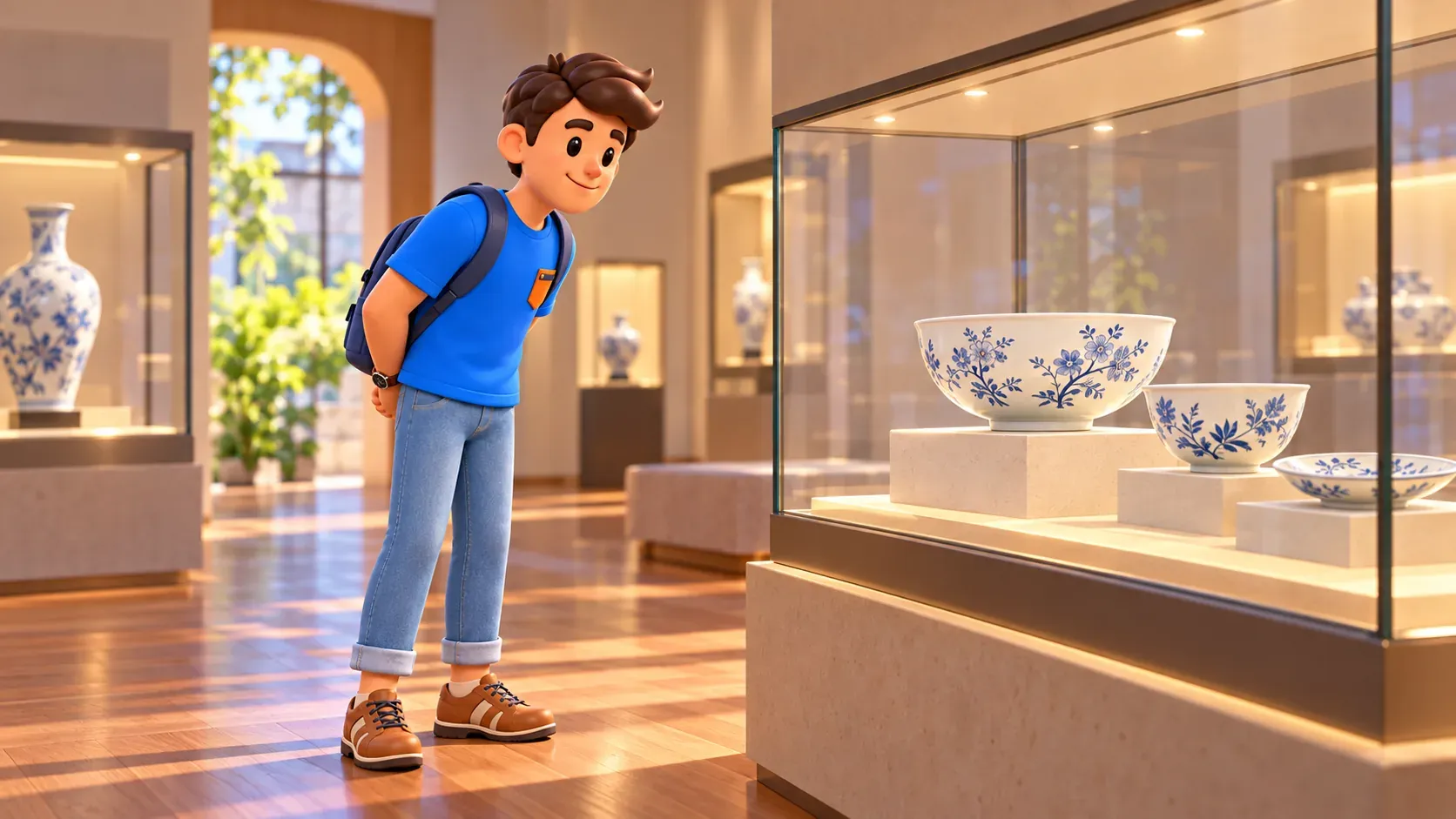
Finish without an unnecessary return
The two-hour version combines the central scene, Hachiko, the connecting streets and a park rest. The museum extends it; the total depends on how long you spend in the galleries. If you started late or the weather interferes, keep the parts that feel comfortable today. Collecting every name is unnecessary for experiencing the intended change.
To finish, compare the route towards Shibuya or Shinsen with the line you need and your next destination. The closest station name on a map does not always provide the most convenient continuation. Include the approach and internal transfers. The walk works well when its ending is as clear as its opening: the lively center remains an impression, and the gentler finish provides a rest.


