
Sham Shui Po in half a day: homes, history and a Han tomb

A half day in Sham Shui Po can bring together two very different ways of seeing Hong Kong's past. At the Heritage of Mei Ho House, housing history becomes tangible through room sizes and everyday objects. At the Lei Cheng Uk Han Tomb Museum, an ancient world emerges through brick construction and archaeological finds. Ordinary neighbourhood streets provide the connection and a pause between the two.
Start with Mei Ho House, then head to the tomb museum. Allow roughly three to four hours for both visits, the transfer and a break. The periods are separated by a great span of time. This route compares human needs and different kinds of evidence; it does not promise an uninterrupted history of one residential community from antiquity to today.
Match the museum calendars first
The museums have different regular closing days. As checked on 20 October 2026, Mei Ho House closes on Mondays except public holidays, while the tomb museum closes on Thursdays except public holidays. For an ordinary week, Tuesday, Wednesday, Friday, Saturday or Sunday is therefore a simpler choice. Holiday exceptions and any special closures still need checking separately.
Normal hours on those days are 10am to 6pm at both institutions, though particular festive eves can bring earlier closing. Both operators list free admission to their exhibitions. That does not make the whole outing cost-free: transport, meals and additional activities remain separate. Avoid arriving near closing and expecting to cover two museums properly in succession.
To fit this outing into a longer visit, try RoadMe: the app creates a personal day-by-day plan around dates, interests, budget and pace. Making city history the priority is a convenient starting point, while current museum calendars should still be checked with each institution.
Around an hour for each museum is a useful initial allowance, leaving the rest for streets, transfer and rest. These are planning estimates, not measured visits or walking times. Someone reading every explanation may need longer; another visitor may prefer a few main observations. Give each museum a clear purpose rather than trying to study every item equally closely.
Mei Ho House: begin with the building
Mei Ho House was completed in 1954 following the major Shek Kip Mei fire of 1953, an important moment in Hong Kong's resettlement and public housing story. That connection is enough for an introduction: an urgent need for homes led to residential blocks that reshaped everyday life for many families.
Before concentrating on displays, notice the scale of the block, repeated levels and corridor arrangement. These make housing visible as a system of rooms, shared routes and neighbourly relationships. Asking how people used the space can reveal more than taking a photograph of a recognisable building outline. The architecture is part of the subject, not merely a container for it.
The building now has a new role, while the museum preserves the story of its community and early public housing. Admission to museum areas does not mean access to every room in the complex or to accommodation spaces. Follow the visitor route rather than searching through service doors for a supposedly more authentic interior.
Choose one scale to observe: a room's dimensions, the length of a corridor or the relationship between private and shared areas. Such details make large social changes understandable. Avoid judging whole lives from one object or treating modest domestic circumstances as an exotic scene. The museum helps explain conditions within which people built routines and social ties.
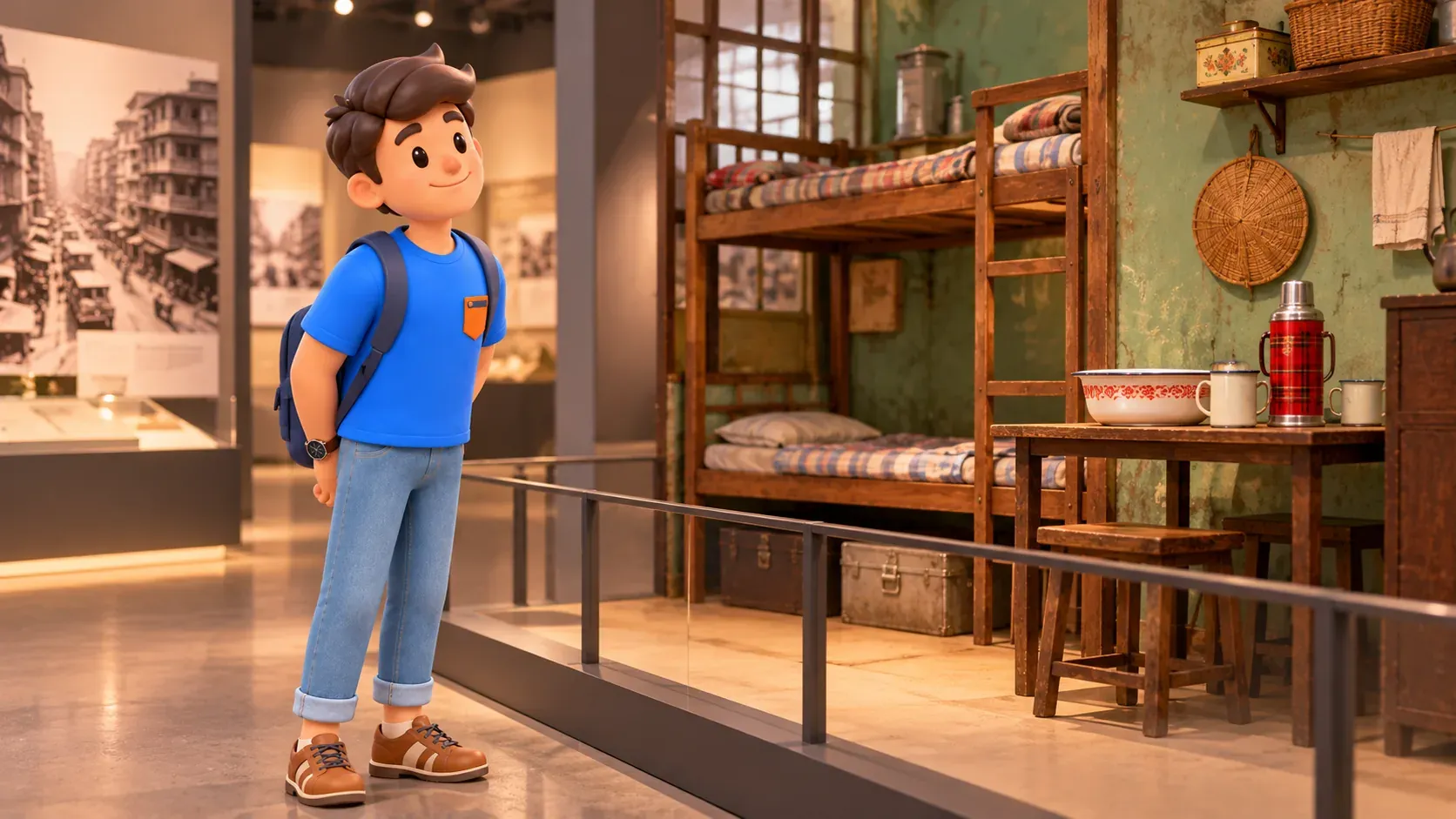
Look at displays through a few questions
For a first visit, work from a question towards objects. How did a family organise a small volume? Which tasks required shared spaces? How did expectations of comfortable housing change? An ordinary domestic item then becomes part of an answer instead of another thing you are obliged to photograph.
Compare reconstructions, documents and the architecture according to museum explanations. A recreated setting presents a particular situation; it does not establish that every home and family looked identical. Care in making that distinction respects the residents' history. A standard layout or a few surviving objects cannot describe every part of someone's private life.
If a tour interests you, check the language, time and conditions for your date. An institution welcoming international visitors does not imply an English-speaking guide is available at every hour. Independent visiting works well too, especially when you have chosen a few questions and given yourself room to read the principal explanations calmly.
Photograph according to current rules and avoid obstructing a route for a picture of a recreated room. You might write down one thought instead. That can connect the exhibition with the subsequent walk more effectively than collecting dozens of labels. A complete photographic archive is not required to have a worthwhile visit.
Between museums: today's district as a pause
After Mei Ho House, head towards the museum on Tonkin Street using a map and current pedestrian signs. The institutions occupy different points within the district, so the transfer is a distinct part of the half day. A straight-line distance between coordinates is not a precise walking time: signals, street sides and pace all affect the result.
Change activity on the way. Look at present-day homes and street uses without immediately forcing them into a museum narrative. The district continues to change. A shop, entrance or ordinary courtyard may prompt a question, but a brief observation cannot establish the living conditions of all current residents. Keep curiosity separate from conclusions you cannot support.
If you need food or water, make a real pause before the second museum. One particular business is not a compulsory stop, and a free table is not guaranteed. Choose according to appetite and circumstances. The aim is to reach the archaeological visit with attention left, rather than finish it simply because it occupies second place on a list.
If someone in the group is tired, discuss shortening now. Two consecutive museums do not suit everyone, even when admission is free. Save the tomb museum for another date, or make it the main visit and keep the housing museum shorter. Choosing the subject matters more than completing every proposed element.
Lei Cheng Uk: antiquity uncovered during housing work
The brick tomb was discovered in 1955 during preparation of a site for resettlement buildings. That creates an understandable connection with the first visit: modern housing development revealed an ancient monument. The periods and circumstances remain different, however. Discovery does not turn the museums into a continuous story of the same family or community.
The tomb is attributed to the Eastern Han dynasty. For a first encounter, seeing how archaeology connects conclusions with construction, inscriptions and finds matters more than memorising dates. The place offers material evidence for discussing the territory's distant past through surviving objects and masonry. It is a different sort of historical encounter from recreated modern housing.
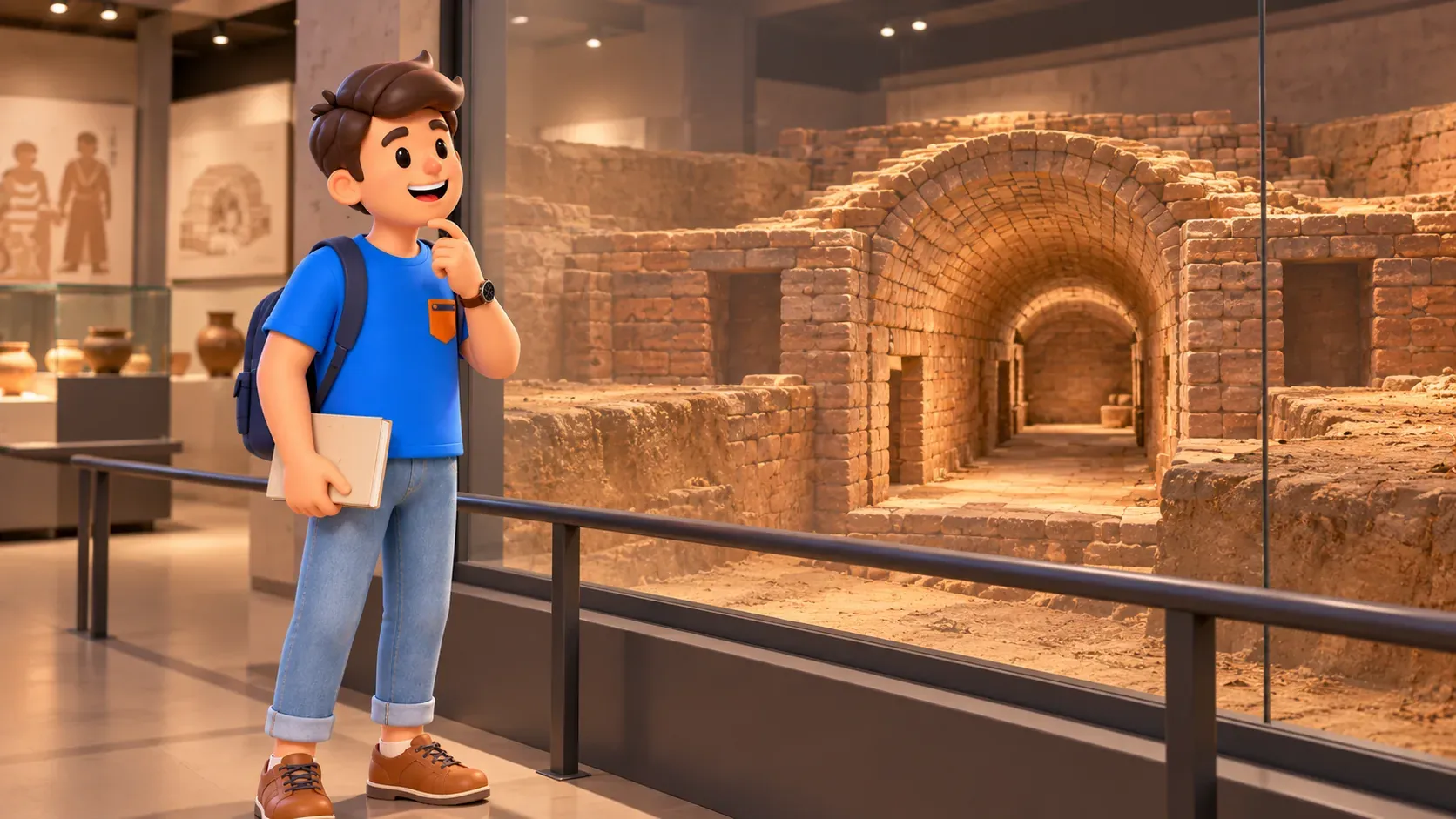
Visitors do not enter the tomb itself. For conservation, its interior is viewed through a glass panel at the entrance passage. Do not plan a descent, a walk through chambers or a photograph from inside. This is a central condition of the visit rather than a temporary inconvenience to overcome by asking an attendant.
Look through the glass, then use the adjoining exhibition to understand the structure and discoveries. This helps distinguish the monument from the ways the museum explains it. If others occupy the viewing position, wait or begin with the gallery. A small space does not require everyone to stand at the same point at once.
What the burial objects can tell you
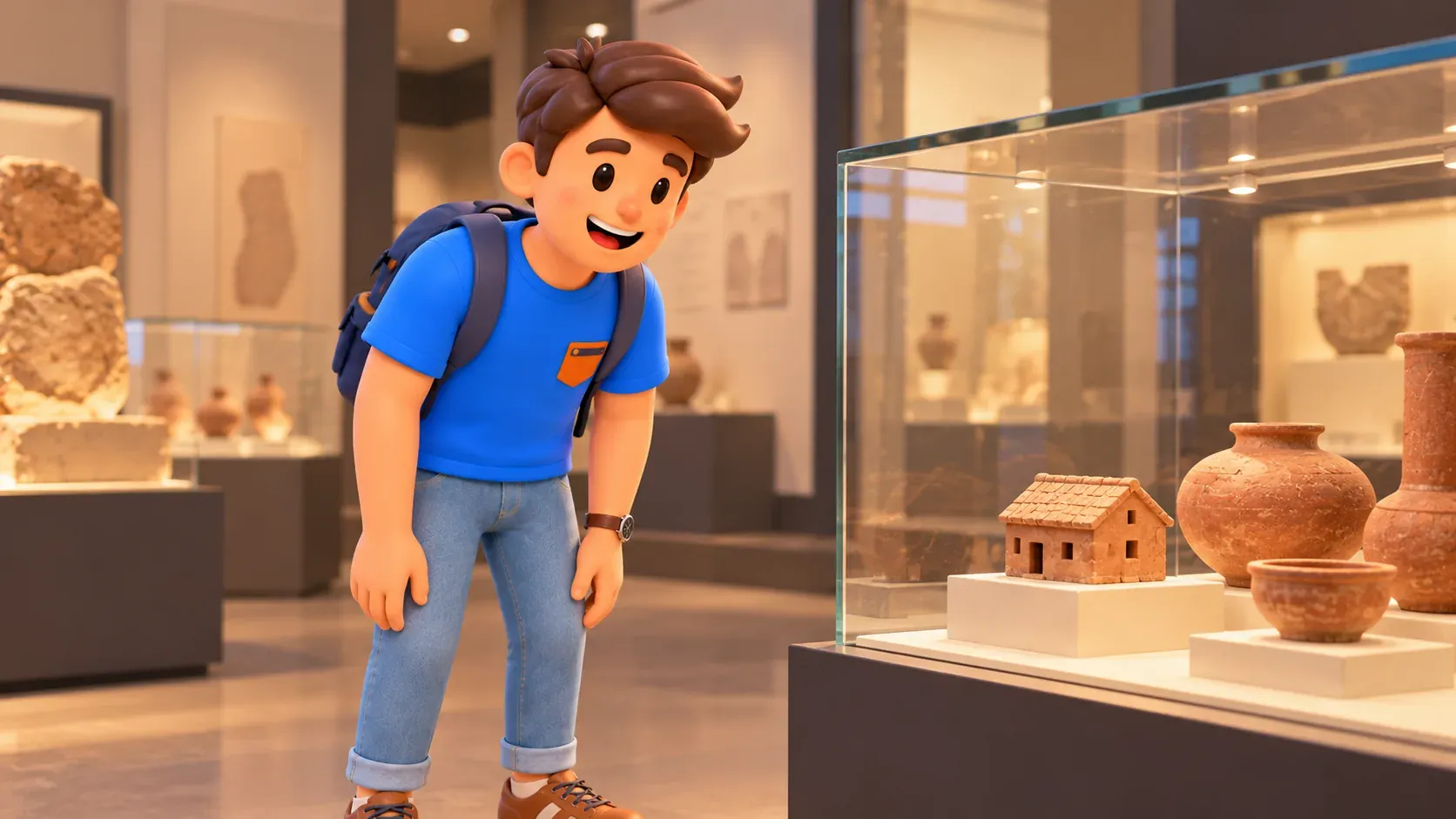
Pottery and bronze finds introduce the material culture of their period. Models associated with everyday arrangements can be particularly approachable. Look at form, the purpose described in museum interpretation and the object's place in a burial. Do not automatically assign a modern use to an ancient item simply because it appears familiar.
There is no need to invent an identity for the deceased to make the story appealing. The museum's interest does not depend on a famous name, royal title or treasure legend. Its value includes the way researchers work with incomplete evidence and explain conclusions through what was actually found. Uncertainty can be part of an engaging visit.
Compare the museums through questions: which traces of everyday life survive, what can space tell you, and what requires explanation? A modern housing reconstruction and an archaeological find provide different kinds of information. That distinction makes the pairing interesting without presenting a direct line of continuity between two periods separated by many centuries.
For exploring more periods of the city, planning the trip in RoadMe is more convenient: the app prepares a personal programme around interests, dates, pace and budget. These smaller museums can then belong to a considered journey rather than a series of unrelated nearby addresses.
A comfortable half day for different interests
An architecture enthusiast may want longer beside Mei Ho House, while someone keen on archaeology will prefer the tomb museum's interpretation. Keep other sections compact. Everyone need not read each text for exactly the same time. Agree on a few shared questions and a meeting point after independent looking, rather than requiring identical attention throughout.
With children, a simple task is finding one object or feature connected with housing in each exhibition. Discuss it using museum explanations, without touching cases or exhibits. This is an observation idea for an ordinary visit, not a promise of a special children's programme. It can help connect two unfamiliar subjects.
Check entrances and street connections if someone has limited mobility or uses a pushchair. Individual accessible museum facilities do not certify a continuous step-free route between both sites. In poor weather, remember that the transfer remains outdoors even when the main activities are under a roof. Indoor destinations do not remove every practical effect of rain or heat.
If only one museum opens on your date, choose the subject you prefer and shape the half day around it. Waiting outside a closed exhibition is not a replacement visit. The street connection is not a continuously interpreted heritage trail; without the second institution, you can shorten it and finish wherever convenient.
Finish and choose the next subject
After Lei Cheng Uk, there is no need to return to Mei Ho House. Select onward transport from your actual finishing position. Before adding more neighbourhood streets, assess time and energy. Half a day already provides two ways of seeing the past and a short encounter with the present district.
For a longer stay, the three-day Hong Kong plan gives a museum half day its own place among views and older-neighbourhood walks. Sharing the word history does not mean that every historic attraction fits comfortably in the same sequence. Different visits need different amounts of attention.
The reward is understanding how evidence tells stories of human life. One museum uses recent housing, space and community memory; the other uses archaeology to approach an ancient world. You do not need to remember every object to recognise the difference and choose which subject you would enjoy following further.


