
Clark County Museum: A Walk Through Southern Nevada History
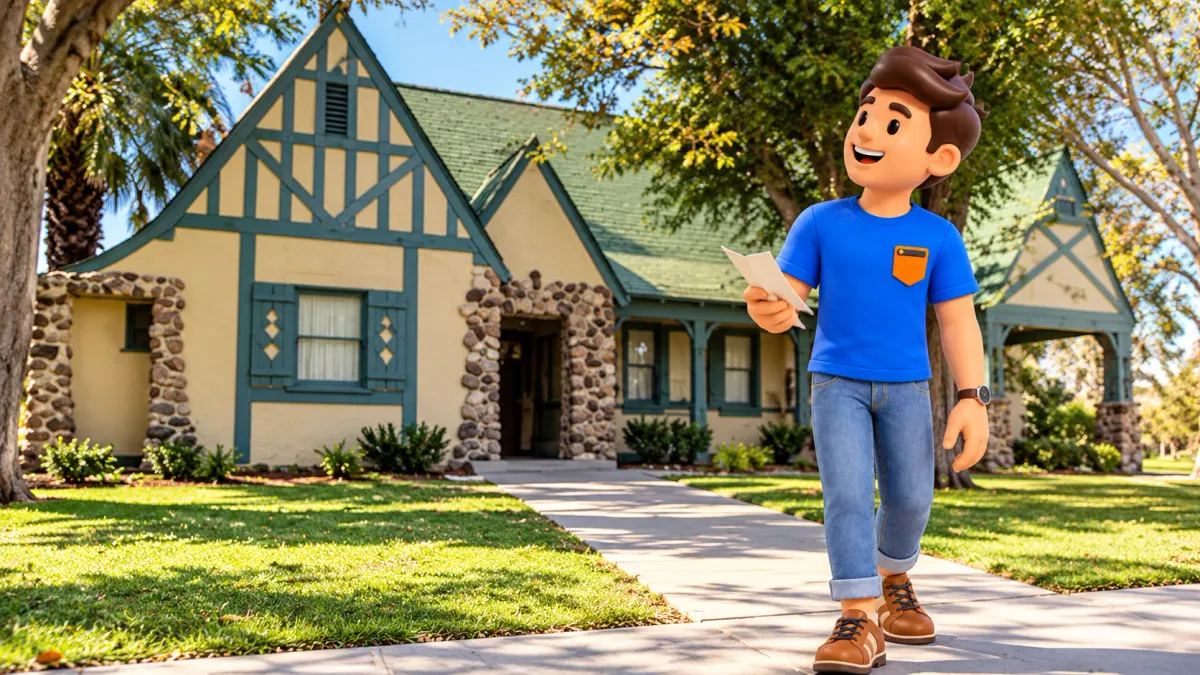
Clark County Museum offers a useful way to understand Southern Nevada through everyday life. Instead of another skyline viewpoint, you can look at domestic rooms, a former wedding chapel and a railway depot, then connect those places with the region’s larger history.
The museum is in Henderson, at 1830 South Boulder Highway. Treat it as a separate outing from the Las Vegas resort corridor. Its Heritage Street belongs to the museum complex; it is not the similarly named Heritage Park or an ordinary residential street where every house is still in its original location.
Build a selective museum half-day
Allow around two to three hours on site for the exhibit hall and a few outdoor buildings, with extra time for travel from your hotel. This is an editorial planning allowance, not a measured visit or a guarantee that the whole journey fits a fixed half-day. Current traffic and your interest in the displays matter.
RoadMe makes it much easier to plan a personal trip around your interests, available time and preferred pace. Let the app organize the wider journey so a museum visit in Henderson fits comfortably into your Las Vegas stay.
A simple first-visit structure is enough: begin with the main exhibit hall, choose a small number of Heritage Street houses, then add the chapel or depot if you still have time. Return without trying to inspect every building or outdoor area. The museum’s variety gives you choices rather than an obligation to finish a checklist.
At arrival, ask which interiors are accessible that day and use the current visitor map. Opening hours for the museum do not prove that every house, carriage or room will be open throughout your visit. A selective plan adapts more easily to maintenance, activity or a closed door.
If you especially enjoy domestic history, give more attention to the houses and less to the railway area. If transport history is your main interest, reverse that balance. The route works best when one or two themes guide your decisions.
Begin in the exhibit hall
The Anna Robert Parks Exhibit Hall presents a broad timeline of Southern Nevada, from the Ice Age to the entertainment era. Start here to gain context before moving among the buildings outside. You do not need to read every panel to understand that the region’s history includes far more than casinos.
Choose one question for this first section. How did people live in this environment? What changed when transport and settlement expanded? How did ordinary work support the region’s growth? A question gives you a reason to look closely without turning a short visit into a study session.
The timeline includes Indigenous history as well as later settlement and industry. Keep those histories distinct rather than treating the landscape as empty before newcomers arrived. A few thoughtful minutes with the museum’s interpretation can improve the way you read the houses and infrastructure outside.
Temporary displays may add another subject, but their dates and contents change. Decide on arrival whether the current exhibition deserves part of your time. A past exhibition mentioned in an old article is not a reliable promise of what will be on view during your trip.
Heritage Street: look for everyday details
Heritage Street brings together historic buildings restored to portray daily life in different decades. Some have been moved to the museum from elsewhere. That distinction is part of the interest: the street is a curated collection, not a complete neighborhood preserved unchanged on its original site.
Choose two or three houses that are accessible and appeal to you. Look for a few concrete details rather than trying to remember every object: the arrangement of a room, the relationship between work and leisure, or the difference between one decade’s domestic setting and another.
The Goumond House offers a useful example of how the museum preserves buildings through relocation. Its own fact sheet dates the house to 1931, identifies its original Las Vegas address and records its move to the museum in 1984. The restored interpretation represents the 1950s, so the building date and the displayed period are different ideas.
That distinction helps avoid a common misunderstanding. An old house is not necessarily furnished to its first year, and a restored room is an interpretation of a period rather than evidence that every object has always stood in the same spot. Use the museum’s labels to understand what you are seeing.
Keep to the visitor route and leave furniture and objects alone. Domestic rooms can feel familiar, but they are displays, not places to sit, open drawers or rearrange an object for a photograph. A door or barrier determines the available view; it does not need to become a problem to solve.
The Candlelight Wedding Chapel as a museum object
The Candlelight Wedding Chapel adds a recognizable Las Vegas theme to the outing. Here, however, you are looking at a relocated historic building within a museum. It is a different experience from observing an active wedding venue on the boulevard.
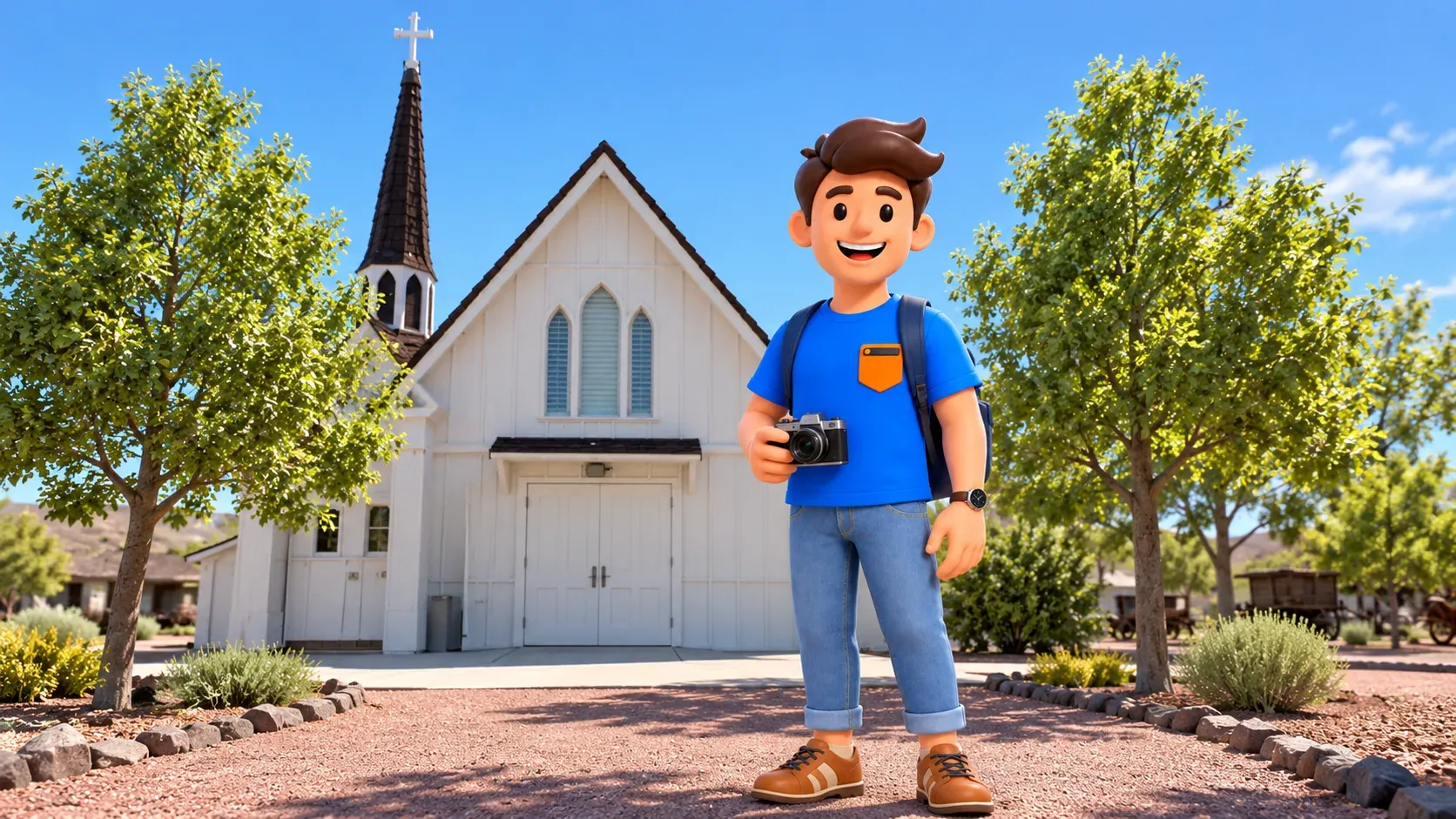
The chapel opened in 1968 under an earlier name. After its working life as a wedding business, the building was moved to the museum in 2007 and opened as a restored exhibit in 2009. Those changes show how an everyday commercial place can become something a community chooses to preserve.
Look at its compact scale, pointed forms and entrance rather than approaching it through a list of celebrity weddings. The architecture is enough to explain the familiar visual language of a Las Vegas chapel. If the interior is accessible, follow the posted visitor route; if it is closed, the exterior still contributes to the story.
Do not confuse a museum display with a promise of a ceremony or a venue service. For this visit the chapel is one selected historical stop, and there is no need to turn it into a second wedding-themed itinerary within the museum.
Optional railway stop: Boulder City Depot
If time and energy allow, continue to the Boulder City Depot area. The depot originally served passengers and freight associated with Boulder City and Hoover Dam. Its relocation to the museum in 1974 is another reminder that these buildings came from different places and roles within Southern Nevada.
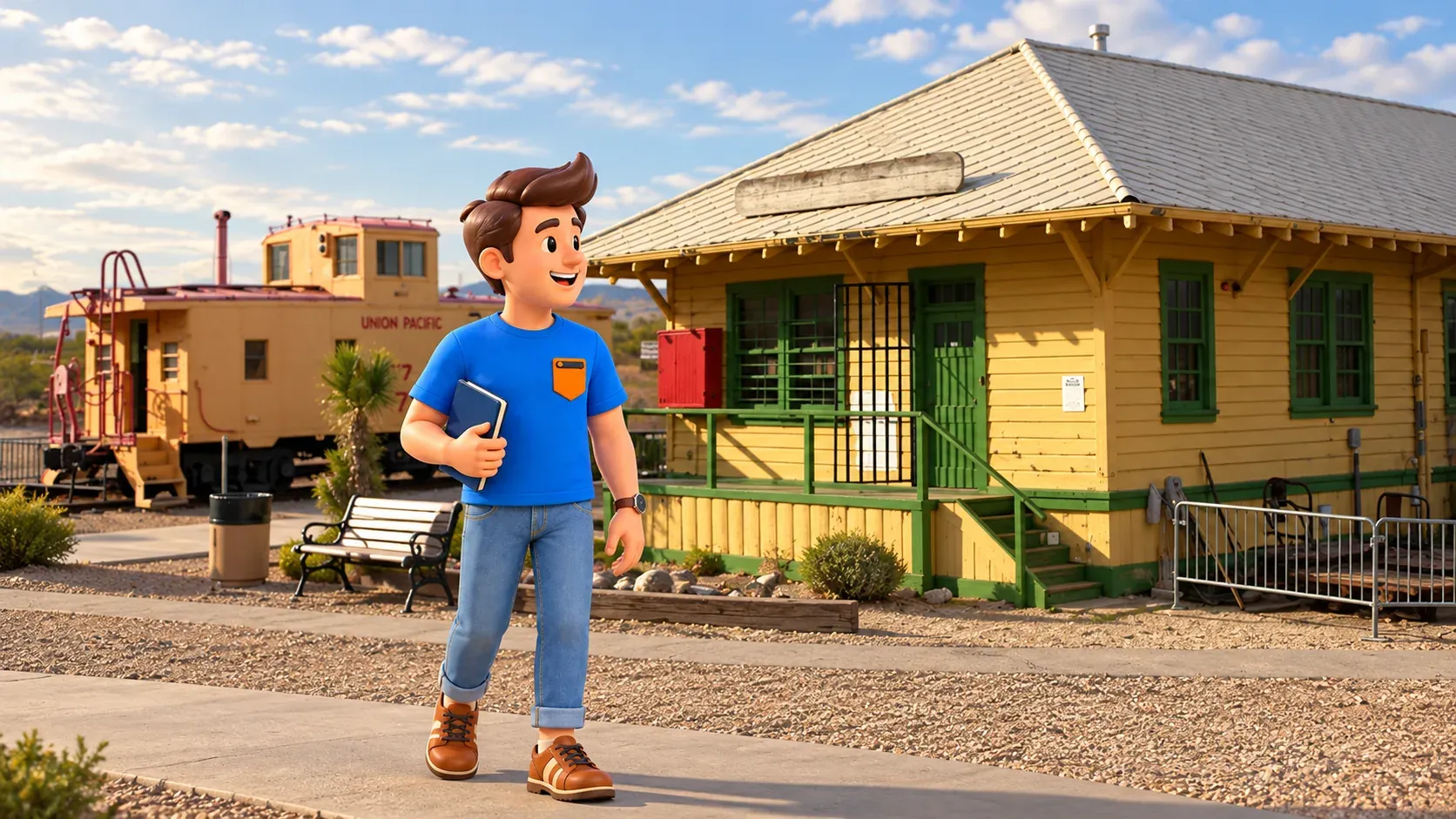
The depot gives you a different scale of everyday history from a house. Think about arrivals, luggage, supplies and the work of moving people and goods. That practical perspective connects the railway display with the domestic settings you have just seen.
Observe rolling stock only from the areas and entrances currently permitted. A vehicle’s presence outdoors does not make it climbing equipment, and a platform or ladder is not an automatic visitor invitation. If a carriage interior is closed, remain with the accessible exterior view.
You can finish after this stop. The hall, a few houses and one specialized building already form a rounded visit. Additional outdoor areas are options for another day or for extra time, rather than missing pieces that invalidate a shorter outing.
Make the journey and visit comfortable
RoadMe can work out a personalized route or whole trip based on your interests, time and pace, making a separate museum outing much more convenient to arrange. Use the app to balance travel to Henderson with the parts of Las Vegas you most want to experience.
The current museum page lists daily opening from 9 a.m. to 4:30 p.m., with closures on Thanksgiving, Christmas and New Year’s Day. General admission is currently free. Check the latest notice before leaving, especially around events and holidays; old price lists may not match the current visitor information.
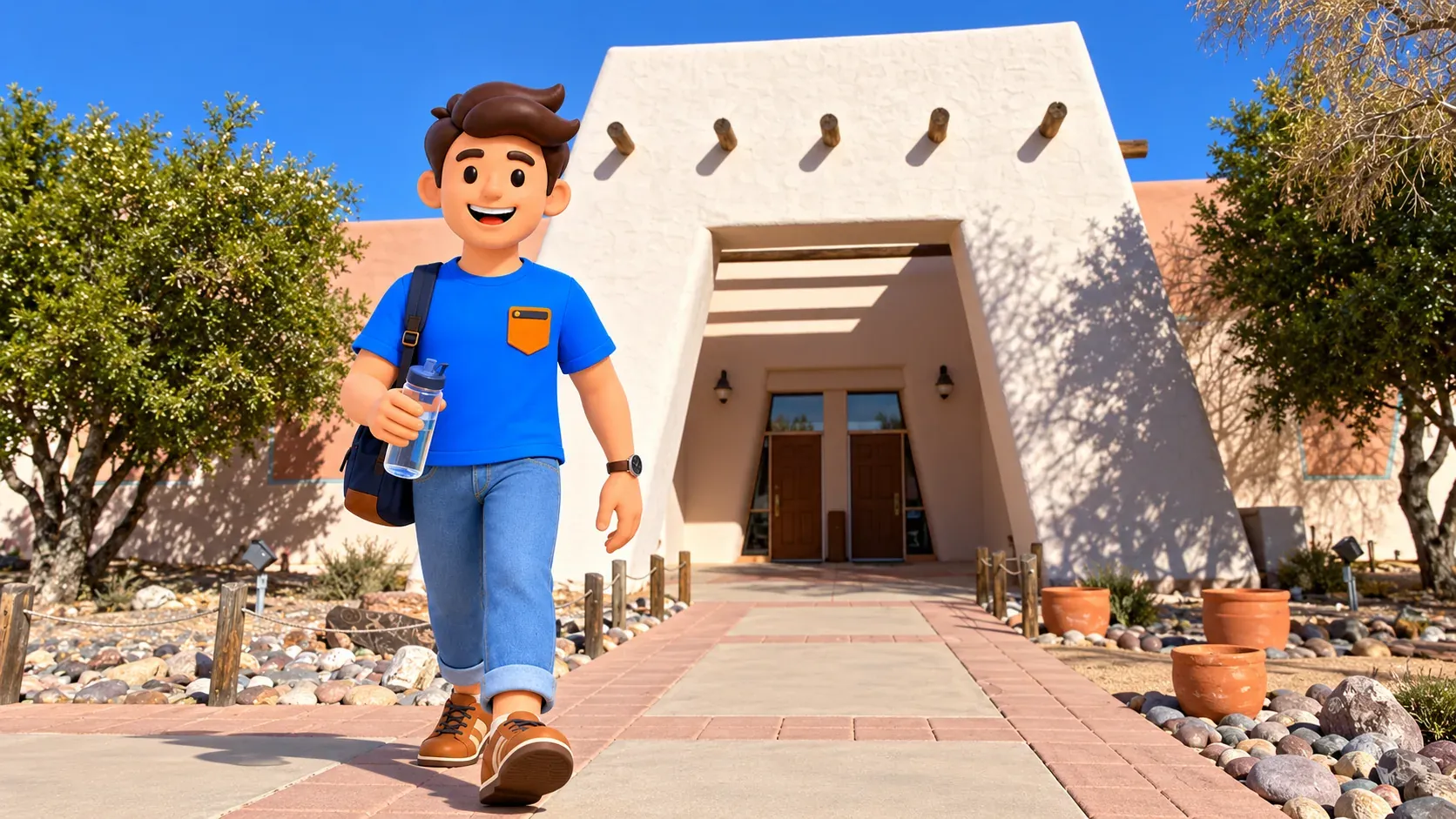
The museum also displays a road-construction notice affecting the approach from southbound Boulder Highway. Check the current access instructions and actual navigation before driving rather than assuming the most obvious direct turn will be available. Leave room in your schedule for the approach, parking and return journey.
Some of the visit is outdoors, so take water and choose a pace that suits the weather. In hot conditions, shorten the exterior selection. If you need particular access arrangements, ask about the current buildings and paths rather than assuming every historic threshold or surface is equivalent.
For personal photographs, follow the museum’s rules: keep paths and doorways clear, do not use flash inside buildings and do not touch, move or climb on exhibits. Organized or paid photography has separate permit requirements; an ordinary visit should not be treated as a staged photo session using the collection as props.
The illustrations interpret the museum’s real buildings and the idea of a visitor’s walk. Their viewpoints are not evidence that every depicted doorway will be open. On the day, follow the actual visitor guidance and choose the accessible parts that interest you most.
Leave with one or two details that made the region’s past feel concrete: a room arrangement, a small chapel or a depot built for daily movement. A selective visit can make Southern Nevada more understandable without exhausting every display. That is a worthwhile reason to give this Henderson museum its own place in your trip.


