
Mammoths in the Desert: The Ancient Landscape of Las Vegas
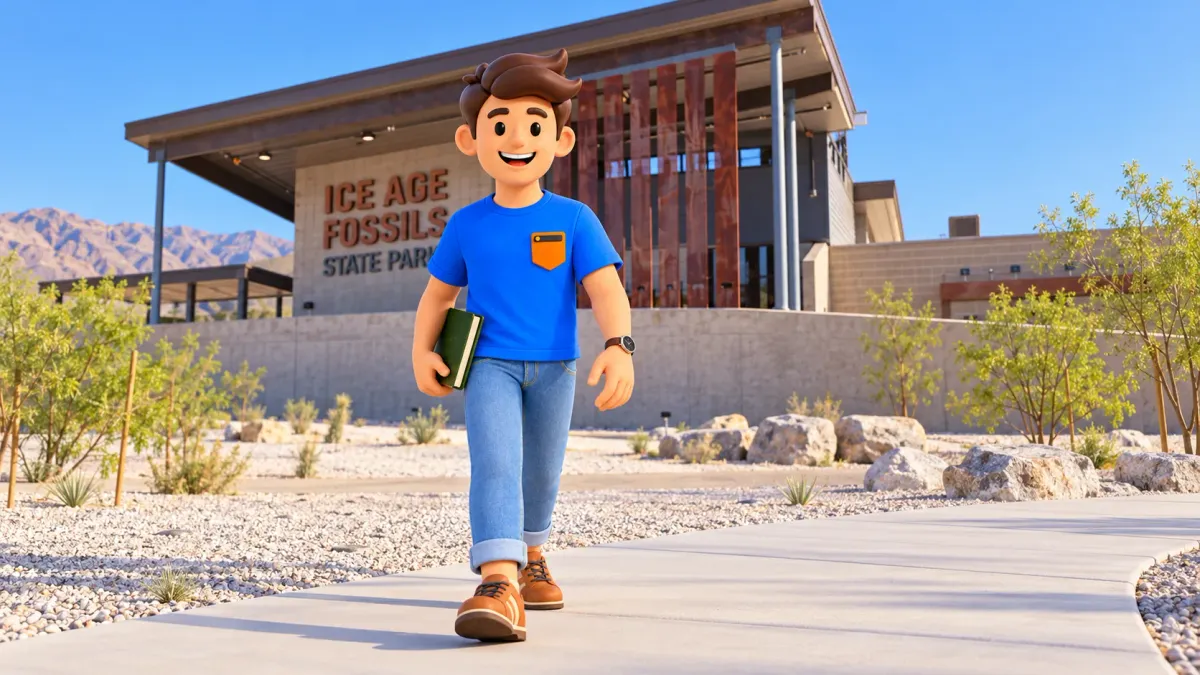
A mammoth may be the last animal you expect to encounter in the story of Las Vegas. Yet long before the city’s hotels and roads, large mammals moved through a valley with spring-fed wetlands. The pale, dry landscape visible today preserves evidence of environments that looked very different.
Ice Age Fossils State Park, its visitor center and the Monumental Mammoth artwork offer an accessible way into that story. A separate natural-history museum visit can broaden the subject. The aim is to learn how to read a landscape and its interpretation, rather than turn a day out into a hunt for objects to collect.
Begin with the landscape, not a search for a giant skeleton
The most useful first question is what allowed animals to live here. Water, vegetation and changing conditions matter as much as the size of a mammoth. An apparently quiet patch of desert becomes more interesting when you know it contains a record of older habitats.
RoadMe makes this kind of discovery easier and more effective by developing a personal route or whole trip around your interests, time and pace. Let the app work out a coherent plan so natural history has enough room alongside the other Las Vegas experiences you want.
Do not expect a complete skeleton waiting beside every path. Fossils can be small, fragmentary and difficult to recognize. A visitor center helps connect those pieces of evidence with the larger picture, while outdoor observation gives the story a physical setting.
There are also several different names to keep apart. Ice Age Fossils State Park is a Nevada state park. Tule Springs Fossil Beds National Monument is a separate National Park Service site in the broader area. Their management, facilities and visiting arrangements are not interchangeable.
An Ice Age valley without a blanket of ice
The phrase Ice Age can suggest glaciers covering every landscape. The National Park Service explains that Tule Springs was cooler and wetter during the Pleistocene, but did not have large glaciers or ice sheets. Spring-fed wetlands and streams are a better starting image than a frozen valley beneath a wall of ice.
The deposits called the Las Vegas Formation preserve evidence of changing water conditions and past life. This was not one unchanging green scene. Over long periods, environments shifted, sediments accumulated and animals left remains that researchers can study.
That idea changes what counts as an interesting view. Layers, pale ground and the shape of a wash can become parts of a question about the past. You do not have to identify each layer yourself; the important step is recognizing that the landscape contains a sequence rather than a single moment.
Nor should a reconstruction of a wetland be treated as a photograph. Scientists combine different kinds of evidence to interpret earlier environments. A painting can help you imagine the result, while the sources behind it explain what is known and where uncertainty remains.
Meet the Columbian mammoth
The mammoth associated with Tule Springs is the Columbian mammoth, Mammuthus columbi. It is not simply the familiar woolly mammoth moved into a desert scene. The distinction matters because a generic snowy image can hide the particular animal and habitat recorded here.
Long curved tusks make mammoths recognizable, but a tooth can be just as informative. The National Park Service describes ridged molars adapted for processing plant material. This offers a useful connection between a fossil’s shape and a practical question: how did an animal eat?
Thinking about diet brings the landscape back into the story. A large herbivore needs more than space in which to stand. Vegetation and water help explain why a wetland setting could support animals whose remains now seem surprising in the modern valley.
Avoid treating every elephant-like image as the same species or every reconstruction detail as equally certain. For a casual visit, reading the name and the exhibit explanation is enough to improve your understanding. Precision can be simple: identify the animal before attaching a familiar picture to it.
Camels, horses and smaller evidence
Mammoths were not alone. Research summarized by the U.S. Geological Survey describes ancient camels, horses, bison, ground sloths and predators among the fauna recorded in the Las Vegas Formation. The subject is an ecosystem, not a single celebrity animal.
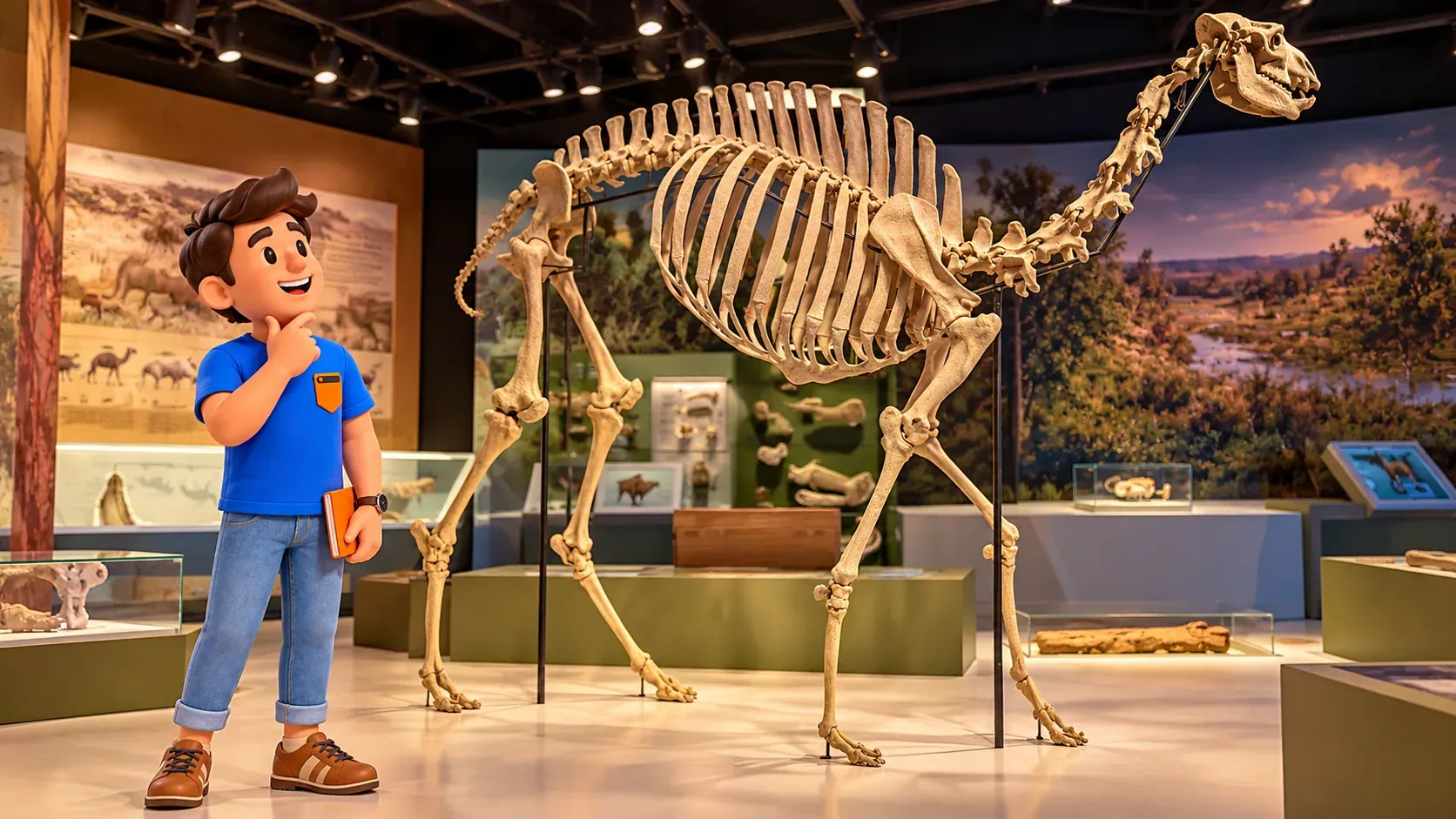
A mounted camel skeleton can be a particularly useful surprise. Its long neck and proportions offer a different form from the mammoth, and a museum setting makes comparison easier. Read the label to distinguish original material, casts, assembled mounts and interpretation rather than assuming everything visible is an untouched specimen.
Small remains matter too. The fossil record includes evidence from invertebrates as well as large mammals. A tiny shell may contribute to understanding a water-related habitat even if it is less dramatic than a tusk. Size is not the same thing as scientific value.
For families, try asking which piece of evidence answers which question. A tooth might suggest feeding, a shell might lead to a discussion of habitat, and a sediment layer might raise a question about change. The aim is conversation, not finding and handling material outdoors.
The visitor center connects fragments with a whole story
Ice Age Fossils State Park’s visitor center provides natural-history exhibits and practical facilities. It is a sensible place to begin because information can make the surrounding terrain easier to understand. Ask what is currently accessible before committing to a walk.
The park also connects the landscape with a history of scientific investigation, including the Big Dig of 1962–63. That reminder is valuable: the picture of the ancient valley did not appear all at once. It developed through fieldwork, comparison and continuing research.
Think about what an exhibition does for you. It can gather information that is scattered across a large area, show scale and explain relationships. It may also use casts, models or illustrations. Those tools are useful precisely when you keep them distinct from the evidence they interpret.
The illustrations in this article follow the same principle. They are artistic interpretations of settings and educational ideas, not documentary records of an excavation or guarantees that a particular display will be arranged identically on your visit.
The Monumental Mammoth is contemporary art
The Monumental Mammoth is a modern metal sculpture at Ice Age Fossils State Park. It is not a fossil and not an excavated skeleton. Its recognizable outline and assembled material give visitors a memorable contemporary encounter with the theme of ancient life.
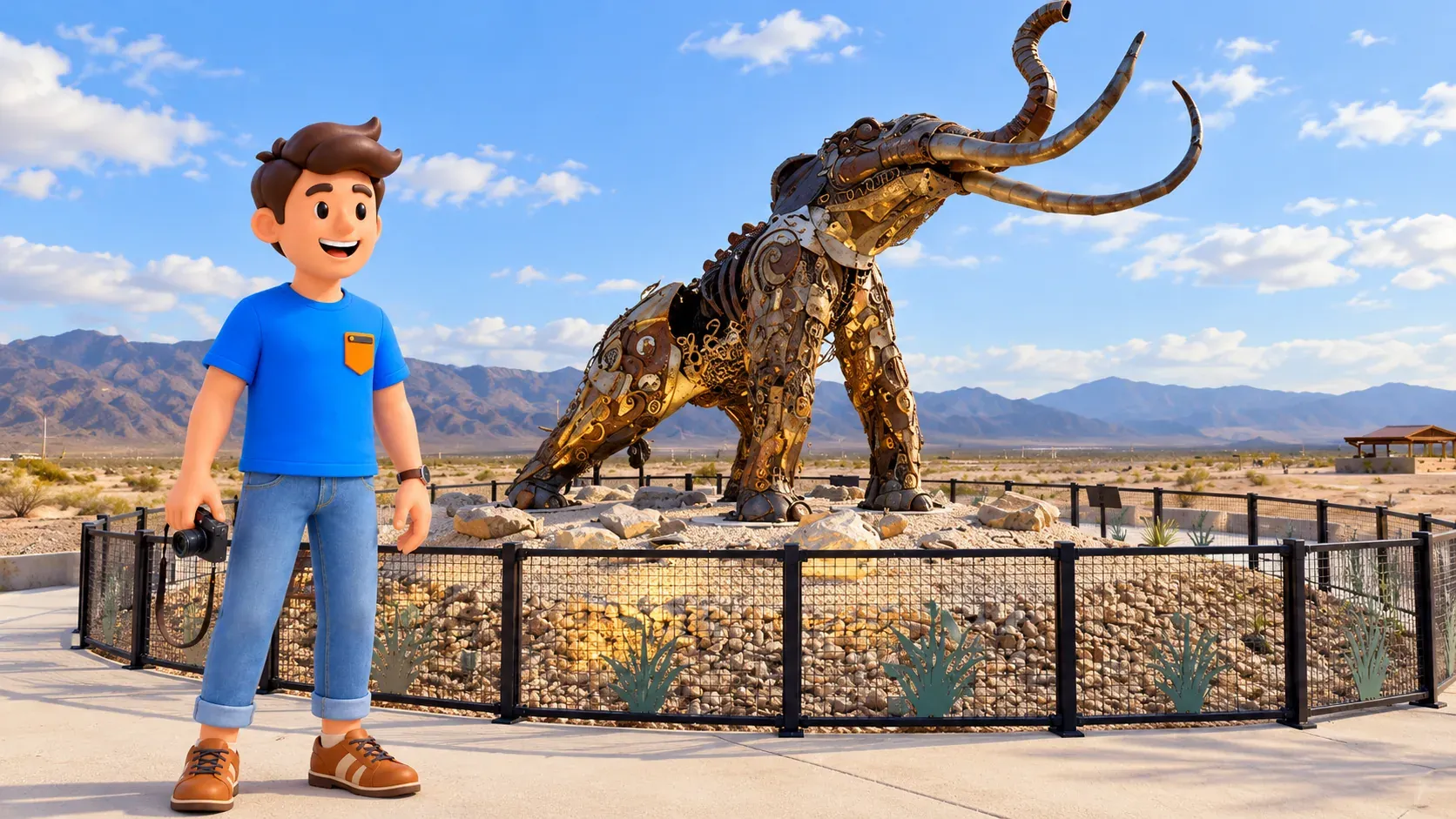
Look at the contrast between the animal shape and the metal components. Art can help an audience connect emotionally with a subject, while scientific interpretation supplies different kinds of information. Both can belong to one visit without being confused.
The distinction is useful elsewhere too. A reconstruction shows an interpretation, an artwork can invite reflection, and a fossil preserves evidence of past life. None of those categories needs to replace the others for a visit to be worthwhile.
Observe the sculpture from the permitted area and respect its boundary. Its visibility in an illustration does not establish access during a closure, nor does it make climbing or crossing a fence appropriate. Ask staff about the available approach for your day.
A museum offers another scale of comparison
The Las Vegas Science & Natural History Museum provides a separate indoor option for exploring prehistoric life. Its Prehistoric Life Gallery introduces dinosaurs as well as Nevada’s Ice Age. That breadth can be useful, provided you do not merge very different time periods into one scene.
Mammoths are mammals, not dinosaurs. A museum containing both subjects does not mean they lived together in the Las Vegas valley. Use the exhibit labels and chronology to separate the stories before comparing how the displays explain them.
This is also a separate venue, not another room inside the state park. Choose it according to your interests and current program rather than assuming it will fit automatically after an outdoor visit. An indoor day and a landscape visit can answer different questions.
What changed, and what you can notice now
By the end of the Pleistocene, the environments and animal communities were changing. The causes of large-mammal extinctions remain a subject of research; do not reduce them to one universally settled explanation. Climate change and human activity are among the factors discussed by researchers.
As checked in October 2026, the state park normally opens Wednesday–Sunday, 8am–4:30pm. An October 14 notice reports parts of Las Vegas Wash Trail closed after storm damage until further notice. Start at the visitor center and follow the routes staff confirm as available.
With RoadMe, it is more convenient to build a whole personal trip around your curiosity, available time and preferred rhythm. Let the app develop the broader plan so a thoughtful fossil-themed visit balances learning, travel, food and rest.
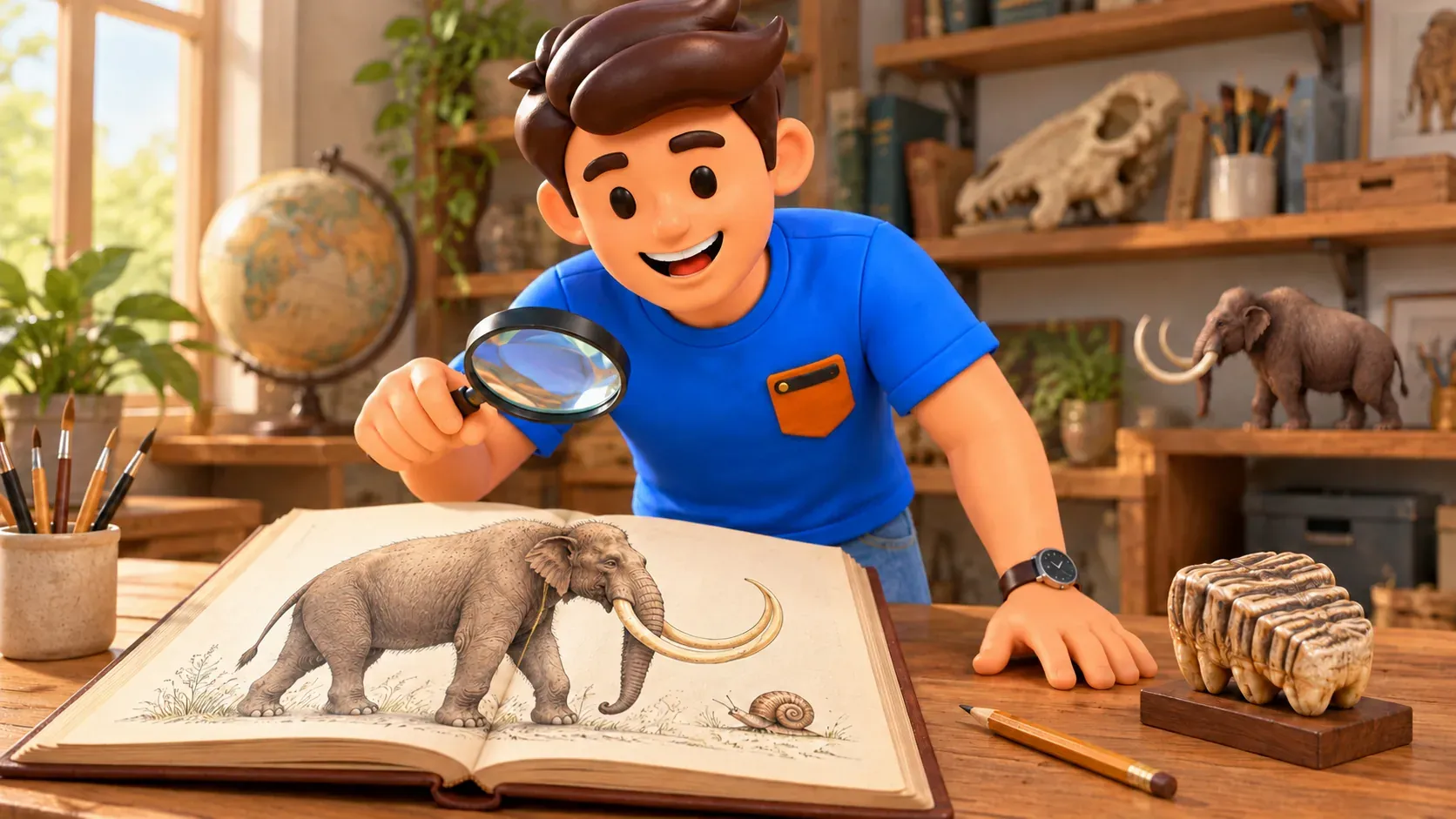
Stay on designated open paths and leave fossils, rocks and other protected features undisturbed. The educational worktable illustration is conceptual, with a replica model rather than material collected from the park. Bring drinking water for outdoor time and account for the weather instead of assuming a cooler ancient climate describes today’s conditions.
The strongest souvenir may be a changed view of the desert. Behind today’s dry ground you can begin to imagine a sequence of wetter habitats, animals and discoveries. Las Vegas then gains a history far older than its skyline, without the landscape needing to reveal everything at once.


