
Seodaemun: a walk through Seoul’s places of historical memory
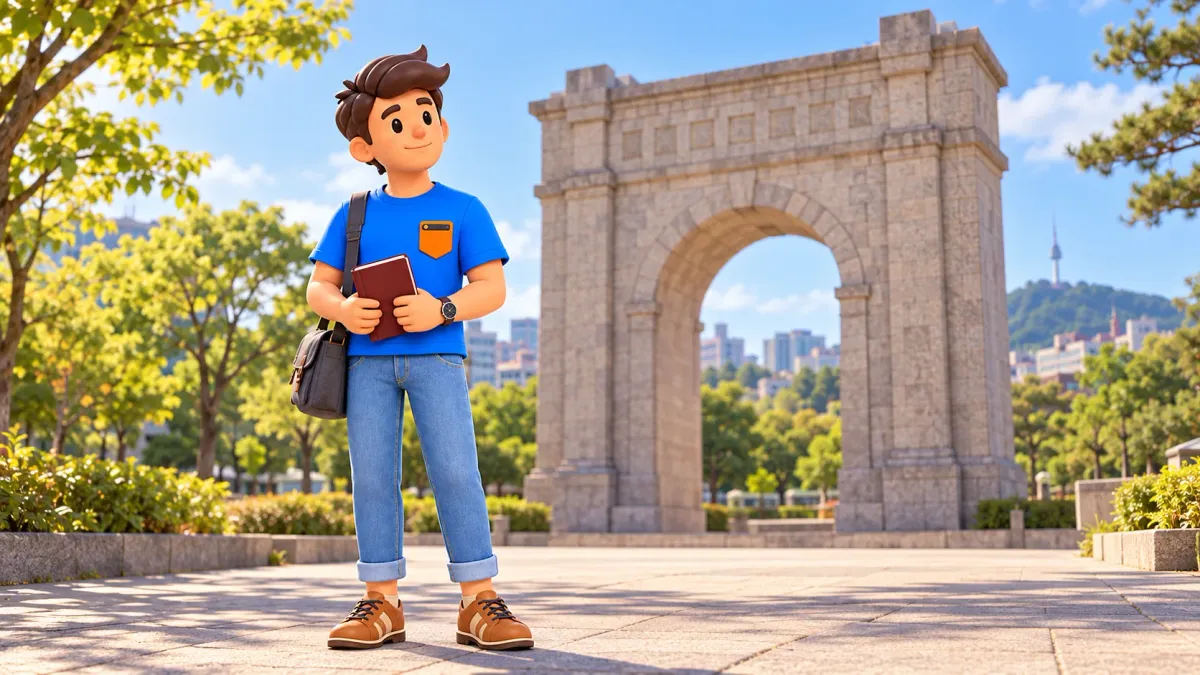
Give Seodaemun three to four hours: begin at Dongnimmun Independence Gate, walk through the park to the former prison museum, then finish with an unhurried outdoor pause. Dongnimmun station on Line 3 is the main transport reference. Add travel from your accommodation separately. The museum takes the largest share of time and attention, so choose an operating day and arrive well before closing.
This part of Seoul reveals different meanings of independence. The late nineteenth-century arch concerns sovereignty; the prison concerns colonial repression and the later struggle for civil rights; the park concerns public remembrance. They stand close together without belonging to one event. Keeping that sequence clear is more useful than gathering photographs of similarly named monuments while losing their different dates and purposes.
Three stops, with time after the museum
From the station, reach the gate by the public approach, then follow the park layout towards the separate museum entrance. After the galleries, return to open space and leave a pause before the next commitment. In this order, the monument introduces a historical question, the museum brings it to human scale, and the park allows reflection without an immediate transition to another demanding visit.
For a trip shaped by an interest in history, plan more conveniently with RoadMe: the app develops a complete personal programme around your interests, dates and pace. Museums, neighbourhood walks and useful pauses receive suitable space in a plan that is easier to follow while travelling.
| Part | Suggested allowance | Purpose |
|---|---|---|
| Dongnimmun | 20–30 minutes | Sovereignty and the late nineteenth century |
| Park connection | 15–20 minutes | Link different places of memory |
| Prison museum | 120–150 minutes | Buildings, documents and individual histories |
| Park afterwards | 30–40 minutes | Rest and a considered ending |
These are editorial estimates, not measured route times. They cover selected exhibition spaces rather than every label or a separate programme. A tour or extended document study needs more time. With a limited allowance, reduce the number of rooms while preserving understanding, instead of rushing through everything before closing. The sites’ geographical proximity does not reduce the amount of history they contain.
Find the appropriate station approach
The district directions use Dongnimmun Exit 4 for the gate and park. The museum has its own approach, with tourism listings also using Exit 5. Follow current signs and public access, recognising that the museum entrance and the nearest point to the arch differ. Once inside the park, its layout is more useful than crossing a major road towards a loosely chosen map marker.
Save 독립문 for the gate, 서대문형무소역사관 for the museum and 서대문독립공원 for the park. Seodaemun’s name relates to a western gate, but Dongnimmun is not a surviving defensive tower of the city wall. Seodaemun Natural History Museum is another institution elsewhere. A shared district name does not make it the next gallery or a compulsory continuation of this particular walk.
The outdoor area is compact, but check access to individual buildings and levels separately. A lift or accessible toilet does not establish identical conditions throughout historic interiors. If you need a particular arrangement, confirm the approach and choose a suitable sequence. The visit’s value lies in what becomes understandable, rather than crossing every threshold regardless of comfort or practical accessibility.
Dongnimmun: an arch completed in 1897
The granite gate was completed in 1897 through the Independence Club, associated with Seo Jae-pil, also known as Philip Jaisohn. Donations supported its construction. The monument expressed aspirations for Korea’s sovereign position in the late nineteenth century. That chronology matters: it predates the Japanese annexation of 1910 and was not built to celebrate the liberation of 1945.
Nearby Yeongeunmun had been associated with receiving Chinese envoys. Its remaining stone bases make a change in diplomatic language tangible. A monument to sovereignty replaced the meaning attached to an earlier ceremonial entrance. The setting therefore matters as much as the arch’s European reference. Location and surviving fragments explain why a new structure received such a deliberate name in this particular part of the city.
The Paris Arc de Triomphe provided a model, while the Seoul structure has its own scale and treatment of granite. Look at the single opening, heavy supports and upper band, then its position within today’s streets. Road construction prompted relocation in 1979. The present scene combines a nineteenth-century monument with a later urban layout rather than preserving an unchanged relationship with every surrounding feature.
Retain two moments as you continue: 1897 for the arch and the early twentieth century for the prison. Dongnimmun acquired further meanings after Korea lost independence, without losing its original context. A historical monument can participate in later remembrance while remaining a product of its own period. This distinction helps read the park’s other objects without turning them into illustrations of a single general event.
From a public symbol to a place of confinement
Follow permitted paths towards the museum. Red brick and a bounded compound change the spatial character after the freestanding arch. Here, architecture is itself evidence: windows, doors, corridors and building relationships were associated with control. Start with the overall plan. Understanding the arrangement helps relate rooms to functions instead of treating each interior as an isolated striking scene.
Construction began in 1907 and the prison opened in 1908, when Korea was already under a Japanese protectorate. The complex later expanded and changed names. Surviving buildings reflect several stages rather than one construction date. Even a brief look at the layout shows different kinds of rooms and ways of organising movement. The present ensemble should not be imagined as one unchanged building conceived and used in a single moment.

Begin with a person and a document
Rather than trying to absorb everything, select one documented history and follow the available interpretation. A record card or photograph reveals a particular person behind the general idea of an independence movement. Name, circumstances and context matter. There is no need to invent a prisoner’s inner voice or attribute feelings to an unexplained image. The document and the museum’s explanation provide a sufficient basis for attention.
Yu Gwan-sun, associated with the March First Movement of 1919, forms part of Seodaemun’s memory. Her history is important, but the museum contains many lives. Treat a familiar name as an entrance into that wider account. Standardised records reveal a system; differences between biographies restore individuality to people it classified. This approach leaves a more precise impression than concentrating only on the most difficult spaces.
Compare documents with the building: repeated doors, restricted views and corridor directions. Architectural observation helps explain conditions without replacing the human account. A few clearly noticed relationships are enough. Photographing or describing every detail is unnecessary. If material needs a pause, take one rather than following another visitor’s pace through every block. A smaller selection read carefully can communicate more than a hurried complete circuit.

The history continued after 1945
Korea’s liberation did not immediately end the prison’s operation. In later decades, it also held participants in democratic movements opposing authoritarian regimes. This expands the museum’s subject beyond colonial rule to subsequent political confinement. The periods need their own explanation. One unchanging label for the institution’s whole history would conceal the different circumstances and experiences represented across the twentieth century.
In 1987 the prison institution moved to Uiwang. Preservation developed afterwards: Independence Park opened in 1992 and the history museum in 1998. A third story emerges through that process, concerning society’s decision to study and present difficult history. Park and museum change the relationship between historical buildings, documents and the people entering today. Public access now supports remembrance and interpretation rather than the former function of confinement.
Not all the original complex survives. Use current interpretation to distinguish old fabric, reconstructed elements and museum explanation. That makes understanding more precise without diminishing the visit. The present route represents selected parts of a larger institution. An unchanged complete view of any one era should not be promised, even when a shared red-brick appearance creates an initial sense of architectural unity.
Choose the depth of the visit
The exhibitions address imprisonment and repression, and some sections are emotionally demanding. With children, consider the subject beforehand and select rooms according to readiness instead of completing a checklist. Exterior architecture and documentary explanation can form a sufficient visit. Avoid turning cells into a game or a staged prisoner photograph. Quiet observation remains a complete way of engaging with the history, without participating in every possible display.
The operator asks for quiet behaviour, no touching exhibits and no flash or tripods. Keep food outside according to museum rules. The leaflet in the illustration belongs to the visitor; it is not an original document removed from a case. A photograph can help retain an understood detail without becoming the main activity in each room. Follow the signs for the particular space as well as the general rules.
Guided visits and educational programmes have their own booking and language arrangements. An ordinary ticket should not be understood as an included personal tour. Confirm those conditions beforehand if they matter to you. For an independent visit, choosing a few clear themes and leaving reading time is more useful than assuming a group will necessarily be available at the right moment or in your preferred language.
Museum hours differ from outdoor access
Regular museum hours are 09:30–18:00 from March to October and 09:30–17:00 from November to February. Last admission is thirty minutes before closing, which leaves little time for the proposed visit. Arrive in the morning or reserve a substantial daytime window. Monday is the normal closing day; when Monday is a public holiday, the closure moves to the following day.
The museum also closes on January 1, Seollal day and Chuseok day. Check the calendar and notices for your date, since building work or a particular event can affect access. The museum requires a ticket, while outdoor park and gate visits have separate arrangements and free access. Round-the-clock park opening does not mean that galleries or every memorial building operate through the night.
Let the park complete the walk
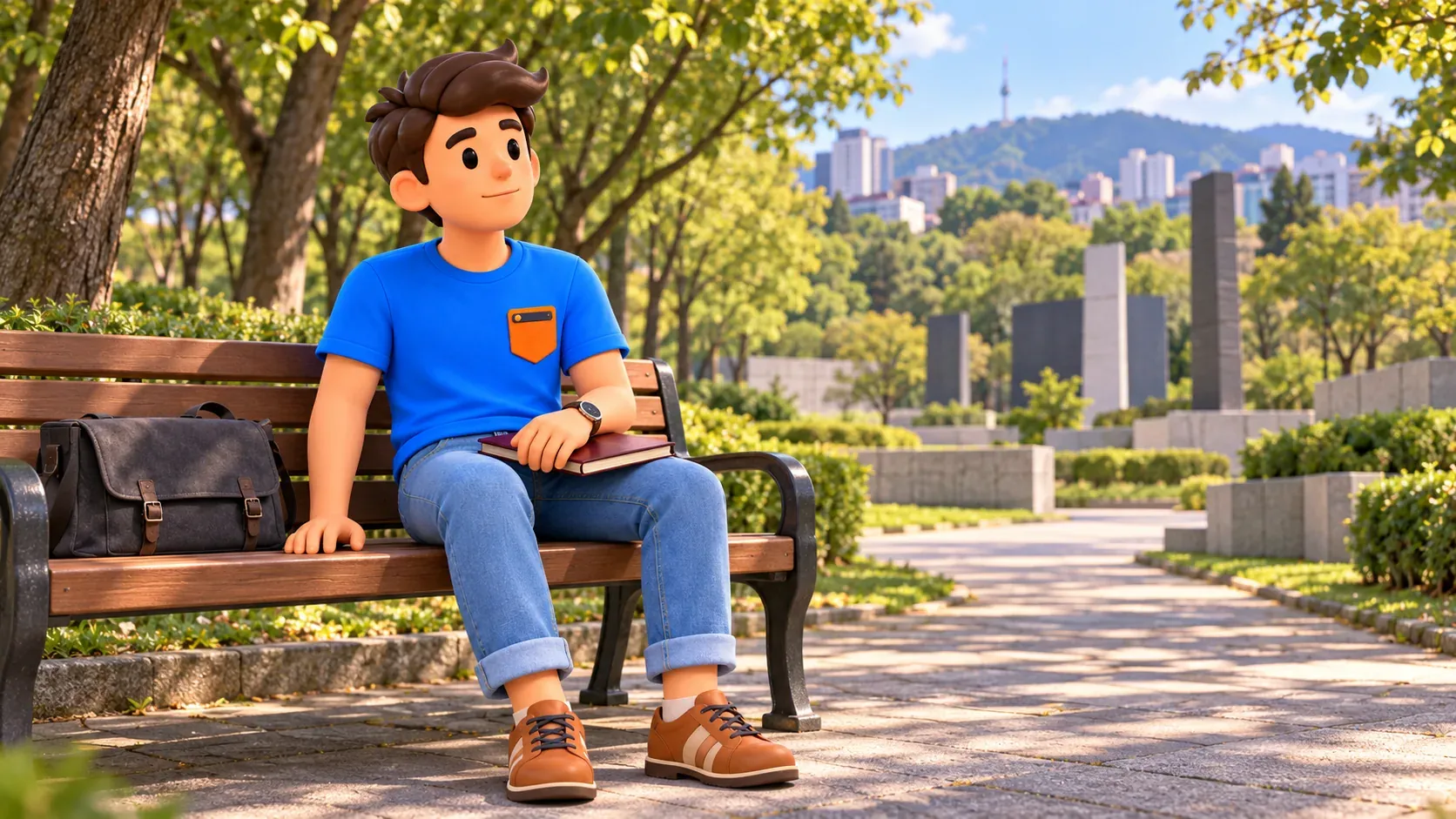
After the museum, leave room for a tree-lined path, a bench and available memorials. The park links periods through an everyday public setting. Compare the sequence again: the arch expressed sovereignty, the buildings convey confinement, and the later landscape organises memory. Reading every inscription consecutively is unnecessary. Keeping these differences clear already explains the relationships between the selected stops and their place in the city.
Distribute visits like this more conveniently with RoadMe: the app prepares a complete personal trip plan around your interests and pace, combining history, other neighbourhoods and rest. A developed programme helps you use time thoughtfully without concentrating too many demanding experiences in one day.
Finish through a clear public exit towards the station. Seodaemun does not require an immediate extra museum or a climb on the neighbouring mountain. You can eat after leaving and allow this visit to remain its own experience. Three to four hours is enough for a coherent sequence: a symbol of sovereignty, a place of individual human histories and a landscape where the city preserves memory of those different stages.


