
Why glowing fish circle in New York’s Battery
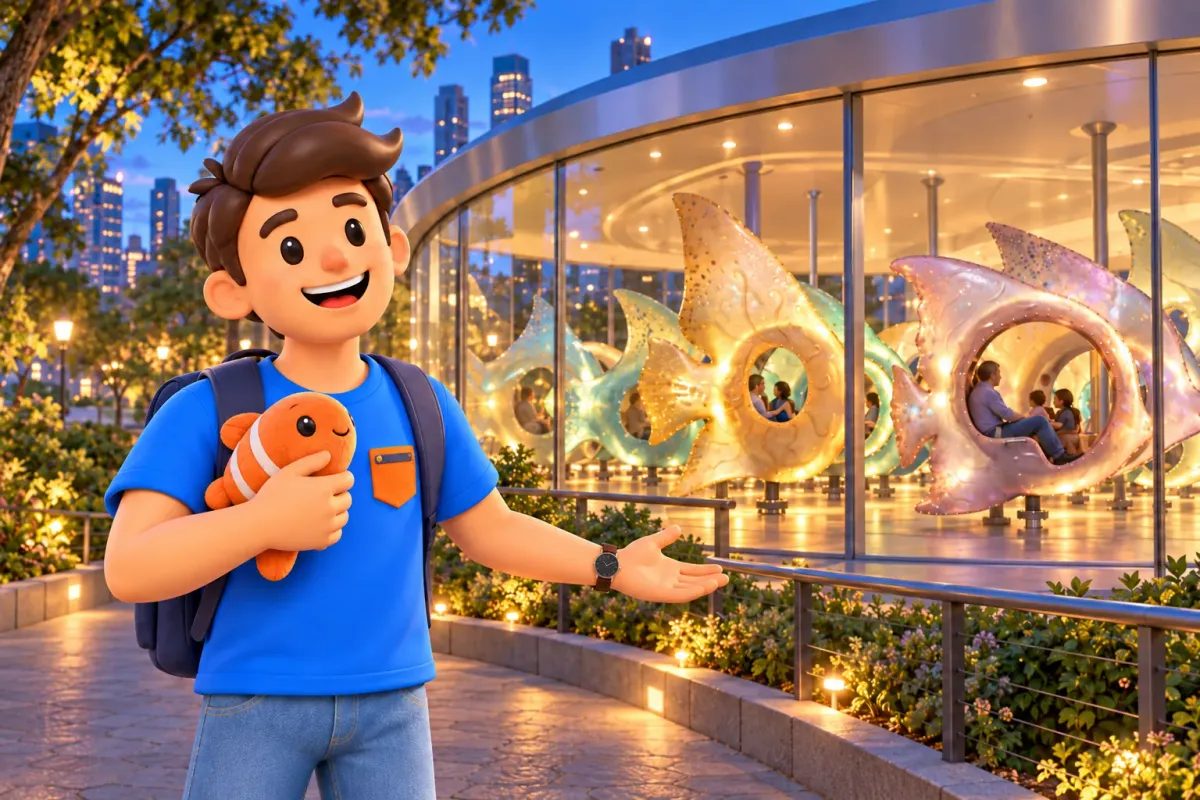
The glowing fish at The Battery belong to SeaGlass Carousel, an attraction that turns a ride into an imagined underwater scene. Their presence has a local explanation: the New York Aquarium once occupied nearby Castle Clinton. SeaGlass recalls that chapter through changing colour, movement and music, rather than rebuilding the old aquarium. The result is a small discovery with a larger city story behind it.
You do not need a full day devoted to carousels to enjoy the idea. If your New York plans already include the southern tip of Manhattan, this can become a playful pause among bigger experiences. The useful question is not how many more sights you can fit around it. It is whether this particular mix of design, history and childlike wonder suits the people travelling with you.
Start with the fish, rather than a checklist
RoadMe makes it much easier to prepare a personal New York day around your interests and pace, including unusual discoveries such as SeaGlass. The application helps build a whole plan with room for major experiences, small surprises and the rest your group actually needs.
SeaGlass is in The Battery, near State Street, within the park’s southern setting. Think of it as one attraction inside a larger public landscape. Visiting the park and taking a ride are different decisions: an open path does not establish that the carousel is operating. A glowing photograph is also not a promise that the same view or lighting will be available whenever you arrive.
For a first look, notice the contrast between an ordinary park scene and the strange shapes inside the pavilion. A fish becomes a place for a rider, not an animal behind aquarium glass. That change is the point of the experience. You are looking at a designed performance, where visitors enter the image instead of simply standing outside and observing a collection.
Allow perhaps thirty to sixty minutes for a local pause and an optional ride, adjusting for the actual queue and your group. This is an editorial planning allowance, not a guaranteed admission time or a measured route. Travel to the park, meals and any ferry journey require their own space. A short attraction works best when the surrounding day has not already used every spare minute.
Why fish belong in this part of Manhattan
The New York Aquarium opened in Castle Clinton in 1896 and closed there in 1941. That history gives the marine subject a connection to this particular place. The carousel does not reproduce the aquarium’s tanks or offer a surviving ride from the nineteenth century. It is a modern response to an older association between this corner of Manhattan and the underwater world.
SeaGlass opened to the public in August 2015. The distance between those dates is useful to remember: the fish are contemporary design, not objects left behind when the aquarium closed. The attraction carries a memory forward through a new kind of experience. You can enjoy the historical link without mistaking it for a reconstruction of exactly what earlier aquarium visitors encountered.
That distinction is also a good way to explain the place to children. The old aquarium showed living marine creatures; the carousel uses invented light and movement to suggest being among fish. One was a collection of animals, while the other is a theatrical environment. Knowing the connection makes the choice of subject meaningful, without turning a family outing into a long lesson before anyone is allowed to enjoy the ride.
For adults, it offers another way of reading a park. Urban memory does not always appear as a statue or a plaque. Sometimes a present-day attraction borrows a past theme and changes its form completely. You can ask what remains of an old use, what has been reimagined and how a new audience participates. SeaGlass makes those questions unusually easy to approach.
A pavilion that helps tell the story
The glass-and-steel pavilion was designed by WXY architecture + urban design with the chambered nautilus as an inspiration. The useful thing to look for is the relationship between a curving enclosure and the scene within it. The architecture helps make the fish feel part of a separate world, while the transparency keeps that world connected to the park outside.
From outside, try looking at the building before concentrating on an individual fish. The curved glass catches reflections of trees and surrounding city surfaces. That meeting of park, structure and changing interior colour can be as interesting as a close view of a seat. You do not need to identify every technical detail to notice how the enclosure prepares the imagination for what happens inside.
Theatrical designer George Tsypin’s team helped create the underwater experience. That background is a useful clue: think of SeaGlass as a staged scene rather than a conventional aquarium display. The environment asks light, sound and movement to work together. Each element contributes something different, so a photograph captures only one layer of an attraction designed to unfold over time.
How the glow creates an imagined ocean
The fish are made from fiberglass and lit from within. Their changing LED colours evoke underwater bioluminescence; they are not living luminous animals and do not need to be submerged to create the effect. This is an artistic suggestion of the sea, not a biological demonstration. Keeping that distinction clear makes the spectacle more interesting rather than less magical.
Music and projected light contribute to the same imagined environment. Instead of needing a literal ocean, the design gives the eye and ear a set of cues that belong together. A shape, a shifting colour and a movement can suggest swimming without reproducing a real habitat. That is why the attraction can appeal to people interested in stage design or visual storytelling as well as families seeking a ride.
If you are observing from an appropriate public position, take a moment before lifting the camera. Notice whether your attention goes first to a colour, a silhouette or a reflection. Then decide what you want a photograph to remember. Trying to include every bright element often makes the image less clear than choosing one relationship between a fish and its surroundings.

Movement is part of the illusion
Unlike a familiar carousel organised around a central pole, SeaGlass uses turntables and machinery beneath the floor. Riders sit within the fish as the scene turns around them. The mechanisms create a changing relationship between neighbouring forms, helping suggest a school of fish rather than a simple row of animals following one another. The technical arrangement supports the story rather than demanding that visitors study it.
Do not assume that every seat moves in exactly the same way or suits every rider. The operator describes different ride arrangements and accessibility provisions. If motion, transfers or seating requirements matter to your group, discuss the relevant conditions with staff before joining the ride. A general description of an attraction cannot determine whether an individual visitor will find it comfortable.
For someone who prefers to remain outside, there is still a design story to notice. You can appreciate an unusual attraction without needing everyone in the group to take part in the same way. Arrange a meeting point and allow riders to follow the actual queue and staff instructions. Avoid treating the pavilion as an unrestricted photography space where non-riders can wander among operating seats.
Choose a time that fits the experience
Daylight and darker surroundings emphasise different things. In daylight, the pavilion’s relationship to trees and the city can be easier to read. When the surroundings are darker, artificial colour may become more prominent. That is an observation about light, not a promise of evening operation. Check the current calendar and any weather or maintenance notice before shaping your day around a particular atmosphere.
A fixed photographic ideal can make a short stop needlessly stressful. If you are already nearby at a suitable operating time, a comfortable visit may be more valuable than returning later solely for a different colour of sky. Likewise, a closed carousel should not force the rest of your trip into an awkward detour. Decide beforehand whether riding is important or simply a pleasant possibility.
With children, leave space for the moment after the ride. A brief pause to talk about a favourite fish or sketch a shape can be more satisfying than immediately announcing the next destination. With adults, the same pause can become a conversation about the architecture or the aquarium connection. The attraction is short; the memory does not need to be rushed to match it.

Keep the surrounding plan simple
A useful outline is arrival at The Battery, a first look at the pavilion, an optional ride under the day’s actual conditions and some unhurried park time. This is a flexible sequence, not a detailed turn-by-turn itinerary. Use the routes currently open within the park and let the group’s energy decide how much walking follows. The carousel should add character to the day, not create a new obligation.
Ferry plans need separate attention. Being at the southern end of Manhattan does not make every boat departure part of the same effortless visit, and carousel admission does not include a ferry trip. If a timed departure already anchors your day, put its practical requirements first. A playful extra is most enjoyable when it does not threaten an experience you have specifically booked.
Before leaving for the attraction, confirm operation, the relevant admission conditions and any personal access requirements. There is no need to memorise an old timetable or rely on a historical opening announcement. The essential decision is whether SeaGlass belongs in your day and what role it should play: a central family treat, a design discovery or a possible small surprise during a nearby walk.
A small attraction with a particular local memory
The answer to the glowing fish is therefore more interesting than an unusual choice of carousel animals. SeaGlass brings a former aquarium association into a contemporary scene of architecture, illumination and movement. The history explains the subject; the design gives it a new form. You can understand both without needing a complete catalogue of fish or an engineering manual.
RoadMe can work this discovery into a personal trip plan based on your interests, available days, budget and travelling companions. Preparing the whole journey in the application is more convenient and effective than trying to connect every appealing stop yourself.
Leave with one detail you actually noticed: a curved reflection, a changing fish silhouette or the link to Castle Clinton’s earlier life. That small observation is enough. New York becomes richer when a short pause reveals why an unexpected thing belongs where it is, instead of adding only another name to a completed list.


