
San Servolo: a three-hour island walk with an unusual museum

Allow around three hours on San Servolo itself to visit the museum complex and walk through its park with contemporary sculpture. Both boat rides, all waiting and your approach to the departure point in Venice are additional. This is a focused island excursion with one museum theme, rather than a quick stop between several unrelated tours.
A former monastery and hospital complex now supports education, meetings and the preservation of memory. Its museum examines the psychiatric hospital’s history, including patients’ everyday lives and institutional isolation. A little preparation helps reveal human stories behind the unusual museum name.
Who should choose San Servolo?
Choose the island for urban history through institutions, a historic pharmacy, architecture and a green walk. The park provides a pause after museum rooms, while the surrounding lagoon preserves the sense of a small journey. The visit does not need to occupy your entire day.
Try RoadMe for a fully worked-out personal itinerary based on your dates, interests and pace. The app makes it much easier to fit San Servolo into your Venice trip while preserving time for neighbourhood walks, other experiences and proper rest.
This museum rewards thoughtful attention, but some material can be difficult. Exhibits include evidence of restraint practices, patient photographs and anatomical material, including human remains. Consider that content when deciding whether the museum suits you and any children travelling with you.
If trees and an unstructured outdoor break matter most, choose the shorter park visit without the museum. Its content is different. Do not promise that everyone can casually avoid a sensitive subject after building the whole outing around it.
Getting there and returning to Venice
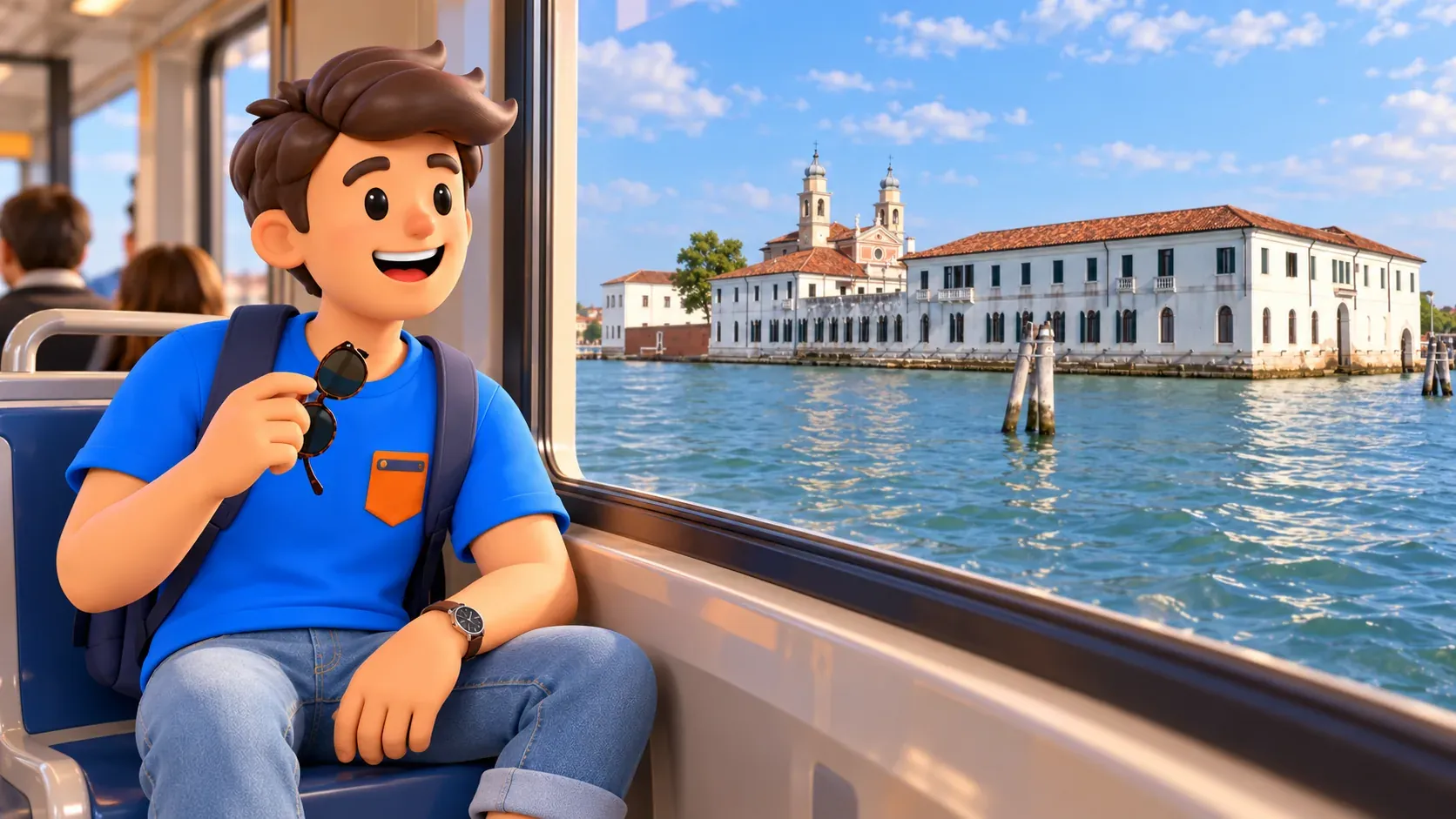
The main connection from the historic centre is line 20 from San Marco–San Zaccaria to San Servolo. The university on the island gives approximately ten minutes for the crossing. Check your actual service, landing stage and direction against the current ACTV timetable and departure information.
First reach the departure area. Walking from accommodation, transferring from another waterbus or travelling from the railway station falls outside our three island hours. San Zaccaria serves several boats and stages; find your specific line rather than treating the whole waterfront as one boarding point.
Save a return departure from the island to Venice too. Line 20 serves other stops and directions, so its number does not replace checking the actual journey. Continuing to San Lazzaro needs its own programme and visit arrangements, not simply a shared route number.
Do not assume an identical frequency throughout the year. Extra services during the film festival apply to particular dates. A short crossing can still involve a substantial wait, so add both directions and their waits in full.
Transport and museum entry have separate tickets and conditions. Check what your pass actually covers; a tourist product’s name does not establish admission to San Servolo’s museum. Buying a museum ticket does not pay for the boat either.
When is the museum open?
The museum’s checked visitor page lists ordinary opening on Thursday from 14:00 to 17:30 and Friday, Saturday and Sunday from 9:45 to 16:30. National holidays are listed as closure days; any special exception needs confirmation for the particular date.
A guided visit can be arranged in advance on other days. This does not mean unrestricted admission throughout the week. Contact +39 041 8627167 or sanservolo@coopculture.it; telephone enquiries are handled Monday to Friday, 9:00–13:00.
Ask about the language and actual duration. Italian and English appear in the operator’s offering, but availability for your booking still needs confirmation. Do not assume you can join an existing group on arrival or that interpreting will be available in another language.
The historic pharmacy, church and anatomical room belong to the museum route. They are not three separate visits to add on top of the complete museum programme. Confirm which spaces are available on the day, since the sequence depends on arrangements and current conditions.
Tickets are sold at San Servolo’s reception. Admission is paid, with concession categories; check eligibility and any supporting evidence relevant to you. Old prices and hours should not be treated as current just because a previous leaflet survives on an official domain.
For a holiday visit, confirm museum access before choosing a boat. An operating residential or educational complex does not prove that its exhibition is open. Equally, a specially booked museum tour does not turn that day into ordinary unrestricted opening.
A three-hour programme on the island
Start and finish at the San Servolo landing. Allow 15 minutes for arrival and reception, 75 for the complete museum route, 40 for all walking including the return, 20 for chosen artworks in the park, 15 for rest and 15 of flexibility. Together these make 180 island minutes.
The 75-minute museum allowance is our planning estimate, not an official guided-tour length. If you book a guide, substitute the confirmed duration and recalculate. A full lunch, both crossings, all boat waits and the approach to San Zaccaria remain additional.
Begin at reception opposite the arrival area and settle the museum arrangements. Follow the available museum route, then go outside into the park. Choose two accessible works along your walk and return to the same landing using open visitor paths.
For ordinary Friday or weekend opening, a morning arrival is convenient. Thursday’s museum opening begins in the afternoon, so adapt arrival accordingly. Leave the whole museum allowance before closure; arriving near the end of the day is not enough for a complete visit.
There is no need to trace the entire shoreline or locate every sculpture in a catalogue. People study, work and hold events here. A closed door, service courtyard or teaching room does not become a tourist shortcut because the island welcomes visitors.
A short history: monastery, hospital, place of learning
San Servolo has a long monastic history. A military hospital was established in the eighteenth century, followed by the admission of psychiatric patients. These changing functions explain the proximity of a church, practical spaces, hospital heritage and green courtyards.
The hospital closed in 1978. Restoration later adapted the complex to new purposes; Venice International University now operates on the island, alongside educational and cultural activities. San Servolo should therefore not be described as an abandoned hospital island outside contemporary city life.
The museum opened in 2006. Its purpose includes preserving memory and examining the exclusion associated with the former institution. That context matters: the exhibits document a particular historical environment rather than providing a guide to present-day mental healthcare.

Inside the museum: objects and their context
Documents, photographs and objects made by patients introduce everyday lives as well as equipment. Choose a few examples and read their explanations carefully. That can be more rewarding than trying to cover every display case at speed.
Avoid reducing people to diagnoses or a striking appearance in a photograph. Creative work and patients’ activities form part of the evidence, while a musical instrument recalls another aspect of hospital life. Each object need not become proof of a single story decided in advance.
Read historical methods through the museum’s interpretation rather than comparing old instruments with current treatment by appearance alone. A question about changing life within the institution is more useful than drawing unsupported conclusions about modern psychiatry.
RoadMe makes it much easier to turn these interests into a complete personal trip plan, working out an itinerary around your priorities and available time. Try combining unusual museums with the art, neighbourhoods and breaks that suit you best.
Agree on one shared question beforehand: how the hospital’s spaces changed, for example, or what an object made by a person can tell you about their life. Discuss different answers in the park afterwards. A shared visit still works when your interests and reading preferences differ.
The pharmacy and church within the same museum visit
The historic pharmacy preserves wooden cabinets, ceramic jars, balances and tools. It records the practical organisation of an eighteenth-century hospital: medicines needed storage, preparation and accounting. Looking at how the room works is enough without memorising every preparation’s name.
View objects under the museum’s conditions. Old vessels are not photography props, and mortars are not an invitation to prepare a medicine yourself. If the craft interests you, ask about the tools and the everyday work of the apothecaries.
The church recalls the complex’s religious history. Its eighteenth-century character, Jacopo Marieschi’s painted decoration and the organ bring architecture into the shared programme. The presence of an instrument does not promise a concert on every visit or permission to play it.
The anatomical section may require a separate decision about comfort. Ask in advance how the route works and whether a particular room can be skipped. That conversation helps families, especially when children have not previously encountered such displays.
The park: choose two sculpture stops
After the museum, follow open paths among the trees. The park has its own value: planting, space between buildings and nearby water change the rhythm after reading documents indoors. You need not fill it with another densely packed guided programme.
Works by Arnaldo Pomodoro, Pietro Consagra and other contemporary artists are represented on the island. Choose two that can be approached on your date. Look first from a distance, then from a closer permitted path: notice changing silhouettes, openings and relationships with trees.
The twenty-minute allowance is for looking; all walking is already counted separately. Do not touch works or use them for sitting or children’s climbing without explicit permission. An art catalogue does not guarantee access to every work during every island event.
Fifteen minutes are reserved for a short break. There is a cafe on the island, but confirm its hours and service for ordinary visitors. A rest allowance does not mean an included lunch or entitlement to conference participants’ catering.

Access, weather and the shorter alternative
The operator explicitly warns that the museum is not fully wheelchair accessible. Discuss the whole journey for your requirements: boarding, disembarking, paths and particular rooms. A green park near a landing does not establish accessibility throughout the museum route.
In rain, shorten the park while retaining the confirmed museum visit. In strong wind, check transport and personal comfort first. Trees and covered passages should not be assumed to provide guaranteed shelter for an entire party during a long wait.
For the park without the museum, allow around ninety island minutes: ten for orientation, thirty-five for all walking, twenty for two artworks, ten for rest and fifteen of flexibility. Church, pharmacy and anatomical displays are excluded. Boat journeys and waits are still additional.
Before returning, check the boat’s direction and leave boarding space for other passengers. If the museum is closed and was your main reason to come, choose another date. A San Giorgio Maggiore visit offers another island theme, while a short Castello walk suits time after returning. Each has its own duration: add it openly, preserving travel time and rest.


