
Sagrada Família to Sant Pau: a ninety-minute architecture walk
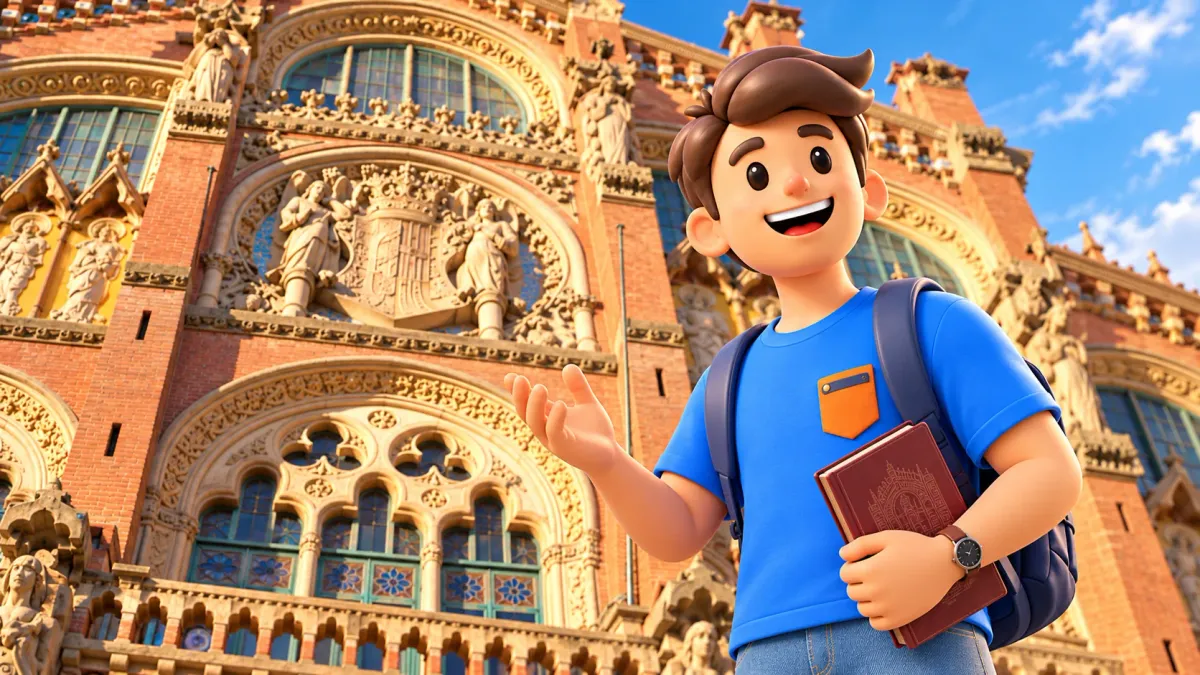
Start beside Plaça de Gaudí on Carrer de Marina, facing the Nativity façade of the Sagrada Família. After looking from the public street, make your way to Avinguda de Gaudí and follow the avenue towards Sant Pau. Finish outside the historic front at Carrer de Sant Antoni Maria Claret, 167. This compact Barcelona walk links Antoni Gaudí’s basilica with Lluís Domènech i Montaner’s former hospital through a street that deserves some attention of its own.
Allow around ninety minutes for walking, short observations and one brief pause. This is a planning estimate, without entry to the basilica, towers, hospital pavilions or ticketed gardens. It is enough for an introduction to two contrasting architectural ideas without turning the outing into a rushed double visit. Your return journey or onward transport comes afterwards.
A short walk with two different purposes
The appeal lies in comparing what buildings were designed to do. At the Sagrada Família, stone becomes a story and a system of symbols. Along the avenue, design accompanies ordinary neighbourhood life. At Sant Pau, decorative richness belongs to a hospital conceived around light, air and its patients’ surroundings. You do not need a catalogue of architectural terminology to begin noticing those differences.
For a more convenient way to develop the whole trip, try RoadMe: it builds a personal itinerary around your interests, dates, pace and budget. You can give major visits, shorter walks and rest their own place in the programme rather than arranging every day manually.
Keep the first façade stop contained, leave room for an unhurried avenue walk, and save some attention for the finish. A rigid minute-by-minute schedule is less useful than knowing what belongs in the outing. A busy crossing, a detail worth examining or the need to sit down can change your pace. Ninety minutes describes a manageable block of time, not a measured result for every visitor.
Choose daylight and weather that suits being outdoors. Bring water in warm conditions and avoid extending observations in direct sun when you are uncomfortable. In rain, consider slippery surfaces and whether an outside walk still appeals. The avenue’s pedestrian sections do not remove traffic at its crossings. Follow signals, markings and temporary barriers, even when the next architectural landmark is already drawing your attention.
Begin with the Nativity façade
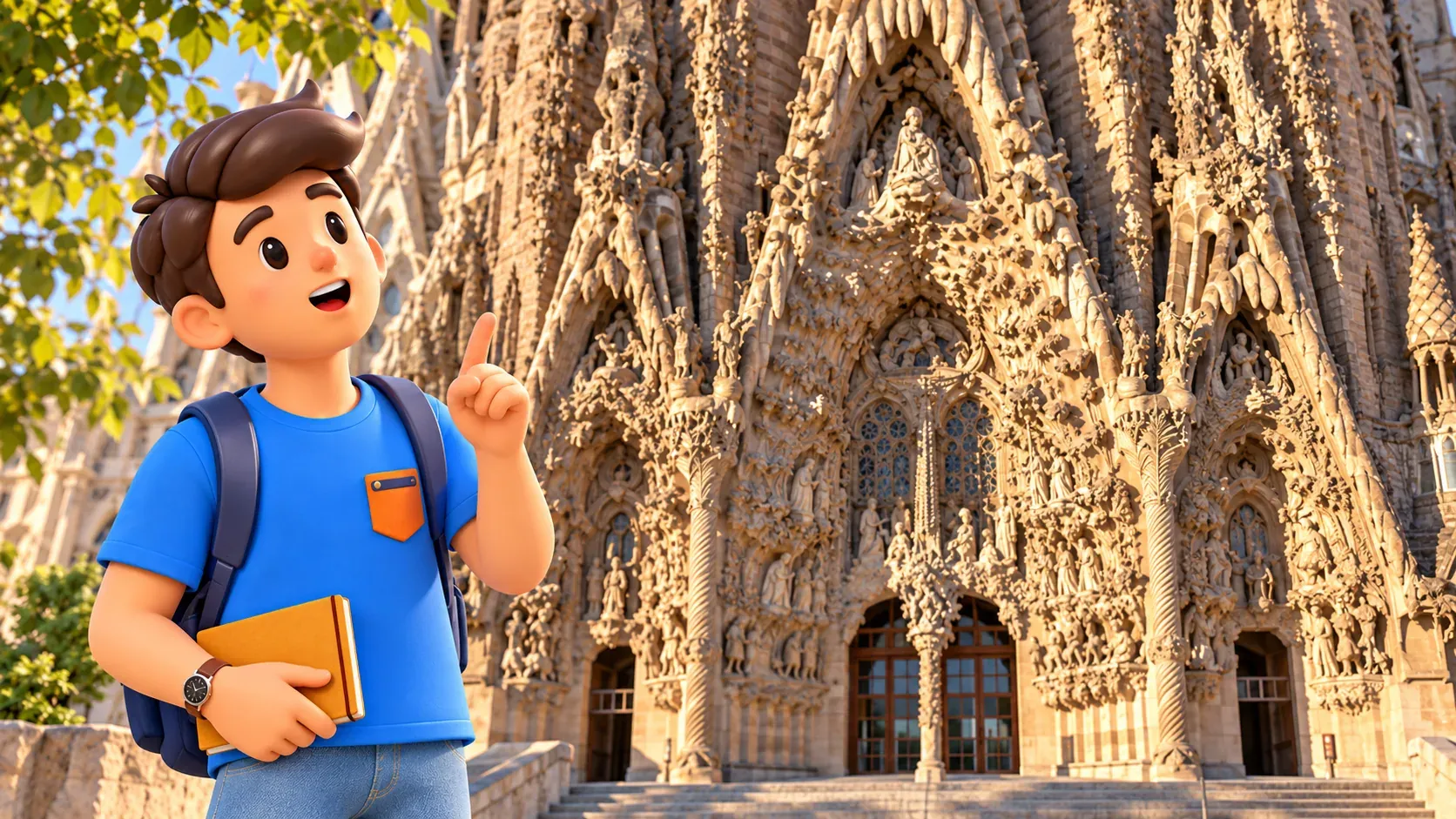
Plaça de Gaudí and the Marina side provide a starting point for the Nativity façade. Find an available public position where you can take in the composition without blocking people passing. There is no need to circle the entire basilica, collect every possible view and interpret every figure before moving on. One attentive stop works better here: look at the whole, then choose a few details that catch your eye.
The façade relates the birth and childhood of Christ. Its density is part of the experience: figures, plant-like forms and intricate transitions create a sense of stone becoming animated. Compare a human figure with the natural shapes around it. Even this small exercise gives the stop more substance than a photograph with towers behind you, while leaving the full symbolism for a dedicated visit.
Try looking in three stages. First notice the strongest vertical forms, then focus on a portal, and finally let your eye settle on smaller decoration. Distance changes what you see. From farther back, the effect comes from silhouette and accumulation; closer views reveal individual stories. You do not have to stand in the most crowded position if another public viewpoint lets you study the same part more comfortably.
Keep exterior observation separate from admission. A square, a pavement and a ticketed basilica visit serve different purposes in the day. If you want the interior, check the owner’s current arrangements and available tickets for your date; official ticket sales are online. Having a ticket ready still does not make this large building a quick stop between two coffees. Expand the programme deliberately if you decide to enter.
The project began before Gaudí
Construction started in 1882 under Francisco de Paula del Villar. Gaudí took over in 1883 and transformed the direction of the project. That short sequence is more useful than trying to memorise an entire chronology: it shows an evolving undertaking rather than a building produced in one construction period. Gaudí’s contribution is central, but the basilica also reflects the work of generations who followed him.
For this outside introduction, hold on to the relationship between nature and architectural form. Natural references are not merely ornaments added to an otherwise conventional surface; they shape the character of what you are seeing. At the same time, avoid attributing every modern detail of the vast complex directly to Gaudí. Nor should one newly finished element be treated as proof that the whole basilica is complete.
If you are travelling together, each choose one detail and compare impressions. Which form looks light, which looks heavy, and where does stone suggest a plant? This is an observation game rather than a knowledge test. It can work with children too, provided there is no demand for a correct answer. Keep the conversation to the side of the pedestrian flow so that studying architecture does not obstruct someone else’s journey.
Let Avinguda de Gaudí change the scale
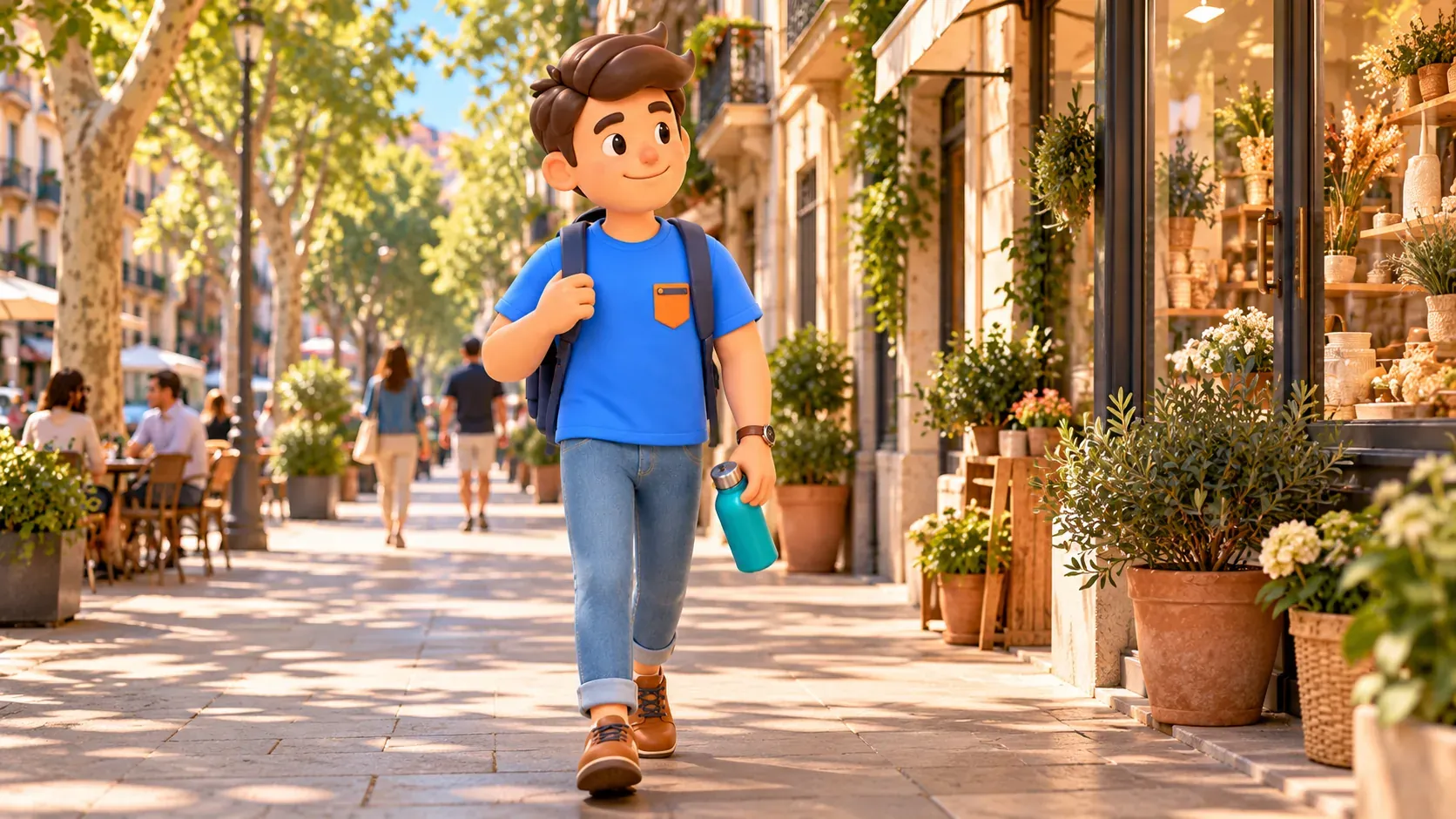
After the façade, join Avinguda de Gaudí and follow it towards Sant Pau. The diagonal avenue stands apart from the familiar Eixample street grid and connects the two architectural ensembles. Let your attention come down from the towers. Shop windows, tables, repeated building rhythms and people on everyday errands become part of the experience. Barcelona continues between its major attractions, and the connecting street makes that visible.
The avenue is partly pedestrianised. Its walking space encourages a slower pace, but intersecting streets still bring vehicles and traffic lights. Do not treat the entire diagonal as one continuous car-free plaza. Take particular care if a child is distracted, you are looking upwards while walking, or you want a photograph along the avenue. Step out of the flow and stop before raising the camera.
You need not add several compulsory sights along the way. This section gives your eyes a rest and connects the two main encounters. Notice a recurring material, a window you like, or the changing perspective as you approach the far end. One or two pauses are sufficient. Turning every block into a separate sightseeing assignment quietly changes a short outing into a much longer one.
A third designer: Pere Falqués
Look for the avenue’s historic street lamps. They are the work of Pere Falqués, rather than Gaudí, whose name appears on the street. The lamps were moved here in 1985 after an earlier life around the intersection of Passeig de Gràcia and Diagonal. It is a small piece of urban history with a useful idea behind it: a distinctive design can acquire a new setting and remain part of everyday public space.
Notice how the support, curved metalwork and light fitting form a single composition. After the basilica’s monumental scale, a street lamp brings design closer to the human body. A short observation is enough; there is no need to hunt down every example. The point worth retaining is that Barcelona’s Modernisme was created by many designers and extends beyond its most photographed buildings.
Make room for one ordinary pause
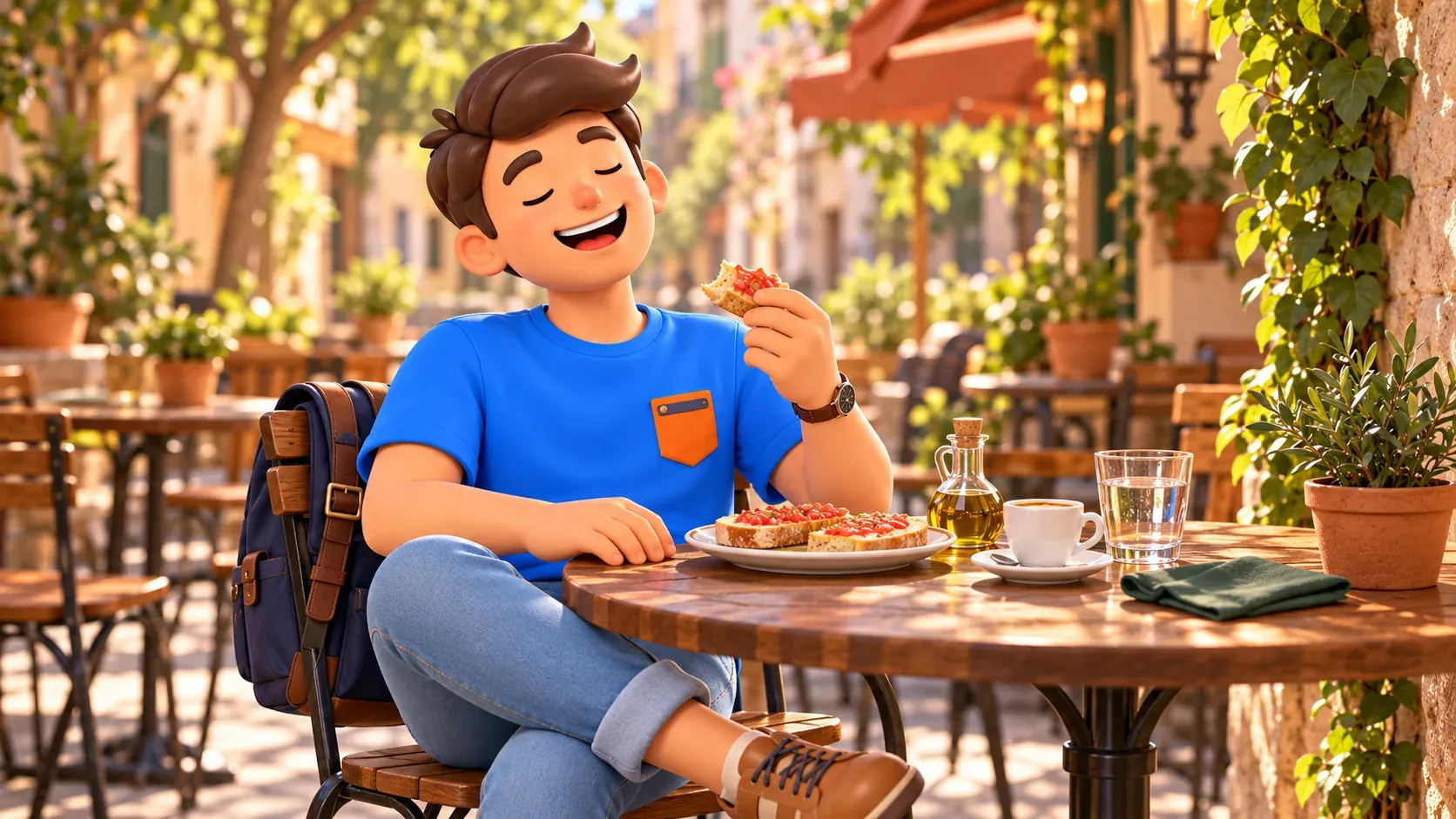
If you want to sit down, choose an available café along the avenue or another permitted resting place. Avoid making the outing depend on one business with an unknown queue. A coffee and a small snack can fit this plan; a full lunch calls for a larger time allowance. Check the menu and conditions locally. A neighbourhood name alone does not guarantee a particular dish, price or empty table.
The pause also helps you change your question. Recall what stood out at the Sagrada Família: dense decoration, natural forms or strong vertical lines. At Sant Pau, compare those impressions with a different purpose. You can keep a thread running through the outing without reading a long explanation at every junction. If you feel tired, reduce the number of details you study instead of rushing street crossings.
Sant Pau: architecture for care
Finish at the historic façade on Carrer de Sant Antoni Maria Claret, 167. Look for the Recinte Modernista de Sant Pau. The working hospital occupies newer buildings to the north of the heritage ensemble, so directions to medical departments can take you away from this walk’s intended finish. There is no reason to circle the large site looking for a general hospital entrance when your destination is the historic architecture.
Lluís Domènech i Montaner designed the complex. Banker Pau Gil’s bequest helped make the new hospital possible; construction began in 1902 and the official inauguration followed in 1930. Here Modernisme served a practical ambition: treatment organised through pavilions, with light, ventilation and gardens contributing to patients’ surroundings. Beauty belonged to an idea of dignified care rather than only to an impressive entrance.
From outside, compare brick, sculpture, ceramics and window forms. At the basilica, decoration draws you into a religious narrative; here, it changes expectations of hospital architecture. This comparison does not mean that the whole ensemble can be seen from the pavement. Pavilions, gardens and connecting passages belong to a separate heritage visit. The street stop offers a first impression, not a substitute for everything beyond the entrance.
Medical activity moved into a new building in autumn 2009. The historic ensemble and the modern hospital therefore should not be treated as one visitor space with unrestricted access. Heritage visits have their own opening hours and admission arrangements. Before buying, check what your chosen visit includes and allow additional time; adding it to an already full ninety-minute walk means changing the rest of the day.
If Modernisme is becoming the focus of your trip, let RoadMe develop a personal plan around architecture and your preferred pace. The app makes it convenient to distribute substantial visits and shorter walks across your days while leaving room for other interests and rest.
The walk ends here with two different architectural ambitions and the everyday street connecting them. For another free part of the trip, consider the Passeig de Gràcia architecture walk, where town-house façades offer another comparison. Choose that separately when you want to continue the theme. This outing already has its own complete story and a clear place to stop.


