
Ryokan in Japan: what to expect and how to choose a stay
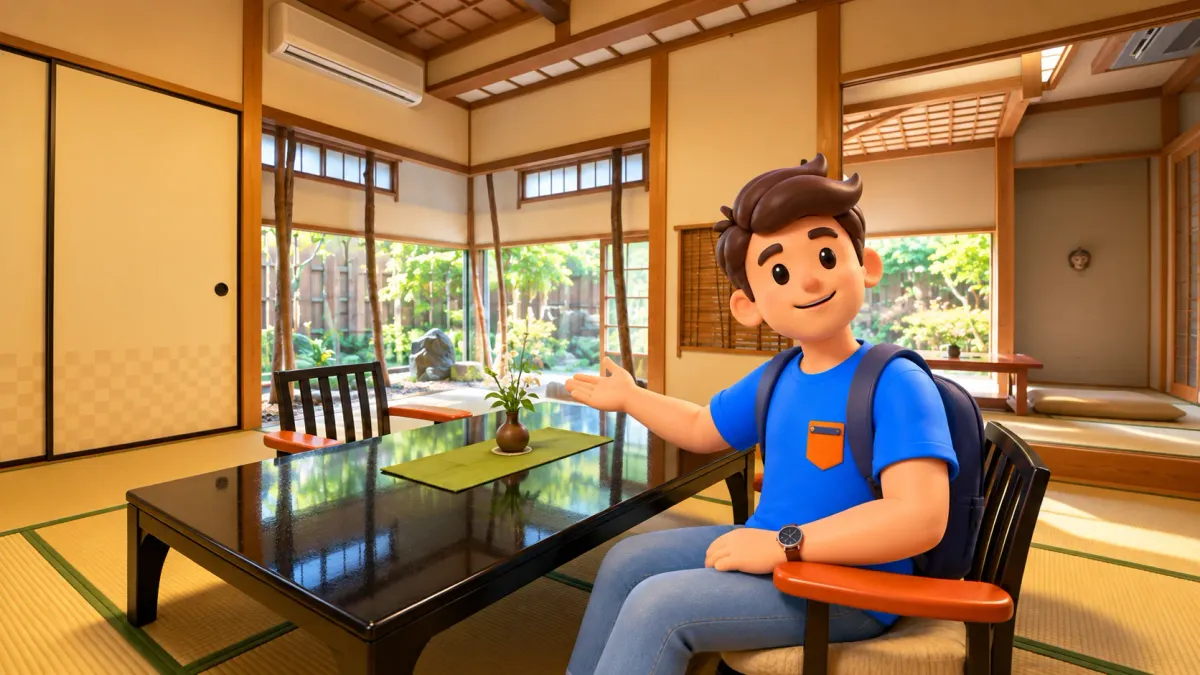
A ryokan is a Japanese inn where the stay itself can be part of the experience: a Japanese-style room, seasonal meals, a bath and time to settle in. The name alone does not promise a futon, hot-spring water or dinner. Choose the actual room and meal plan rather than booking from one attractive photograph.
The most consequential checks are whether the price is per person or per room, which meals are included, what “private bath” means and when you must arrive. This guide, checked in October 2026, helps you compare a ryokan stay with an ordinary hotel without assuming every inn follows the same format.
Choose a stay that fits the time you have
A ryokan can suit a trip where you want to spend part of the afternoon and evening at the accommodation. A dinner-inclusive plan is less useful if you arrive after the meal or leave before breakfast. Decide how much of the stay you will actually use before paying for the setting and services.
RoadMe makes it more convenient to prepare a personal trip plan around your dates, interests and pace. Try giving a ryokan evening its own space in the plan, then choose visits that leave enough time for the property's arrival and meal arrangements.
| What matters to you | Check in the chosen offer | Avoid assuming |
|---|---|---|
| A traditional sleeping space | Tatami room, futon and seating | Every room uses floor bedding |
| Seasonal dinner | Dinner-and-breakfast plan, serving place and time | Meals follow automatically from the word ryokan |
| Privacy when bathing | In-room bath or separately reservable bath | “Private” always means inside your room |
| Natural hot-spring water | Which bath actually uses it | Every ryokan bath is an onsen |
| Late arrival or early departure | Admission, meal and transport arrangements | The inn works like a round-the-clock city hotel |
Ryokan accommodation ranges from small inns to larger properties with several room categories. Neither size nor a quiet-looking photograph establishes the experience. A city inn may suit architecture and dining; a hot-spring stay may place more emphasis on bathing. Choose the features you want rather than an abstract “most traditional” label.
Read the room category before the property description
A Japanese-style room commonly has tatami flooring, a low table and floor seating. Futon bedding can be put out later, allowing the same room to serve as a sitting space by day and a bedroom at night. An apparently empty floor in an arrival photograph is not necessarily missing furniture.
That flexible use of space is part of the room's interest. The table, cushions, sliding partitions and sleeping arrangement work together instead of separating every activity into a different room. Take time to notice the materials and arrangement, without treating the decorative alcove as extra storage.
Modern ryokan can also offer rooms with beds, mixed Japanese-Western layouts and chairs at an ordinary height. You do not need to choose floor sleeping to have a worthwhile stay. Confirm bed number, sleeping arrangement and seating for the category actually reserved.
Check whether the room has a toilet, shower and bath separately. “Private bathroom” in a translated listing may not tell you everything you need. A property's large shared bath is not proof that your room contains a shower; a private toilet alone does not establish either.
Read the exact category's photographs and description, including annex or separate-building details. A bath, garden outlook or dining room shown on the main page may belong to another category. If a feature is essential, obtain confirmation before accepting a non-refundable offer.
For a floor-futon room, ask how and when bedding is prepared and whether staff will enter while you are dining. Keep luggage and belongings clear of the intended sleeping space. If sitting low or rising from the floor is difficult, ask for a suitable bed and chair arrangement in advance.
Understand the rate: people, meals and nights
Ryokan rates are often quoted per person per night, commonly with dinner and breakfast, but room-based and other packages also exist. Enter the correct adults and children and read the final booking total. Do not double a room total or mistake a per-person amount for the whole room.
Compare like with like: the same date, guests, room, meals, cancellation conditions and included facilities. A lower room-only headline cannot be compared directly with a dinner-inclusive package. For a couple, verify the total for both guests rather than relying on a search-result price.
| Plan wording | Usually describes | Question before purchase |
|---|---|---|
| Room only / sudomari | Accommodation without meals | Where can you eat nearby, and until when? |
| Breakfast included | The stay and specified breakfast | Is dinner unavailable or separately bookable? |
| Dinner and breakfast / one night, two meals | Two specified meals with the stay | What times and serving locations apply? |
| Private-bath package | A stated private bathing arrangement | In-room or timed shared facility, included or extra? |
Check taxes, service charges and any locally applicable bathing or accommodation charge in the final conditions. Drinks, minibar items, additional dishes and some private baths can be separate. Do not use an old national price range as a current quote for a particular date.
Payment timing also varies: advance payment, payment at the property or a choice between them. Confirm the accepted method and cancellation deadline for the specific booking. An attractive accommodation total is incomplete if you cannot meet its payment terms or arrival conditions.
Meals are a central choice, not an automatic inclusion
Many ryokan serve regional and seasonal food. A kaiseki-style dinner consists of a succession of small dishes, but the menu, presentation and service vary. A photograph of one elaborate dinner does not establish your plan's exact courses, ingredients or serving location.
Meals may be served in the room, a private dining space or a communal dining room. Ask which applies if privacy, seating height or travelling with a child matters. In-room dining is not a feature of every ryokan and should not be inferred from a generic guide.
Reserve the meal plan at the same time as the room where required. Kitchens prepare ahead and often serve during fixed periods. You may not be able to add dinner at arrival or move it to any time you choose. Ask for the final arrival time that preserves the booked meal.
Communicate allergies and dietary requirements before booking or as early as the inn requests. Describe the ingredients and restrictions clearly, and wait for a definite answer about whether they can accommodate them. A preference request is not confirmation that a meal will be suitable.
Do not assume vegetarian, vegan, gluten-free or religious requirements are interpreted identically everywhere. Ask the inn to confirm the relevant ingredients and preparation limits. If it cannot meet an essential requirement, choose another suitable plan or accommodation rather than relying on a change at the table.
Breakfast needs the same attention as dinner. Check the serving period and format, especially before an early train. A traditional Japanese breakfast and a Western breakfast are different offers; availability depends on the inn. Missing a serving period does not automatically create a packed breakfast or refund.
Separate the bath from the room and the water source
A ryokan is accommodation; an onsen concerns hot-spring water and bathing. Some inns have natural hot-spring baths, others a similarly styled ordinary bath. If the water source matters to you, check the actual facility rather than assuming it from a wooden building or mountain setting.
Three arrangements frequently need separating: a communal bath used by other guests, a bath reserved exclusively for your party for a period, and a bath attached to your room. A reservable bath may be elsewhere in the building and may require a booking or additional payment.
An open-air bath, often called rotenburo, describes its outdoor setting. It does not by itself mean private access. Likewise, an ordinary bathroom inside a room is not automatically an in-room onsen. Check these features individually before paying a premium.
Ask how reservations work for a private bath, whether your room category qualifies, the duration and charge, and when access is available. If a private slot is essential, do not rely on obtaining one after arrival unless the property confirms that arrangement.
Communal bathing normally involves washing first and entering without swimwear; hair and towels stay out of the water. Respect privacy and the property's photography rules. Tattoo policies differ by inn, so ask about the specific bath you intend to use instead of assuming that a private option resolves every policy automatically.
You can choose a ryokan without using a communal bath. First confirm suitable washing facilities for your room and needs. The separate guide to onsen rules, tattoos and private baths covers the bathing experience in detail; here the decision is what your accommodation purchase includes.

Arrival, shoes and the evening rhythm
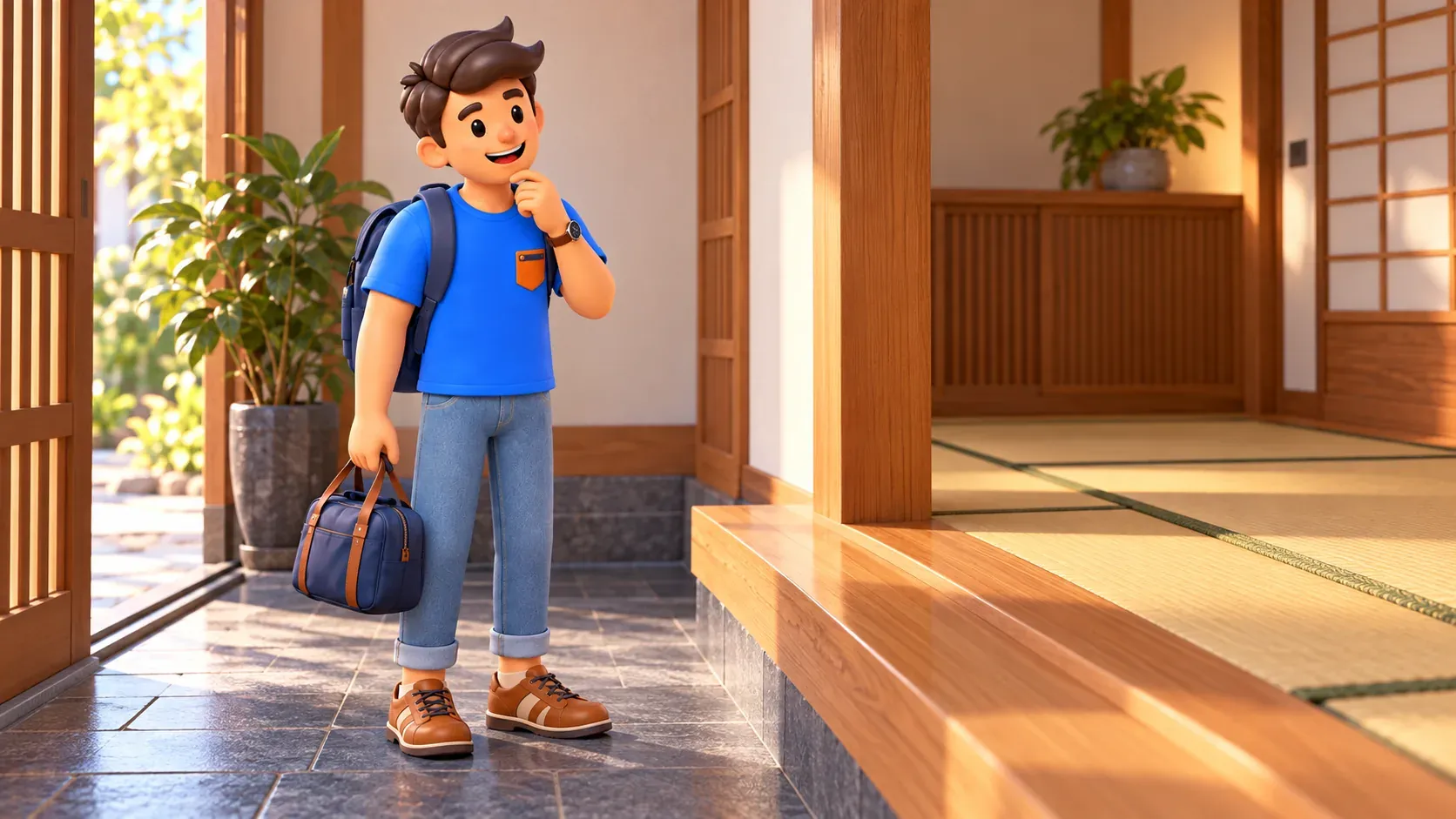
Check the property's arrival window rather than using a universal hour. Allow time to reach the inn, complete reception and settle in before dinner. If delayed, contact it promptly using the booking details; a late train does not automatically extend the kitchen's service.
Follow staff instructions at the entrance. Outdoor shoes come off at the designated boundary, and slippers do not belong on tatami. Keep wheels and heavy bags from scraping the mats. Ask where to put luggage rather than placing it in the tokonoma, the alcove used for decoration.
A yukata is a light cotton robe often supplied for use during a ryokan stay. Where it can be worn depends on the property: dining, corridors and going outside are separate questions. Ask staff how to put it on and which footwear is appropriate instead of assuming the same arrangements throughout a town.
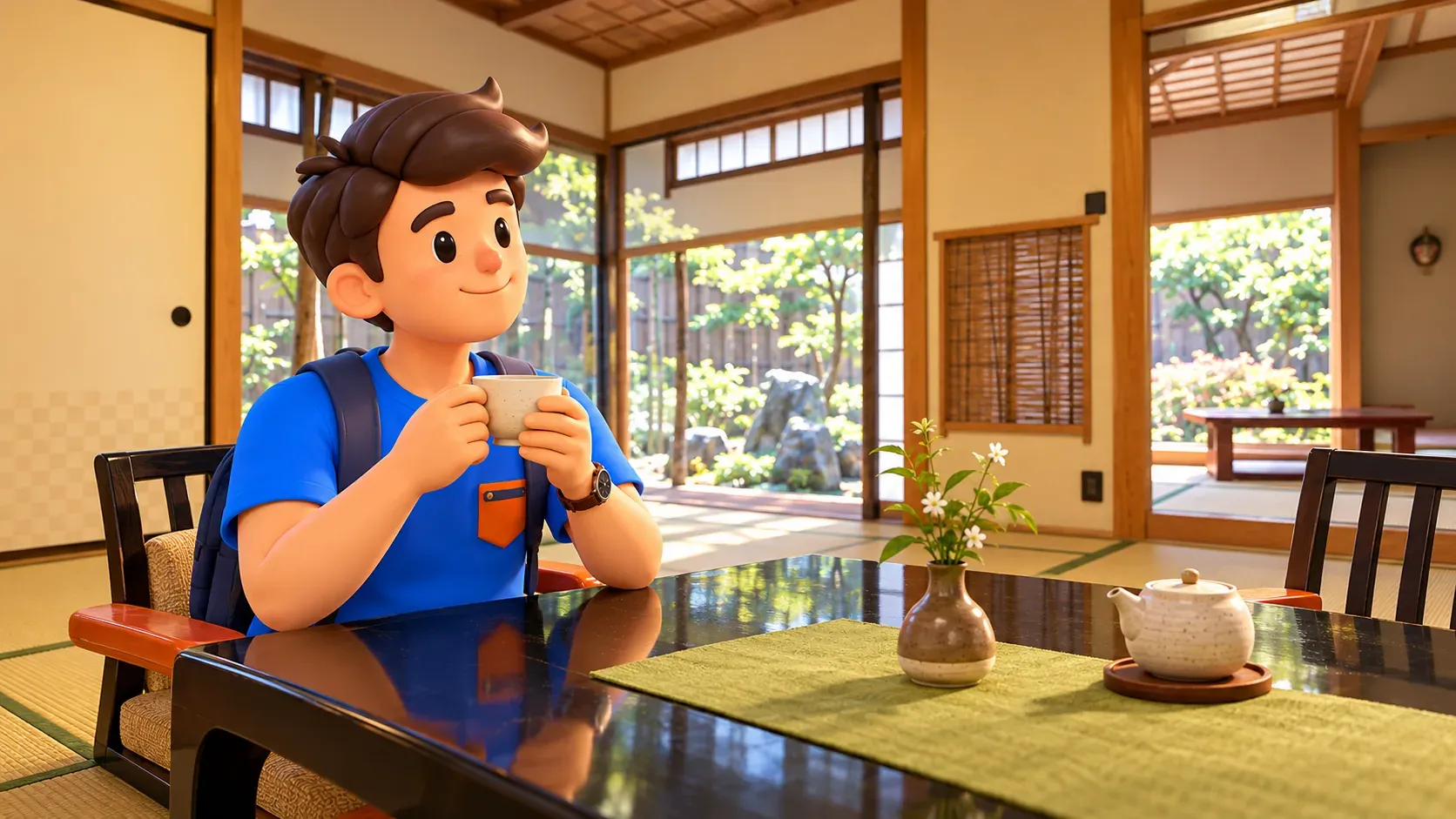
Tea, seasonal details and a room that changes from sitting to sleeping space can make the stay rewarding without many scheduled activities. You do not need to turn the evening into a performance of unfamiliar customs. Ask when unsure and leave time to enjoy the accommodation.
Check bath opening and cleaning times separately from reception hours. Also ask about leaving and re-entering after dinner: some inns have a curfew or a particular late-entry procedure. A room-only rate does not necessarily mean unrestricted overnight access to every facility.
Children, solo stays and access needs
Enter every child's age and ask about meals, bedding and any facility charge. A child sharing existing bedding can be priced differently from one receiving a futon and meals. Do not transfer one property's age thresholds or family package to another, and check minimum-age restrictions.
Solo travellers should search with one guest from the start. A room that appears for two people may have a different single-occupancy price or not be sold for one on your date. Confirm the actual total instead of taking half the two-person quotation.
For accessibility, consider entrance steps, lifts, the room, bed height, toilet, dining seat and bath together. A bed instead of a futon can solve one problem without making the whole building suitable. Describe your requirements and ask for specific arrangements rather than a general reassurance.
For language needs, confirm available support and keep the arrival, meal and payment information in a form you can access offline. You do not need to speak fluent Japanese to ask clear questions, but a booking page in English does not establish that every staff member speaks it.
Transport, luggage and the final booking check
Check the last part of the journey from the station. Some ryokan offer a shuttle, others do not, and advance arrangements may be needed. Confirm the pickup point and time, luggage space and any fee. A scenic location does not prove a walk is short or that a taxi will be waiting.
If sending a suitcase ahead, obtain the inn's consent and coordinate delivery with your stay. Our guide to luggage forwarding between hotels in Japan explains the deadlines and the essentials to retain. A room booking by itself does not authorise a parcel to arrive whenever convenient.
RoadMe helps build the surrounding days as a personal plan, so visits fit your interests without crowding out the evening you booked. Try adjusting the pace and available hours in the app, then confirm transport and property conditions separately.
Before payment, save the selected room, guest count, meal plan, bath arrangement, total price, arrival deadline and cancellation terms. Send any essential food, access or privacy question early. A well-chosen ryokan is one whose actual arrangements match how you want to spend the stay.


