Japanese onsen: bathing rules, tattoos and private baths
Before your first Japanese onsen visit, choose a specific bath and check three things: its tattoo policy, whether you are comfortable with communal bathing without swimwear, and whether a private bath needs a reservation. There is no single admissions rule covering every facility in Japan. One accepts visible tattoos, another requires approved covers, and another offers an alternative private space.
Inside a conventional communal onsen, the sequence is straightforward: undress in the changing room, wash thoroughly and rinse away all soap, then enter the shared water quietly. Keep your towel and long hair out of the bath. Understanding this sequence makes the experience much less intimidating without requiring you to learn every local custom in advance.
Understand onsen, sento and ryokan before booking
An onsen uses a natural source meeting Japan’s thermal or mineral-water criteria. A sento is a public bathhouse and does not necessarily use such a source. A ryokan is a type of traditional accommodation, not the name of a bath. It may have a communal onsen, a reservable bath, or private baths attached only to particular room categories.
Planning in RoadMe is much easier than collecting scattered suggestions: the app develops a personal trip plan around your interests, dates and pace. Try choosing a relaxed day that gives the bathing experience room alongside the other places you want to discover.
| Term | What it describes | What it does not guarantee |
|---|---|---|
| Onsen | Bathing using a qualifying natural source | Acceptance of every tattoo or private access |
| Sento | A public bathhouse | Natural hot-spring water |
| Ryokan | Traditional accommodation | An onsen in every room |
| Kashikiri-buro | A bath reserved for exclusive use during a period | Availability without a booking |
| Rotenburo | An open-air bath | Privacy: it may be communal |
The last distinction often surprises first-time visitors. A beautiful outdoor pool in a photograph is not necessarily yours alone. When booking accommodation, establish who uses the bath, what water it contains and whether access is included in the rate you are actually purchasing.
Why washing and soaking are separate
Public bathing in Japan is part of everyday social history as well as tourism. Sento became important urban institutions during the Edo period, long before a private bathroom was something every household could assume. Shared water still implies consideration for other users: soap and laundry belong outside the soaking bath.
Onsen add a connection to the natural source and surrounding landscape. The appearance and mineral composition of water vary. It need not be milky white or smell strongly of sulphur to qualify. Choose using the facility’s actual description rather than deciding whether the water resembles a promotional photograph.
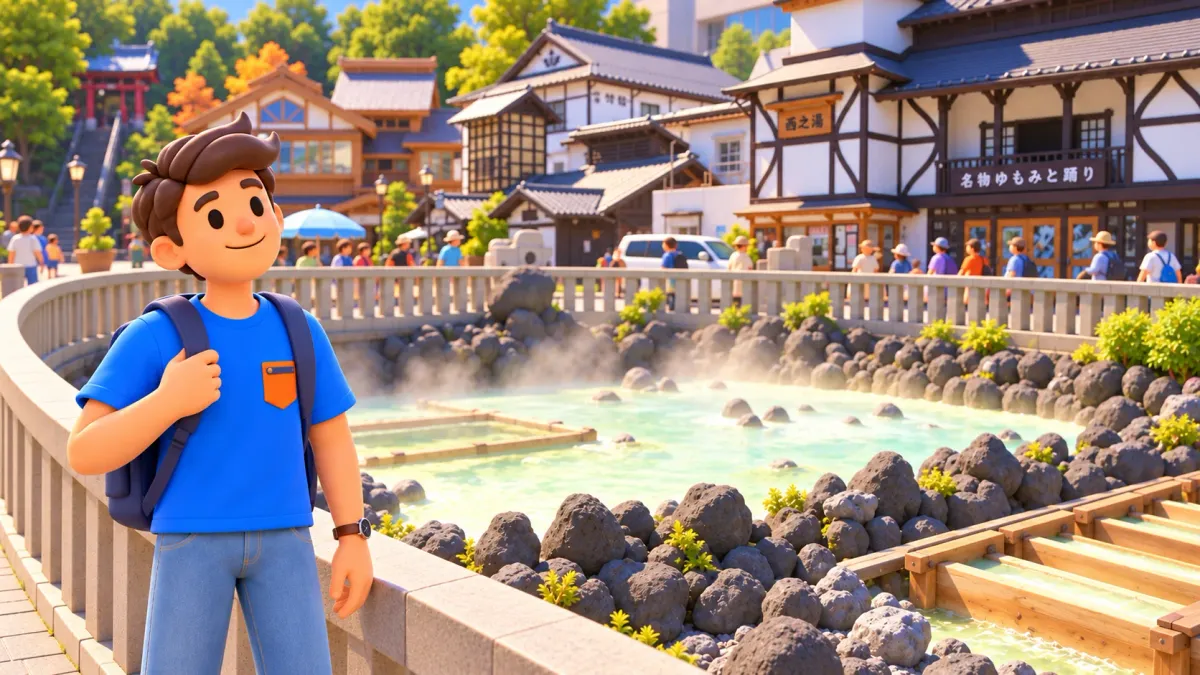
In a hot-spring town such as Kusatsu, the management of spring water can be visible outside the bathhouse too. A source, channel or water-handling installation is not automatically a public bathing pool. Stay outside barriers and do not touch water merely because other visitors are walking nearby.
Our guide to recognising temples and shrines in Tokyo takes a similar approach to cultural discovery: establish what you are looking at before applying a general rule. An onsen is easier to enjoy when you understand the specific place and service you have chosen.
Tattoos: confirm the policy before paying
Neither “tattoos are forbidden everywhere” nor “foreign visitors are always exempt” is reliable advice. Operators set their own policies. The conditions can differ between a communal bath, a private bath, accommodation and other parts of the same complex.
Official tourism guidance explains the historical association of restrictions with perceptions of tattoos and organised criminal groups. For a visitor, the practical point is that the house policy still applies regardless of personal meaning or nationality. A clear question before arrival is usually more useful than an argument at reception.
- Find the current policy for the exact facility.
- Check which bathing area the permission or restriction covers.
- If coverings are allowed, ask about their permitted type, size and number.
- If the wording is unclear, ask before buying admission or a non-refundable stay.
- Keep the answer with the facility name and date so you do not confuse it with another property.
For example, Natural Hot Spring Heiwajima’s instructions allow admission under its conditions when tattoos can be fully hidden by special covering sheets, up to four sheets. This is one operator’s rule, not a national allowance. An ordinary plaster or a promise to hold a towel over a tattoo is not the same as using an approved covering.
Do not arrive with a large tattoo expecting to improvise a solution after entering. Find an explicitly accepting facility or discuss private bathing. Confirm the private option as well: reservation terms and access to shared areas can still differ.
A useful enquiry is specific: “I have a tattoo of this size on this part of my body. May I use the communal bath? If not, can I reserve a private bath, and are your approved covers required?” That gives staff something concrete to answer without relying on assumptions about the traveller.
Communal or private: choose a comfortable format
Conventional communal baths are predominantly separated by sex and used without clothing or swimwear. If you are uncomfortable with that arrangement, choosing a different service is entirely reasonable. A visit intended to be enjoyable does not need to become a test of confidence.
Private bathing usually means either a bath attached to a particular guest room or a bath reserved for a limited session. For a session, establish the start and finish, key collection, group size and whether day visitors are eligible. Ask whether changing time is included in the booked period.
| Your priority | Look for | Ask about |
|---|---|---|
| Comfortable communal bathing | Ordinary day admission | Tattoos, towels and last admission |
| Privacy | A reservable bath | Exclusive use and session duration |
| Bathing together | An eligible family or private arrangement | Group composition and age restrictions |
| No separate session booking | The appropriate room category | Actual bath facilities and water source |
A private resting room is not necessarily a private bath. Some packages provide a room to relax in after communal bathing. Likewise, “private bathroom” in an accommodation listing can mean an ordinary bathroom rather than an onsen supply. Read the specific room and service description.
For children, visitors with limited mobility or anyone needing assistance, check the actual space. Steps, the bath rim and the approach may matter more than the attractive photograph. “Family bath” does not by itself guarantee an accessible layout or suitability for every age.
What to bring and what to leave outside
A small towel, a larger drying towel, any necessary hair accessories and a bag for wet belongings are useful starting items. Some facilities provide or rent supplies; others sell them or expect you to bring them. Check what admission includes before buying duplicate items.
Tie long hair so it cannot touch the bathing water. Store jewellery and objects that might interfere or be damaged in an appropriate secure place. Check locker arrangements, especially with a suitcase: a changing-room locker is not automatically a luggage-storage service.
Leave phones and cameras outside the bathing area. An apparently empty communal bath is not an invitation to photograph it. A private session does not automatically override the operator’s photography rules either. Permitted pictures of the building exterior are a separate matter.
You do not need swimwear for a conventional communal onsen: it is normally not allowed there. Exceptions exist for particular mixed or specially organised services, but they must be stated explicitly. Do not extend the arrangements at one spa complex to Japanese bathing as a whole.
Our guide to travel clothes and local dress codes covers preparation for other parts of a trip. At an ordinary onsen, the rule concerns the water itself: everyday clothing and underwear remain in the changing area.
From reception to the water: the visiting sequence
- Confirm the service at reception. Clarify admission, tattoos and any private reservation.
- Remove shoes where indicated. Respect the boundary to the clean area and do not enter the changing room in outdoor shoes.
- Choose the correct changing area. Read the current signs rather than assuming yesterday’s arrangement is unchanged.
- Undress and secure belongings. Keep the key as instructed and leave the phone away from communal bathing.
- Wash in the designated area. Use the shower or basin without spraying other people.
- Rinse away all soap and shampoo. The shared tub is for soaking in clean water.
- Enter gradually and quietly. Do not jump, swim or put your head under the water.
Washing areas commonly have low stools. Remaining seated also makes it easier to keep the shower away from other users. Rinse the equipment you used afterwards and leave the space ready for the next person.
Before entering the shared tub, put the small towel in a suitable dry place by the edge or hold it above the water as appropriate. Do not submerge it or wring it into the bath. A towel used for modesty while walking between areas is not swimwear to keep on in the water.
Quiet surroundings, temperature and other bathers
An onsen is not a swimming pool. Avoid laps, diving, splashing and loud conversation. Give other visitors space and do not stare at them. If an unfamiliar step is unclear, read the sign or ask staff before improvising.
There is no universal soaking time that everyone must achieve for a “proper” result. Temperature and tolerance differ. Do not endure discomfort; leave the water and rest if you become too hot. Do not change a communal bath’s temperature yourself by adding cold water.
Do not plan bathing after drinking alcohol. Where individual medical restrictions apply, follow appropriate professional advice rather than a tourism article’s promises. An onsen does not replace treatment, and a visit does not require a record-breaking duration.
Dry your body before returning to the changing room so you do not leave its floor wet. You can then dress and rest in a permitted area. Check where food and drinks are allowed: the rules for a lounge do not necessarily apply inside the bathing room.
RoadMe helps make a relaxing visit part of a personal trip rather than another task on an overloaded checklist: the app builds a plan around your interests and pace. Try leaving some breathing room around the bath so the experience does not end in a rush to the next stop.
Check the booking and the full service price
Compare equivalent purchases. Day admission, a private session and accommodation with an attached bath are different services. Ask whether the charge is per person or per room, the time allowed, towels, optional extras and final admission. There is no single useful “onsen price in Japan”.
For a reserved session, establish cancellation and late-arrival conditions. Availability may be limited to one time slot, and a delayed train does not necessarily extend it. Do not assume every ryokan accepts day visitors without checking beforehand.
Verify payment arrangements for the actual facility and your payment product. A confirmed reservation and an accepted method of paying the remaining charge are separate questions. Resolve both before travelling, especially when the booking has conditions that would make a last-minute change costly.
Keep the practical details together: property name, service, date, number of people, time slot and what is included. A promotional photograph can show a different room category or bath from the one reserved. The confirmation should identify the service you expect to use, rather than merely the name of the hotel.
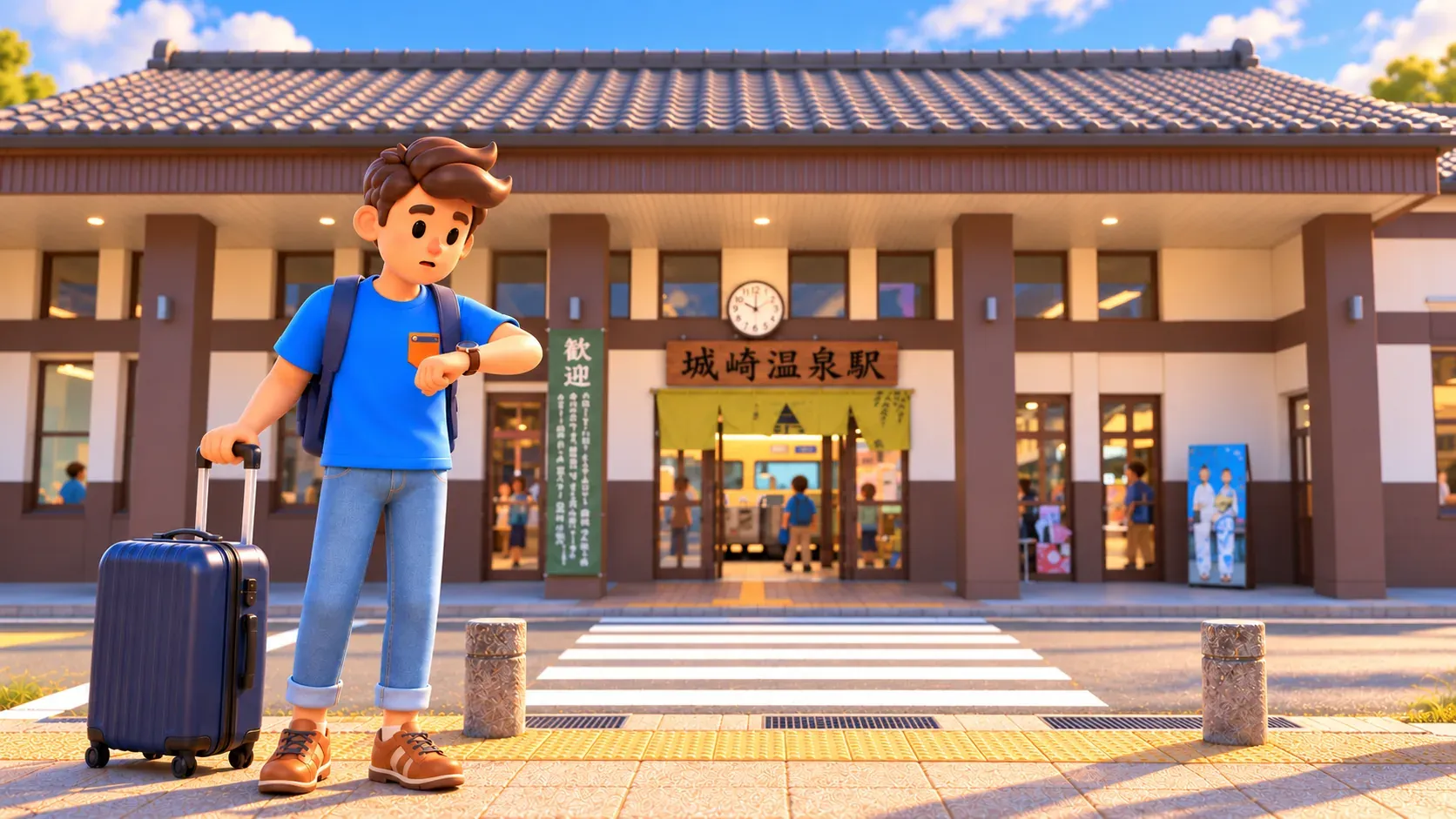
Your first-visit check
- A specific bath is chosen and the communal or private format is understood.
- The tattoo and covering policy has been confirmed where relevant.
- Reservation, timing, towels and payment conditions are clear.
- You know where to change, wash and leave the phone.
- Towel and hair will stay out of the shared water.
- There is time to rest and the return transport is feasible.
Treat a first onsen as an introduction to a local practice rather than an examination in Japanese customs. A suitable facility, a comfortable format and a few shared-water rules answer most questions. If one service does not suit you, a different bathhouse or private session may provide exactly the experience you wanted.