
Which Rome Gallery: Borghese, Doria Pamphilj or Barberini?

For one art visit in Rome, consider the Borghese Gallery, Doria Pamphilj or Palazzo Barberini. Borghese is particularly expressive for movement and sculpture. Doria Pamphilj combines a private collection with its palace setting. Barberini suits painting together with the architecture of a Baroque palace. None of the three, however, is confined to a single genre.
The choice also depends on practical conditions. Borghese requires booking and has limited visiting sessions; Doria Pamphilj closes on Wednesdays; Barberini requires checking which rooms are available. Choose one gallery, add a short nearby walk and finish without a second substantial museum commitment. This is a more manageable aim than seeing all three in a day.
Decide what you want to remember
If gestures, turning bodies and the suggestion of living movement in a material interest you, start with Borghese. If the collection within historic rooms matters most, consider Doria Pamphilj. For paintings together with the organisation of a palace, choose Barberini. These are decision aids, rather than a ranking of cultural importance or a claim that one collection serves everybody.
RoadMe makes building a personal plan for your entire trip much more convenient, using your interests, dates, pace and budget. Let the app distribute galleries, city walks and rest across the stay, so this visit fits a considered programme rather than becoming another obligation in an overcrowded schedule.
Agree on one main interest with your companions before purchasing. Enjoying art does not require wanting many similar rooms in succession. One visitor might want to study a sculpture, another a particular painting. A clear shared aim makes it easier to preserve time for circulation, a short break and an unhurried ending, rather than judging the day by the number of works encountered.
| Gallery | Useful starting interest | What shapes the plan |
|---|---|---|
| Borghese | Sculptural drama alongside other art forms | A reserved session; the park is a separate experience |
| Doria Pamphilj | Painting within a private palace collection | Via del Corso entrance and Wednesday closure |
| Barberini | Painting and Baroque architecture | Availability of specific rooms and current restrictions |
Borghese: choose the drama of movement
At Borghese, build the visit around several works that reward sustained attention. Bernini’s Apollo and Daphne captures a transformation: Daphne’s fingers and hair become foliage, her feet roots. The group was made in 1622–1625. This small historical foundation is enough to begin comparing different states suggested by one material, rather than merely identifying a famous artist’s name.
A useful question is how the impression changes as your position changes within the permitted space. Gesture, drapery and delicate branches can register differently. The current display does not reproduce the original arrangement exactly: the group initially stood against a wall and was moved later. Not every modern viewpoint needs to be described as the artist’s single original intention.
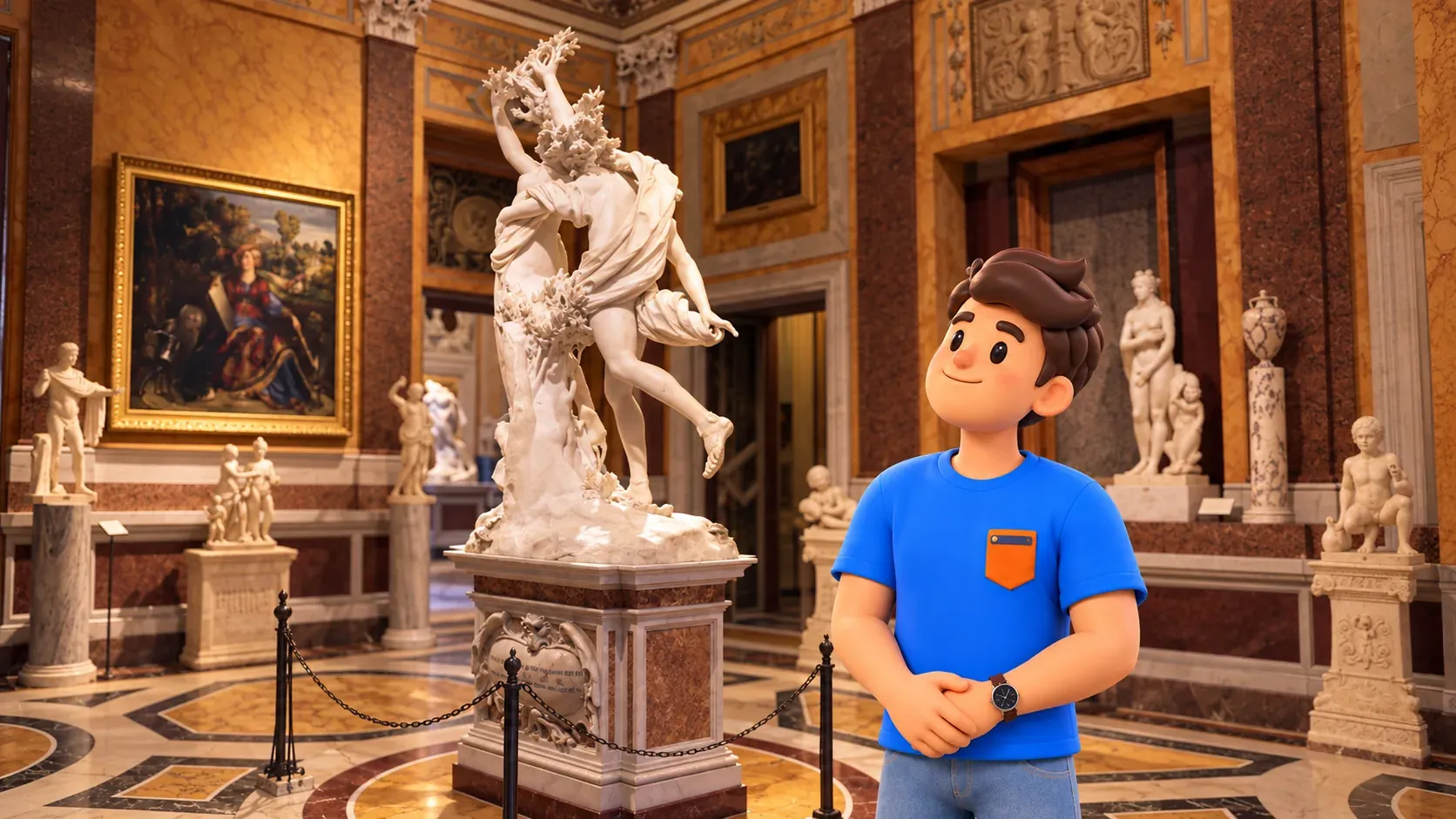
The gallery also holds paintings and ancient works, rather than only Bernini sculptures. If sculpture brings you here, leave some attention for another medium without turning the session into an audit of the entire collection. Several connected observations can stay clearer than a long sequence of stops made when it is already difficult to distinguish your own responses.
The address is Piazzale Scipione Borghese 5, within the Villa Borghese park. Free access to the park does not grant museum admission. Equally, the park remains a separate place to enjoy after leaving the gallery. Travel from a station or distant park gate requires additional time; do not start counting the reserved museum session at the entrance to the large park.
Fit Borghese into an unhurried part of the day
An ordinary booked session lasts two hours. The final 17:45 session is shorter, at one hour and fifteen minutes. Our outline assumes the ordinary two-hour visit, so the final entry needs a different programme. Booking is compulsory for every ticket category, including free admission; eligibility does not create a right to arrive whenever you wish.
For a 10:00 session, start around 9:30 at the gallery itself: thirty minutes for entry arrangements, two hours inside, then twenty minutes for retrieving belongings and leaving. Add thirty minutes on available park paths close to the gallery and twenty for rest. The total is approximately three hours forty minutes, ending around 13:10 near the museum.
This is not a route through the lake, Pincio and distant gates. Travel from accommodation, lunch and the return are additional. The admission buffer does not predict a queue; follow the terms of your actual session if delayed. At the time of checking, Room XX was closed until 16 October 2026 for exhibition installation, so the general timetable did not establish access to every room.
If sessions are unavailable, do not base the day on definitely buying admission on arrival. The museum has limited last-minute tickets with different availability and durations. Another available date or gallery provides a more dependable plan than assigning several hours to uncertain waiting. Neither an appealing public park nor a short-looking queue confirms an interior place.
Doria Pamphilj: choose a collection in its palace setting
The appeal here lies partly in how a painting sits among other objects. The private family collection occupies gallery wings and substantial rooms in the palace. This part of the building’s present appearance relates to refurbishment in 1731–1734. Historic picture arrangements suggest a different display principle from the familiar sequence of isolated paintings against otherwise empty walls.
One meaningful anchor is Velázquez’s Portrait of Pope Innocent X, painted in 1650. Study the face and how a single portrait holds your attention, then return to the gallery’s overall appearance. Changing scale, from the person represented to the room around you, creates a personal theme without requiring a checklist of every artist in the collection.
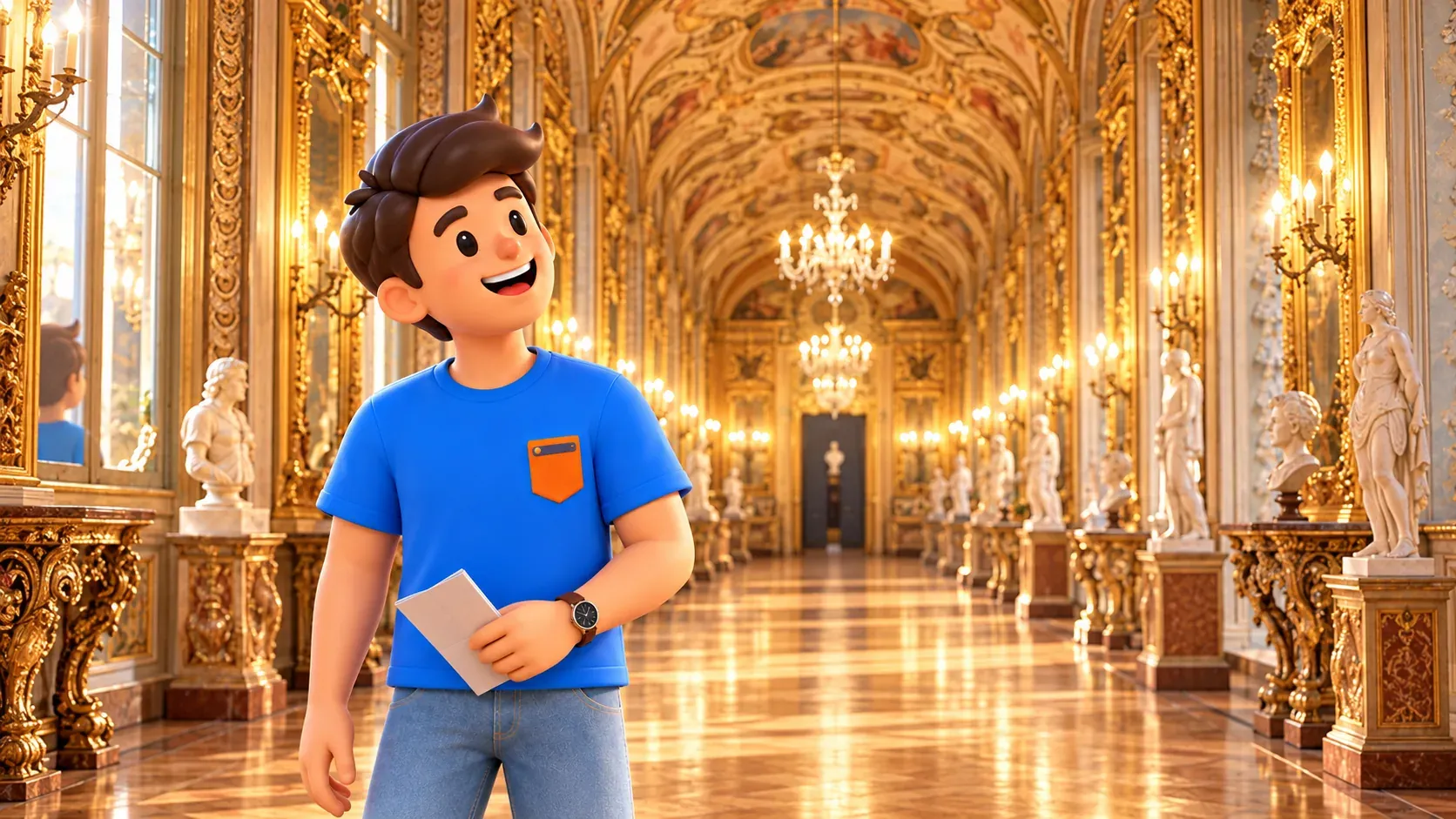
The Hall of Mirrors adds another effect through repeated reflections, gilding, sculpture and the painted vault. You need not interpret every scene to notice how the architecture directs your gaze along the room. This does not make the whole palace accessible on one ticket. The Secret Apartments have separate admission and management; an ordinary gallery ticket does not include them.
Enter at Via del Corso 305. Do not confuse this gallery with the Villa Doria Pamphilj park or Palazzo Pamphilj on Piazza Navona. Choosing by a family name rather than the address and type of visit can send you to a very different place. This programme requires the art gallery entrance on the Corso.
Allow three hours including a short city walk
The gallery recommends roughly ninety minutes for a visit without imposing that as a hard limit comparable to Borghese’s sessions. Our basic outline allows twenty minutes for admission arrangements, ninety for selected displays, twenty for leaving, thirty for a short walk around Via del Corso and Piazza del Collegio Romano, and twenty for rest. That totals three hours.
Plan around an advance reservation. Statements about ticket-office purchases do not guarantee admission without booking. Monday, Tuesday and Thursday opening is 9:00–19:00, with final entry at 18:00. Friday to Sunday is 10:00–20:00, with final entry at 19:00. The gallery closes every Wednesday, as well as on specified holidays. Check the actual date rather than assuming a state museum’s Monday pattern.
The thirty outdoor minutes provide a small change of rhythm nearby, not a second museum or a long detour across the centre. Timing is estimated, with approach, lunch and onward travel extra. If you want longer with the pictures, extend the interior visit and reduce the outside section while preserving rest. An open remainder of the day is more useful than another rigid obligation.
Barberini: combine paintings with palace architecture
At Barberini, the building itself deserves attention. Carlo Maderno, Gian Lorenzo Bernini and Francesco Borromini contributed to its creation. Following the acquisition of the property for the family in 1625, a new palace developed; Bernini took over direction after Maderno in 1629. A little context supports looking at the architecture without requiring a complete construction history.
Select several available paintings and notice the transition to palace space. The great hall with Pietro da Cortona’s painted ceiling is a significant part of the building, but full visibility must be checked. From 14 to 24 October 2026, the official site reports only partial visibility of this hall and closure of the south wing for an institutional event.
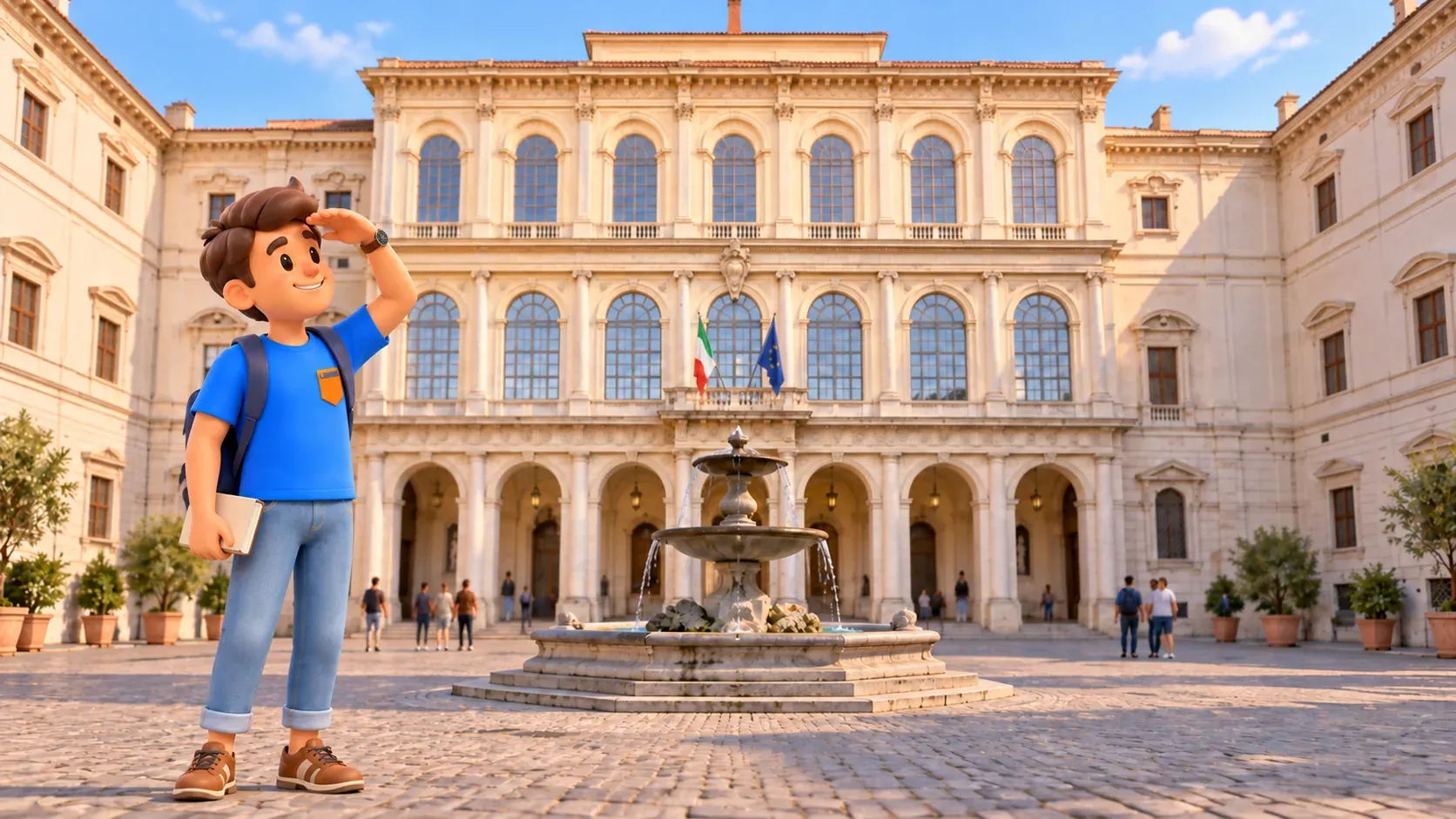
For those dates, do not expect unrestricted access throughout the palace or an uninterrupted view of the complete vault. If the great hall determines your choice, consider another date or establish the available programme first. If painting matters more, assess the open rooms and choose a limited visit. Historical significance does not override current visiting conditions.
The address is Via delle Quattro Fontane 13. Ordinary opening is Tuesday to Sunday, 10:00–19:00; the ticket office closes at 18:00. Monday is the weekly closure, with holiday conditions also requiring attention. A ticket may combine Barberini and the separately located Corsini Gallery, valid twenty days from first use. It does not combine all three galleries in this comparison.
Build a Barberini visit and settle the practical details
For a limited programme, allow twenty minutes for entry, one hundred and ten for selected available paintings and palace context, and twenty for leaving. Add thirty minutes for a short walk along Via delle Quattro Fontane towards Piazza Barberini, then thirty for a break. The total is approximately three and a half hours from the museum door, not a full Bernini or Borromini city trail.
These are three independent programmes. Do not add them together or transfer admission rules between addresses. At Borghese, backpacks and larger bags cannot enter the galleries; permitted storage during the visit depends on its conditions and available space. Doria Pamphilj has no cloakroom or use of a lift and permits only small bags.
At Barberini, bulky bags and umbrellas must use the available storage, but suitcases and luggage are not accepted and locker dimensions are limited. Contact your chosen gallery beforehand if you have particular mobility requirements. A historic palace, a lift somewhere within it and a usable complete sequence for your own needs are different questions, especially during current closures.
Ask RoadMe to work out a personal plan for the whole trip with your balance of sculpture, painting, walking and rest. Distributing these visits across days is more convenient in the app; confirm actual sessions, tickets and room availability with the gallery.
Choose one artistic focus and leave space for the impression after you exit. Nearby park paths at Borghese, a short city transition after Doria Pamphilj or a pause around Piazza Barberini can finish the visit without introducing another substantial task. A successful art day leaves you remembering what you saw, rather than only the sequence of names on the schedule.


