
Rembrandt’s Amsterdam: a walk through his home and working city
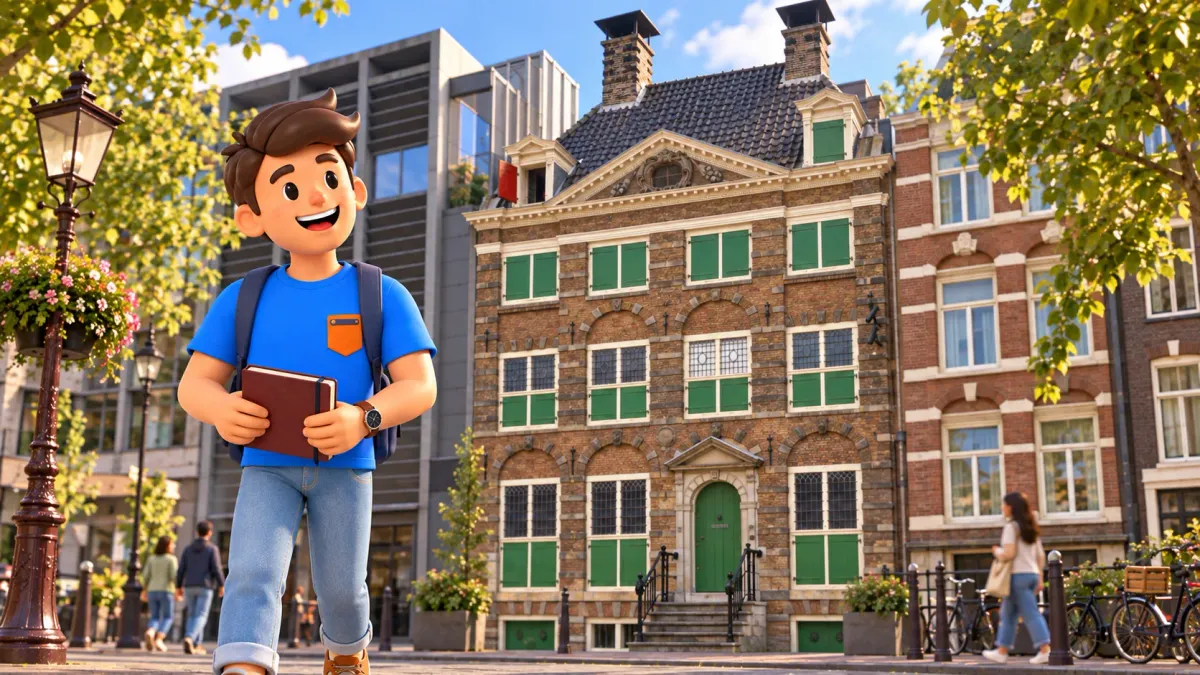
You do not need to find every address in Rembrandt’s life or every famous painting to discover his Amsterdam. Several different connections tell a clearer story: the city’s memory of the artist, his actual home, family history and the world of patrons. Together they create more than a list of monuments. They make Rembrandt a person who lived, worked and depended on circumstances within a city, rather than only a celebrated name beneath a painting in an art-history book.
Allow around four hours, from 10 am until 2 pm: Rembrandtplein, the Rembrandt House Museum, Zuiderkerk and De Waag, followed by a short Nieuwmarkt pause. The house is the main paid visit; other stops are exterior observations. This is a compact themed walk, rather than a complete biography mapped onto the city. A Rijksmuseum visit for The Night Watch is separate.
Choose a walk about an artist’s working city
The route suits an interest in painting connected with everyday work and surroundings. You do not need advance knowledge of every subject or date. Ask simple questions: where were pictures made, what did the working environment require, who commissioned portraits and what happened beyond the studio? Four stops give different answers without becoming an exhaustive catalogue of artworks. Inside, choose your own depth; the outdoor section supports the central story without requiring another admission purchase at every turn.
Try RoadMe for a fully worked-out personal walk or trip plan based on your interests, dates and pace. The app makes a connected programme of art, city history and rest much more convenient to use throughout your stay, with time for what matters most to you.
Choose museum entry first. Our version arrives at 10:45 am; select an available suitable time and adjust exterior stops if needed. A square allows flexibility, while chosen admission needs an arrival margin. Keep another large art museum for a separate programme.
Four hours with the house at the centre
Use 10–10:20 am for Rembrandtplein’s monument, then twenty-five minutes for a current public pedestrian approach to Jodenbreestraat 4. The museum block is 10:45 am–12:45 pm. Keep twenty minutes until 1:05 pm for walking to Zuiderkerk and observing it outside, then twenty-five minutes until 1:30 pm for the approach to De Waag and an exterior stop. The final half hour is a small Nieuwmarkt pause, without an obligatory return to the starting square.
These blocks include orientation and stops; they are estimates, not a measured track. Follow current public crossings and an actual map. Travel from accommodation and your onward journey come separately. A full lunch within the four hours is not promised: the break may be brief, and tables or service depend on your chosen venue. If the museum needs longer, shorten the final pause or exterior observation. Keep the programme’s story rather than turning every following place into an appointment you must reach at speed.
For another view of domestic history, see our canal walk with Museum Van Loon. It concentrates on a canal house, garden and family setting spanning different centuries. Here, the working life of one artist and his city connections matter more. Choose them around different interests or days instead of automatically stacking them into one half day. Their difference helps you decide whether your group wants art history, domestic architecture or a more open-ended introduction to the canals.
Rembrandtplein: start with remembrance
Separate the artist’s lifetime from later fame. Louis Royer’s Rembrandt monument was unveiled in 1852, long after Rembrandt died. It is an image created by later generations, not an address where the artist was born or maintained his principal studio. The square offers a useful opening question: how does a city choose a person through whom to tell its story? The next stop supplies a different sort of connection, grounded in an actual house where he lived and worked.
Twenty minutes can hold an overall view and a few details of the main figure. Do not build expectations around old photographs of additional sculptural groups. Look at posture, clothing and surrounding city activity, then continue towards the house.
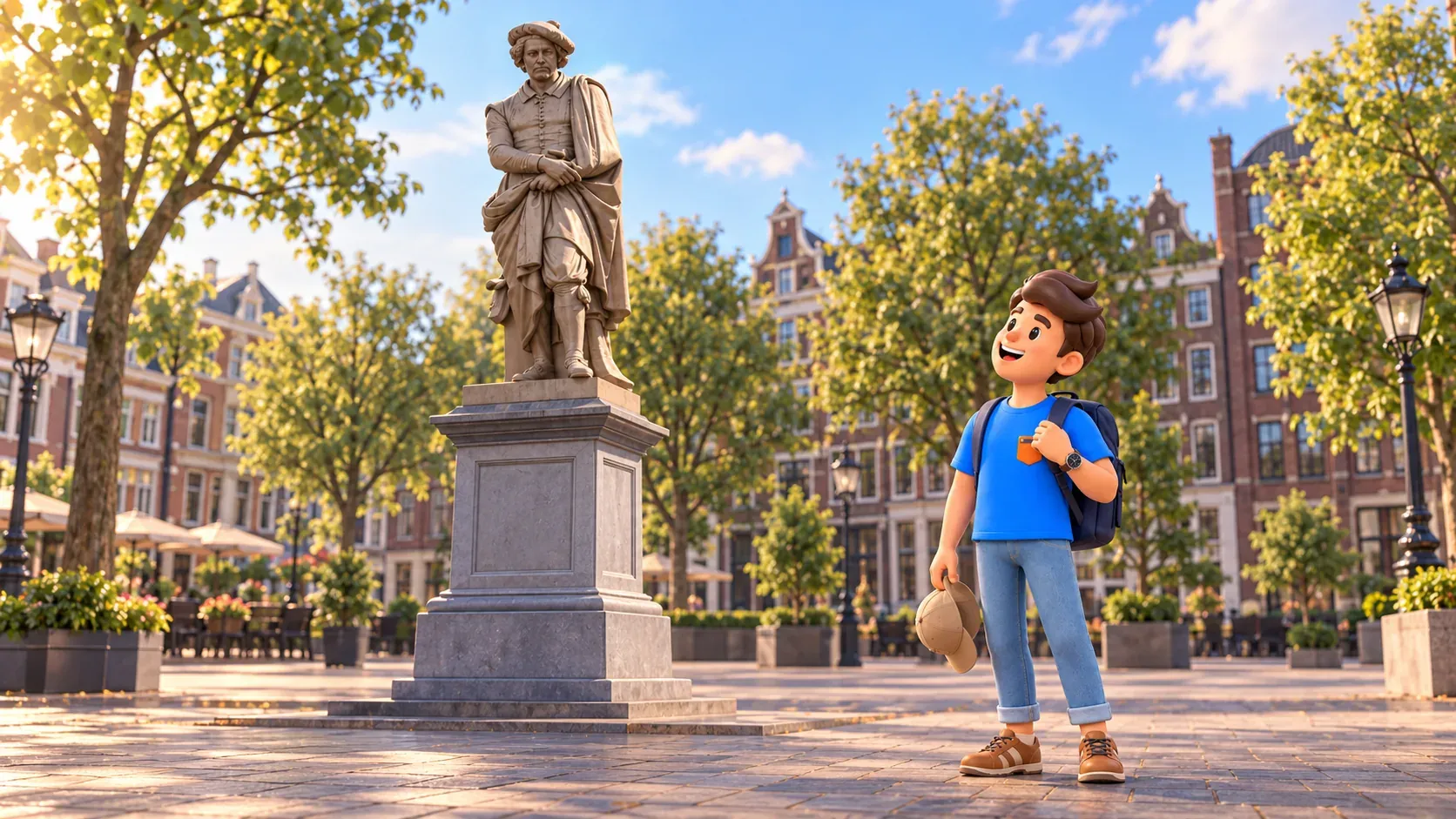
Do not imagine the centre unchanged since the seventeenth century. A surviving address, historical structure, later alteration and modern street differ. Separate remembrance from a documented life connection; the house offers a more direct link than the monument.
Jodenbreestraat: a place to live and work
Rembrandt bought the house in 1639 and lived here for nineteen years. Family life and artistic work shared the building. That is the main reason to visit: understand the scale of a domestic and professional environment, rather than only see old rooms. The artist needed space for work, encounters, possessions and everyday tasks. Ask how the domestic world connects with the studio, what light contributes and how objects might help shape an artist’s attention beyond the finished image known from a gallery.
The present setting is a historical reconstruction, rather than untouched rooms containing every original possession left in place. An inventory made before a forced sale was an important source. The connection between document and space is revealing: a list helped reconstruct the rooms and the artist’s world. You need not learn its contents first. Notice instead how research becomes an understandable physical setting, with spaces, working objects and explanations making a written record meaningful to someone arriving from a modern city street.
Financial difficulties forced Rembrandt to leave in 1658. Avoid reducing that turn to one failed painting or a single mistaken decision; causes are more complicated, and the museum explains the limits of certainty. The contrast between ambitious acquisition and eventual departure is enough to restore a human scale to a famous name. Successful work and recognition did not remove loss, debt and change from his life. A substantial house belonged to that story, rather than serving only as an attractive shell for a studio.
In the studio, look for a process
Notice light and the organisation of work. The museum explains the studio’s north-facing windows in relation to steadier illumination without direct sunshine. This small fact makes painting less abstract: an image develops within conditions, materials and sequences of action. You need not assess each detail as a practising artist. Simply connect the room’s arrangement with a task requiring sustained looking, comparison and changes to a working surface. That link between practical surroundings and artistic attention can be more memorable than another list of celebrated titles.
Rembrandt worked in etching as well as painting. Within the available presentation, compare ways of making images without trying to learn a complete technical procedure. The museum offers demonstrations of painting and printing processes; check the actual schedule on your date. We do not promise one will begin immediately after entry. Our two hours allow selected rooms, multimedia and available programming, rather than establishing a workshop’s duration or guaranteeing participation in a practical activity using the materials you see.

Admission includes a multimedia tour, with English, Russian, French, German and Spanish among its languages. This is not a live guide in each language. Choose a comfortable approach, linking explanations with visible objects instead of trying to listen, read and photograph everything simultaneously.
Keep famous originals in their actual museums
The house explains an artistic environment and working life; it does not replace all Rembrandt collections. The original Night Watch is at the Rijksmuseum. The Anatomy Lesson of Dr Nicolaes Tulp belongs at the Mauritshuis in The Hague. Do not mentally include either in your Jodenbreestraat admission. These are different places and visits. If one painting first attracted you to Rembrandt, decide beforehand whether seeing that specific original or understanding his domestic and professional world is the main purpose of this part of your trip.
The illustrations are thematic scenes, not documentary collection views or a promise of a visitor workshop. Follow the actual display and rules; working objects are not automatically available for use. Notice what surprised you and how the setting changed your impression of Rembrandt.
If you want more painting, studios or city stories after the museum, give those interests to RoadMe. The app works out a personal programme for the whole trip, making connected days much more convenient than repeatedly assembling separate recommendations and walks yourself.
Zuiderkerk: a short family-history stop
After the museum, head towards Zuiderkerk, allowing twenty minutes for the approach and exterior observation. Three of Rembrandt and Saskia’s children, who died shortly after birth, were buried here. A lengthy biography is unnecessary for the connection to be meaningful. The stop recalls life beyond commissions and the studio. A quiet look at the available church surroundings and a short pause are enough, without making a family loss into spectacle or an object-finding game that misses the character of the place.
Church entry, tower climbing and individual events are not included. We do not assume the interior is always open or free. Check the current programme and add time if you want a separate visit. An exterior observation already connects the museum’s story with the city. There is no need to search for a legendary location where a particular painting was supposedly made. A documented family connection gives the stop a clearer purpose than an impressive story without a reliable basis in the place’s history.
De Waag: the professional world of patrons
Allow the next twenty-five minutes for approaching De Waag on Nieuwmarkt and looking outside. The building connects with the surgeons’ guild, the patrons behind The Anatomy Lesson of Dr Nicolaes Tulp of 1632. After house and family, the walk introduces a professional city of organisations and people who wanted images. A group portrait becomes part of public life, rather than only an isolated picture in a gallery. The original remains in the Mauritshuis; this Amsterdam exterior stop supplies context, without promising the painting itself.
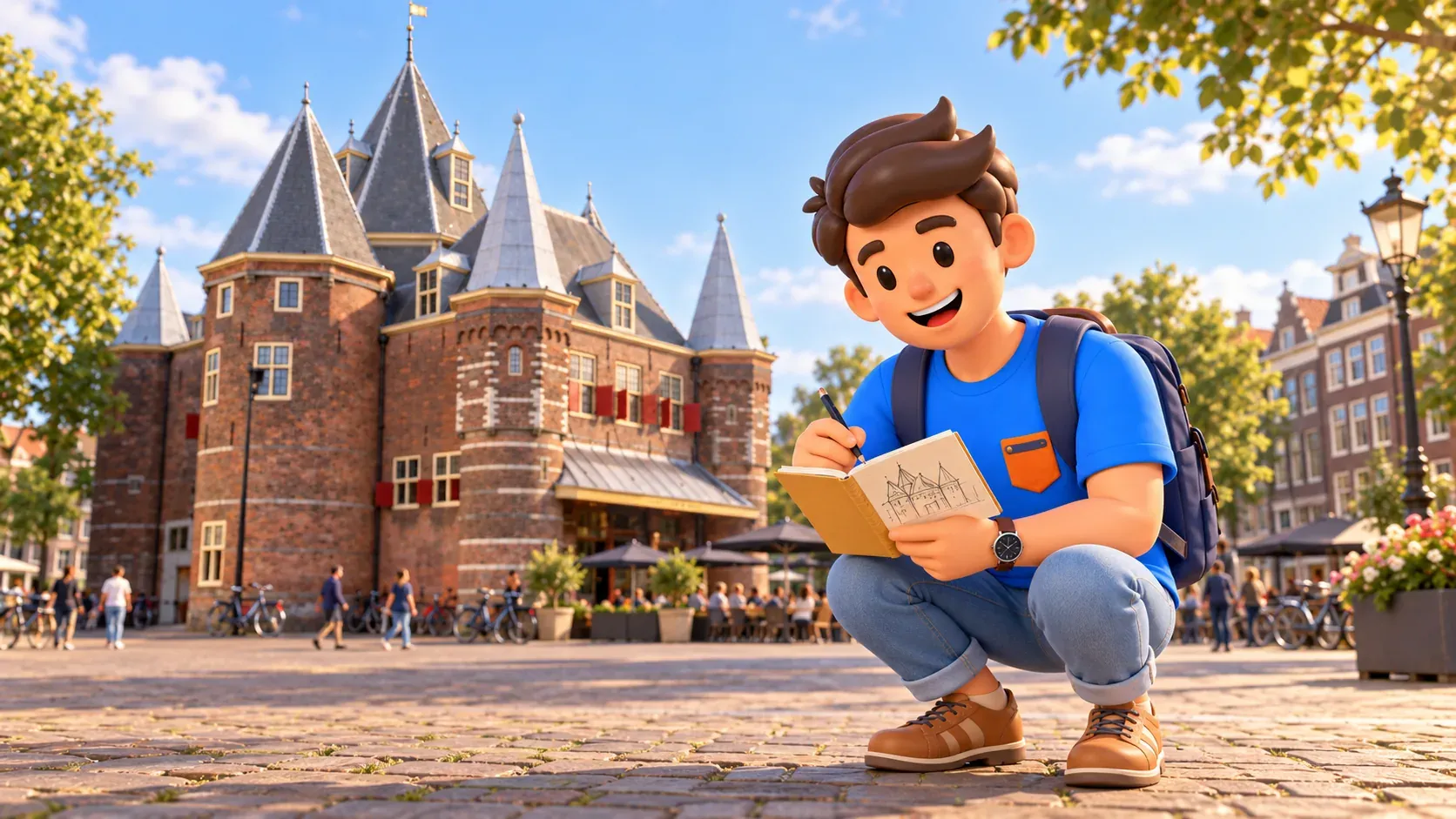
De Waag’s surviving anatomical theatre dates to 1691, after Rembrandt’s death. Do not imagine the current room as an unchanged space where he worked on the 1632 painting. No interior visit is included here. Outside, notice how a historical building acquired functions linked with city professions, then end with a small Nieuwmarkt pause. A substantial lunch, interior admission or further biographical locations need time beyond this four-hour plan. You can finish with a clear connection between image-making and the city that commissioned it.
Entry and accessibility choices
The house opens at 10 am; closing varies with season and calendar, usually 5 or 6 pm. Christmas Day and King’s Day have closures, and 7 January 2027 is separately announced as closed. Check your date and book an appropriate start-time ticket. Do not transfer rules between holidays: 1 January 2027, for example, is listed as open. The desk accepts debit cards, without guaranteeing any particular bank’s card. Later closing matters if you shift the programme, even though our museum visit finishes before the afternoon.
The historic house has narrow, steep stairs and no lift access; the lift serves the modern wing, rather than making the entire old house step-free. Discuss a suitable format with the museum if accessibility affects your visit. The whole urban route has not been verified as step-free either. If the museum is closed, move the main visit or deliberately choose a shorter exterior walk. In rain, reduce the square and outside stops while protecting the museum block, keeping the central connection between an artist, everyday work and a real city.


