
Red Hook Art and Waterfront Walk: Pioneer Works to Valentino Pier
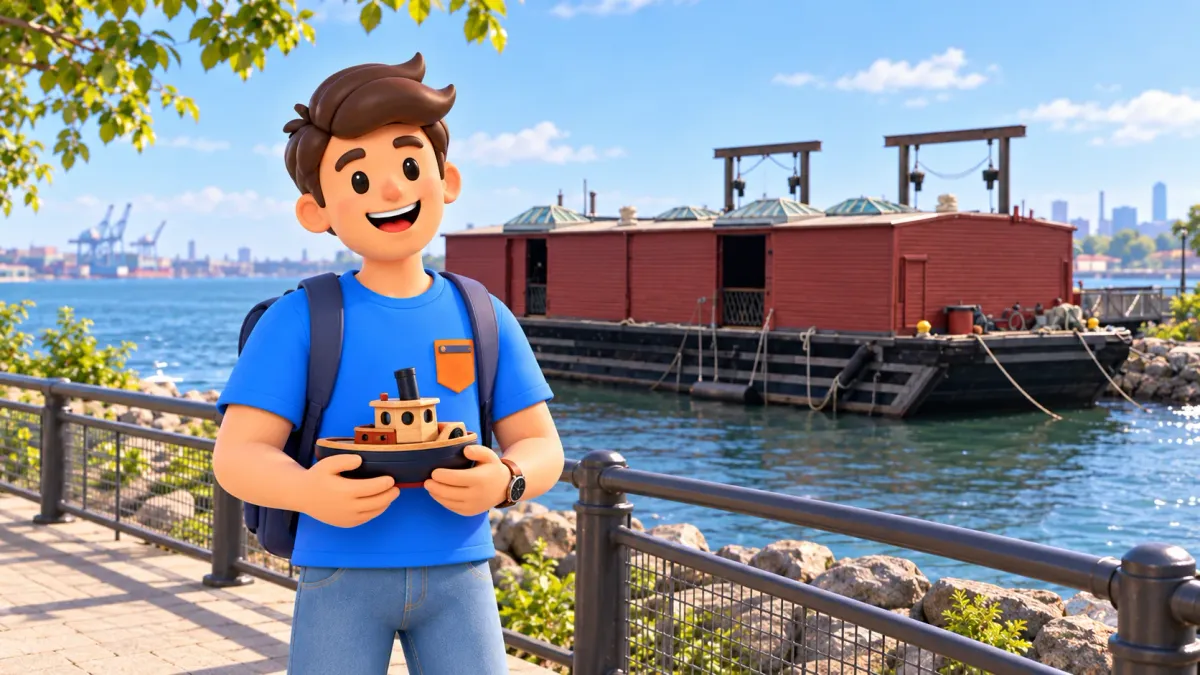
Red Hook makes a rewarding separate outing in Brooklyn when you want contemporary art, traces of the working port and time beside open water. Keep the plan small: Pioneer Works, the Waterfront Museum aboard a historic cargo barge, and Louis Valentino, Jr. Park and Pier. Between them, leave room to eat, notice the streets and understand how cultural spaces, homes and working waterfront uses sit alongside one another.
A useful starting version is a Saturday outing of roughly four to five hours locally, with travel from your accommodation additional. Begin around noon at Pioneer Works, have lunch and visit the barge only if its opening is confirmed. Finish at Valentino Park, keeping time to return to the ferry landing or reach your chosen bus. Other days work too, but the barge becomes a calendar-dependent addition rather than a promised daily visit.
Choose the Red Hook outing that suits your interests
RoadMe makes it more convenient to build a personal day and trip plan around your interests in contemporary art, maritime history or quiet waterfront time. Try planning Red Hook in the app so suitable experiences and room to rest shape the outing around you.
This walk has a different rhythm from crossing Brooklyn Bridge. The interest lies partly in small observations: broad openings in an industrial building, changing surfaces underfoot, working vehicles and a sudden glimpse of the harbour. An appealing facade is not proof of a public entrance. An artist’s studio remains a workplace unless a programme explicitly welcomes visitors inside.
Do not expect an entire port district converted into an arts backdrop. Industrial activity, residential streets and cultural programmes coexist here. Looking at that mixture is more useful than searching for a supposedly undiscovered corner. Nor is this a continuous landscaped waterfront promenade. Public access to the water comes in separate places, connected by ordinary streets rather than an uninterrupted path along the shoreline.
Decide how important boarding the museum barge is before choosing a date. For art and a harbour view, Pioneer Works and Valentino Pier can make a satisfying shorter outing. For a closer look at freight transport and life afloat, fit the day around the museum calendar. That decision matters more than following the same geographical order on every possible weekday.
Match the two cultural venues’ calendars
Conditions checked on 17 October 2026 list Pioneer Works’ galleries and garden open Wednesday to Sunday, noon–6pm. Its evening events, individual exhibitions and ordinary daytime access may have different arrangements. Look at the programme for your date and the requirements of anything you actually want to attend. Opening hours for the building do not mean every installation or studio is available throughout them.
The Waterfront Museum normally offers free public visits for individuals and families on most Saturdays, 1–5pm, and Thursdays, 4–8pm, when the barge is docked in Red Hook. “Most” is essential: its current notice explicitly announces closure on 29 and 31 October 2026. Group visits by arrangement and special performances are separate formats, potentially involving booking and payment. A general opening pattern is not a reservation.
Saturday therefore gives a useful ordinary overlap, starting around noon, without guaranteeing admission on every Saturday. For Thursday, reverse the outdoor emphasis: visit Pioneer Works and the waterfront earlier, then go to the barge for its confirmed late opening. In winter, protect daylight for walking. Avoid making one outing depend simultaneously on a late museum visit, sunset and the last convenient ferry.
Arrive at the right landing
NYC Ferry serves Red Hook/Atlantic Basin on its South Brooklyn route. The operator locates the landing at Ferris Street and Clinton Wharf. Save that name for your return: Valentino Pier is a place to walk, not the ferry stop. Keeping the transport landing separate from the scenic pier prevents a pleasant final pause from becoming a hurried search for boarding.
Route sequences and intervals can change with season and day of the week. Check the active timetable, direction and service notices rather than assuming the same short direct journey from every Manhattan landing. Ordinary NYC Ferry services require a valid ticket. A temporary fare-free shuttle advertised for a particular date does not make the regular route free or replace its ticket conditions.
A land-based arrival involves the subway and a local connection or additional walking. Pioneer Works lists the F/G at Smith–9th Streets and the B61 bus among its options. Choose the actual connection from your accommodation using current service information. Reaching the subway station is not the same as arriving at the venue’s door; account for that final section before deciding how much walking to add.
Pioneer Works: give one programme proper time
Your first main destination is Pioneer Works at 159 Pioneer Street. The cultural centre brings visual and performing arts together with music, science and technology. Its value need not depend on encountering one famous object. The relationship between different practices and a generous former industrial space is part of the visit. Allow roughly an hour to ninety minutes for an introduction, adjusting that estimate to the programme you choose.
The red-brick building was constructed in 1866 for Pioneer Iron Works, which manufactured railroad tracks and other large machinery. Rebuilt after an 1881 fire, it eventually became the cultural centre that opened to the public in 2012. Think of this as the reuse of an industrial structure, not an abandoned factory to explore informally. Materials, height and openings help make its earlier purpose legible.
Start with what is available today. A sound-based work may need time spent listening rather than a quick circuit; a material-focused piece may reward looking from more than one distance. Follow the instructions for each work. Permission to touch an interactive installation does not automatically extend to neighbouring art, and studios should be entered only where public access is invited.

Most programmes are free, but that does not promise free admission to every concert, class or special event. Check whether your chosen format needs a ticket or registration. Individual exhibitions can also have exceptions within their advertised run. One suitable daytime visit is enough for this itinerary; an evening programme is an option to choose deliberately rather than another obligation.
After renovations completed in early 2025, the centre reports an elevator linking all three floors, an accessible garden path and accessible restrooms. Those are useful building-specific arrangements, not a description of the entire street and waterfront route. If access requirements matter, ask each venue about the conditions relevant to you, including any approach to the barge.
Use lunch as a real pause in the neighbourhood
Between the cultural centre and the southern waterfront, leave time to eat around Van Brunt Street. Choose somewhere currently open that suits your budget and dietary needs. A recognised name does not guarantee a spare table, and a long queue can consume the time intended for the museum. Around forty-five minutes to an hour for food and sitting down is a practical allowance.
Look at the streets during the transition, rather than treating them as empty space between attractions. Warehouse-scale buildings, small shopfronts and residential doors explain the district’s mixture. Use pavements and permitted crossings, paying attention to driveways and working vehicles. Seeing water between buildings does not mean any yard offers an authorised route to it.
The Waterfront Museum: a cargo barge, not a harbour cruise
The museum is at Pier 44, reached from 290 Conover Street. Its directions describe pedestrian access through a private parking lot to the designated pier approach. Follow current signs and watch for vehicles. This is a specific route to a museum, not permission to investigate adjacent industrial premises or improvise a continuous shortcut beside the water.
Lehigh Valley No. 79 is a covered wooden cargo barge built in 1914. It carried freight between New Jersey railroad facilities and ships and piers around New York Harbor. Barges of this type had no engines and depended on tugboats to move. That detail changes the way the vessel reads: it belonged to a transport network rather than being an old sightseeing steamer.
During confirmed public hours, explore the barge’s working history and ask about the parts currently accessible. The museum describes the captain’s living quarters, waterfront workers’ tools and maritime signalling objects. The actual visit and interpretation available that day should guide your expectations. Allow roughly forty-five minutes to an hour, without assuming that a performance found elsewhere in the calendar is included in ordinary daytime access.
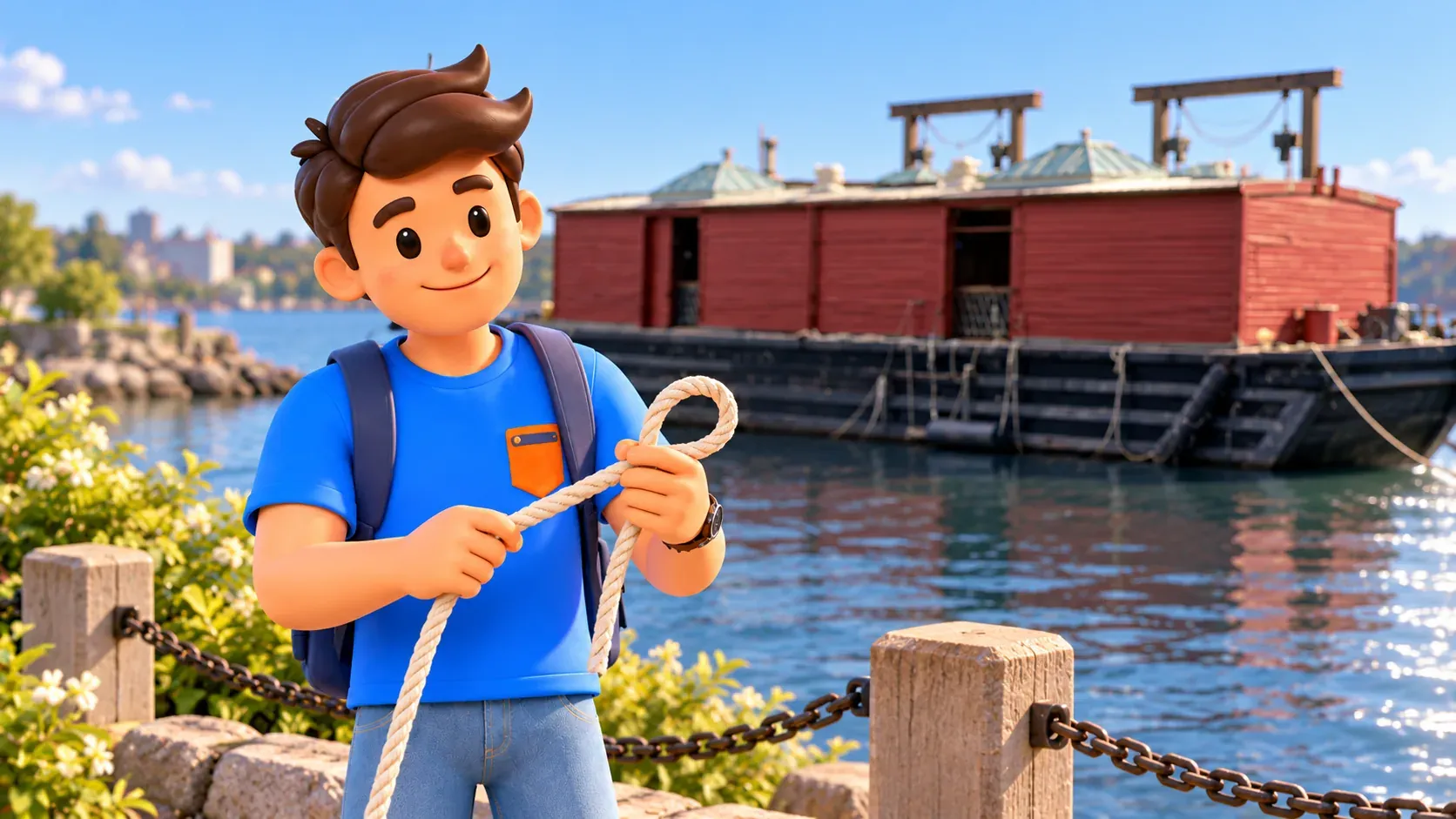
If the museum is closed, do not board independently. Pier 44’s garden and public waterfront space have their own arrangements: the operator lists daily access from sunrise to 9pm, subject to current instructions on site. Outdoor access and access aboard the vessel are different things. If the permitted approach is unavailable, continue towards Valentino Park using public streets instead.
Finish at Valentino Park with time to look
Louis Valentino, Jr. Park and Pier lies on Ferris Street between Coffey and Van Dyke Streets. Its name honours a firefighter and city lifeguard who died during rescue work in 1996. A quiet stop connects that neighbourhood memory with a broad harbour view. The place works as a finish precisely because it does not require another major indoor visit.
In suitable visibility, the pier offers views towards the Statue of Liberty, Governors Island and other parts of the harbour. These remain distant landmarks: this walk does not replace an island visit or promise a close photographic view of the statue. Watch how water, passing vessels and shoreline buildings relate to one another. A calm half-hour can be more rewarding than chasing a single supposedly perfect angle.

RoadMe makes it easier to fit Red Hook into a personal trip plan, distributing art, walking and rest across days according to your interests. Build your version in the app so this outing has enough space instead of becoming a rushed addition to another part of Brooklyn.
Allow around thirty to forty-five minutes for the final stop, with separate time to reach transport. Strong wind or rain may make a shorter stay more comfortable; sunset is not required for a successful outing. There is no need to descend to a rocky shoreline for a photograph. This plan stays on permitted pedestrian areas and does not include swimming, fishing or taking a boat onto the water.
Consider surfaces as well as distance. The three anchors lie in western Red Hook, but a compact map does not guarantee smooth paving throughout. Choose shoes comfortable on varied surfaces and allow for normal street crossings. Shorten the outing if the arrival journey has already involved more walking than expected, rather than using the final waterfront section to recover an overfilled schedule.
Before returning to Atlantic Basin, check the next suitable departure and its direction again. Use an appropriate land connection if it works better that day. The result is a clear first encounter rather than a complete directory: contemporary culture in a former industrial building, a specific story about harbour freight and time beside open water. That is enough for one unhurried visit.


