
Two Hours on the Quirinal: Palaces, a Square and Small Churches
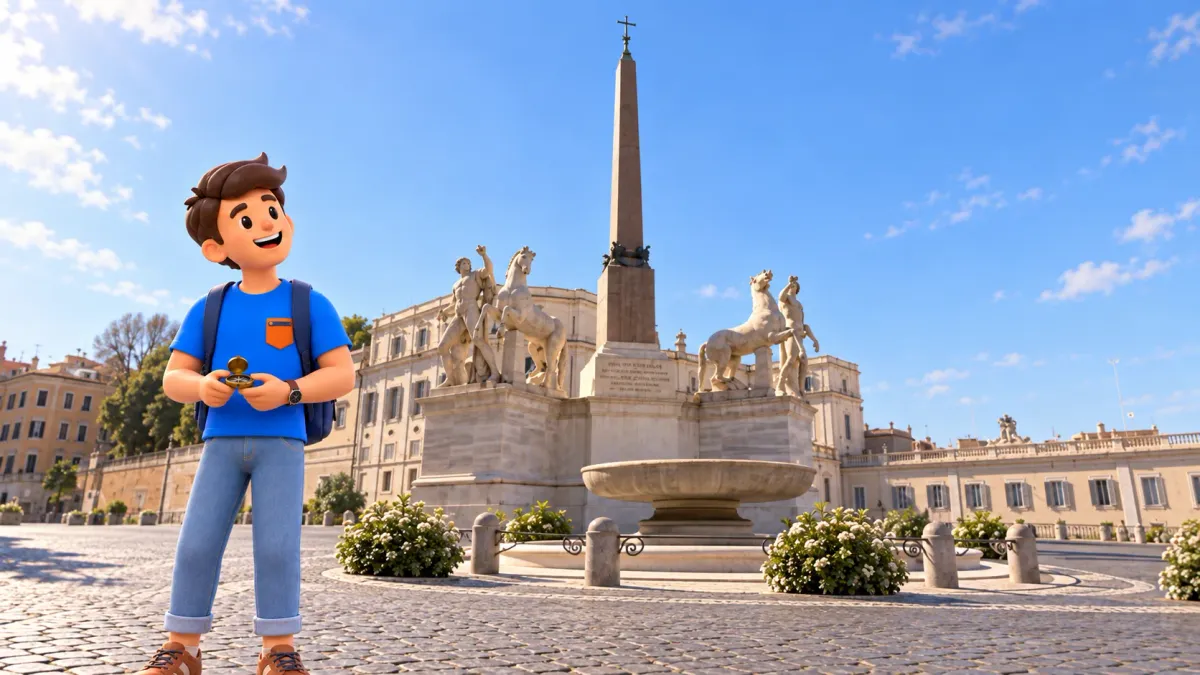
A short Quirinal walk can reveal three scales of Rome: a square with horses and an obelisk, long palace façades, and small churches where architecture seems to gather around the visitor. You do not need every palace room or an explanation of every Baroque symbol. A few things worth looking at closely can give the outing its shape.
Allow roughly two hours from Piazza del Quirinale along Via del Quirinale to Sant'Andrea, San Carlo and the Four Fountains junction. The palaces remain exterior stops. One or two brief main-church interiors are possible if sightseeing access allows. The uphill approach to the start and the onward journey are extra. Timings are planning estimates, not measurements taken on a walk.
Choose a day and one or two interiors first
To compare both churches inside, choose a day when both allow visits. Sant'Andrea's community lists Monday closure and a midday break. San Carlo publishes sightseeing hours for working days; Sunday Mass does not establish unrestricted tourist access. Check notices for your date even when the general schedule looks suitable.
Try RoadMe to prepare a personal trip plan around your dates, interests, pace and budget. A complete considered itinerary in the app makes it more convenient and effective to arrange short walks alongside major visits while keeping room for rest.
The example below uses an ordinary Tuesday-to-Saturday morning, beginning at the square at 9:30 and ending around 11:30. That places the brief visits at approximately 10:10 for Sant'Andrea and 10:40 for San Carlo, within their published normal morning windows. It does not confirm admission on every holiday or particular date.
If you want only one interior, choose it beforehand. Observe the other church outside and spend the released time looking more closely or resting longer. If both interiors are essential, select a checked date rather than rely on an unexpectedly open door. Small buildings still host worship and other visitors, so flexibility remains part of the plan.
A two-hour outline with a proper pause
| Minutes from the start | Plan |
|---|---|
| 0–20 | Quirinal Square: horses, obelisk and fountain outside |
| 20–30 | Quirinal Palace and Palazzo della Consulta exteriors, including local movement |
| 30–40 | Via del Quirinale towards Sant'Andrea |
| 40–60 | Sant'Andrea exterior and brief main interior if accessible |
| 60–70 | Public connection towards San Carlo |
| 70–90 | San Carlo façade and brief main interior if accessible |
| 90–105 | Rest in a suitable available place away from the junction |
| 105–120 | Four Fountains: pavement observation, necessary crossings and finish |
The total is one hundred and twenty minutes. Rest is already included, and the final fifteen minutes do not require rushing between every corner for photographs. San Carlo's cloister, crypt and other rooms are outside the calculation. Even if available during your visit, studying the whole complex takes additional time.
Reaching the square may involve an ascent from lower central streets. Give that its own margin and begin counting once you are at the square. If a museum or breakfast comes first, allow the connection to the start too. This is not a certified step-free route; check particular entrances and surfaces for your needs.
The square: several periods in one composition
At Piazza del Quirinale, first take in the silhouette: obelisk, figures with horses and fountain basin. The sculptural groups represent the Dioscuri, Castor and Pollux. Their placement and surroundings changed over time. The present composition is not one ancient ensemble that has stood here unchanged since antiquity.
The large basin entered the present fountain arrangement in 1818. That small fact captures something characteristic of Rome: individual elements may be very old while the way they are brought together is much later. The city repeatedly rearranged its emphasis, making moved and reinterpreted objects into a familiar urban image.
For twenty minutes, use two ways of looking. First judge the figures' size against the square; then find a line connecting horse, human body and the obelisk's vertical. You need not locate the one position fitting everything into a photograph. Looking from a comfortable public part of the square can be more rewarding than struggling for symmetry.
Two palaces from outside
The Quirinal Palace is associated with papal, royal and republican chapters of Rome's history. It is now the official residence of Italy's President. For this walk, see how it belongs to the square and how a long façade establishes scale. A complete interior visit is a different undertaking.
Palace admission is arranged separately for a chosen date and time. The official site gives its main visit programmes an average duration of about one hour twenty minutes and asks visitors to arrive early with identification. Such a visit changes the entire two-hour outline. If the palace is your main purpose, build a separate outing around it.
Palazzo della Consulta, on the same square, was designed by Ferdinando Fuga in the eighteenth century and houses Italy's Constitutional Court. Compare the windows and entrances from public space. Being an active institution does not imply unrestricted entry. The example's ten minutes cover the exterior comparison and movement between workable viewing positions.
Along Via del Quirinale towards a smaller scale
Continue on public routes along Via del Quirinale towards Sant'Andrea and then San Carlo. The points form a northeastward sequence from the square. Short connections include orientation time. The itinerary does not use private palace gardens as a shortcut or depend on access to a courtyard beyond a gate.
After the square, put the camera away briefly and notice the distance between yourself and the architecture. A palace façade feels like a long wall of the city; a church entrance soon asks for a closer, slower look. The changing scale is the walk's main idea, rather than collecting as many names as possible.
Sant'Andrea: an oval, marble and light
Gian Lorenzo Bernini designed Sant'Andrea al Quirinale in the seventeenth century. Outside, notice the semicircular steps, small curved portico on two columns and tall front with a triangular pediment. This provides an approachable example of an entrance shaping your expectations before you step inside.
If sightseeing is possible, begin with the oval plan. Its long axis runs across the entrance direction, so the space opens differently from a familiar long basilica. Coloured marble, stucco, gilding and light work together. For a brief visit, choose one relationship between them instead of trying to find every artwork.
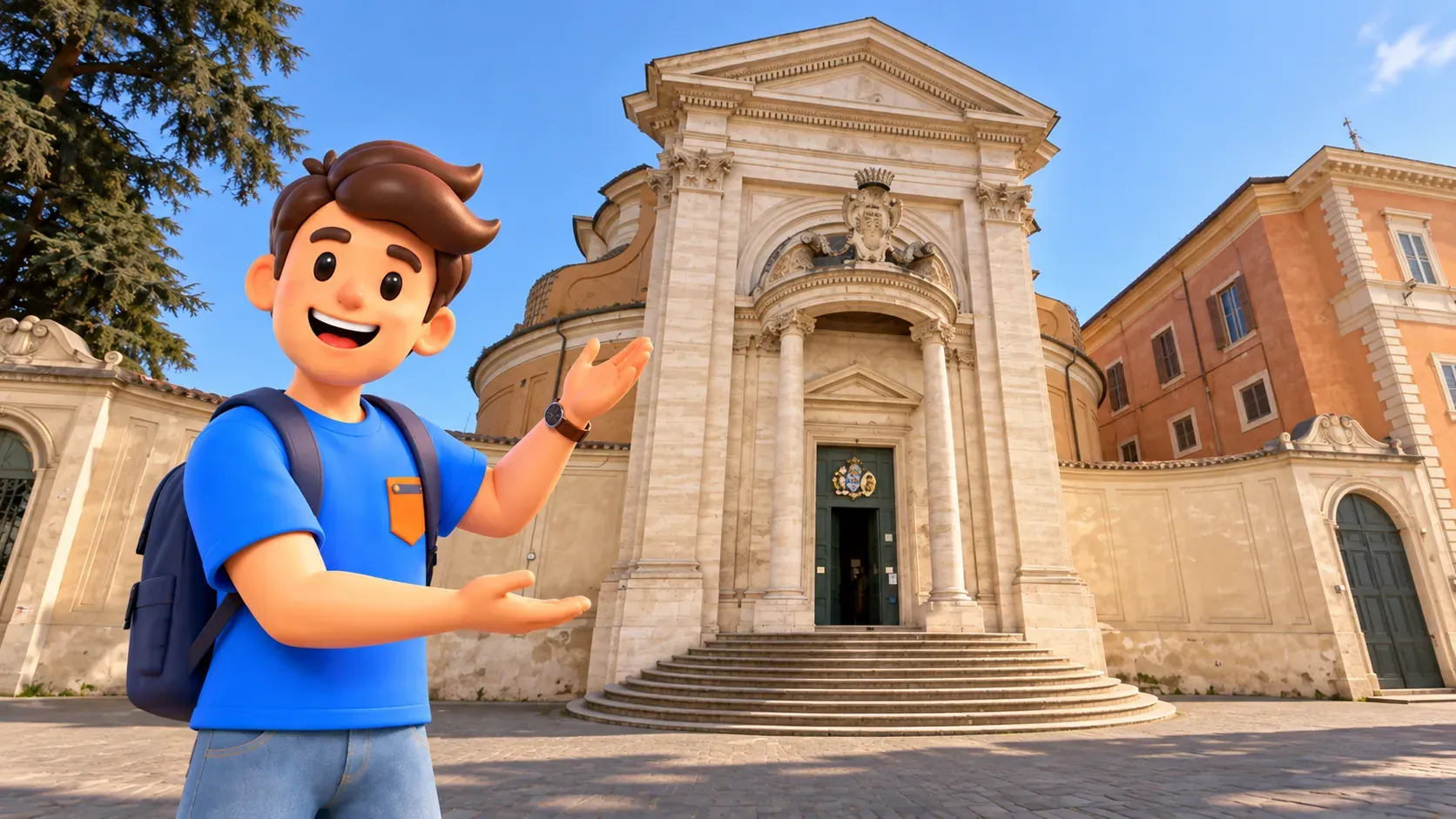
Twenty minutes cannot hold a detailed guided account. An overall look and one detail are enough if conditions allow a quiet pause. During worship, follow the community's arrangements. If the door is closed, the exterior remains a worthwhile stop; it simply offers a different experience from the interior you originally hoped to see.
San Carlo: moving lines rather than size
A short connection brings you to San Carlo alle Quattro Fontane, also called San Carlino. The church is associated with Francesco Borromini and the Trinitarian order. Compare its spatial effect with Sant'Andrea without turning the visit into a contest about which architect won. Different observations can be interesting without requiring a single favourite.
Outside, follow the alternating concave and convex portions of the façade. After Francesco's death, his nephew Bernardo Borromini completed the upper level. Even a recognisable architectural work has a design and a history of execution. A narrow façade can reward more attention than its modest width initially suggests.
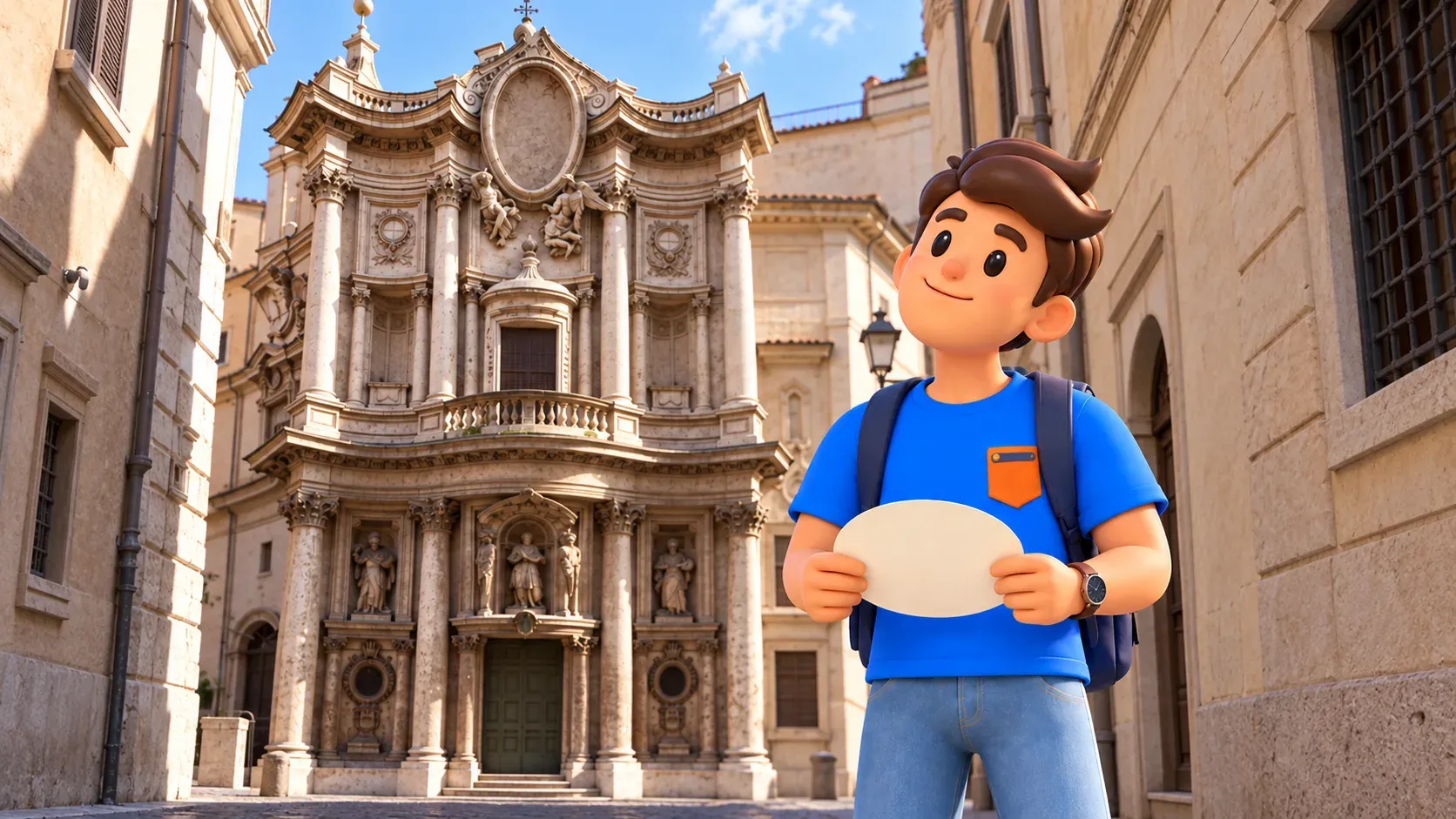
Inside, choose another focus: pale surfaces, the curving cornice and the dome's geometric pattern. Coffers with different shapes draw the eye upwards. After Sant'Andrea's coloured marble, compare how lines and light shape your response. This is an invitation to look, rather than a prescribed answer about what you must feel.
The twenty-minute block covers the façade and a brief main-church interior. Save cloister and crypt for a longer visit. The community includes them among accessible parts during opening hours, but availability does not mean the entire complex can be explored attentively in the same short interval.
Rest before the junction
After the two small churches, take fifteen minutes in a suitable available place away from the crossroads. An empty bench or a particular open café cannot be assumed. Finding somewhere workable belongs inside this block, and carrying water helps keep it flexible. A full lunch needs separate time rather than quietly taking the final fountain stop.
Compare impressions with a simple question: what stayed with you most, colour, a curve or light? Your answer can help choose later visits around your interests. If one interior was unavailable, compare what you actually saw: entrance shape, façade and relationship to the street. A useful walk does not need to produce exactly the same experience for everybody.
The Four Fountains occupy corners
Quattro Fontane means four fountains at the corners of an intersection, rather than one central basin with four jets. The ensemble belongs to changes in the street network under Sixtus V in the late sixteenth century. Reclining figures in niches and small basins turn the crossing of street directions into an architectural scene.
Choose an accessible corner and study one composition: the figure's position, background texture and niche within its façade. Compare another corner if practical and using a permitted crossing. These remain working streets. Seeing the ensemble does not require standing in the road's centre or collecting all four angles regardless of conditions.
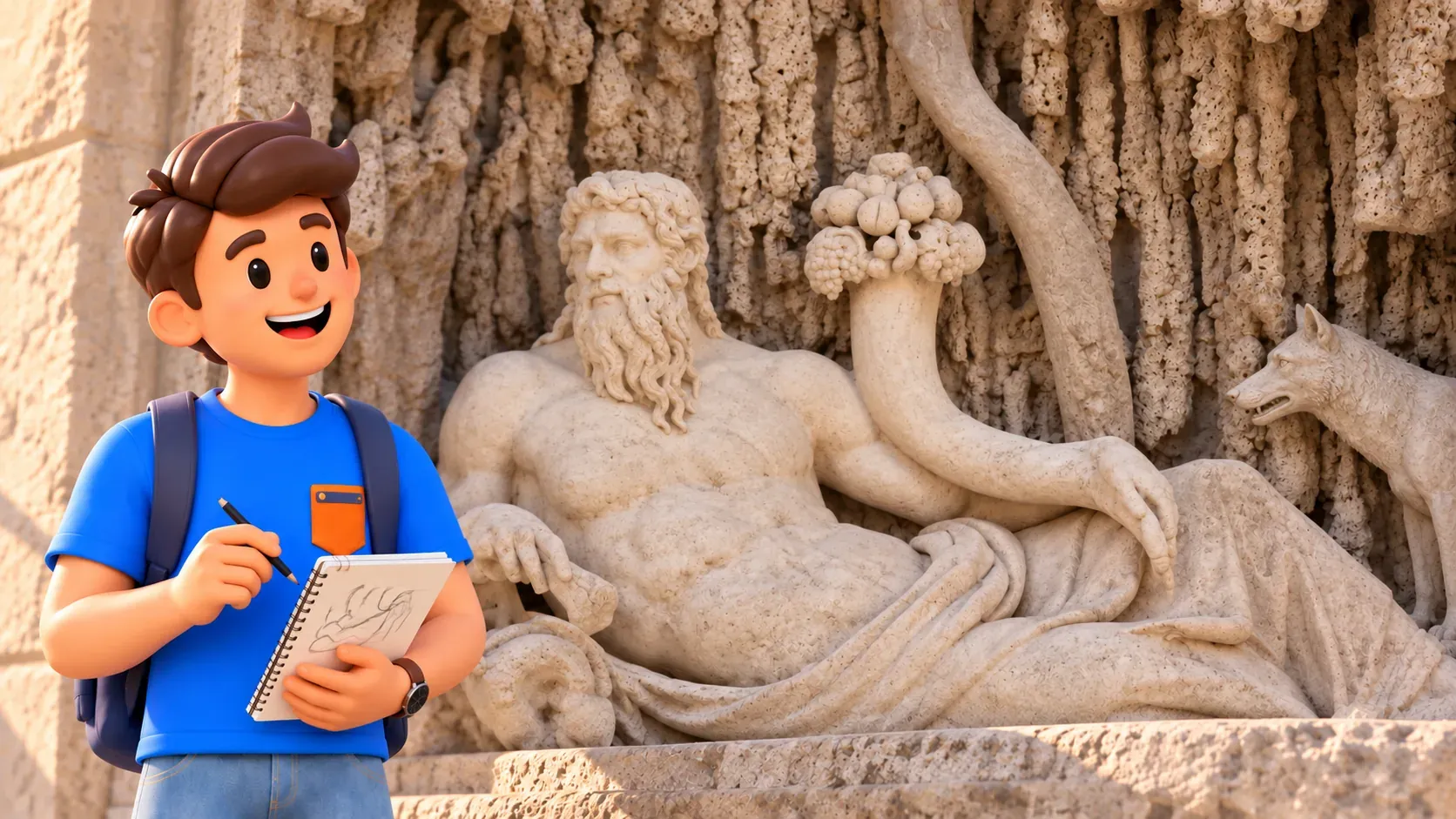
Finish here, then check the onward journey from the corner where you actually stand. If continuing downhill towards another part of the centre, allow that connection separately. Finishing at the Four Fountains does not mean you have reached the next major attraction already. Extra movement time is particularly useful in poor weather or towards evening.
Try RoadMe to connect the Quirinal with your other Rome days in a personal plan shaped by your interests. The app helps distribute short walks, substantial museum visits and rest beforehand, making a considered whole-trip itinerary more convenient to use on the spot.
For more greenery and less comparison of interiors, consider our Caelian Hill walk with Villa Celimontana. On the Quirinal, keep the changing scale as the central experience: square, palace wall, oval church, curving façade and a fountain at a street corner. That makes a satisfying two hours.


