
A Day Around Prospect Park: Brooklyn Museum or Botanic Garden

A day around Prospect Park works best with one substantial visit and enough time outside to enjoy what you have seen. Choose Brooklyn Museum if art is your main interest, or Brooklyn Botanic Garden if plants and landscape design appeal more. Then eat, rest and walk through a nearby part of the park. The three neighbours have separate entrances, tickets and calendars; their closeness does not turn them into a single attraction.
This plan offers two versions of one day, rather than a checklist to complete in full. The museum version pairs naturally with the park’s northern entrance and Long Meadow. The garden version leads out towards Flatbush Avenue, into the park at Willink and towards the Boathouse. Allow roughly six to seven hours locally, including breaks, with travel from your accommodation additional. Those are editorial planning estimates, not measured walking times or promised admission slots.
Choose the visit that deserves your best attention
RoadMe makes it more convenient to turn your interests in art, plants or relaxed walking into a personal day and trip plan. Try planning this outing in the app so one well-chosen visit and useful breathing space shape the day around you.
For the museum version, look at the current programme before leaving and identify a main interest. Brooklyn Museum describes strengths including ancient Egyptian art, American art and feminist art, but a collection category is not a promise that every particular work will be available. Choose a direction, check any exhibition-specific admission and give yourself permission to stay with something unexpected. A focused two to three hours can be rewarding without becoming a survey of the whole institution.
The garden version suits a different kind of attention. Instead of collecting every named section, select two or three contrasting environments: perhaps the Japanese Hill-and-Pond Garden, a plant collection and a conservatory pavilion appropriate to the day. Water, leaf shapes and the way a path reveals a view become the subject. A spring photograph is inspiration rather than proof of what will be flowering when you arrive.
Make the choice before buying your ticket. Starting with a museum visit and then rushing into the garden because it is nearby uses the best part of the afternoon on another admission process. There is also a perfectly sensible shorter version: choose your main visit, eat and take only a small park walk. Having less on the plan makes it easier to give the chosen place proper attention.
Check the date before fixing the order
The museum’s own Google Arts & Culture partner profile publishes standard opening Wednesday to Sunday, 11am–6pm, with Monday and Tuesday closed. Confirm the actual museum calendar and ticket conditions before travelling. Brooklyn Botanic Garden usually opens Tuesday to Sunday, with seasonal hours and some holiday exceptions. Wednesday to Sunday are therefore the normal overlapping days when either version is possible.
Conditions checked on 17 October 2026 show why the month matters. The garden lists an October closing time of 6pm but a November closing time of 3.30pm. Last admission and the closing of specialty gardens begin thirty minutes before the overall closing time. On 24 October 2026, the Fall Harvest Festival requires special tickets and ordinary admission is unavailable. These are dated conditions to verify against your own visit, rather than a permanent schedule.
A museum-and-garden combination ticket exists, but it does not remove the need to choose your pace. Its museum admission is for the same day and does not automatically include special events or separately ticketed exhibitions. Do not assume a standard garden ticket includes everything next door, or that ordinary museum admission grants universal garden access. The useful question is whether both visits actually fit your interests and available attention, not whether a bundled ticket can be bought.
Begin with a brief look at Grand Army Plaza
The Soldiers’ and Sailors’ Memorial Arch gives the neighbourhood a clear starting image. Completed in 1892 to John H. Duncan’s design, it commemorates those who served the Union in the Civil War. Its large stone opening and sculpture create a monumental threshold between busy streets and the park landscape. Look at the relationship between the arch and the space around it, rather than treating it only as a background for a photograph.
Allow perhaps fifteen to twenty minutes for an exterior stop, using pedestrian crossings and safe viewpoints. Access to any interior or occasional special opening is not included in this plan. If you arrive late, skip the stop and protect time for the main visit. The day does not depend on seeing the arch before entering a museum or garden.
For Brooklyn Museum, navigate to its address at 200 Eastern Parkway. For the garden, choose a working entrance deliberately: its FAQ reported the 150 Eastern Parkway entrance closed at the time of checking, even though the general map still showed it. This garden route uses 990 Washington Avenue for arrival and 455 Flatbush Avenue for departure. A gate symbol on a map is not confirmation that the gate is currently operating.
Museum option: one theme, lunch and northern Long Meadow
With an 11am museum opening, a short plaza stop can precede the visit without a rushed start. Once inside, identify the relevant galleries and spend time with a manageable selection. For an ancient object, consider its material and original use; for a painting, notice how space is arranged before reaching for a label. Those small questions make an unfamiliar collection approachable without pretending to replace its interpretation.
Avoid building the morning around one unverified masterpiece or exhibition. Temporary displays change, particular rooms can have restrictions and ticket categories can differ. A general interest in a collection is a more resilient starting point. If you discover that a chosen exhibition needs a different ticket, make that decision openly rather than assuming it was covered by the standard admission you selected.

Afterwards, take a real lunch break outside the galleries. Choose somewhere currently open that suits your dietary needs, rather than making the entire outing depend on an unverified restaurant address. Allow around an hour overall for food, sitting down and ordinary delays. Talking about the visit during a break often gives it more shape than immediately searching for another attraction.
For the park, return towards Grand Army Plaza and enter the northern part of Prospect Park. A short walk around the northern Long Meadow area offers space and changing views after the enclosed galleries. You do not need to cross every stretch of grass or continue to the lake. Sit when you find a suitable bench and turn back while the outing still feels comfortable. Finishing near the northern entrance keeps this version coherent.
Garden option: selected landscapes and a different park finish
At the Washington Avenue entrance, consult the current garden map and locate your eventual Flatbush Avenue exit. Planning towards that side avoids retracing every section. Brooklyn Botanic Garden is a separate institution beside Prospect Park, not simply a freely accessible section inside the public park. Its boundary, admissions and visitor rules still apply even when the next destination is close.
The Japanese Hill-and-Pond Garden rewards moving slowly. Curving paths alter the angle towards the water; branches frame a view and then conceal it; reflections make a modest distance feel deeper. Notice how the composition changes over a few steps. Stay on permitted paths, leave plants untouched and do not feed wildlife. The living collection is something to observe rather than handle.
Choose a second environment according to weather and season. Summer water-lily photographs do not promise the same display in October, and a spring avenue does not guarantee blossoms year-round. A conservatory pavilion can provide a different kind of visit, subject to its own availability and closing arrangements. Two contrasting places seen carefully are a stronger plan than reaching every label just before closing.

Garden rules also shape the lunch plan. Outside food and drink are restricted, with stated exceptions including bottled water, baby food and medical needs. Blankets and folding chairs are not permitted, so this is not an ordinary picnic lawn. Plan your substantial meal outside the garden and keep the transition into the park unhurried. If you need a particular food or rest arrangement, check the current rules before arrival.
Leave through the Flatbush Avenue side and orient towards the Willink entrance of Prospect Park. From here, choose the Boathouse as an outdoor destination and return towards Willink afterwards. Do not automatically add Long Meadow as well: it belongs to the other version of the day. The Lincoln Road entrance was closed for reconstruction during the check, so it should not be treated as a guaranteed exit. Follow current signage and the active park map.
Let the park be a visit, rather than a final checklist
Frederick Law Olmsted and Calvert Vaux designed Prospect Park, which first welcomed visitors in 1867. Its open areas, hills and water create a landscape that can feel spontaneous, although the sequence is carefully composed. After a museum or garden, this change of scale is part of the pleasure: your attention moves from an individual object or plant to the way a view unfolds.
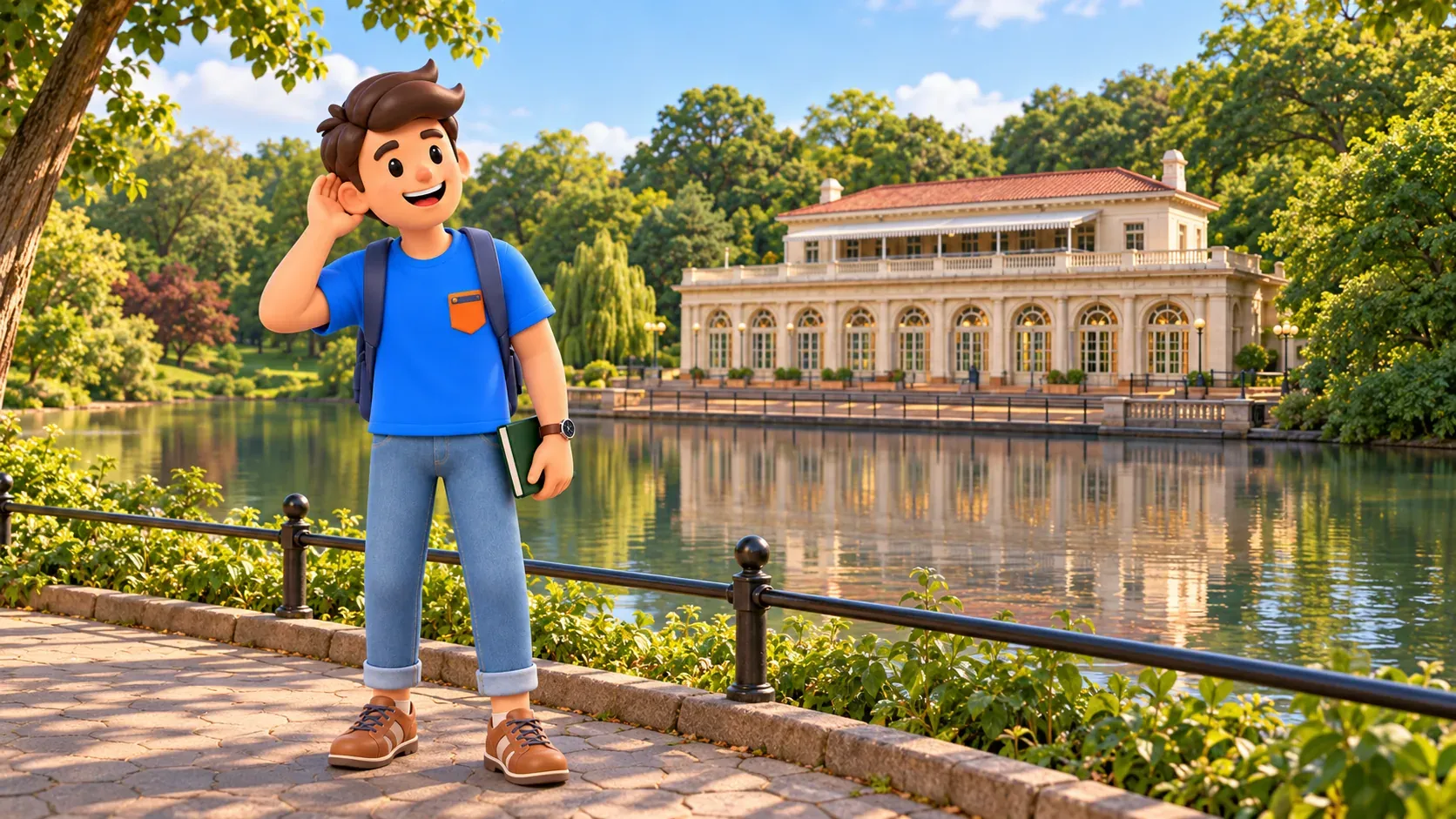
The early twentieth-century Boathouse adds an architectural focus beside the water. In this plan it is an exterior visit: look at the facade, reflections and setting. The Audubon Center housed here has its own calendar, so an afternoon walk does not guarantee an indoor visit. Boat rental is not part of the itinerary either; the operator had already closed its 2026 boating season at the checked date.
RoadMe makes it easier to fit this outing into a personal trip plan based on your interests, balancing museum time, nature and rest across different days. Build your version in the app so Brooklyn follows your preferences rather than a race to include every neighbourhood.
Allow roughly an hour and a half to two hours for the park portion, including stops and your return. Shorten it if the main visit has already used your energy. In the garden version, return towards Willink and then Prospect Park station; in the museum version, finish back near Grand Army Plaza. Check the actual train direction and service changes for your date rather than relying on a permanent journey-time promise.
Consider access across the whole outing. The garden offers accessible entrances and many paved paths, but some sections are steep, narrow or uneven. That does not make every route automatically step-free or suitable for every mobility need. If gradients, stairs or standing time matter, check the relevant institutions’ arrangements and reduce the park to a practical section.
In winter, start earlier and reserve daylight for outdoors; in heat, extend seated breaks; in heavy rain, shorten the park. The satisfying result is one substantial encounter and a walk with enough attention left to enjoy it. Brooklyn Bridge, DUMBO and Williamsburg deserve other outings. Here, art or living collections and a designed urban landscape are enough for the day.


