
Potsdamer Platz and the Kulturforum: a half-day architecture walk
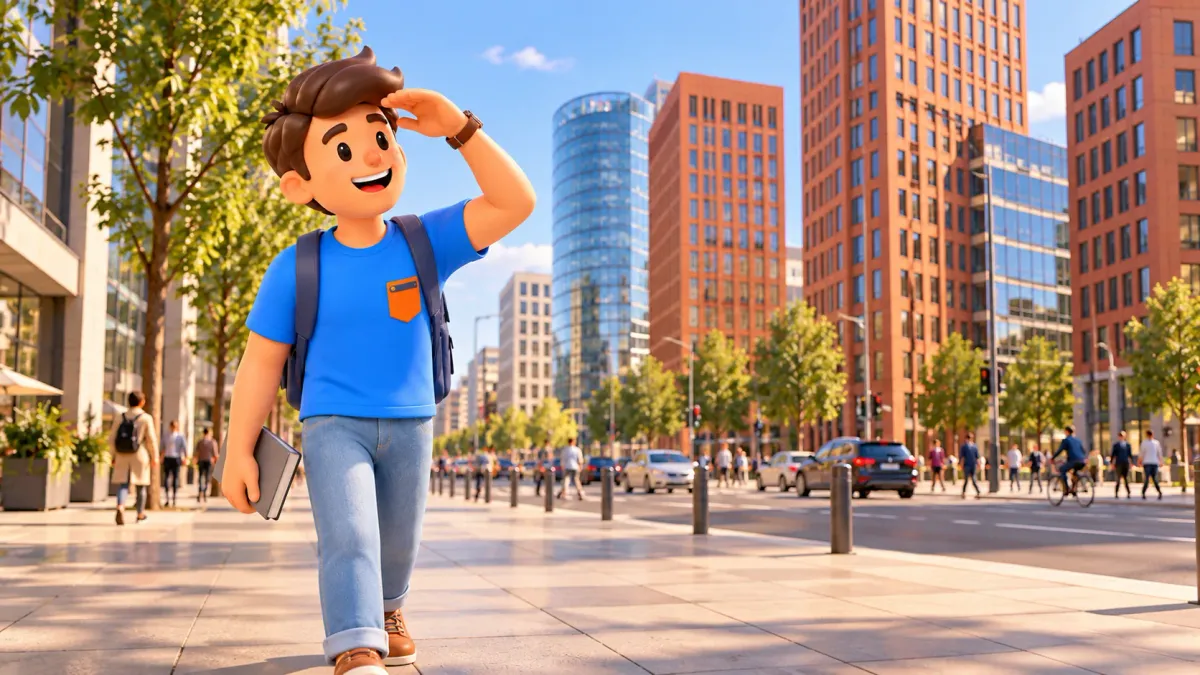
Connect Potsdamer Platz and the Kulturforum for a half-day architecture walk through several different versions of central Berlin. The sequence takes in contemporary towers, the Philharmonie, St Matthew’s Church and the Neue Nationalgalerie, starting and finishing at Potsdamer Platz station. Around four hours allows exterior stops, a break and one short museum visit. The aim is to compare ways of shaping city space, without trying to visit every cultural institution in the area.
The contrasts appear quickly. At the square, attention travels upwards along façades; at the Philharmonie, it follows unfamiliar angles; before Mies van der Rohe’s gallery, it settles on a broad horizontal roof. A small historic church introduces another scale among the modern buildings. You do not need specialist training to notice these differences. Compare form, material and your own response to space, rather than treating the walk as a test of architectural names and dates.
A half-day route with one museum stop
From S+U Potsdamer Platz, begin on the public streets and open spaces around the square. Head west towards the Philharmonie, continue by available public connections to St. Matthäus-Kirche, then reach the Neue Nationalgalerie at Potsdamer Straße 50. After the selected exhibition and a break, return to the station. These anchors establish the sequence; choose actual crossings using a current map and signs, allowing for barriers around the berlin modern construction site.
Try RoadMe to develop a personal plan for your whole trip around interests, dates and pace, bringing architecture, art and rest together. The app makes it more convenient to give this walk a suitable place in the wider visit and leave proper time for your chosen exhibition.
The 240-minute outline gives fifteen minutes to the station approach, thirty to Potsdamer Platz, twenty to the Philharmonie connection and twenty-five to its exterior. Allow fifteen for the church outside, twenty for the Neue Nationalgalerie’s architecture and eighty for one museum visit including admission. A twenty-minute pause and fifteen-minute return complete the four hours. Movement within sections is included. These are editorial estimates, not a measured track or a guarantee against queues.
A concert, a Philharmonie tour and full visits to several museums are separate activities. Eighty minutes suits a selected part of an available exhibition programme rather than a detailed tour of everything open. Increase the overall allowance if you want longer. On Monday, when the museum is normally closed, the exterior version takes approximately 160 minutes: remove the museum section while keeping the break and a clear finish. It remains a coherent architectural outing.
Potsdamer Platz: read the city through its façades
Potsdamer Platz helps explain how Berlin reconnected areas after the city’s division. Its surroundings now form a contemporary urban district with towers, streets and a mixture of everyday uses. For a short visit, that organisation matters more than remembering the name of every block. Look at where people move, how entrances work and what happens at ground level beneath the taller façades. Architecture is part of a functioning place rather than just its skyline.
Different architects contributed to the area’s development. Renzo Piano Building Workshop planned one major section of its renewal; do not attribute the whole square and every surrounding block to a single designer. For this walk, compare warm terracotta surfaces with cooler glass, narrow vertical accents with larger planes. Differences become visible without a long catalogue of authors that is difficult to retain between stops. You can appreciate a composition before learning every name associated with it.
First find a safe place on the pavement for a wider view, then approach one façade. From farther away, the silhouette works; close up, repeated windows, joints and entrance details take over. These are different experiences of the same building. An empty square is not essential: people and traffic show how the place is actually used. Stop where others can still pass, instead of choosing the middle of a busy crossing as a photographic viewpoint.
Do not make the start depend on access beneath a particular roof, inside a shopping passage or up to a viewing platform. Individual complexes have their own arrangements and possible restrictions. This outing begins on public city streets and remains useful without purchases or extra admission tickets. Treat any interior you want to add as a separate choice with its own time, rather than quietly expanding the first half-hour beyond what the schedule can hold.
Approaching the Kulturforum changes the scale
Continue towards the Philharmonie on public pavements and marked crossings. The Kulturforum is an area containing several institutions, not one building with a single entrance and ticket desk. Concert halls, museums and other cultural venues are close together, but visits are organised separately. The address of your chosen place is more helpful than simply directing navigation towards “Kulturforum”, particularly where temporary barriers change what looks like the most direct connection on a map.
Construction of berlin modern continues between the Philharmonie and Neue Nationalgalerie. Follow open public routes even when a detour looks longer than the line on your screen. Do not treat the building site as a normal museum entrance: special events on particular dates do not create permanent open access. For this architectural walk, it is enough to understand that the setting is changing and that you should remain on the available public side.
Compare your impression with Potsdamer Platz. There, buildings form street perspectives; here, cultural buildings make stronger individual statements as separate forms. This is an observation rather than a rule for every metre of the neighbourhood. Walk a little farther, change viewing distance and decide which scale you find comfortable. Architecture has a physical dimension: openness, height and the amount of time you want to spend in a particular place all contribute to its effect.
The Philharmonie: follow the shape with your eyes
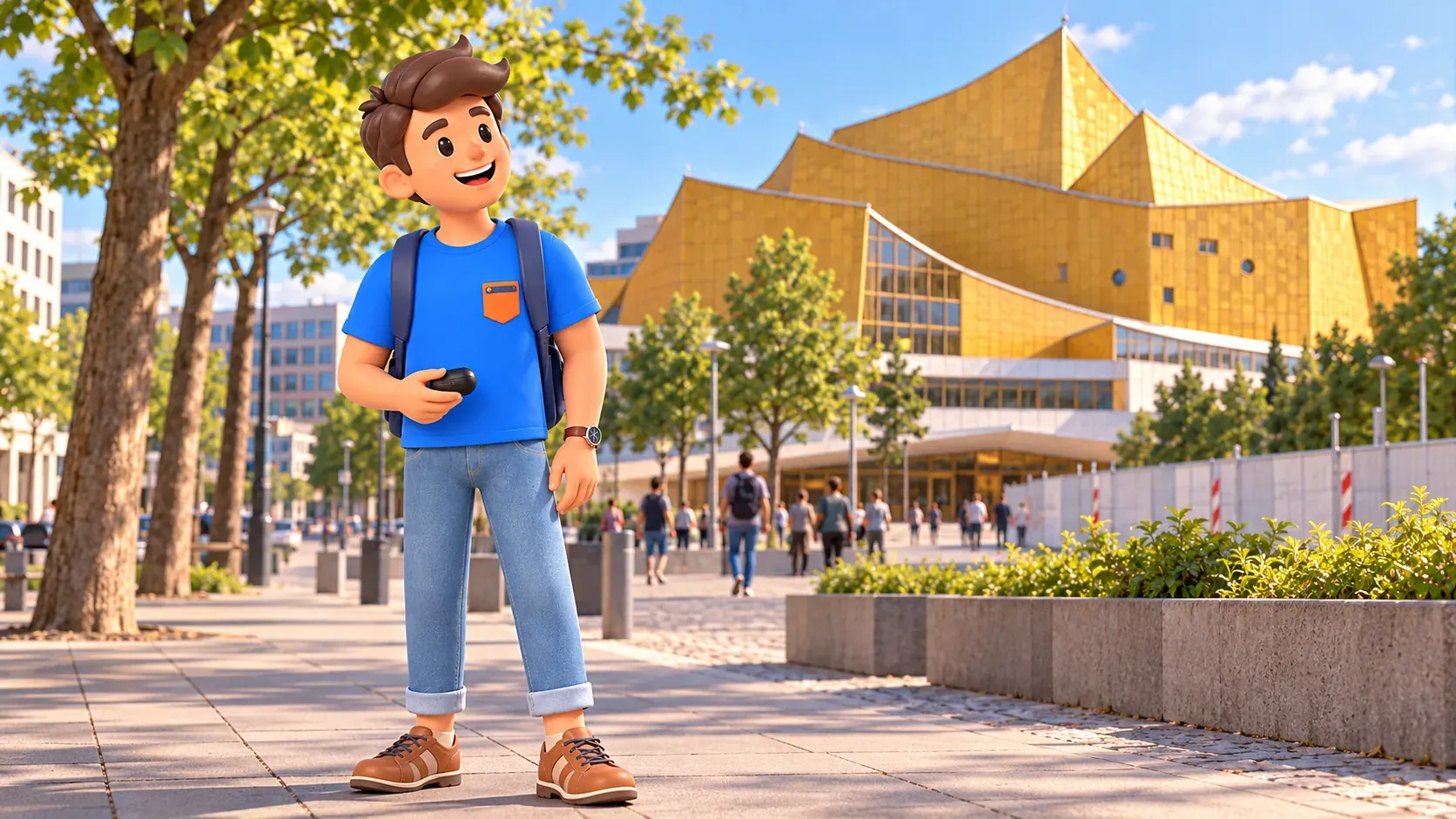
The Philharmonie opened in 1963 and is associated with architect Hans Scharoun. Its unusual tent-like shape and bright yellow-gold exterior distinguish it from neighbouring buildings. That short introduction is enough for the exterior stop. Notice how angles and sloping planes create a different mood after the square’s more emphatic verticals, although you are still in the same central part of Berlin. The contrast can be understood through looking, without an extended explanation of architectural theory.
Do not expect one correct façade from which the whole building immediately explains itself. Choose an available view, move a little and compare the outline. The hall’s internal arrangement with the musicians at its centre is a separate subject, better explored through a tour or concert. This exterior walk does not promise free foyer access, a look inside the auditorium or the chance to hear the orchestra without making the corresponding visiting arrangements.
If you already hold a concert ticket, arrange the day around the entry time and conditions for the particular hall. Do not automatically append a performance to the four-hour outline: arrival, coats and getting settled require their own allowance. Music lovers can shorten the museum section and finish the walk earlier. Architecture can provide a thoughtful introduction to the evening, but it should not leave you arriving tired and watching the clock instead of anticipating the music.
St Matthew’s Church: a historical pause
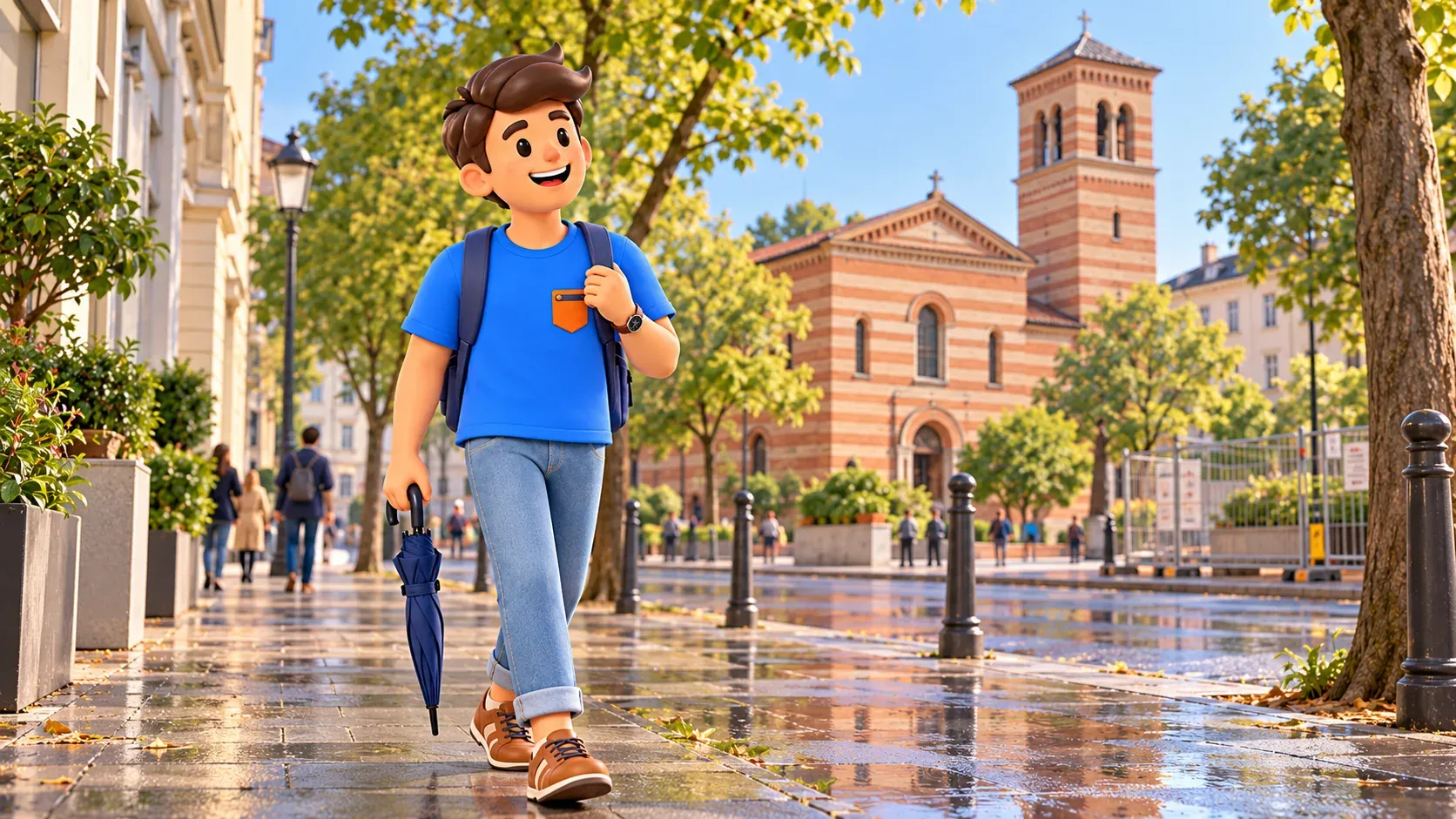
Slow down at St. Matthäus-Kirche. Designed by Friedrich August Stüler, the church was consecrated in 1846; its present exterior also reflects postwar reconstruction. Among large modern buildings, it recalls an earlier urban setting. Fifteen minutes outside is enough for this plan: notice the tower’s outline, the rhythm of arched windows and striped brickwork. You do not need to turn this smaller stop into another compulsory interior visit or a long detour away from the route.
Ask what makes a modest historic building noticeable among larger neighbours. Is it age, different material or more familiar proportions? Companions may give different answers. The stop connects the outing and keeps the Kulturforum from becoming a sequence of unrelated architectural labels. If work or inaccessible areas affect the surroundings, look from open public space. There is no need to go behind a barrier for a photograph or assume the nearest visible path must be available.
Neue Nationalgalerie: the strength of a horizontal line
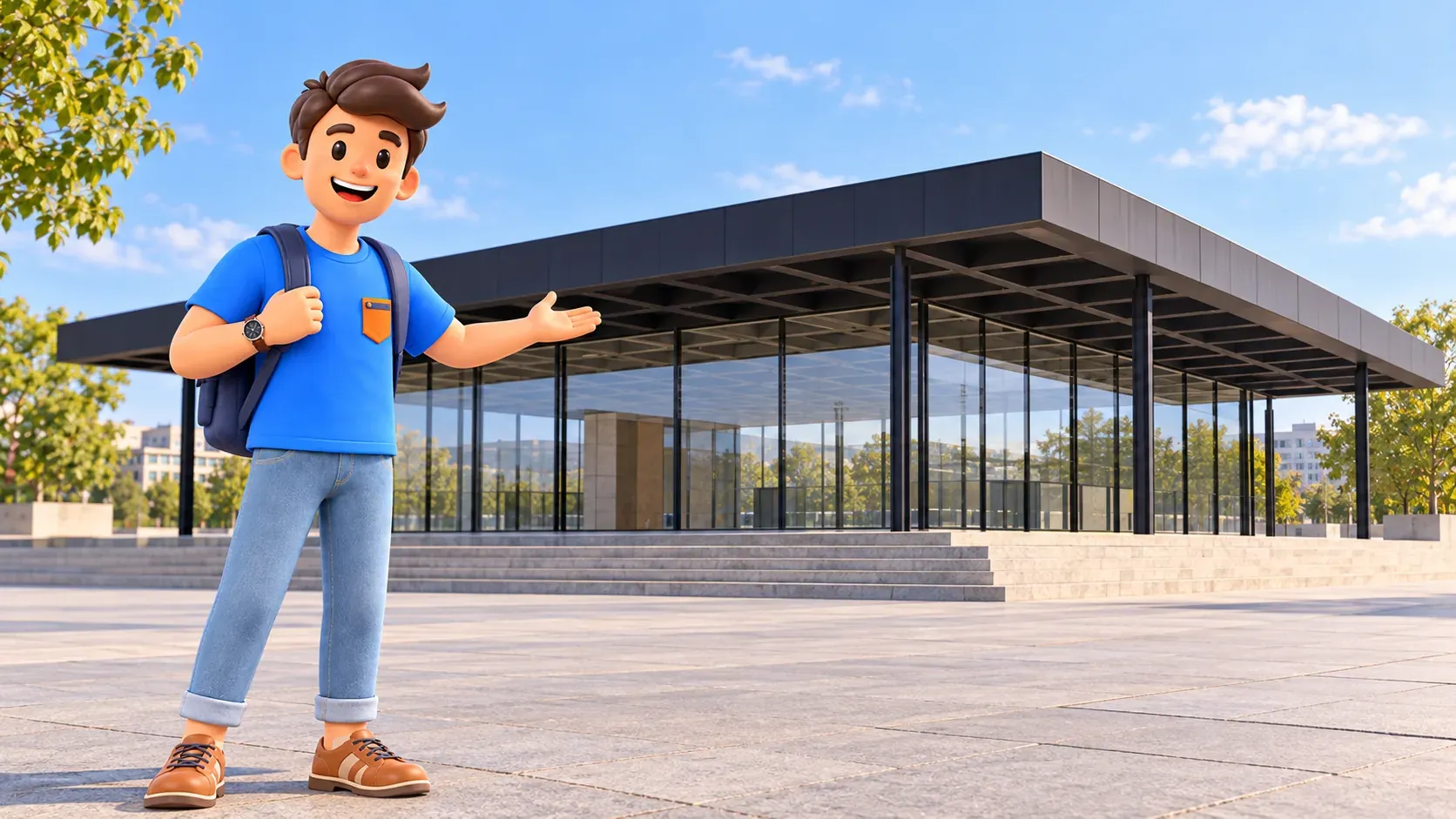
Continue to the Neue Nationalgalerie. Ludwig Mies van der Rohe’s building opened in 1968; its image is shaped by a broad steel roof, glass and restrained geometry. After the Philharmonie, the comparison is particularly clear: one architecture appears to change direction, the other holds a long, calm line. Begin from a distance, then approach from an available side to distinguish the overall volume and the position of the glass walls beneath the projecting roof.
Do not infer the whole museum collection from what can be seen through the glass. The pavilion’s architecture and the arrangement of exhibitions are different matters, while the programme determines which rooms are available on your day. Looking outside does not promise free passage through all interiors or every terrace area. Follow current signs and use an open approach. Appreciating the roof does not require crossing a closed boundary or assuming the prominent steps are the only way inside.
At the check on 17 October 2026, normal museum hours are Tuesday, Wednesday and Friday–Sunday 10:00–18:00, Thursday 10:00–20:00, with Monday closure and separate public-holiday exceptions. A notice also reports temporary gallery closures for reinstallation within the Extreme Tension exhibition. Plan the eighty-minute interior visit around what is actually available. Admission makes sense when the open programme interests you, rather than simply because the building happens to be the next item along your route.
The museum identifies step-free access on the building’s left side, from Reichpietschufer. If you need it, use that specific approach instead of treating the conspicuous front steps as the only entrance. Choose admission according to the relevant programme and conditions. Nearby Kulturforum museums do not automatically share access merely because the district’s name groups them together in visitor information. Distinguish the ticket you hold, the building you are entering and the galleries currently open to that ticket.
Finish before architectural attention runs out
After the selected museum section, leave twenty minutes for a break. Discuss which building stayed with you and why: height, colour, movement of form or a horizontal line. With children, choose a shape from each place rather than testing dates. Rest does not require discovering another attraction. A suitable seat and water can be more useful than an extra object added in the last few free minutes before the return journey to the station.
In RoadMe, it is easier and more convenient to build a personal plan for the whole trip, distributing architecture, museums and pauses around your interests and pace. Try connecting this outing with the other days in Berlin so experiences complement one another and each visit has enough time.
Return to Potsdamer Platz by available pavements and crossings, then check current onward transport. In rain, shorten exterior stops and give more time to a suitable open exhibition; on a museum closing day, keep the outdoor walk. Our first-time Berlin plan by interests helps arrange the remaining days. The main result of this half-day is to see several ways of building a city close together and discover which one speaks most clearly to you.


