
Across Ponte Scaligero to the Arsenal: a Short Borgo Trento Walk
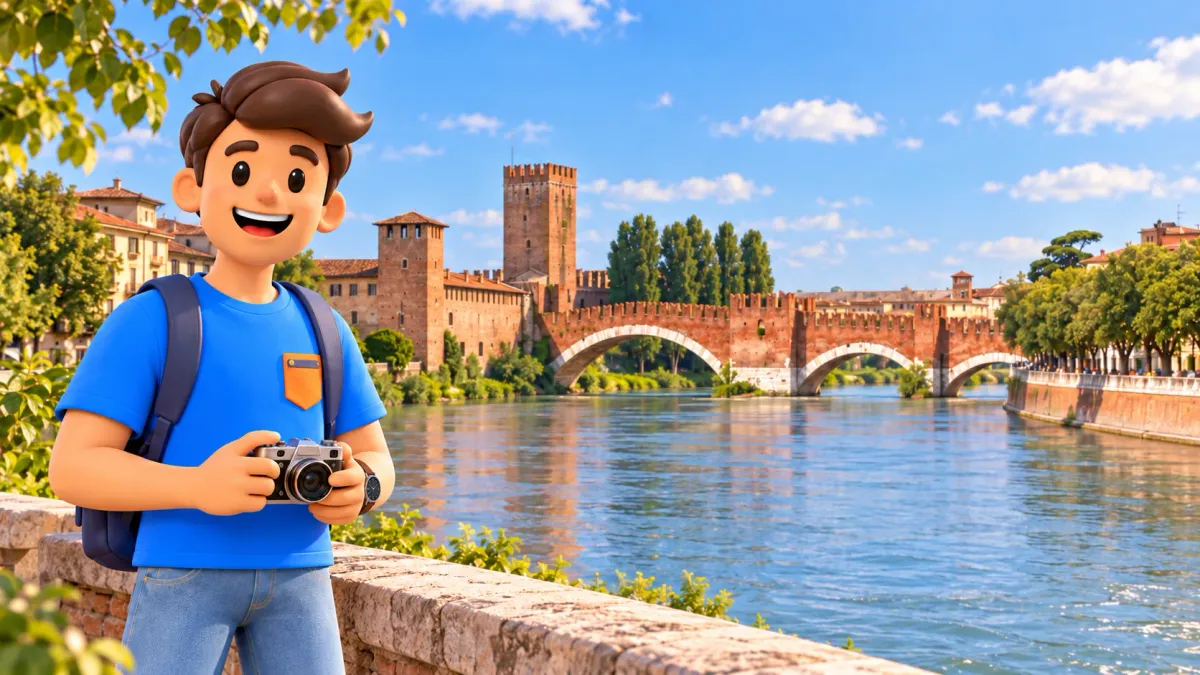
Ponte Scaligero is often treated as a beautiful extension of Castelvecchio: walk between the battlements, look at the Adige, then turn back. The opposite bank has a continuation of its own. A short walk leads towards the Austrian Arsenal and the southern edge of Borgo Trento. In roughly two to two and a half hours, you can move from medieval imagery to nineteenth-century military architecture and return through a different bridge.
Choose this outing when the main squares are familiar and you want to broaden your picture of Verona without committing to another museum day. Its anchors are the crossing, the Arsenal exterior and a few public neighbourhood streets. Castelvecchio Museum, the military complex's interiors and a longer trail of Borgo Trento villas are separate experiences, each deserving its own time.
Choose the route and leave a little flexibility
Begin at the Castelvecchio-side entrance to Ponte Scaligero. Cross the Adige, then approach Piazza Arsenale using the currently permitted pedestrian access. After looking at the exterior, follow Via Arsenale towards Viale della Repubblica, turn into Via Cappellini and return to Lungadige Campagnola. Finish by crossing Ponte della Vittoria back to the old town. One bridge opens the walk and another gives it a clear end.
RoadMe makes it easier to create a personal plan for the whole trip, bringing neighbourhoods, cultural visits and rest together around your interests. Try planning Verona in the app so this short crossing fits comfortably into days shaped around your preferred pace.
Allow about 120–150 minutes: fifty to sixty-five minutes of movement, twenty-five to thirty-five minutes at the bridge and Arsenal, thirty to thirty-five minutes for a break, and around fifteen minutes of flexibility. These are planning estimates rather than timings from an author's test walk. Getting here, a full meal and museum visits are additional. Temporary diversions may also increase the time.
There is an important current qualification. Works announced in September 2026 affect Piazza Arsenale and an adjoining section of Lungadige Cangrande, with the notice running to the end of the year. Follow pedestrian signs rather than expecting an unobstructed square or access through every courtyard. The route uses public streets so that understanding the complex does not depend on entering its working spaces.
If no clear, safe connection is available on the day, shorten the outing and return over Ponte Scaligero. That is a useful fallback, not a reason to pass a barrier. Crossing the river and seeing the accessible side of the Arsenal already preserves the main idea. Continue with the full version only through permitted connections, allowing for the arrangements actually in place.
Ponte Scaligero: experience the crossing first
The bridge belongs to Castelvecchio and the defensive world of Verona's fourteenth-century della Scala rulers. Three unequal spans, brick walls and battlements give it a fortified appearance. Today's structure is not an entirely untouched medieval survival: destroyed during the Second World War, it was rebuilt in 1951 using recovered materials. Its history includes the decision to restore a recognisable piece of the city.
Start with the experience of moving across it. Between the tall brick sides, the river appears through openings and then reveals itself from another angle. That rhythm differs from walking along an open embankment. Choose one view along the water and another back towards the castle. You do not have to stop at every possible opening to understand the crossing.
The battlements and raised sections may look tempting, but the route does not require climbing onto walls. Remain on the normal pedestrian surface, allow room for other people and notice uneven paving. The bridge is interesting without a precarious photograph. At a busy moment, a little patience is more useful than making an empty frame the condition of enjoying the place.
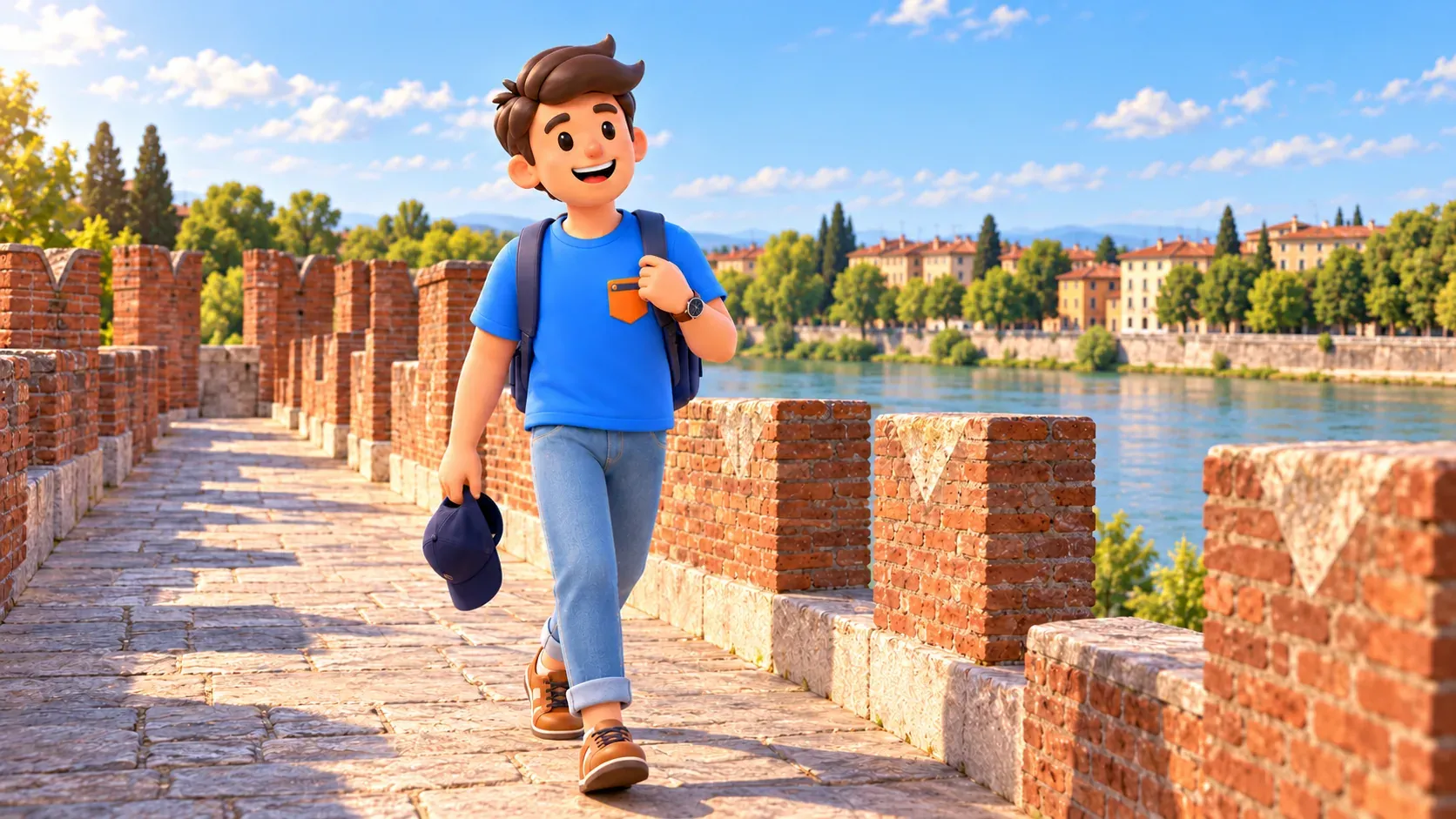
Reconstruction adds a useful layer to what you see. The bridge holds both a memory of medieval defence and a later effort to recover an urban silhouette after destruction. Keeping that idea in mind is enough to make you look more closely at its materials. Detailed building history can wait while this walk moves towards another military period on the opposite bank.
The far bank changes the scale
After crossing, do not read everything around you as an extension of the castle courtyard. Ordinary roads, traffic and neighbourhood activity have their own purpose here. Look back to understand the bridge's connection with Castelvecchio, then turn towards the Arsenal. Those two directions help establish that you have entered another part of Verona rather than simply taken a photograph on a famous bridge.
Approach Piazza Arsenale through the pedestrian routes and signs available on the day. The works notice does not mean the entire district is closed, but older photographs of an open square do not establish today's arrangement either. You do not need to predict the exact position of temporary barriers. Leave some flexibility and keep the next landmark in mind.
Expect a building with a practical purpose rather than another decorated old-town square. The Arsenal has a different window rhythm, spatial organisation and reason to appear monumental. Approaching it with that question makes the stop worthwhile even without an exhibition, event or open courtyard. The exterior can explain the theme without requiring a particular visitor programme to be operating.
The Arsenal and nineteenth-century military Verona
The Franz Joseph I Arsenal was built between 1854 and 1861. It supported the maintenance and storage of weapons in Austrian-period Verona. Its scale follows from that task: separate buildings and ordered spaces formed a working system. This is not a medieval castle facing another castle, even when some of its forms suggest a conversation with earlier architecture.
From outside, notice rounded openings, pale stone with brick bands, and repeated elements. Military utility did not prevent architectural expression. Here it comes through order, materials and proportion. Compare this with the bridge, where walls direct a single movement across the water. The Arsenal is more about organising an extensive operation than creating one dramatic passage.
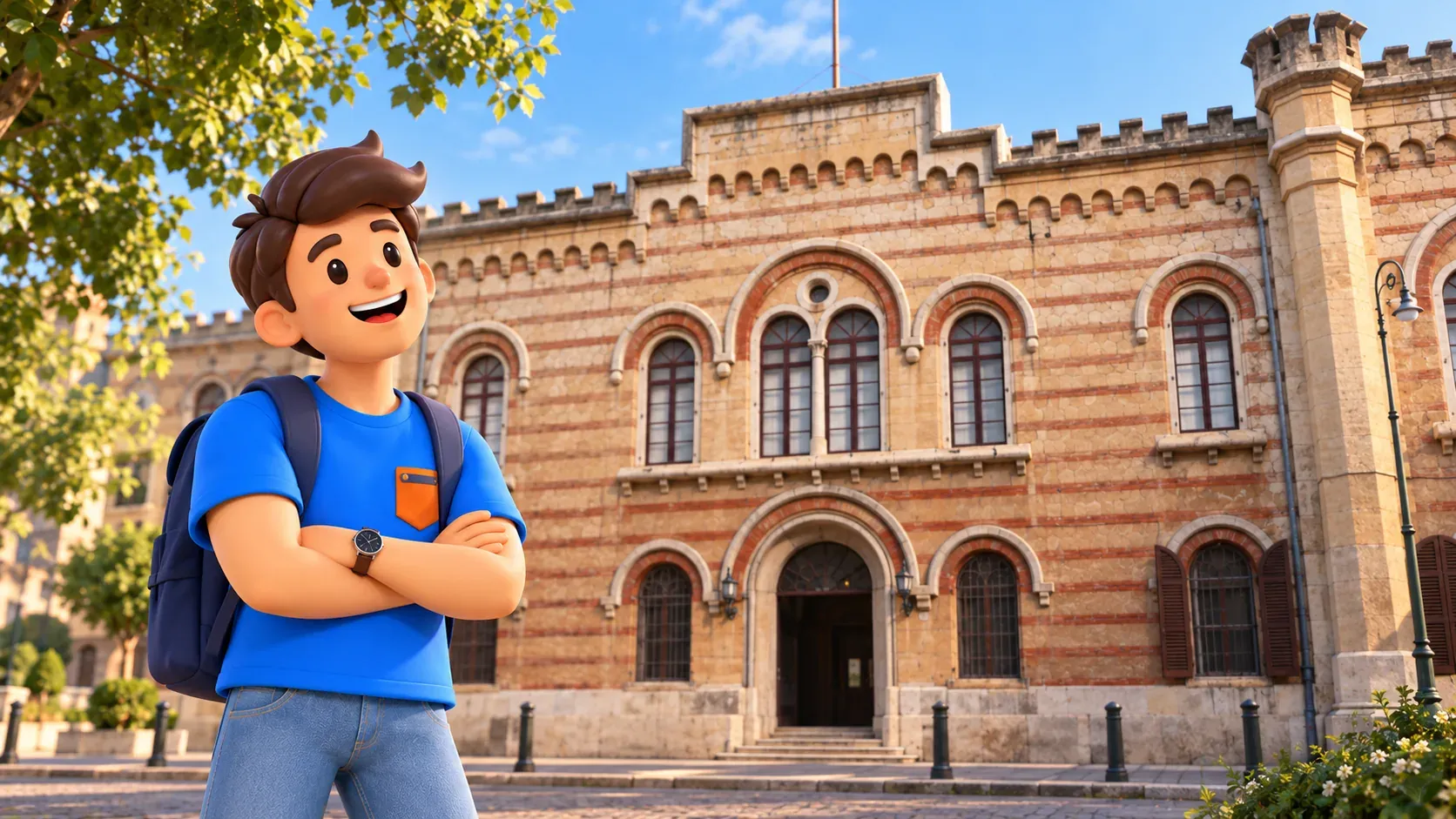
The complex is undergoing restoration and changes in use. This walk does not assume every part has already become a single open park or museum. Observe the accessible exterior sections and recognise present work as part of the site's life. An event in one room does not establish free entry into every building, and an open gate does not replace access signs.
Do not import promises from older accounts of pools, water play or fairs into your particular day. Those activities depend on a calendar and the state of the relevant area. The Arsenal serves here primarily as an architectural anchor. That keeps the walk meaningful on a day without a programme, when understanding the building's scale and original purpose is enough.
The useful conclusion is that two military Veronas stand near the same river. Castle and bridge relate to medieval rulers; the Arsenal belongs to the logistics of a nineteenth-century army. This small historical connection is easy to retain without a list of dates. The next section moves away from that monumental comparison towards the residential life of Borgo Trento.
A few streets on Borgo Trento's southern edge
Continue from the Arsenal along Via Arsenale towards Viale della Repubblica, then take Via Cappellini back towards the river. This is the southern edge of Borgo Trento, not a survey of the whole district. A wider walk through villas and Liberty architecture needs separate time. Here, notice how the scale of homes and everyday entrances changes after the large historic complex.
Borgo Trento developed outside the older centre, particularly around the turn of the nineteenth and twentieth centuries. Compare street width, space between buildings, greenery and ground-floor arrangements. You do not need to identify a famous owner for every house. A neighbourhood can become clearer through its overall organisation even when you have not set out to study an individual architectural style.
Do not expect every frontage on this short section to be a textbook example of Liberty, or traffic to vanish as soon as you cross the river. Borgo Trento is a substantial residential district with practical needs of its own. A relaxed visit comes from the pace you choose rather than a promise of empty streets or a secret city nobody else has discovered.
This is a reasonable place for a break. Choose an available café or rest spot that suits how you feel, rather than making one establishment compulsory. The suggested thirty to thirty-five minutes covers a short pause. Add time if you prefer a long lunch. After two strong architectural impressions, it is useful to give them space before turning back towards the water.
RoadMe helps develop a personal route or trip plan around your interests, balancing substantial visits with walks and rest. Try arranging your Verona days in the app to explore different sides of the city while keeping a rhythm that works for you.
Return to the river and finish at Ponte della Vittoria
Via Cappellini brings the route back to Lungadige Campagnola. Continue towards Ponte della Vittoria through permitted public access, then cross to the old-town bank. You do not need to follow Lungadige Matteotti on towards another bridge: that would be a different outing. A definite finish helps preserve the compact scale, especially if a museum or evening plan still lies ahead.
The river section gives you a view of the old town from outside it. After the Arsenal and residential streets, the opposite bank reads differently: separate buildings begin to form a cityscape. This is not an elevated viewpoint requiring a climb. Its value lies in a closer, horizontal perspective, with the river remaining part of the distance between the banks.
Remain aware of pedestrians, cycles, temporary narrowings and crossings. The route does not include descending to the water or using a service strip along the bank. Where a section is closed, use the official diversion. Add its time to the outing rather than trying to preserve an estimate through an awkward or prohibited shortcut.
Fit the walk into your wider Verona plans
For a longer day centred on the river, see our Adige walk between Ponte Scaligero and Ponte Pietra. Here the emphasis is on the Arsenal and southern Borgo Trento. The two walks need not happen consecutively: they explore different relationships between Verona and the water and can comfortably belong to separate days.
Castelvecchio Museum can come before the start or at another time. Its visit is not a condition of using the bridge and deserves attention of its own. If combining the museum with this route, decide which block matters most to you. That prevents the second part of the day becoming a race to recover a schedule that was too dense from the beginning.
Wear shoes suited to city paving and consider kerbs and uneven sections. This version has no compulsory hill climb, but it does not promise a completely step-free experience. In heat, carry water and choose a comfortable time; in rain, shorten exterior stops as needed. Indoor shelter at the Arsenal is not assumed, so consider conditions before setting out.
The main reward is a change of perspective after a short crossing. Beyond familiar battlements are a different historical scale, a large working complex and a residential district. Returning over Ponte della Vittoria, the centre feels like part of a wider city. For a two-hour outing, that is a coherent and memorable discovery.


