
Poklonnaya Hill: Victory Park and one museum visit
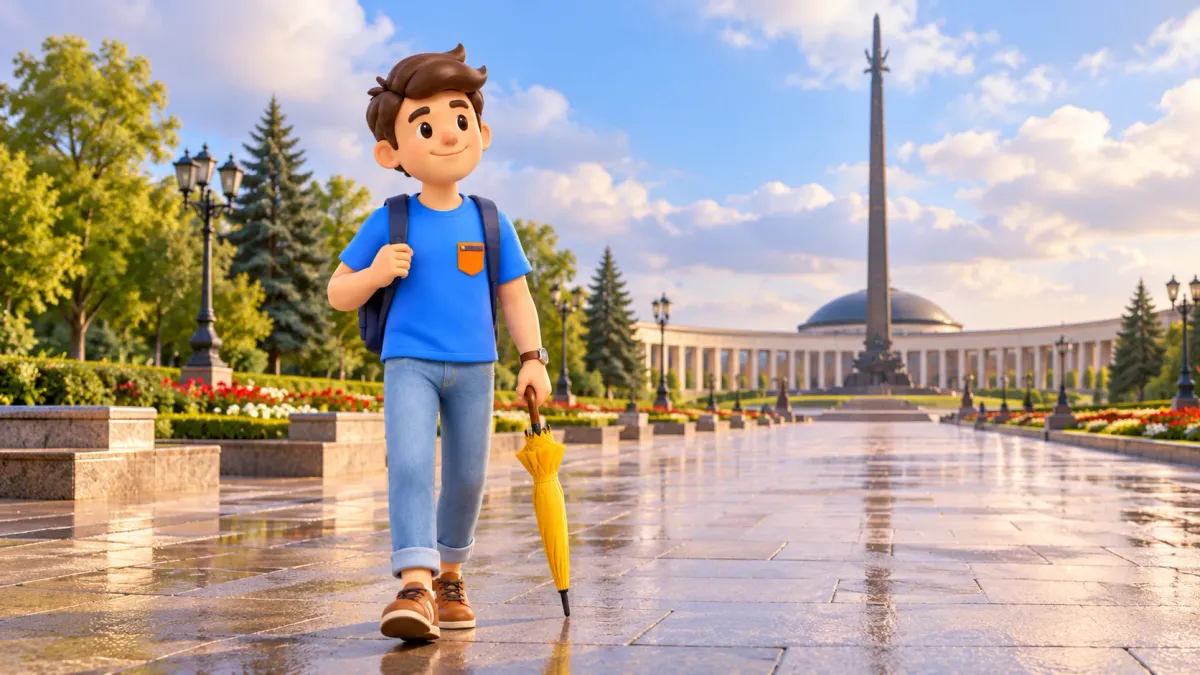
Poklonnaya Hill is easy to underestimate on a map. A few large attractions appear as nearby pins, but the spaces between them form a substantial memorial landscape. A manageable day follows one thread: the main avenue, the Victory Monument and one museum programme. The park then provides context while the museum receives proper attention. Adding every exhibition area and the separate Borodino panorama can create more fatigue than understanding, even when the locations seem conveniently close.
Allow roughly one and a half to two hours for a short outdoor introduction with the approach and pauses, or around four to five hours with a substantial Victory Museum visit. These are editorial estimates, not measured durations. A long guided programme or careful reading can take more time. Decide what interests you inside and preserve energy for the return journey, rather than treating the walk back to transport as an invisible remainder after the important activities are over.
Make one museum programme the main anchor
For a first visit, choose the Victory Museum’s main building at 3 Victory Square and one programme that interests you. The outdoor section becomes a calm approach or a walk afterwards. If the programme has a fixed start, confirm it first and fit the park around it. An early booking calls for a shorter outdoor introduction; a later one is not a reason to fill the waiting time with every distant corner of the grounds.
To make this a personal day, try RoadMe: the app plans a walk or trip around your interests, dates and pace. Museum time, the memorial landscape and rest can take the place that fits your own visit.
Distinguish the park, the main building, an individual guided exhibition and other museum sites. Neighbouring attractions may have different tickets, entrances and visit lengths. “Going to Victory Park” does not automatically specify a complete set of admissions. Choose the content first, then check which ticket and booking it needs. This avoids deciding at the entrance between an additional purchase and missing the programme that originally motivated the trip.
The metro approach is part of the distance
The principal transport orientation is Moscow’s Park Pobedy metro station. The museum’s official directions lead from the station towards the park, then straight along the Main Avenue towards the Victory Monument and main museum building. The shared name does not mean the museum doors are immediately outside the metro. Include this full approach in the schedule. News about a station with the same name in another city does not describe conditions for this Moscow visit.
Decide whether to walk directly to the museum or pause for an outdoor introduction. For a direct visit, follow the official approach without pursuing remote location pins. For a slower arrival, choose two or three short stops on the available route and preserve time before admission. In an open landscape, any visible monument can look easy to add. Each diversion still requires walking and time to return to the main line.
Minskaya provides another approach, arriving from a different side of the museum. Do not combine the two instructions mechanically or assume you can pass through a restricted museum area. Check which side has the central entrance. If reduced mobility matters, confirm current suitable access with the museum and transport operator. A broad avenue by itself does not prove that the entire journey from platform to the selected exhibition is equally convenient or step-free.
The avenue and monument: understand the scale slowly
The outdoor introduction works as a gradual approach. Look first at the overall axis and distant outline, then at the space around the Victory Monument, then at the museum frontage. You do not need to visit every memorial to understand the ensemble’s scale. Fewer stops can make it easier to notice how distance feels different between the open avenue and the large space nearer the principal monument.
This is a memorial setting connected with the war of 1941–1945, the Soviet Union’s wartime experience within the wider Second World War. Quiet observation and respectful conduct suit the place. If an event occupies part of the grounds, follow present restrictions instead of assuming normal unrestricted passage on every date. Ceremonies can change an approach even when the wider area and museum remain open for their usual activities.
Do not build the plan around a guaranteed operating fountain or a particular lighting effect. Season, weather, maintenance and events influence the appearance. The main thread remains clear without water displays: avenue, monument, square and museum. For photographs, look around first and choose a stopping place that leaves room for other visitors. One broad view and one personally noticed detail are more useful than a series of nearly identical images made while rushing towards a timed entry.
Choose the museum content before buying admission
Not every programme in the main building is an unrestricted independent visit. For example, the official page for “Feat of the Nation” states that visits take place with a museum guide at scheduled sessions. Check its ticket composition separately: the museum explains that the guided programme and building admission can be different items. Do not transfer one exhibition’s conditions to all other galleries or assume the first ticket purchased opens every space without additional arrangements.
When checked on 23 October 2026, the museum listed Monday as closed. Verify the actual date’s hours and final admissions before travelling. A building’s opening period does not mean every guided session is available until closing. Start time, duration and language matter for a tour. If you require a particular language, confirm it directly. The language of a webpage or a familiar translated exhibition name does not establish that a suitable guided visit runs on your date.
Read one chosen programme’s description and consider whether the format suits your group. Allow time for checks, cloakroom arrangements and finding your way inside. Save an electronic ticket on your device before arrival so that displaying it does not depend on mobile reception at the entrance. A general description of an exhibition as interactive does not establish that every object may be touched. Staff instructions and the particular gallery’s rules remain the relevant guide on site.
Inside, follow one interest rather than every room
Take a manageable question into the museum: perhaps how it presents everyday life, people’s work or the remembrance of events. That focus helps connect documents, objects and interpretation without trying to give every label equal attention. One selected programme can provide a substantial experience by itself. Add another section only after considering energy, time and admission conditions, rather than because a higher count of exhibitions seems to make the visit more complete.
The historical subject asks for attention and can be emotionally demanding. That does not mean everyone must have the same reaction. After an intense section, stop, discuss a question or finish earlier. With children, consider programme age conditions and their actual interest, rather than simply the existence of a child ticket. A large museum does not become light entertainment because it uses multimedia, reconstructed settings or other immersive presentation techniques.
Do not expect a particular temporary object because it appeared in an old article. Content and availability change. If one item or section is the reason for the whole journey, confirm it beforehand. For a general introduction, a checked programme and time to look closely are enough. A single understood story can remain clearer than a long list of rooms hurried through near the end of the day without pauses or time to consider what they showed.
Make the post-museum break part of the visit
Avoid scheduling another major attraction immediately after leaving. Allow time to return to an ordinary city rhythm, drink water, eat and decide whether you want more walking. The pause is useful after a fixed-duration tour, when a group has determined your pace inside. Choose rest from what is accessible now and how you feel, rather than treating a particular bench saved far away on the map as a compulsory destination.
If the museum takes more attention than expected, you can change the stops in your personal RoadMe plan and shorten the outdoor part. Try keeping the day centred on your main interest, with a comfortable pace and room for rest rather than additional compulsory visits.
In pleasant weather, a short open section after the break can lead back towards transport. In cold or rain, finish earlier. The museum day remains worthwhile even if its outdoor portion is shorter than anticipated. Judge the visit by attention and comfort rather than pins collected. If one person wants to continue while another is tired, agree on a clear meeting point and independent return only when that arrangement is comfortable for everyone.

The Triumphal Arch and Borodino panorama tell another story
The Triumphal Arch beside Kutuzovsky Prospekt relates to the war of 1812. Do not explain it as commemorating the same events as the Victory Museum. A brief exterior view can fit near the start or finish if the approach works and energy allows. Do not enter the road for a photograph or assume that a visible monument beyond a major traffic route can be reached directly in a straight line.
The Borodino Battle Panorama Museum stands at 38 Kutuzovsky Prospekt, building 1. It is a separate institution, admission and subject. If 1812 is your main interest, choose the panorama instead of a large Victory Museum visit and rebuild the day around it. Geographical proximity does not reduce the amount of content. A substantial independent museum is not a short optional corridor to walk through before heading to the metro after an already full programme.
Finish clearly and check the important decisions
Choose your finish according to where you actually emerge after the museum. Returning towards Park Pobedy works with the main axis; check a different exit on the current official plan. A complete circuit of the grounds need not be the final task. Leaving for a different station requires checking the real route, distance and access. A short line on a large map can conceal a barrier detour or an additional exposed section that is uncomfortable in wind.
Before travelling, check the museum date, chosen programme, booking conditions, weather and journey. Wear comfortable shoes and preserve room for pauses. The priority is simple: understand the memorial scale and attend one museum programme thoughtfully. Park and galleries can then support each other, while the return avoids becoming the last test of an overfilled schedule. Other museums and distant parts of the grounds remain reasons for another visit with their own time and interest.


