
From Tuttomondo to San Paolo a Ripa d’Arno: another side of Pisa
A short walk in Pisa can connect two very different artistic languages: Keith Haring's Tuttomondo and the Romanesque church of San Paolo a Ripa d'Arno. Start at the mural beside Sant'Antonio Abate, then head west through the streets towards the church and small Sant'Agata chapel. This part of the southern centre brings contemporary art, monastic history and everyday city life into one manageable outing.
Allow approximately one and a half to two hours for the basic exterior walk with pauses. This is a planning estimate, not a timed measurement. Start at Tuttomondo and finish around San Paolo near the south bank of the Arno. Lunch, interiors, the return journey and a longer river walk need separate time. No church admission is essential, so the route can stand on its own rather than serving only as a way towards the tower.
Why put these places together?
At the start, look at colour, outlines and connections between figures. At the end, consider stone, arches and relationships within a building. You do not need art-history training: choose one question, such as how repetition creates movement. The walk shows that Pisa's artistic life belongs to more than one period and extends beyond the best-known façades of Miracles Square.
Planning this is easier in RoadMe: the app develops a personal programme around your interests, available time and pace. Try choosing contemporary art, architecture or relaxed neighbourhood exploring as your priorities, so the route you use on the spot fits the trip you actually want.
Leave room to spend longer at one of the main places. If Tuttomondo interests you most, give it attention and shorten the intervening pauses. For architecture, save more time for San Paolo and Sant'Agata. The aim is to notice relationships between different parts of Pisa, rather than assigning every stop the same duration simply because it appears on a list.
Tuttomondo: begin with the whole wall
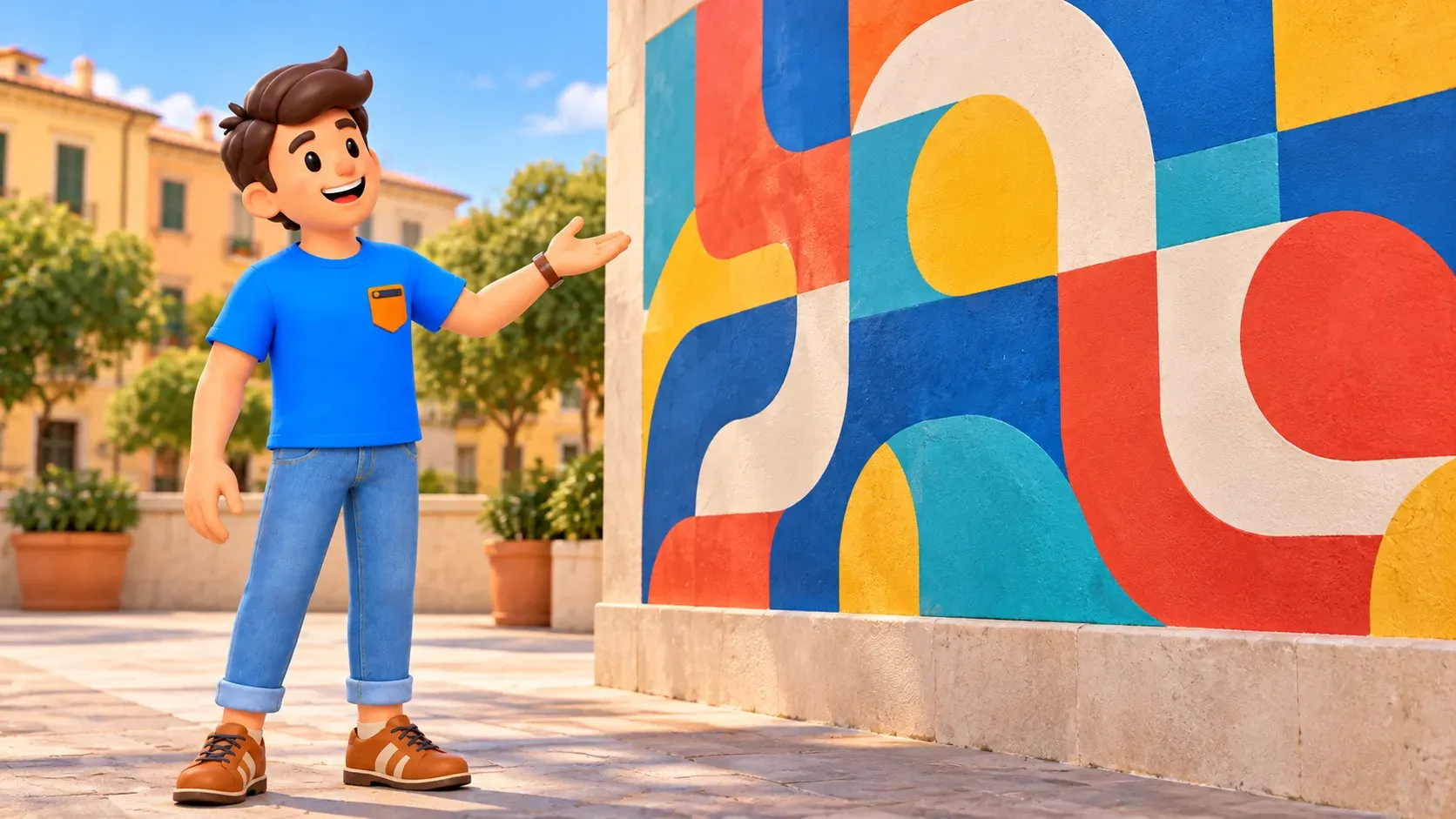
Haring created the Pisa mural in 1989 on a wall of the Sant'Antonio complex. Its title suggests the whole world. Step back as far as the public space and surrounding movement comfortably allow, so you can see the composition together. There is no single conventional protagonist: figures and signs connect, and their relationships matter more than any isolated outline.
Haring's recognisable contours and areas of colour create interaction. Follow one line or gesture before trying to interpret every image. Then notice how that element relates to its neighbours. The idea of coexistence becomes visible through the work's arrangement as well as through an explanation. You need not give every figure the same meaning, or find one authoritative reading before enjoying what you see.
The mural's beginnings are linked to a meeting between Haring and a young Pisan in New York. For this short outing, the result matters more than a detailed account of the commission: an international contemporary artist made a lasting public work in a city usually associated with much older art. It addresses passers-by, without requiring a museum's sequence of rooms or a particular order of viewing.
Take an overall photograph, then put the camera or phone away for a few minutes. Separate images can preserve colourful details while losing the whole. If other visitors are present, do not wait indefinitely for an empty scene. The work belongs to an urban setting, where viewers are natural. Choose a position that leaves passage clear and avoid approaching just to touch the painted surface.
The church and mural have different stories
Sant'Antonio Abate stands nearby. Its religious history and Tuttomondo's independent artistic significance do not replace one another. Avoid treating the entire complex merely as scenery for the famous wall. A place can hold the memory of a community, wartime losses and contemporary culture without turning them into one undifferentiated story. The differences help explain why the setting is more than a frame.
The basic route uses the church as an exterior reference. If it is open and you want to enter, respect worship and any service. Give the visit part of the walking allowance or add time separately. A closed door need not interrupt the route. Likewise, public access to an outdoor artwork does not establish access to every part of the religious complex.
Before leaving, compare the painting with surrounding surfaces: how does a large coloured plane change an ordinary wall, and how do windows and passages look beside it? This helps move from one artwork to the neighbourhood itself. The next section will not offer something equally famous at every turn. Keep observing rather than expecting a new masterpiece at each corner.
Walk west through the neighbourhood
Head west from the mural area towards San Paolo a Ripa d'Arno using available city streets and crossings. Choose the practical approach according to your starting position and local conditions. This is a connection within the southern centre, not a journey to a distant edge of Pisa. It is also not necessarily pedestrianised throughout: ordinary traffic and street crossings remain part of the walk.
Notice the change of scale. After the bright wall, quieter façades, doorways and small openings become interesting. You need not prove that every old stone is medieval or every courtyard open to visitors. Different materials and uses already show a living quarter. Keep private entrances private, even when an attractive fragment of courtyard can be seen beyond them.
For water or coffee, make a short stop without a compulsory search for the best place. A pause is useful if it leaves you attentive for the final section. Put a full lunch outside the one-and-a-half-to-two-hour estimate. Avoid adding an entire central shopping walk automatically: the connection would then become another programme and change the outing's original character.
San Paolo: read the façade
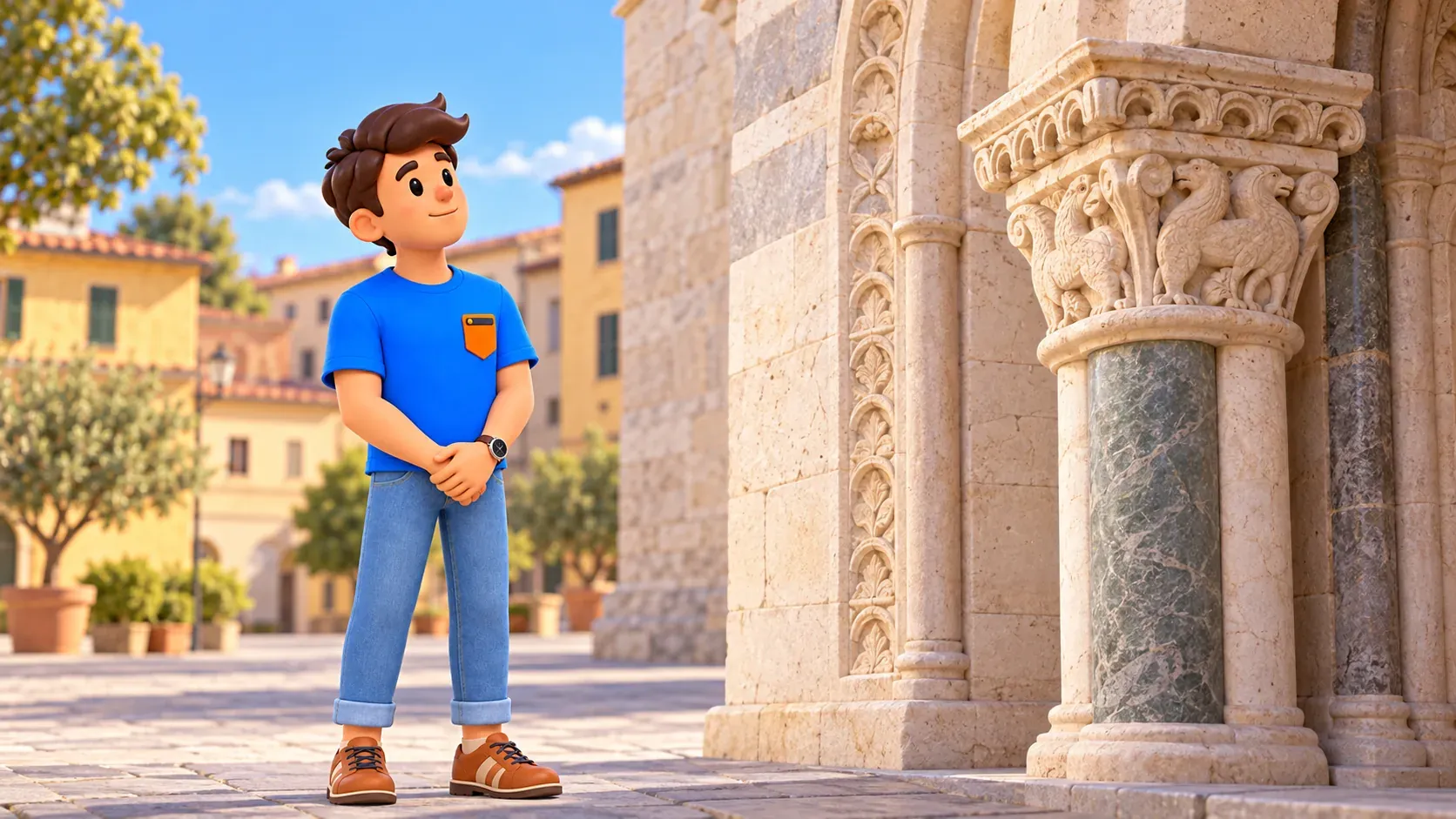
At San Paolo, look at the building together before comparing tiers and rhythms of arches. Pale stone and the arrangement of the surface belong to Pisan Romanesque traditions, but this is not merely a smaller version of the cathedral. The church has its own history and surroundings. Notice one difference between parts of the façade rather than trying to learn every architectural term immediately.
The nickname Old Cathedral belongs to local tradition. It does not automatically establish the church as a cathedral in the same sense as Pisa's present principal church. This distinction prevents an attractive name becoming an unsupported historical conclusion. For the walk, understanding the site's antiquity and San Paolo's independent Romanesque importance is enough. You can appreciate its presence without solving every question about its earliest beginnings.
Look at differing solutions beside the portal and the way arches direct your eye. At Tuttomondo you followed links between coloured figures; here the relationships involve supports, openings and tiers. This does not place Haring and medieval builders within one style. It is simply a way of looking more carefully at two different uses of form, while leaving their purposes and historical settings distinct.
The interior is outside the basic programme. If access is available and you choose a visit, shorten another addition or increase the time. Avoid putting a museum appointment immediately after an assumed quick glance at the façade. Romanesque architecture can reward several quiet minutes, when your eye stops searching for a single striking photograph and begins to notice proportions.
Sant'Agata: a small building beside a large church
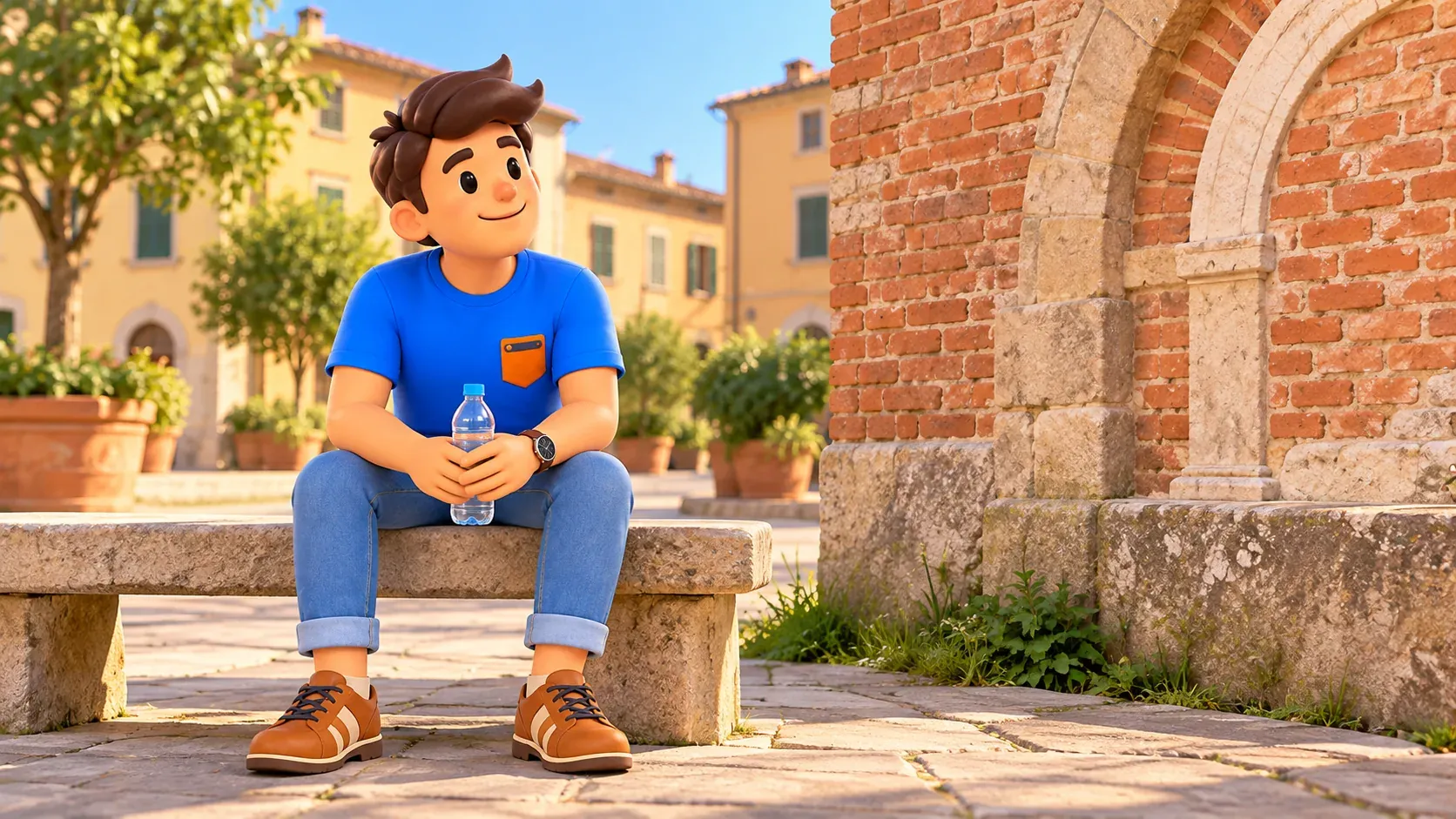
Sant'Agata chapel stands near San Paolo. Its small octagonal brick form changes both scale and material. Compare several faces from available public approaches, without assuming the whole perimeter is accessible. Moving from a broad church front to a compact volume reveals how varied Romanesque architecture can be within the same setting. An exterior encounter is sufficient for this route.
The chapel belonged to a denser religious complex. Twentieth-century wartime destruction changed its surroundings and opened views that had not existed before. Today's apparent isolation should not be mistaken for an untouched original design. Sometimes the quality that makes a monument convenient to photograph arose through loss. This is a brief but meaningful thought to carry away from the stop.
Compare the chapel's brick with the church's stone and look for repeated arched details. You need not settle disputed attributions or seek interior access. Its value here is clear geometry and a relationship with the neighbouring building. If tired, use one comfortable viewpoint and finish. An extended circuit is not required to understand the contrast in scale.
Choose an ending rather than collecting extensions
The finish is around San Paolo near the south bank of the Arno. Stop here, reach an available riverfront section or head for lunch. A crossing to the north bank and onward museum visits are outside the basic estimate. There is no reason to add a bridge only because every urban route seems expected to close into a loop.
RoadMe makes it easier to connect this short walk with the rest of Pisa: the app develops a personal trip plan around your interests and time. Use it to bring contemporary art, architecture and rest into one suitable programme, which is more convenient to follow than repeatedly building a day from separate notes.
If you want more, choose one theme. A river view can provide a quiet pause; a ships museum visit could form another independent block after checking its calendar. Avoid combining both with a compulsory return to the tower in the same two hours. A good short route ends early enough for the next decision to reflect your actual energy rather than an unfinished checklist.
Keep a few useful questions in mind
Three questions can connect the outing: how does an artist join the parts of an image, how does a façade connect architectural elements, and how do missing buildings change a monument's appearance? They do not require a complete landmark directory. They help you notice more in a short time while keeping the places' different periods and purposes clear.
In strong heat, rain or uncomfortable conditions, shorten outdoor pauses. There is little value in standing before a façade when discomfort has taken all your attention. Choose a few observations and finish calmly. With good light, linger over details; towards dusk, concentrate on the wider form. The walk should follow your interests rather than a requirement to inspect every part equally thoroughly.
It can also suit travellers with different levels of interest in museums. A shared walk offers subjects for conversation without requiring everyone to read long explanations. Agree on the length of a pause and let people choose their subject. One person may remember Haring's figures, another stone arches or the small brick chapel. Different impressions do not mean someone has looked at Pisa incorrectly.
Another side of Pisa, without a hunt for secrecy
Another side does not promise an unknown city without visitors. It means changing the usual collection of impressions: a contemporary work, ordinary streets and a significant Romanesque church away from Miracles Square. Pisa remains interesting when some of its history is encountered through daily surroundings rather than a compulsory admission ticket.
After the walk, a bright wall and a stone façade can remain equally strong images of the trip. Noticing that the city's artistic life continued across different centuries and forms is enough. That is more satisfying than expanding a small programme to include every famous place on the same half of the map.
For another southern neighbourhood, see our Kinzica and San Martino walk.


