
Street art in Pisa: Haring, Kobra and beyond the centre
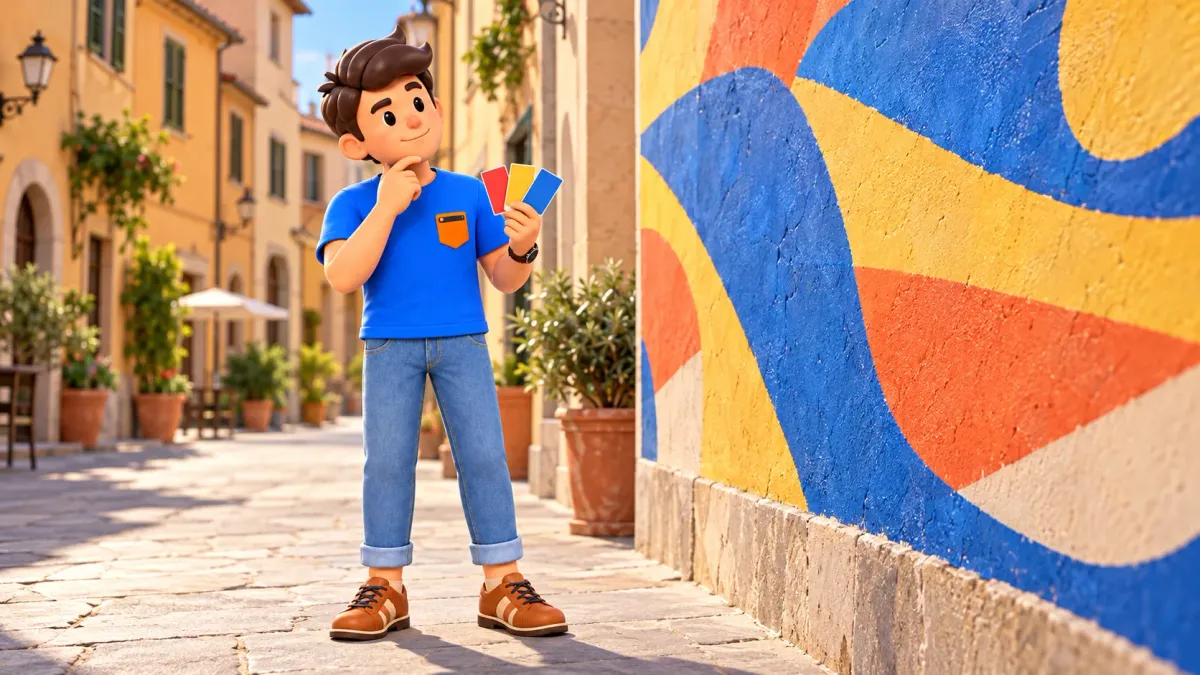
Two large wall paintings near the southern centre provide an accessible introduction to contemporary Pisa. At Keith Haring’s Tuttomondo, figures form an interconnected world; at Eduardo Kobra’s mural, bright geometric planes assemble a portrait of Galileo. A short urban transition connects them. For a first encounter, this is enough: one small outing reveals different ways of addressing passers-by without requiring every painted wall in the city or an endless collection of addresses.
Begin with Tuttomondo, then continue towards Kobra on Via Silvio Pellico. Allow roughly 45–90 minutes for observation, the transition and a brief pause. This is an editorial estimate with looking time, not measured walking time. For more, choose a separate direction: west towards Zed1 in Porta a Mare, or east towards Ozmo at the SMS centre in Le Piagge. Both extensions need their own time; they are not automatically included in the short basic walk.
Choose a walk rather than a mural competition
There is no required number of works. Two images properly observed can be more memorable than a long list glanced at briefly. First decide what interests you: line, a colourful portrait, literary imagery or art within a residential neighbourhood. The extension then has a purpose. Consider the work’s relationship with its setting, movement and your own way of looking, alongside the artist’s reputation. A famous name alone does not determine how long you should stay.
RoadMe makes that choice easier to turn into a personal plan: the app develops a route or trip around your interests, available time and pace. Choose contemporary art, city walking or other experiences so wall paintings have a suitable place in the day you want in Pisa.
Street art occupies a living environment. Repairs, temporary barriers, traffic and ordinary activity can change viewing conditions. Do not expect a precise photograph from an old guide to be a guaranteed outcome. Leave room to change angle or the duration of a stop. A wall visible from public space does not establish permission to enter a courtyard, climb steps or use a building entrance as a dedicated viewing platform. These remain places where everyday life continues alongside the artwork.
Tuttomondo: see relationships between figures
Keith Haring made Tuttomondo in Pisa in 1989, following an invitation from a young Pisan who met him in New York. A city known for older monuments acquired a contemporary work addressing ordinary passers-by. That position matters: the image is not confined to a museum room. It exists beside daily movement, where people can encounter it unexpectedly, return and notice connections without needing a formal introduction to art history or a special occasion to look.
First stand back where available space permits, considering the whole painted plane. A characteristic black line connects coloured figures into a moving system. You need not immediately select one principal character: people, animals and abstract forms depend on one another. Then examine a group and notice how a contour continues, gestures join and attention changes direction. Coexistence is expressed in the structure of the composition as well as its subject, making individual elements difficult to separate from their relationships.
The title can be understood as All the World, but that is not a single dictionary for every detail. Some motifs have familiar interpretations; the experience need not become decoding all the signs. Choose a connection you notice, then compare it with the overall rhythm. This works without specialist preparation. The stop becomes a conversation with an image rather than an examination in the accepted meaning of every silhouette, gesture or shape that attracts your attention.
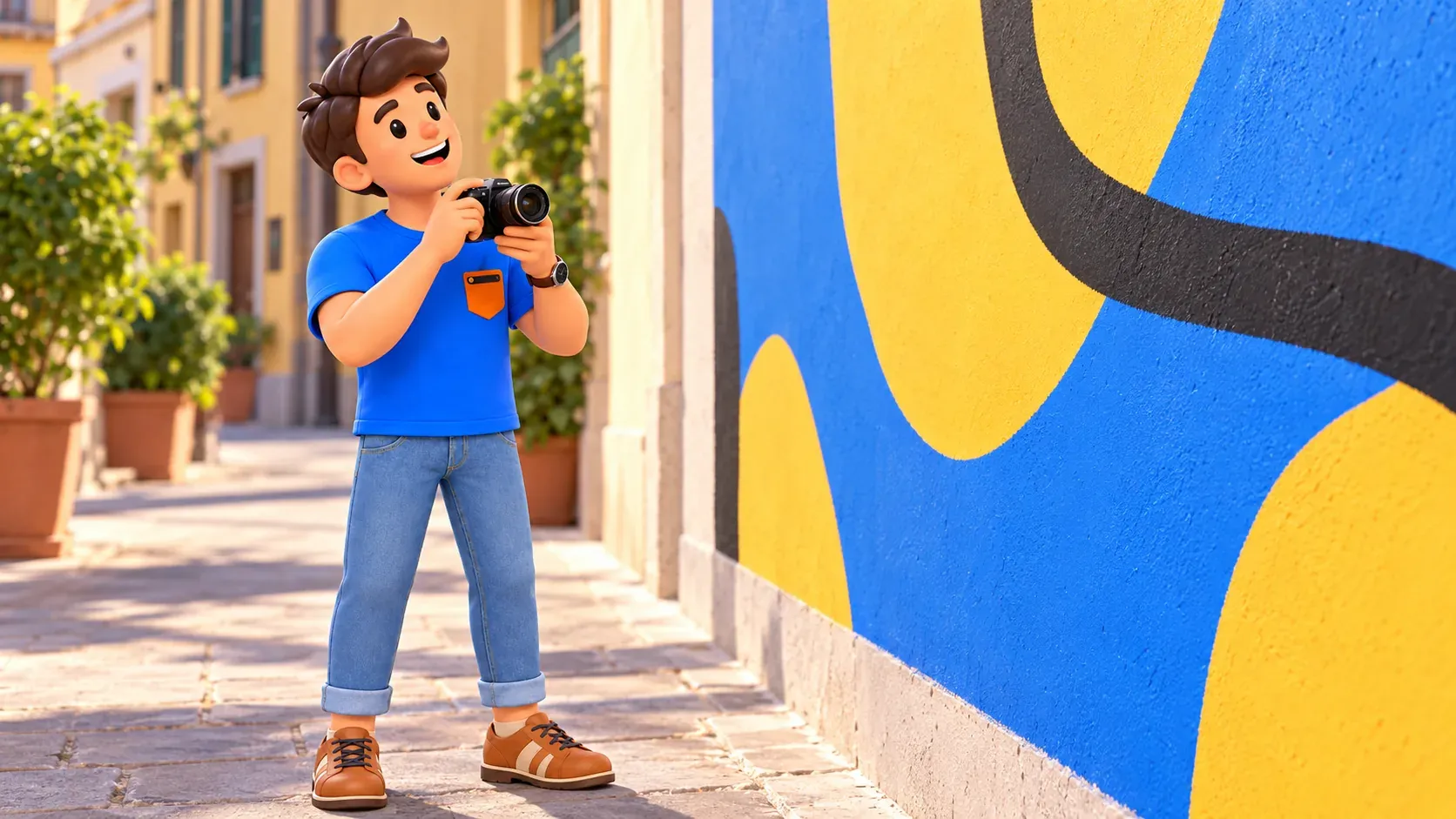
Before moving on: look first, photograph afterwards
At a large work, the search for an empty frame can consume the visit. Try a few minutes without a camera, followed by a wider view and one detail. A photograph of a relationship between figures may be more interesting than forcing everything into one image. You do not need an awkward or unsuitable stopping place for symmetry. Scale can also be understood through the work’s relationship with people and ordinary city surroundings, rather than by removing every sign of life.
With companions, ask where your eye moves after one chosen figure. Different answers are useful: colour, contour or a transition between characters may guide each person. Comparison helps you see more without deciding on one correct impression. With little time, a short conversation can replace lengthy reading on the spot. Explore the creation story and individual motifs later, once your own encounter has given those details a reason to matter rather than making them another obligation before leaving.
Kobra: Galileo and the tower as metaphor
The next stop is Eduardo Kobra’s painting on Via Silvio Pellico. Created in 2023, it addresses Pisa’s scientific memory. Galileo holds the leaning tower as a telescope: a recognisable city symbol becomes an instrument in an artistic statement. This is metaphor rather than documentary evidence of an experiment with a tower held in the scholar’s hands. Contemporary art can combine familiar motifs freely without becoming a literal illustration of one historical event, and that distinction makes the image easier to enjoy.
Haring’s composition moves attention between many figures; Kobra’s gathers it around a portrait. Compare those ways of organising a wall. Bright colour fields and geometric divisions give different impressions close up and further away. Separate planes first become noticeable, then assemble into face and gesture. You need not name every technique. Recognise that neighbouring works address viewers in different visual languages while both use a large urban surface and an open encounter with people passing through the city.
Use public streets and existing crossings between the stops. Nearby murals do not remove traffic, and looking towards a painting should not determine an unsuitable place to stand. These two works already complete a short outing. The word route does not require more points immediately. A modest comparison can stand as an experience of its own and leave energy for another part of the day, whether that involves more art, an unrelated visit or simply a comfortable pause.
Pause before choosing an extension
After Kobra, decide whether you still want wall painting or a different city experience. A pause separates curiosity from the urge to finish a list. The extensions lie in different directions, so treat them as independent options rather than one straight line. Add travel, observation and return time separately. The initial 45–90 minutes do not contain all the districts, a full meal and any interior visits you happen to encounter along the way.
For art in neighbourhood life, consider Porta a Mare. For literature and the meeting of historical images, consider SMS and Le Piagge. Both can be rewarding for different reasons. Neither must be declared the more important in advance. Choose according to the question raised by the first two walls and the attention you wish to give the continuation, rather than simply the number of remaining marked places. A new district deserves more than being squeezed into spare minutes.
West: Zed1 in Porta a Mare
Zed1’s I sogni di Pisa is in Porta a Mare on Via Conte Fazio. It is connected with a late-2023 artistic project involving several artists and neighbourhood walls. The subject changes: instead of a celebrated scientist’s portrait, you encounter a female figure with a large heart from which roses emerge. The image uses a metaphor of hope and vitality. Compare the figure, scale and relationship between heart and flowers, without requiring a complete account of every neighbouring intervention to understand this work.
Distinguish it from other nearby works by the same artist. Zed1’s name does not mean every painted surface in the district is I sogni di Pisa. The municipal project included separate imagery on engineering structures. For this selected work, the woman and roses provide the relevant subject. Recognising a particular painting is more useful than merging different images into one object because they share an artist’s name or were made as part of one wider project.
The painting occupies a residential building’s exterior wall. Consider it part of daily surroundings and leave entrances and passages clear. The adjacent doorway is not a visitor platform. Notice how art changes the impression of a quarter without turning it into a separate museum with guaranteed viewing conditions. A dated festival announcement is not a current events calendar either. A wall painting and a temporary programme remain different things, even when they originated within the same artistic initiative.
East: Ozmo and Orlando Furioso
Another direction leads towards the SMS centre by San Michele degli Scalzi in Le Piagge. Ozmo’s Orlando Furioso relates to Ariosto’s poem and an early-2010s project about its visual history. Literary and fantastic motifs meet Pisa’s memory. It is not a literal illustration of one scene that you must recognise without help. Look for transitions between images and the way an old book becomes part of a contemporary urban surface, with connections extending beyond a single episode of its narrative.
References to Galileo, Fibonacci and Antonio Tabucchi appear in the composition. Do not turn them into a test of identifying every face. Choose one contrast: portrait and fantasy, literary subject and local history, old text and the scale of a wall. The comparison continues what you began with Haring and Kobra. Keep this work distinct from Ozmo’s separate Galileo mural; one artist or a shared figure does not make different paintings identical locations or interchangeable objects in a city walk.
A painting at an exhibition centre’s entrance does not mean its original exhibition continues inside or every room is open. Check the interior programme separately. Exterior observation has value independently. If a current exhibition interests you, allow time specifically for it. This eastern extension need not be combined with the western option for completeness. Another district can remain another walk, rather than sending you across town and back after you have stopped noticing distinctions between images and places.
What the route helps you notice
After several works, street art becomes more than one style. Haring’s connected line, Kobra’s geometric portrait, Zed1’s imagery and Ozmo’s literary combinations use a city wall differently. Distance, setting and daily movement matter alongside the picture’s subject. Pisa continues to create public art without cancelling its older architecture. Contemporary work need not be treated only as a surprising decoration between better-known monuments. It can provide the central subject of a coherent outing and a reason to explore another quarter.
RoadMe connects that interest with your whole trip more conveniently: the app creates a personal programme according to your preferences and available time. Art, a chosen neighbourhood and rest become a clear route that is easier to use while exploring Pisa.
Finish with one connection to remember: a contour between figures, a face from colour planes, heart and roses or a conversation between book and city. That is enough for a first encounter. Detailed object histories and further walls can unfold gradually. The short route remains worthwhile independently, while a continuation gains a clear purpose and its own place in the trip instead of automatically extending every outing into a circuit of the entire city.
For another neighbourhood route, see our Galileo science-history walk.


