
Maritime Pisa: ancient ships, arsenals and the citadel

You do not need to head straight to the beach to discover maritime Pisa. In the western historic centre beside the Arno, the Ancient Ships Museum, Republican Arsenals and Old Citadel with the Guelph Tower form a connected outing. This is a route about a city shaped by waterways: carrying goods, building vessels, defending approaches and adapting to a changing environment. The present riverfront becomes the beginning of a historical conversation as well as a pleasant setting.
Allow approximately three to four hours for the museum and an exterior walk with a pause. This is an editorial estimate for an unhurried thematic outing, not a measured duration. Begin at the Ancient Ships Museum in the Medici Arsenals, continue towards the Republican Arsenals and finish around the Old Citadel and Guelph Tower. The stops occupy one western district; a short return between neighbouring sites is possible. A full lunch, tower ascent and travel back across town are separate.
Keep three periods distinct
There are three historical layers. Ships and finds inside the museum concern Pisa’s ancient waterborne life. The Republican Arsenals tell a story of medieval shipbuilding. The Medici arsenal building and later changes to the citadel belong to different political circumstances. Proximity does not make them one shipyard from one period. Holding that distinction makes the route clearer and prevents every vessel from being casually assigned to the medieval republic’s fleet.
RoadMe makes it easier to bring this outing into a personal plan: the app develops a route or trip around your interests, available time and pace. Choose archaeology, urban history or waterside walks so the museum and riverfront fit comfortably into the day you want in Pisa.
Choose a date when the museum is open and suitable for your group: it provides the encounter with actual vessel remains. Looking at the building outside cannot replace that experience. If the exhibition cannot be visited, keep it for another date rather than claiming the closed entrance offers the same thing. Confirm current admission conditions, access to the spaces you need and calendar changes with the museum before setting out, especially during a short stay.
Start with the discovery, then the ship
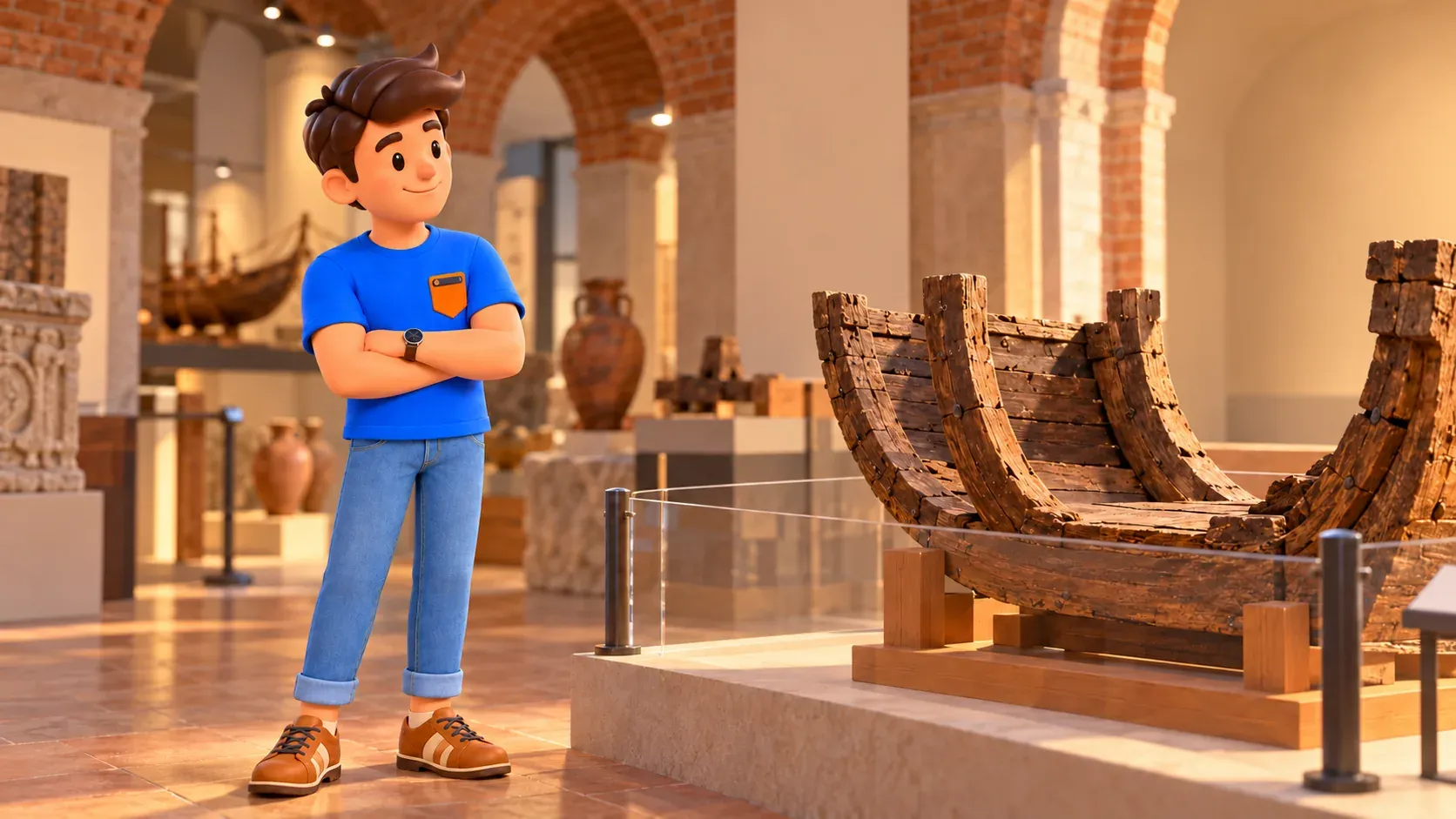
The Ancient Ships Museum grew from discoveries made in 1998 during work near San Rossore station. Vessel remains and objects connected with ancient river and maritime life lay underground. For a first encounter, the circumstances matter more than an exhibit count: modern construction work revealed evidence that allowed Pisa’s ancient past to be studied afresh. This is an archaeological story, rather than a collection of boats that remained quietly inside the building from the day they were made.
Begin with the account of discovery and preservation where it appears along your visit. Wood that spent centuries in a wet environment could not simply be left to dry like an ordinary plank. Conservation and research became part of the vessels’ later lives. The museum appearance of a hull therefore reflects specialist work. Distinguish original material from its presentation, rather than imagining a complete ready-to-display boat lifted out of the ground without alteration.
Choose one hull for closer attention. Look at surviving wood, form and the way construction is shown. You do not need an examination in shipbuilding vocabulary. Ask what the vessel’s shape can tell you about navigation, and what must be established from other finds. That conversation encourages attention without spending all your energy trying to read every display and object at precisely the same level of detail, regardless of the time you have.
Cargo and small objects: a human scale
Amphorae, equipment and everyday objects matter alongside large remains. They move the discussion from the general word trade to practical activities: loading, carrying, storing and working aboard. Urban history consists of more than famous victories or rulers. Objects suggest the labour of people whose names may not survive. Waterborne connections become a continuing activity requiring materials, skills and repeated decisions, rather than an abstract label attached to a prosperous medieval city.
Do not identify an exact departure port or route from one amphora without the museum’s explanation. Instead, compare types of evidence: a hull concerns a vessel, a container its cargo, and a small object use and everyday life. Together they give a richer picture than a dramatic frame alone. With children or friends, choose an object and discuss the task it helped perform, using the information actually available in the gallery rather than inventing a biography for it.
Alkedo is a well-known point within the museum story, but should not turn the visit into a hunt for one compulsory photograph. Choose a connection of your own: ship and cargo, preserved wood and conservation, or construction and life on the water. That keeps the museum an experience rather than a catalogue to complete regardless of time. Detailed histories of particular finds can follow once you know which questions have caught your interest.
The Medici Arsenals: the building has a story too
The exhibition occupies the Medici Arsenals, associated with a later period of galley construction and maintenance. The subjects fit together without belonging to the same date. Ancient finds are considerably older than the building that houses them. The premises add another layer: state organisation of maritime activity, working bays and the scale of production. Keep the objects’ age distinct from the architectural setting, allowing both histories to contribute without one replacing the other.
An arsenal concerns production and maintenance rather than simply an attractive hall by water. Shipbuilders, tools, materials and supply stand behind the name. It is easy to focus on the vessels and forget that their present building also belonged to waterborne infrastructure. Where convenient, notice the scale of the bays and their relationship to the exhibits. You do not have to reconstruct an entire yard from one detail to recognise premises with a working biography of their own.
Before leaving, consider your remaining time and energy. Around one and a half to two hours can be an initial allowance for a focused museum visit, rather than a universal duration. If you read extensively, keep the museum and shorten the outdoor section. If attention is tiring, the river offers a change. Another large museum need not follow simply because the first visit went well: this theme already provides enough material for a comfortable continuation outside.
Towards the Republican Arsenals: from finds to work
After the museum, head towards the Republican Arsenals in the Old Citadel area. Use available public streets and passages; nearby sites do not guarantee a path through every courtyard. You might allow around an hour for the exterior section with pauses, keeping additional interiors separate. The format changes here. Instead of an exhibition, the remains, river and their relationships become central. Do not expect a complete medieval workshop preserved exactly as it was at the height of production.
The Republican Arsenals are connected with galley construction for independent Pisa. Shipbuilding formed state infrastructure: vessels supported trade, defence and the city’s Mediterranean presence. Carpenters, metalworkers, rope-makers, timber and metal were required. Maritime history therefore becomes a story of urban economy and labour. Surviving fragments help suggest production, but the present site should not be presented as the full original complex with every structure intact and in its former position.
Compare it with the Medici Arsenals. They are nearby, but the names do not identify one building twice. Republican yards developed from the needs of an independent city; the later Medici complex reflects a different system of government and maritime organisation. That difference explains a change after Pisa lost independence without requiring a list of every ruler. A date, purpose or admission condition associated with one complex should not automatically be transferred to its neighbour.
The river beside the yard: look for connections
Move your attention from individual attractive arches to the site’s relationship with the Arno and defences. Shipbuilding needed access to water, and that access required organisation and protection. Today’s embankment shows only part of the older landscape: watercourses, banks and uses changed. Avoid reconstructing the entire ancient harbour confidently from the current waterline. It is enough to see why river, working premises and walls should be read together rather than as unrelated attractions on a list.
The Republican Arsenals may host modern events, but that does not make every room permanently open to visitors. An interior programme, exhibition and exterior walk are different options. Do not make a chance event essential without current confirmation. The outdoor route remains meaningful through the yard’s remains and waterside location. If an exhibition genuinely interests you, give it its own time instead of fitting it above an already full plan simply because it happens nearby.
The Old Citadel and Guelph Tower
Finish around the Old Citadel and Guelph Tower. Production history meets control over the city here. After the Florentine conquest in the early fifteenth century, the area was adapted to new purposes. The tower recalls a change of government as well as military defence. Its vertical form differs from the arsenals’ working bays: it belonged to observation and control of an important approach, while nearby yards made and maintained vessels.
The present Guelph Tower is a post-war reconstruction. It was destroyed in 1944, so the visible silhouette should not be described as wholly untouched late-medieval work. This adds another period: the city recovered a lost historic image. From outside, compare the restored vertical form with surviving parts of its setting. Adjacent walls need not share one age. The citadel changed over a long time rather than receiving a permanent final arrangement in one building campaign.
An ascent is not a condition of this outing. Entry, internal rooms or an event need separate confirmation. If access is limited, the exterior and riverside position still provide a clear finish. Not every historic silhouette has to become a compulsory viewing platform. After archaeological finds and traces of production, it is enough to recognise a water district as a place of military and political control, followed by modern remembrance of destruction and rebuilding.
Finish the maritime day at your own pace
Decide separately about lunch, returning or another riverside section. Travelling to the sea need not follow on the same day: the urban route has an independent narrative. If ancient vessels interest you most, spend longer in the museum; for the historic landscape, favour the exterior part. Choosing a priority works better than giving every neighbouring site equal detail for the sake of a complete list, then adding every available museum in the centre.
RoadMe connects that choice with your whole trip more conveniently: the app creates a personal plan according to your interests and available time. Museum visits, waterside walking and rest become a clear route that is easier to use while you explore.

Leave with three distinctions: an ancient vessel and a later building, two periods of arsenals, and a historic tower with a reconstructed silhouette. They make maritime Pisa more revealing than one general sentence about a former sea republic. Detailed object histories can unfold gradually. The first outing establishes connections and shows which part of this wider history you want to return to, rather than attempting to replace every further discovery at once.
For another neighbourhood route, see our Pisa city walls walk.


