
Half a day in Pisa from the station: a walk that returns for your train

Half a day from Pisa Centrale can include Tuttomondo, a walk through the centre to the cathedral square and a return by a different bridge. Allow around four and a half hours for the outdoor version, including a short break and a chosen margin before departure. This is an example of organising a city stop, not a promise that the plan fits every train connection.
The basic route excludes the tower climb and museums. It begins at the main railway station, crosses the Arno at Ponte di Mezzo and returns by Ponte Solferino. The duration is an estimate: pace, luggage, photographs and street conditions can change it. If you have a fixed train, decide your station-return time first and then fit the walk around it.
Set aside the return time before planning the sights
Write down your departure and choose when you want to be back at the station. In the example, the last half hour is reserved for the station. That is a planning choice, not a universal rule. You may need additional time for luggage, orientation, finding the platform or the particular requirements of your journey.
Then count the hours genuinely available to the city. Time between the train's arrival and reaching the station forecourt is not automatically sightseeing time. The same applies to any practical stop before setting out. If fewer hours remain, reduce the programme immediately rather than trying to recover minutes by rushing each monument.
For a stop between journeys, RoadMe makes it more convenient to prepare a personal itinerary around your interests, pace and available time. The app develops a coherent walking plan for the experiences you want, leaving less organisation to do while you are actually exploring Pisa.
The main reference points are Pisa Centrale, Piazza Vittorio Emanuele II, Tuttomondo, Corso Italia, Ponte di Mezzo, Borgo Stretto, Piazza dei Cavalieri and Piazza dei Miracoli. Return via Via Santa Maria towards the Arno, then Ponte Solferino and the southern centre to the station. Interior visits are outside the basic calculation.
Example allocation from the start of the city stop. All timings are estimates; increase the chosen station margin if needed.
| Minutes | Stage |
|---|---|
| 0–20 | Station exit and Vittorio Emanuele II |
| 20–40 | Tuttomondo |
| 40–70 | Corso Italia and Ponte di Mezzo |
| 70–105 | Borgo Stretto and Cavalieri |
| 105–125 | Walk to the cathedral square |
| 125–175 | Ensemble exterior views |
| 175–195 | Short break |
| 195–240 | Return via Ponte Solferino |
| 240–270 | Chosen station margin |
At the station: choose a light way to explore
Begin with simple checks: the correct station, the departure you are using and whether your luggage suits an extended walk. This plan starts at Pisa Centrale. Do not transfer its starting point automatically to another station, the airport or a bus arrival location. Each alternative needs its own allowance for reaching the centre.
A large suitcase changes the experience compared with a small backpack. If you need to arrange storage, account for the whole time involved before departure and after returning. The route does not assume that a particular luggage service will be available when you need it. Any time spent solving that question belongs outside the sightseeing allowance.
Head from the station area towards Piazza Vittorio Emanuele II. The square helps make the transition from transport to the city and is a clear early reference point. This is not the moment for a long explanation of every surrounding building. Take a few minutes to orient yourself and choose a pace that you can maintain.
Keep the overall shape in mind: north through the centre towards the tower, then back across another bridge. Use a map for the public route when needed.
Tuttomondo: meet modern Pisa before medieval Pisa
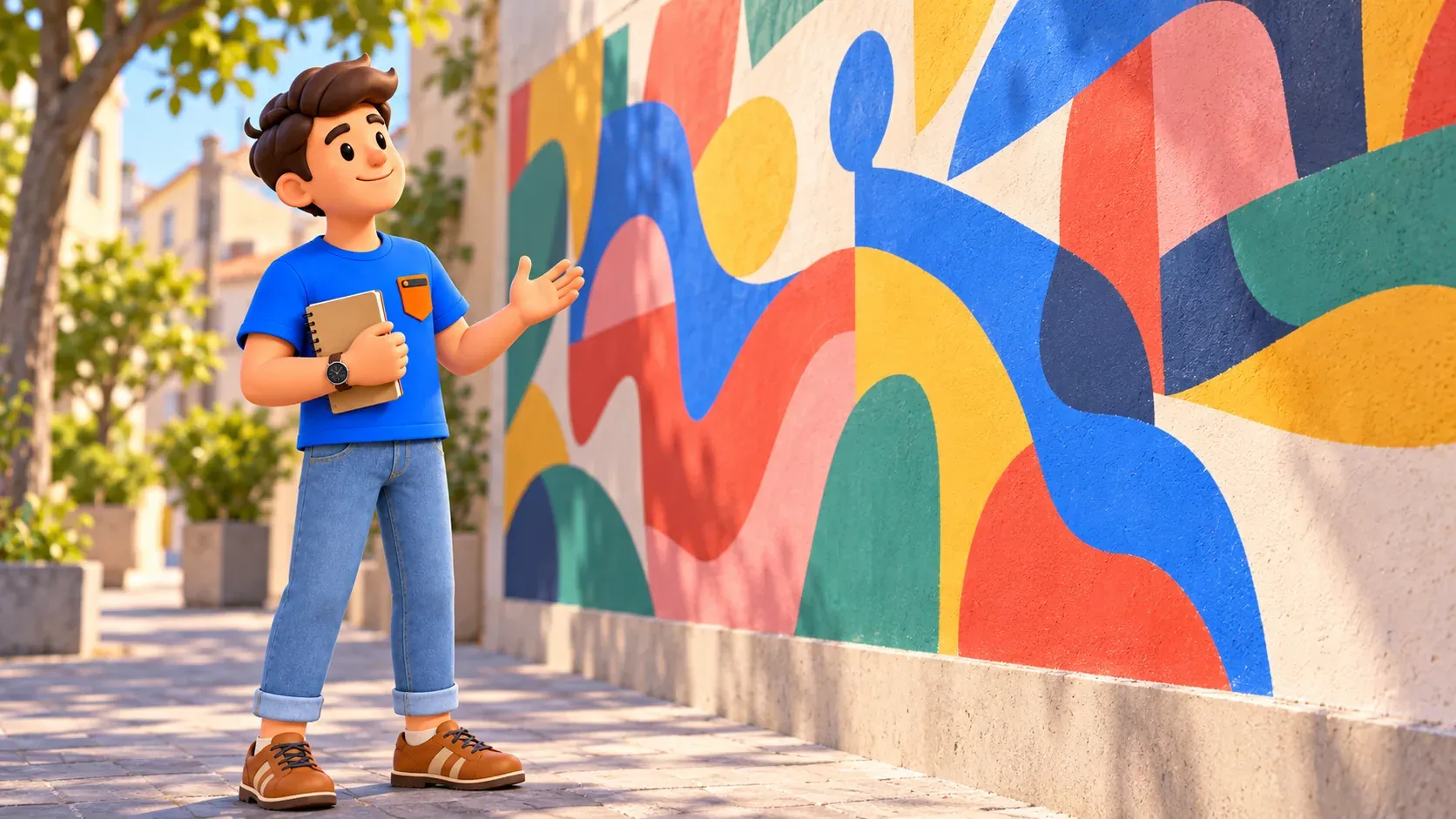
Before joining Corso Italia, make the short detour to Tuttomondo. Keith Haring created the work in Pisa in 1989 on a wall by Sant'Antonio Abate. It makes an engaging beginning: the city's artistic story immediately extends beyond the marble monuments waiting at the far end of the outward walk.
Look at the interlocking figures and recurring outlines. A first encounter does not need a complete interpretation of every image. Notice how separate characters create a shared, lively composition. This provides a worthwhile stop even if public art has not previously been one of your main interests.
Give the work a small but deliberate amount of time. Take a wider photograph, choose a detail you like and then return towards Corso Italia. If you want to linger, consciously shorten another part of the walk. Time with a work of art is not wasted when you understand which other pause it is replacing.
Corso Italia and the first view of the Arno
Corso Italia connects the Piazza Vittorio Emanuele II area with the central district near Ponte di Mezzo. The walk now has an everyday rhythm: shop fronts, urban façades and people going about their business. Continue towards the river with pauses kept brief, so that the main destination remains ahead without becoming a hurried obligation.
Near Piazza XX Settembre and Logge di Banchi, slow down for a moment. The loggia connects the place with the city's trading history and creates an open public setting before the bridge. For this walk, an exterior look and a comparison with the tighter street corridor you have just left are enough.
Ponte di Mezzo provides the first broad river view. Look along both banks, then cross towards Piazza Garibaldi on the northern side. There is no need to follow the waterfront far in either direction now. The Arno will appear again on the return, while a long riverside branch would change the shape of the whole station stop.
Piazza Garibaldi is a useful point to check the time. If you are on your own schedule, continue into Borgo Stretto. If a delay is already apparent, choose which pause to shorten. Protecting the return and the station allowance matters more than preserving an identical amount of time at every intermediate point.
Through Borgo Stretto to Piazza dei Cavalieri
Borgo Stretto leads from the river junction into the historic centre. Its arcades and closely spaced façades change the scale after the open water. Stop briefly near San Michele in Borgo to see how a church's multi-level façade is incorporated into an ordinary urban street. An interior visit is not included in this plan.
Continue towards Via Ulisse Dini and Piazza dei Cavalieri. Palazzo della Carovana stands out on the square. Its façade is associated with Vasari's transformation, while the building's present life is linked to the Scuola Normale Superiore. This short historical layer introduces academic Pisa on the way to its best-known symbol.
Look at the square as one space. Find Palazzo dell'Orologio and Santo Stefano dei Cavalieri, then compare their positions with the Carovana palace. You do not have to stop at every building for the same amount of time. Choose a strong overall view and one detail that genuinely catches your attention.
Afterwards, continue towards San Sisto and Via dei Mille, then Via Santa Maria and the cathedral square. This transition brings the route back to its main ensemble. If time is tightening, let some façades remain part of the setting instead of turning each into an additional compulsory visit.
The cathedral square: a main stop without adding admissions
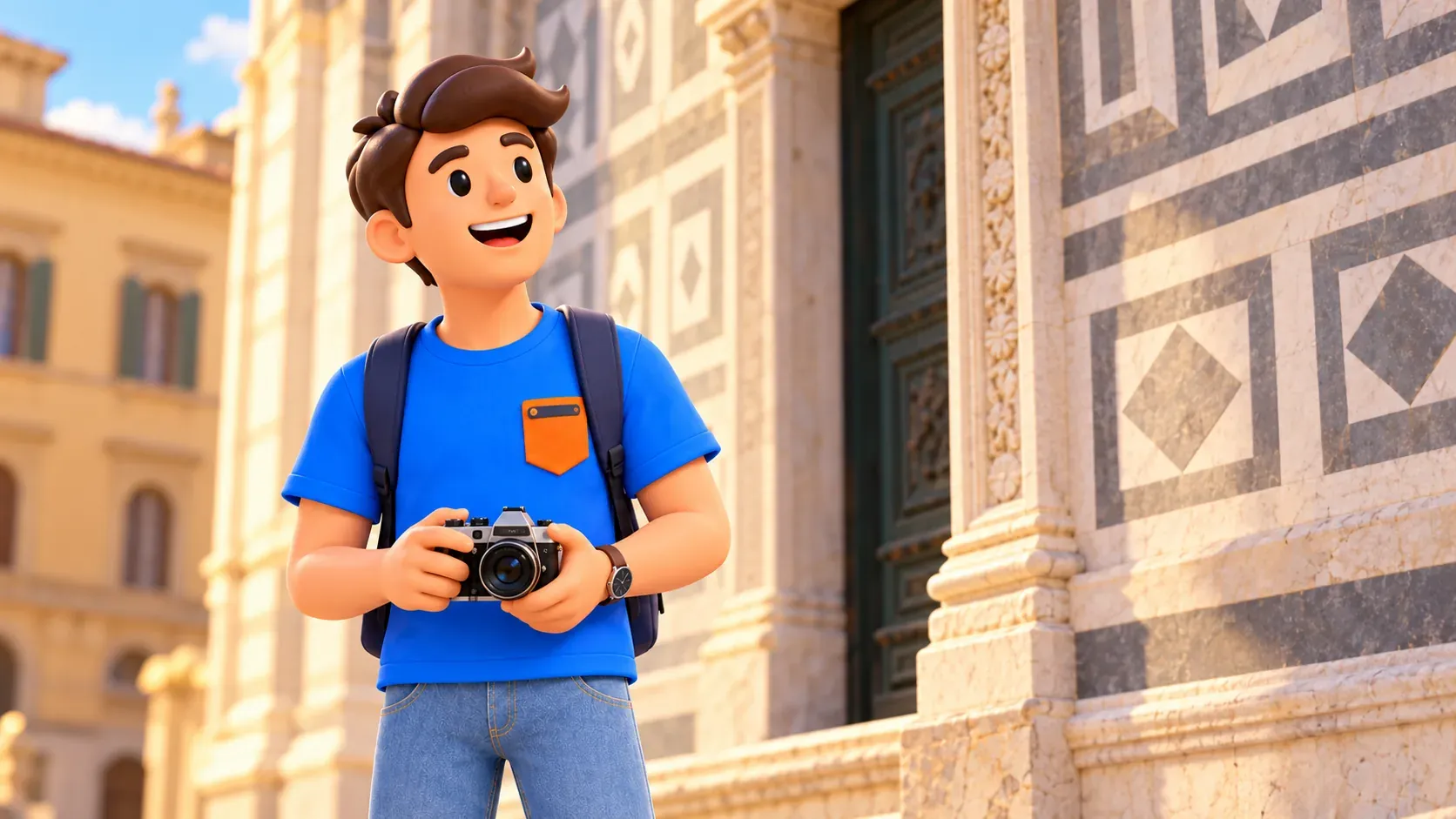
At Piazza dei Miracoli, look first at the ensemble: cathedral, baptistery, Camposanto and the separate tower. The tower is the cathedral's bell tower, so its position relative to the church matters as well as its lean. This view gives the familiar silhouette an architectural setting and provides a reason to stop beyond the standard photograph.
The basic schedule allows around fifty minutes here for exterior views and photographs. It does not represent a complete visit to all the monuments. Follow the accessible paths, select a few viewpoints and compare the circular baptistery with the elongated Camposanto. The impression can be satisfying without entering every part of the complex.
If you have chosen a particular interior in advance, rebuild the programme around its actual conditions. Do not place a tower climb or museum on top of an already full plan. It needs time for the visit, admission and possible waiting. With a fixed train, shorten another block or arrange a longer stay in the city.
Before leaving, check when the return journey needs to begin. More photographs should not quietly consume minutes already assigned to the station walk. Leaving one viewpoint for another trip is easier than turning the final part of the day into a race. Wanting much more time here is a good reason to plan a separate day in Pisa.
A break and a different route back
A short rest after the main visit helps change the rhythm. Choose its format according to the actual time available. A quick pause is easier to fit than a lengthy order when departure is fixed. There is space for a break in the example, but no promise of immediate service or an available table at any particular café.
For the return, follow Via Santa Maria towards the river, then head towards Ponte Solferino. The Arno appears again from a different viewpoint. A short look is enough: this section mainly gives you a calm change of bank and a clear route back rather than the beginning of another long waterfront walk.
On the southern side, orient yourself towards Via Francesco Crispi and Via Cesare Battisti for Pisa Centrale. Check your map and available signs if you are unsure. Forty-five minutes in the example is not a guarantee for every walking pace. If you move slowly or pause often, start back earlier and use a larger allowance.

What to shorten when you have less time
For a smaller window, preserve one main priority. If it is the cathedral square, shorten Corso Italia and Piazza dei Cavalieri stops. If Haring is especially important, give the mural its attention and accept a shorter passage through the centre. A clear choice works better than insisting on equal time at every place.
When interests and limited hours need to work together, RoadMe helps develop a more convenient personal trip programme. It builds the itinerary around your preferences and pace, so the time available in Pisa can go towards suitable experiences rather than repeated manual rearranging during the walk.
If departure is approaching, finish sightseeing and return. The app does not replace checking your real train information and does not guarantee a connection. Rain, heat or fatigue can also be reasons to shorten the route while preserving a clear way back and the margin you chose for the station.
Return with a complete first impression
At the station, use the current information for your departure and platform. Any remaining time is for ending the city stop calmly, not another optional circuit of the streets. A margin that proves unnecessary has still done its job: it let you explore with less pressure to keep moving quickly.
This walk has introduced contemporary art, a commercial street, the river, an academic square and the marble ensemble. That is a coherent way to meet Pisa in half a day. A future visit can follow whichever part you liked most, instead of being driven by an immediate need to add everything left outside this particular walk.
For help choosing the length of your stop, see How long to spend in Pisa.


