
Evening in Pisa: a walk along both banks of the Arno
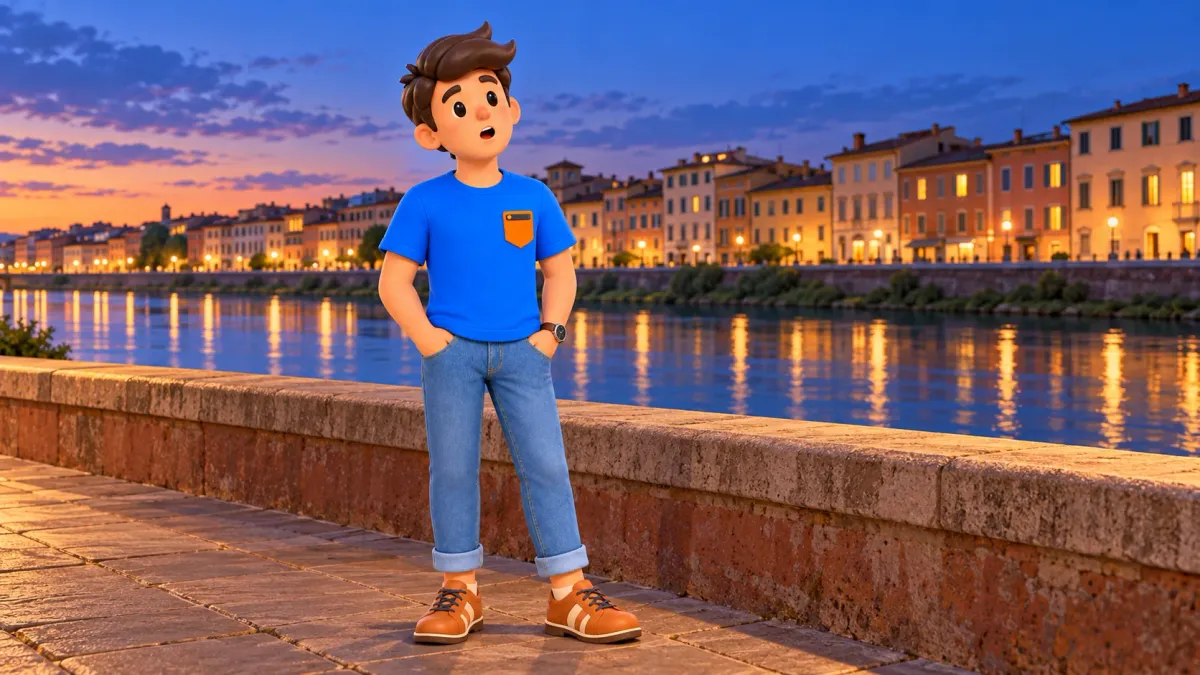
For a relaxed evening in Pisa, walk a loop along the Arno between Ponte di Mezzo and Ponte Solferino. Follow the north bank west past palace façades, cross the river, then return east via Santa Maria della Spina and Palazzo Blu. Near the end, you can briefly turn into the quarter around Piazza Chiara Gambacorti before returning to the starting bridge. No museum opening is needed for the walk to make sense.
Allow roughly one and a half to two hours with stops, excluding dinner and travel to or from the route. This is a planning estimate, not a measured duration. Begin with some daylight remaining for stone details, leaving reflections for the later section. The useful starting time depends on your date, the weather and how much light you prefer for walking.
Set up an evening that leaves room to pause
Start at Piazza Garibaldi by the northern end of Ponte di Mezzo. The first section heads west along the north bank to Solferino; the second returns on the south side. Two crossings change your viewpoint without requiring a walk along the whole urban river. If you stay for dinner south of the Arno, completing the return to the start is a choice rather than an obligation.
Preparing an evening like this is easier in RoadMe: the app develops a personal walk or trip plan around your interests and pace. Try choosing whether architecture, river views or relaxed neighbourhood exploring matters most, so the programme you use on the spot suits the way you want to travel.
Do not depend on special illumination, empty pavements or identical conditions in every season. The interest comes from changing distances to façades, reflections and everyday streets. After a demanding day, one river section and a short crossing may be enough. Treat the complete loop as a useful outline, rather than another sightseeing task you must finish after the museums.
Ponte di Mezzo: begin by seeing the river
From Piazza Garibaldi, approach the northern end of the bridge and look along the Arno in both directions. This helps explain why the riverfront deserves its own place in a Pisa visit. Buildings appear as long sequences rather than individual doors and windows. Give the wider setting a few minutes before choosing a particular façade or reflection for a photograph.
Ponte di Mezzo is associated with the city's Game of the Bridge tradition, but the crossing is interesting without an event. It connects the central banks and reveals ordinary movement through Pisa. Do not read a busy square as a guaranteed evening programme: festivals, closures and special events need checking for your dates. This route is designed as a normal walk.
Use pavements and permitted crossings. A riverfront does not automatically mean a continuous pedestrian zone without traffic. Stop for photographs where you leave room for other people, separating picture-taking from walking. Decide at the beginning whether you want more time to observe or more time to photograph. That small choice can prevent every pause from becoming the same repeated activity.
The north bank: palaces in a longer perspective
Head west from Ponte di Mezzo along the north bank. Compare height, window rhythms and colours as the light changes. You need not identify every building. Choose two contrasts, perhaps a restrained surface and a more elaborate treatment, and follow them. The riverfront becomes more legible without keeping a complete palace directory open throughout the walk.
Palazzo Reale recalls a period after the medieval republic. The former grand-ducal residence is associated with the Medici and Lorraine dynasties and now houses a museum. For this evening, use it as an exterior historical reference. A museum visit needs its own calendar and time; the route neither promises entry nor depends on it. The building still contributes to the story from outside.
If interested, make a small detour towards San Nicola, then return to the river. Its bell tower recalls that Pisa has more than one leaning structure, although closer examination is better with suitable light. An exterior encounter is enough tonight. Skip the detour if you are tired or dusk arrives sooner than expected: the main loop remains coherent without it.
Solferino: change sides and scale
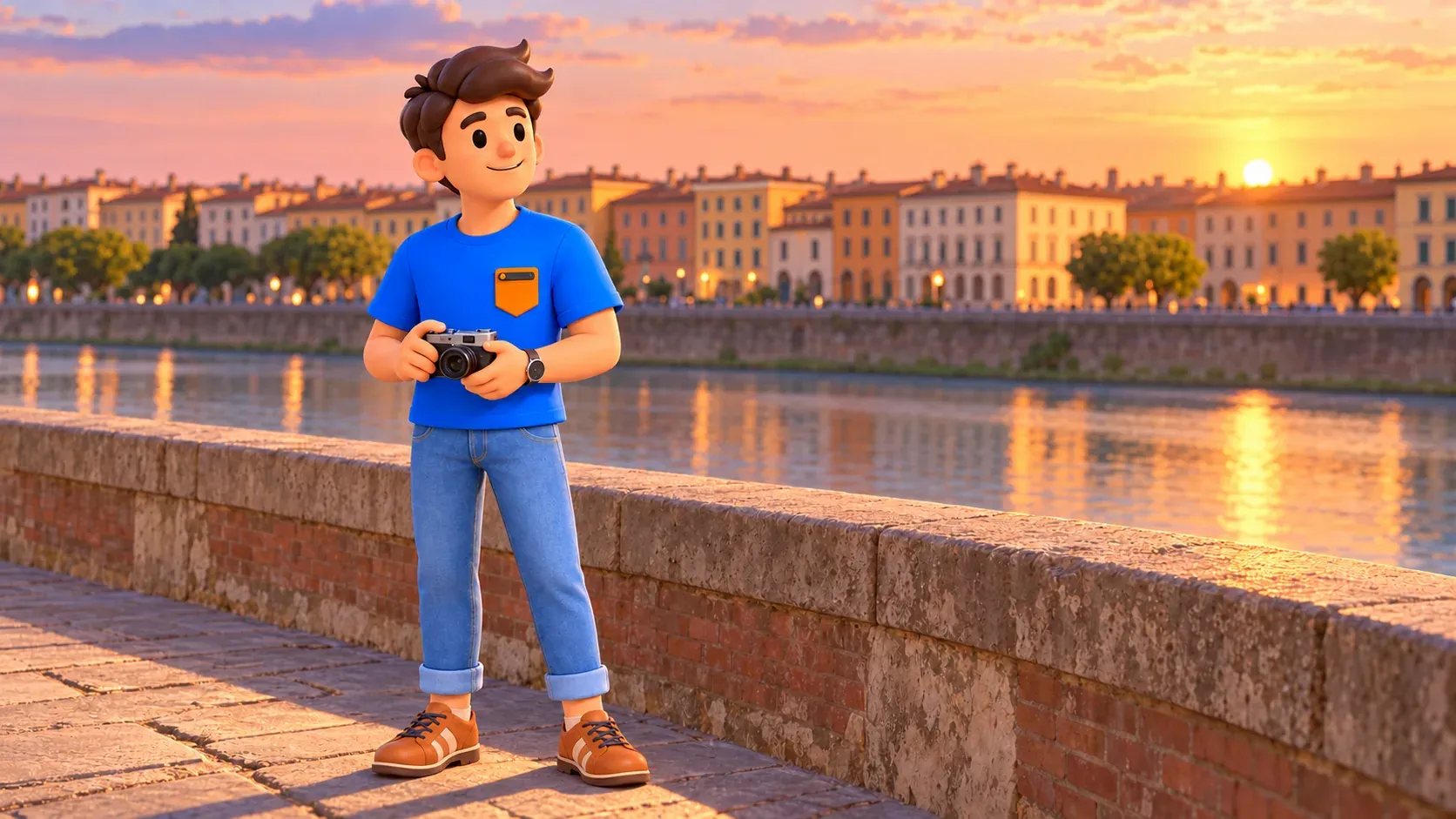
Cross Ponte Solferino to the south bank. On the bridge, the distance to the buildings changes: façades become a panorama and the river takes up more of your view. Pause on a convenient part of the pavement while leaving passage clear. A photograph need not include water, sky, every palace and your portrait at once. One clear subject often communicates the setting better.
The present bridge is not an untouched medieval structure. Its story includes wartime destruction and flooding, while the current crossing belongs to the second half of the twentieth century. Marble lions retained from an earlier bridge provide a link to its predecessor. This small detail shows that the riverfront includes the history of rebuilding as well as historic façades.
On the south side, turn east towards Ponte di Mezzo. You are now following the same river section from the opposite viewpoint. That is the point of the loop: a different impression does not require going much farther. If time is short, remove some pauses while keeping the order. Avoid adding the western citadel simply because its direction is visible along the river.
Santa Maria della Spina: notice the small scale
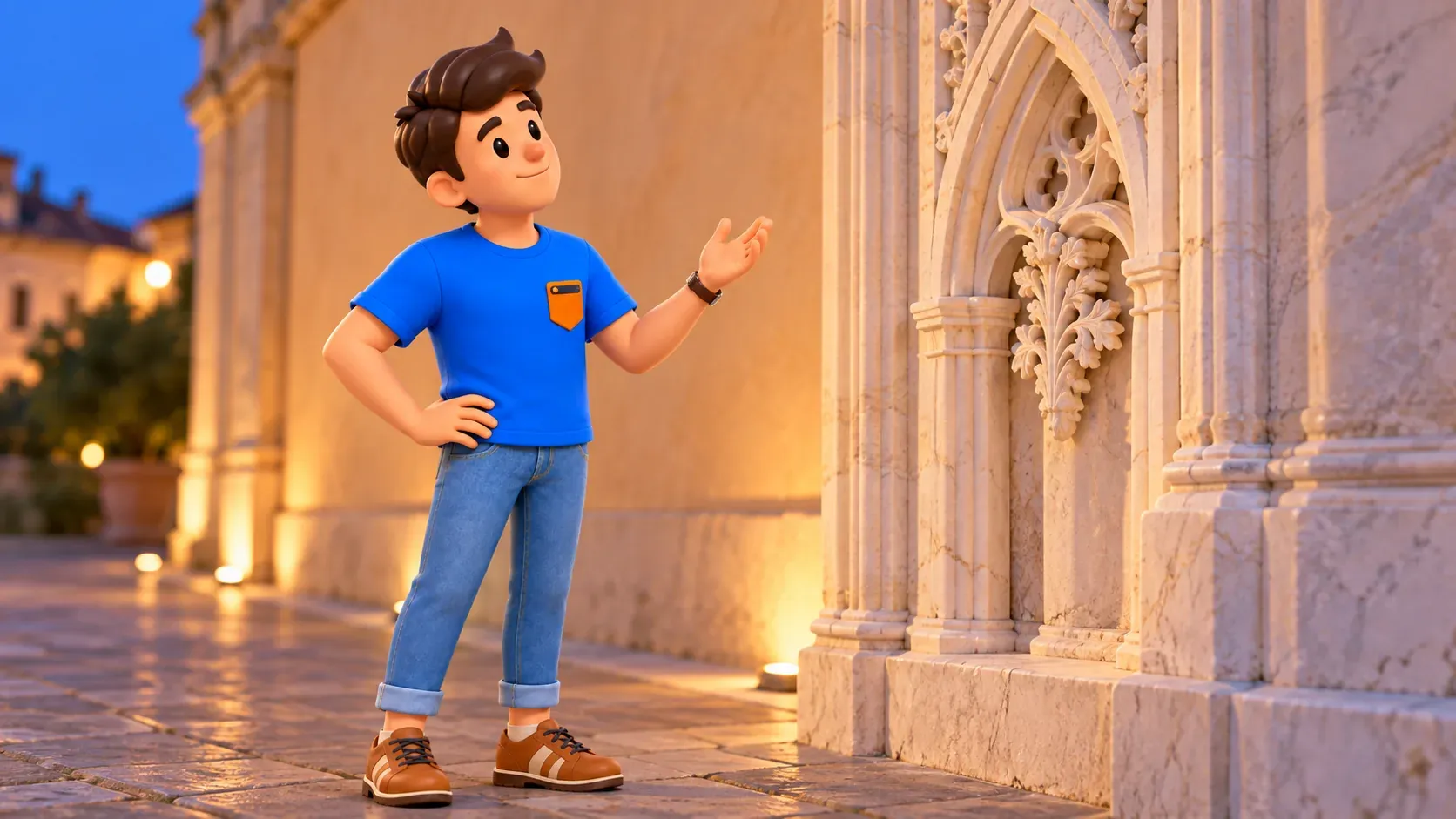
Santa Maria della Spina stands on the south bank near Solferino. Its compact form contrasts with the long palace fronts, moving your attention from panorama to intricate marble. Look at pointed features, arches and vertical lines. One or two details that remain clear in the available light are enough for an evening stop. There is no need to decode the whole sculptural programme.
The name refers to a relic of a thorn from Christ's crown. The building also expresses Pisa's close relationship with water: it was dismantled and rebuilt higher in the nineteenth century to protect it from floods. Its present position should not be treated as unchanged since the Middle Ages. This is a useful historical clue for the walk, without turning the stop into a full construction history.
The basic plan includes an exterior look. A closed door need not interrupt it, and illumination should not be assumed to make carving clearer after sunset. If Gothic detail is your priority, reach this section before darkness. Later, return your attention to larger shapes and reflections, which provide another subject without demanding close examination of small features.
Palazzo Blu and the colours of the bank
Continue east towards Palazzo Blu. Its blue façade makes it recognisable, but the colour's name is only a beginning. Cloud, remaining daylight and neighbouring walls influence what you see. Compare it with the longer row, then look across to the other bank. This stop helps show how an expressive individual building belongs to a continuous urban frontage.
Today the palace is a museum and cultural centre, with a history involving earlier urban houses and later alterations. Keep building, permanent spaces and temporary exhibition distinct: a particular display and its entry require separate checking. The exterior is enough for this evening. If an exhibition is a real priority, give it another time block in place of part of the walk, rather than adding it on top.
Try changing just one element in how you observe the river: move to another permitted spot, wait for a calmer reflection or leave less sky in a frame. There is no universal best viewpoint to discover. Comparing two views of the same place can be more rewarding. Leave yourself time to put the camera or phone away and simply watch for several minutes.
A small Kinzica detour and room for dinner
Before returning to Ponte di Mezzo, you can turn inland to Piazza Chiara Gambacorti, also known as the Pear Square. The scale changes again, from long river façades to a smaller space within the quarter. Its history includes the vanished church of San Lorenzo and market life. For tonight, it is enough to notice that an open square can preserve traces of earlier, denser building.
This is an optional addition, not the start of an extended tour of Kinzica. Choose dinner by the menu, mood and available tables. A terrace is neither a museum exhibit nor a guaranteed quiet corner. Dinner is outside the one-and-a-half-to-two-hour estimate. You can finish the walk here and choose the later journey from the restaurant according to where you are staying.
RoadMe makes it easier to connect this evening with the rest of your stay: the app builds a personal plan around your interests and available time. Use it to make the Arno walk a suitable part of your day, with less work matching a separate sightseeing list to an already busy programme.
If time is limited, save the square for another outing and continue by the bank towards Logge dei Banchi. These seventeenth-century trading loggias add another layer of central Pisa near the bridge. Look from outside as you pass, without assigning another admission. Cross Ponte di Mezzo to the north bank if you want to finish the complete loop at the start.

Adapt the walk to light and energy
The same clock time means different light in summer and winter. Choose a start in relation to sunset on your date rather than a universal instruction to arrive at a fixed evening hour. Keep some daylight for façades and Spina, then dusk for the broader river setting. Cloud need not spoil the walk, but bright postcard reflections are not part of the promise.
In rain, strong wind or uncomfortable conditions, shorten the exposed section. No photograph requires passing a barrier, descending to the water or standing in the road. Follow available public paths and local restrictions, with a simple way to stop. After a long day, the desire to complete everything can become stronger than attention to how you actually feel.
Avoid assigning every pause to the minute. Spend longer on palaces, details at Spina or conversation near the end, according to your interests. The two banks need a clear order, while enjoyment needs freedom to linger. If one building matters more, concentrate on it and shorten the rest. A few selected impressions can be a satisfying encounter with evening Pisa.
Return with a different view
At Ponte di Mezzo, look along the Arno once more. You have changed banks and distances, so the familiar panorama now contains details you have noticed. This is a natural finish. There is no need to continue to Miracles Square simply because many famous names remain elsewhere in the city.
An evening like this gives Pisa a different pace after daytime visits. A few façades, a small Gothic church and river reflections can form a complete experience without a museum programme. Leave with the sense that the Arno has earned its own place in the trip, beyond being water you crossed on the way to the tower.
For the city before your evening walk, see our one-day Pisa itinerary.


