
Petrovsky Travel Palace and park: a quieter Moscow outing
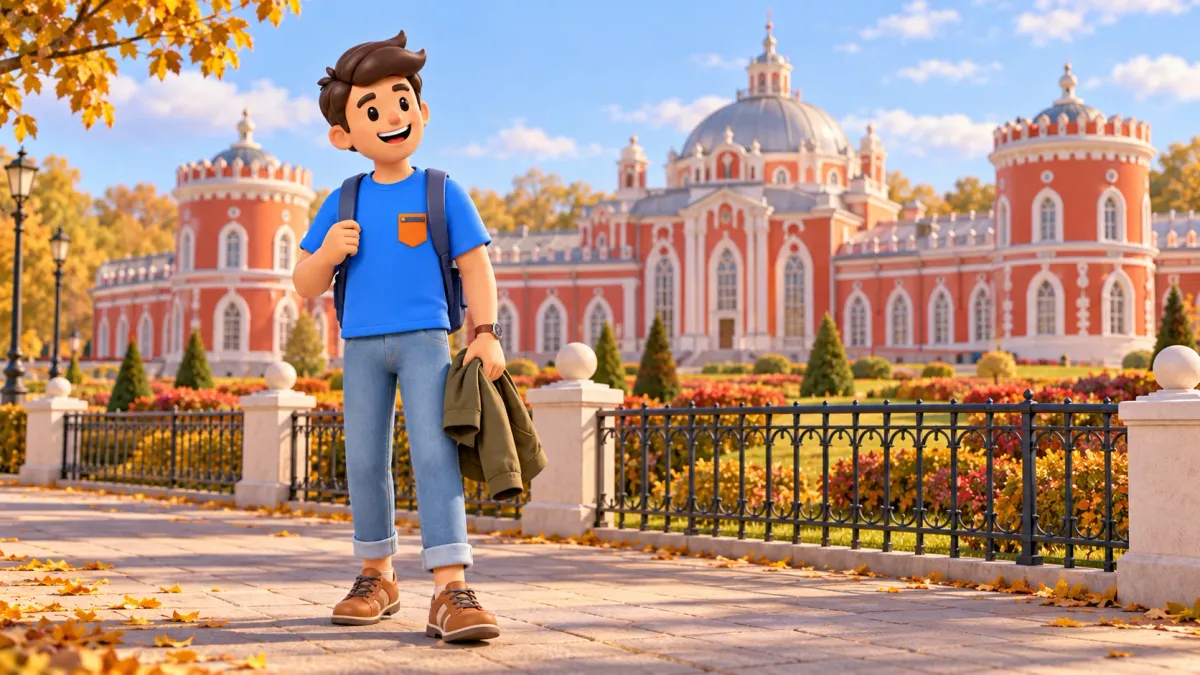
Petrovsky Travel Palace brings red masonry, white decorative details, round towers and a central dome to the edge of a major Moscow avenue. Its presence can feel surprising after the traffic of Leningradsky Prospekt. A useful visit gives the building your attention, then changes pace among the trees of neighbouring Petrovsky Park, without trying to turn the outing into an inventory of every palace room.
There are two distinct ways to plan it. An independent walk concentrates on available exterior views from public space and the park. An interior visit requires a separately arranged organised programme. A hotel entrance, an attractive courtyard photograph or an online audio tour does not establish unrestricted access to the historical interiors. Settle that distinction before deciding how the visit fits your Moscow day.
Choose the visit that suits your day
The most flexible version combines exterior observation with a manageable section of park. It works for visitors who enjoy architecture but prefer not to fix every hour in advance, and for companions who may need a shorter outing. Its interest lies in the relationship between an old ceremonial approach to Moscow, a distinctive building and the surrounding urban landscape.
Try RoadMe for a complete personal trip plan built around your interests, dates and pace. Connecting Petrovsky Palace with the rest of your Moscow stay makes the sequence more convenient and efficient, leaving room for the journey and a relaxed park walk.
For the interior, arrange a specific programme. The palace hotel’s official excursion page directs visitors to the Museum of Moscow’s excursion bureau. The museum’s rules state that visits to Petrovsky Travel Palace take place in organised groups, with admission against a visitor list and an identity document. The details recorded on that list must match the document presented.
Check the particular programme’s date, language, age conditions, document requirements and scope. Do not interpret museum ticket-office hours as the palace’s opening hours, or assume that advertised tours mean walk-in admission every day. A valid booking concerns its own session and arrangements. If you cannot confirm them, keep the independent exterior walk as a complete alternative rather than hoping for an improvised entry.
Understand why a palace stands beside this road
A travelling palace provided a stop before a ceremonial arrival in Moscow from the direction of St Petersburg. This relationship to the road explains the building’s location better than an expectation of a secluded royal garden inside today’s city centre. The avenue is part of the story, even though contemporary traffic makes the setting very different from an eighteenth-century approach.
The project is associated with architect Matvey Kazakov, and construction began in 1776 on Catherine II’s orders. For a first visit, those facts provide enough historical structure. Allow time to see how individual volumes make a coherent silhouette before adding an elaborate chronology. The architecture becomes easier to remember when a historical fact is attached to something you have actually observed.
The name should not be read as evidence that this was Peter the Great’s palace. The land was associated with the Vysoko-Petrovsky Monastery. When searching for programmes, distinguish this Moscow site from similarly named Russian parks and palaces. The useful identifying address is 40 Leningradsky Prospekt, rather than the word Petrovsky on its own.
Arrive with a clear pedestrian approach
Dynamo and Petrovsky Park Metro stations are useful arrival points. Choose an operating exit and pedestrian approach using the current city map and local signs. A station’s name does not mean every exit leads directly to the side of the palace that you need. Establish the relationship between the avenue, park and enclosure before setting off towards your first viewing position.
Leningradsky Prospekt remains a major traffic corridor. Use designated crossings instead of trying to shorten the journey through moving traffic for a better angle. If you have booked a tour, follow the meeting instructions in its confirmation. The meeting point may differ from the facade most often shown in photographs or from the entrance used by hotel guests.
Leave a margin between arriving by Metro and meeting the group. Finding the correct approach and preparing a document take time as well as walking. No exact transfer time is presented here as a measured journey. The same margin improves an independent visit: you can look around without starting with a search for one compulsory photograph or an immediate deadline elsewhere.
Look at the architecture at two scales
Begin with the overall composition from an available public position. Notice the contrast of red and white, the rounded towers and the central domed volume. You do not need to fit the entire ensemble into a single image. A selected section may communicate its character better than a very wide photograph crowded with railings, branches and passing people.
Then choose a repeated detail: white decoration against red masonry, the shape of an opening or the meeting of a straight wall and a curved tower. Compare two visible fragments instead of trying to name every architectural term. The palace brings several traditions together; seeing that mixture is more useful than repeating a complicated style label without understanding what it describes.
Respect the enclosure and current access arrangements. Do not test a service gate, follow another visitor through a controlled entrance or treat hotel facilities as a way around excursion rules. An exterior introduction can be made from public space. If present conditions allow only a partial view, concentrate on that part rather than promising yourself an uninterrupted circuit around every wall.

Let the park change the pace
After looking at the palace, move to available public paths in Petrovsky Park. There is no need to trace every avenue or complete a compulsory loop. Choose a comfortable direction, notice the changing relationship between trees and buildings and stop where conditions suit you. The park offers a visual pause after the density of decorative architecture.
The park plan was approved in 1827, and its history is associated with architect Adam Menelaws. This belongs to a different phase from the beginning of the palace’s construction. Avoid imagining today’s landscape as an unchanged eighteenth-century setting. A historical plan helps explain the place, while present paths, planting, boundaries and neighbouring buildings reflect a much longer urban life.
One small observational task is enough. Consider where the palace remains a visual reference and where the trees make the park feel like a separate space. Complete quiet should not be assumed beside a large city road. Choose a calmer section according to actual conditions, and finish early if necessary without treating a shorter walk as a failed itinerary.

Check the details of an organised interior visit
Start with the programme’s name and organiser. A general architectural tour, a children’s activity and a special themed event may have different arrangements. One programme’s age label does not describe every palace visit. Its duration, language and available rooms cannot automatically be transferred to another booking. Read the description attached to the specific session you intend to attend.
Confirm what information is needed for the visitor list and which identity document must be shown. If travelling with a foreign passport or with a child, ask the organiser about the conditions that apply to your booking. Do not substitute assumptions drawn from ordinary museum admission. This is an individually agreed access arrangement, where a mistake may not be repairable at the entrance.
Save the meeting instructions separately from the ticket itself. If delayed, contact the organiser rather than expecting to find and join the group inside. Hotel activities and the palace complex have their own working arrangements. A room reservation, restaurant visit or another event on the grounds does not automatically provide a museum tour of the historical interiors.

Adapt the outing to weather and company
In dry weather, you can spend longer comparing facade details and walking among trees. After rain, footwear and the actual state of paths become more important. In winter, shorten stationary stops beside the enclosure and decide where the outdoor section will end. A warm break needs a separately available venue; the palace interior should not be assumed to be a walk-in shelter.
With children, try a simple comparison: round and rectangular volumes, red and white, then a change of scene among trees. There is no benefit in insisting on every detail after interest fades. Older companions may prefer more time for the approach and a rest. For limited mobility, ask about the actual surfaces, steps and tour conditions rather than assuming that a park guarantees an easy route throughout.
RoadMe can build a complete personal trip plan around your interests, dates and pace, connecting the palace with other parts of Moscow. Try the app to choose a useful sequence in advance and leave room for travel, rest and changing weather.
Finish with an easy way back
For the independent version, roughly ninety minutes to two hours can provide room for the approach, exterior observation and a relaxed section of park. This is an editorial estimate, not a timed circuit. An organised interior programme adds its own duration and conditions. If the interior is your priority, secure that session first and make the park the flexible part of the day.
There is no need to attach several distant palaces to this outing. Petrovsky already gives a coherent subject: a former approach to the city, Kazakov’s architecture and a shift of rhythm among trees. Return to a convenient operating entrance at Dynamo or Petrovsky Park using a clear pedestrian route, with enough energy left for the final part of the journey.
Before leaving, remember three observations rather than a room count: how red and white organise the silhouette, how a round tower differs from the central volume and how the park changes the setting. Those impressions remain worthwhile without an interior tour. If you did join one, they connect the rooms to the city outside and give the visit a clear beginning and ending.


