
Paris Sculpture Day: Rodin, Bourdelle or Zadkine
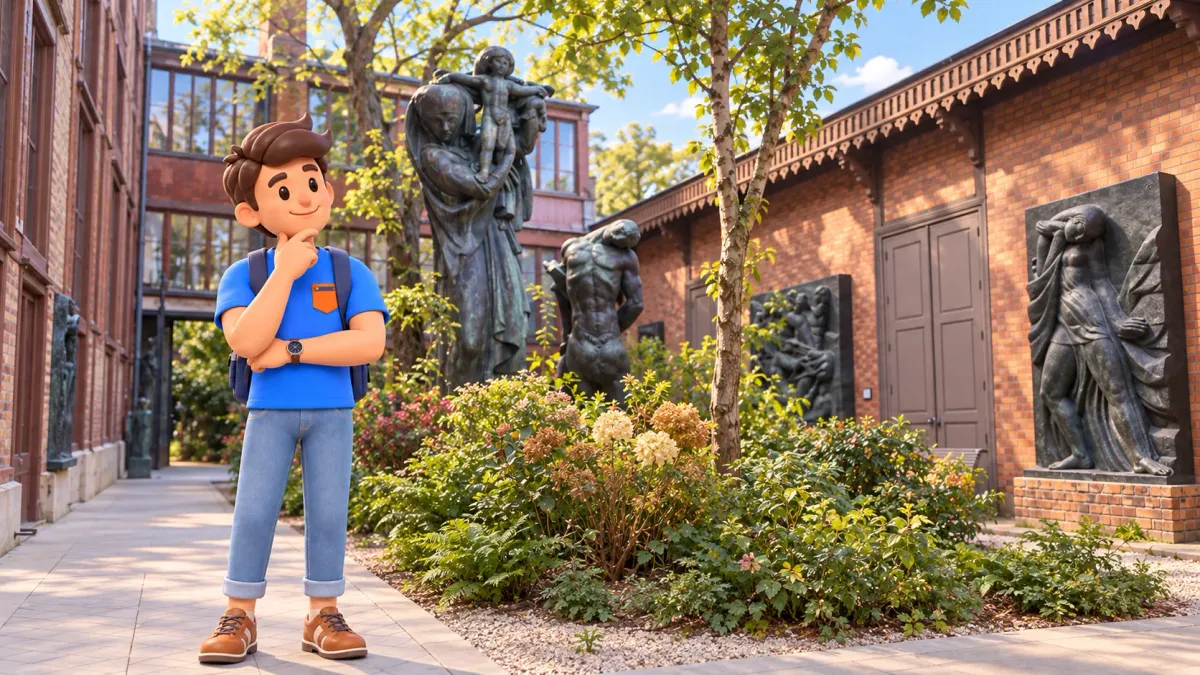
Choose Rodin for a sculpture garden and an eighteenth-century mansion, Bourdelle for the working environment of a sculptor, or Zadkine for a smaller house, studio and garden. These are different ways to spend time with art. One museum and a neighbourhood walk can make a satisfying outing; two substantial visits require a full day.
The practical choice also depends on your date. As checked on 14 October 2026, Musée Zadkine announces closure through 19 October inclusive, with a new free collection display planned from 20 October. Confirm that reopening before choosing it. Rodin and Bourdelle offer the basis for the separate programmes below, subject to their opening days and current visitor conditions.
Choose the experience you want to have
Try RoadMe for a complete personal trip plan shaped around your interests, dates, budget and comfortable pace. The app makes it much more convenient and effective to fit a sculpture visit into a well-planned Paris day.
At Rodin, the setting encourages movement between rooms and open air. A familiar figure can look different against foliage, stone architecture or the sky. Choose it if famous works and a substantial garden are what draw you to sculpture, while leaving enough daylight for the outdoor part.
Bourdelle makes the practical life of an artist especially tangible. The preserved studio, large plaster forms and garden sculptures invite questions about scale and process. It suits someone curious about how a work develops, or who enjoys museums where the buildings contribute directly to the subject.
Zadkine offers greater intimacy. Its house and ateliers belong to a smaller setting, shared historically by the sculptor and the painter Valentine Prax. After confirmed reopening, it is a good choice for a shorter visit centred on materials and changing forms, rather than a long succession of monumental galleries.
Rodin: give the mansion and garden time
Hôtel Biron is an eighteenth-century mansion that Rodin chose himself. He rented rooms here in 1908; his donation to the French state in 1916 enabled the museum that opened on 4 August 1919. That history explains the close relationship between artist, collection and place without making the building a preserved production studio of the Bourdelle kind.
Inside, look for the difference between a preparatory form and a more developed sculpture. Clay, plaster, bronze and marble affect the impression of a body or gesture. Read the material information after an initial look, then ask what the surface adds: softness, weight, a sharp contour or a suggestion of movement.
Keep part of the visit for the garden. The Thinker and The Gates of Hell are useful starting points, while the three-hectare setting provides different backgrounds for observing sculpture. Choose a few works and move between permitted viewpoints. Individual objects can be lent elsewhere, so leave room for what is actually on display.
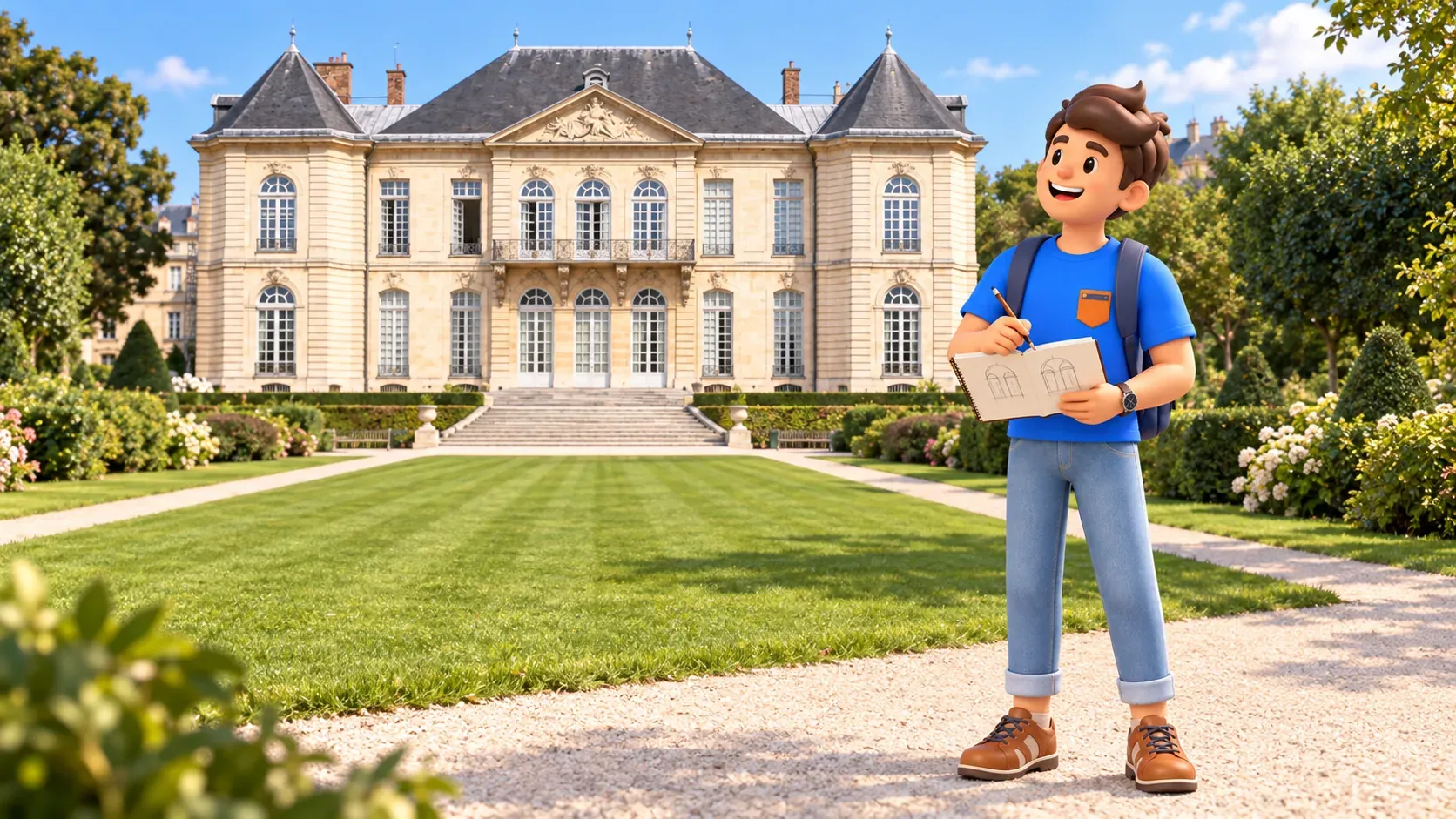
The garden-facing façade of Hôtel Biron is worth a short pause too. Notice its central emphasis, tall windows and relationship with the planted spaces. This is an opportunity to compare the scale of sculpture with the surrounding architecture. Flowers, clear skies and an empty foreground are seasonal possibilities, rather than requirements for enjoying the visit.
Allow 150 minutes for selected rooms and garden. With 15 minutes for arrival, a 45-minute meal after leaving and a 30-minute public-street stroll around Rue de Varenne and Boulevard des Invalides, the outing takes about four hours. Giving the museum 180 minutes instead extends it to four and a half hours.
Ordinary admission is paid and includes the Paris museum and sculpture garden; the garden is not a free municipal park. Use 77 Rue de Varenne for the usual entrance. Check current garden barriers and daylight before visiting. Every exit is final, so finish both indoor and outdoor sections before going elsewhere for lunch.
Bourdelle: understand the work behind the sculpture
Bourdelle settled in the studio in 1885 and worked here until 1929. The museum opened in 1949. The preserved sculpture studio provides a direct connection with that working life: tall space accommodates large forms, while north-facing glazing supplies relatively even light. The room helps explain why sculpture required practical arrangements as well as inspiration.
Look at the relationship between a figure and its supporting volume. A small study and a monumental form invite different viewing distances; neither needs to be treated simply as a smaller or larger version of the same experience. Use the labels to identify material and purpose, then give yourself time to notice balance and tension.
The museum has several architectural layers. Historic ateliers meet Henri Gautruche’s 1961 plaster hall and Christian de Portzamparc’s 1992 extension. Three gardens connect the buildings. Moving through these settings can reveal how the scale of a work changes when its background shifts from an enclosed room to brickwork and greenery.
Save a little of the garden time for looking rather than photographing. Choose one sculpture and compare its outline from two permitted positions, without stepping into planting or touching the object. A preserved atelier is a museum space: a live demonstration or creative workshop requires its own programme and booking.
Our single-museum version takes three hours: ten minutes for arrival, 110 for the permanent collection, studio and gardens, thirty for a break and thirty for public streets towards Montparnasse. Follow Rue Antoine-Bourdelle towards Avenue du Maine and Boulevard du Montparnasse. No private artist residence or second museum is included.
The postal address is 18 Rue Antoine-Bourdelle, but the current reception-works notice directs visitors through the green gate at number 16. The permanent collection is free for individual visitors without reservation, within capacity. Temporary exhibitions are separately paid, and the gardens follow museum hours.
L’étoffe de l’artiste, from 23 September 2026 to 24 January 2027, explores artists’ clothing and identity through garments, portraits, photographs and other works. Choose it deliberately if that subject appeals. It needs separate admission and additional time; it is not part of the 110-minute permanent-collection allowance.
Zadkine: a smaller visit after reopening
The house, ateliers and garden at 100 bis Rue d’Assas were the setting for Zadkine and Prax’s lives and work from 1928 to 1967. Prax’s legacy enabled the museum that opened in 1982. Her painting deserves attention as an independent artistic career, alongside the sculpture for which the address is better known.
Zadkine explored direct carving and a varied treatment of materials. Instead of assigning every work to one fixed style, choose a figure and consider the relationship between solid form and empty space. Then compare it with another work. A compact museum can reward sustained attention without requiring a large selection.
The new display announced for 20 October includes recent acquisitions and Prax’s work. While the closure through 19 October continues, the garden cannot serve as an accessible substitute for the house. Reconfirm actual opening before travelling, rather than treating the announcement as a guarantee.
Once open, allow ten minutes for the approach and passage from Rue d’Assas, 75 for the selected museum visit, thirty for a break outside and 35 for nearby public Assas and Vavin streets: about two and a half hours. A Luxembourg Garden visit would need its own access check and time allowance.
Two museums: a full Rodin–Bourdelle day
If you want a comparison, choose Rodin and Bourdelle and give them a whole day. The example below takes 390 minutes, or six and a half hours, from 10am to 4.30pm. Both normally open Tuesday to Sunday, apart from listed holiday closures. These are planning estimates, including a meal and entrance checks, rather than queue forecasts.
| Time | Programme | Minutes |
|---|---|---|
| 10:00–10:15 | Arrival and checks at Rodin | 15 |
| 10:15–12:45 | Selected rooms and sculpture garden | 150 |
| 12:45–13:30 | Meal after final exit | 45 |
| 13:30–14:10 | Public-street walk to Bourdelle | 40 |
| 14:10–14:20 | Entry checks at the current gate | 10 |
| 14:20–16:10 | Permanent collection, studio and gardens | 110 |
| 16:10–16:30 | Pause and reserve | 20 |
After leaving Rodin through the visitor entrance, go west along Rue de Varenne, then south on Boulevard des Invalides. Cross Rue de Sèvres at Duroc and continue along Boulevard du Montparnasse towards Avenue du Maine. Turn into Rue Antoine-Bourdelle for the current number-16 gate. This public-street connection is about two kilometres; forty minutes allows more than the modelled walking time for crossings and orientation.
Keep Bourdelle’s temporary exhibition for a separate or redesigned programme. Adding a 75-minute exhibition would extend the outing to 5.45pm and reduce the practical margin before Bourdelle’s rooms close. If you want the show, rebuild the afternoon around its admission and opening conditions. A third museum is also unnecessary. If Rodin holds your attention longer, finish there and enjoy the neighbourhood afterwards.
For a different pairing after Zadkine reopens, our Montparnasse half-day walk already explains Bourdelle, the cemetery and Zadkine. Its shorter introductory visits offer another approach; do not append that whole route to this day.
Opening times and practical choices
Rodin normally opens Tuesday to Sunday, 10am–6.30pm. Last admission is 5.45pm, the ticket office closes at 5.30pm and room clearance starts at 6.15pm. The garden closes at dusk, so visit it earlier in the colder months. The first Sunday is free from October through March, rather than throughout the year.
Bourdelle normally opens Tuesday to Sunday, 10am–6pm, with last entry at 5.15pm and rooms closing at 5.45pm. After its actual reopening, Zadkine’s regular hours are Tuesday to Sunday, 10am–6pm, with last entry at 5.30pm. Its permanent collection is free for individual visitors without booking.
All three close on Mondays, 1 January, 1 May and 25 December. Check your selected date, activity and any exceptional conditions before departure. A late admission leaves less time than the closing hour suggests. Groups and guided programmes have their own arrangements.
Leave suitcases and bulky luggage elsewhere; Zadkine has no cloakroom for bulky items. Take a small bag and allow time for checks. For mobility needs, confirm the appropriate entrance and assistance with the museum; accessibility within a museum does not establish a completely step-free street or transport journey.
Leave space for the art you remember
Pick one question for the day: how a surface carries a gesture, how a studio supports work, or how a garden changes scale. That gives the outing a direction while leaving room for an unexpected favourite. Shorten the subsequent walk if you spend longer with a sculpture.
Use RoadMe to build the full personal plan for your stay around sculpture, other interests, dates, budget and pace. Try the app for a more convenient and effective way to organise the whole trip, including time to eat and rest.
Choose the museum that suits you, confirm its current conditions, then protect enough time to look. One satisfying visit is a complete Paris sculpture outing.


