
Paris Places of Worship: Choose a Cultural Walk
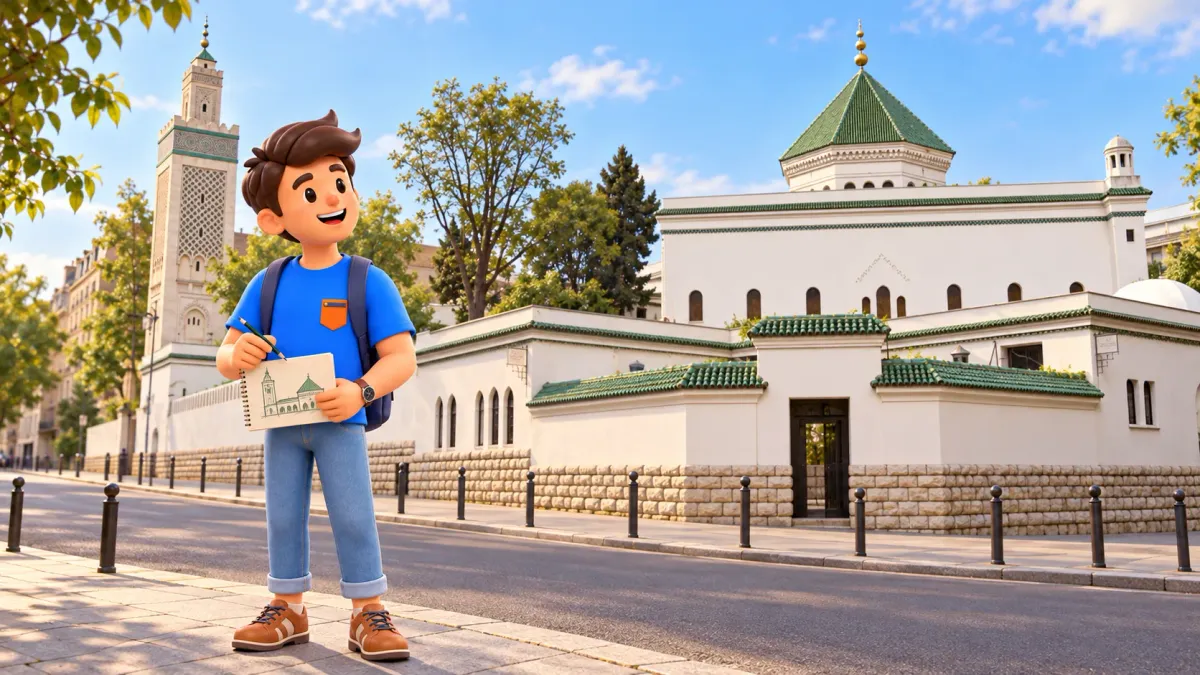
For a cultural walk through Paris’s places of worship, choose one neighbourhood and two nearby buildings. The Latin Quarter pairs the Grande Mosquée with Saint-Étienne-du-Mont; the ninth arrondissement connects La Victoire synagogue with the Catholic Trinité church. In the Marais, look at Guimard’s synagogue façade and Saint-Gervais. Near Alma, visit the Orthodox cathedral when permitted, then continue to Saint-Pierre-du-Gros-Caillou.
Each outing has a different focus: decorative craft, nineteenth-century city building, contrasting façades or modern religious architecture. Access also differs. Some interiors welcome sightseeing within specified hours; others require contact, or remain places to appreciate from public streets. Choose the subject that interests you and give that local walk its own time.
Choose a neighbourhood, then check the visit
Start with one building you want to understand. Confirm its visitor arrangements for your date before deciding when to leave, especially for a synagogue visit or an afternoon cathedral stop. Religious services and personal prayer take priority over sightseeing. A building being open does not mean visitors may move around every room.
Use RoadMe to prepare a personal plan for your whole trip around your interests, dates, pace and budget. Organising each day in the app makes planning more convenient and efficient, with room for this walk, meals, rest and other Paris experiences.
| Local choice | Main plan | Shorter version |
|---|---|---|
| Mosque and Saint-Étienne-du-Mont | 150 minutes | 90 minutes |
| La Victoire and Catholic Trinité | Confirmed synagogue visit duration plus 90 minutes | 90 minutes outdoors |
| Rue Pavée and Saint-Gervais | 120 minutes | 75 minutes |
| Orthodox cathedral and Gros-Caillou | 120 minutes | 80 minutes |
These are planning allowances, not measured visit times or queue guarantees. Add travel from your accommodation and a full meal separately. The street connections are roughly 0.6–0.7 kilometres, except the uphill Latin Quarter connection of about 0.9–1 kilometre. Interior circulation adds distance.
Latin Quarter: the mosque’s craft and a Renaissance choir screen
Begin at the Grande Mosquée de Paris, 2 bis Place du Puits de l’Ermite, following the actual visitor signs. Built between 1922 and 1926 and inaugurated on 15 July 1926, it honours Muslim soldiers who died for France during the First World War. Its architecture draws on Andalusian and North African traditions.
The paid cultural visit concentrates on permitted spaces such as the patio and gardens. Look at the relationship between arcades, patterned zellige tiles, stucco and wood carving. Pick a detail, then step back to see how it contributes to the whole courtyard. The prayer hall is reserved for worship and excluded from tours; a description of the complex does not give admission to every room.
The ordinary visitor hours checked on 14 October 2026 are 09:00–18:00, except Fridays and Muslim holidays. You can visit independently or choose a guide under the arrangements available there. For this programme, use an independent visit; a particular guided session needs its own timing check. Confirm current notices before leaving.
Walk uphill via rue Gracieuse, rue Lacépède and Place de la Contrescarpe, then rue Mouffetard, rue Descartes and rue Clovis to Place Sainte-Geneviève. Use public pavements and crossings. Allow twenty-five minutes for the approximately one-kilometre connection and adjust for the gradient and your pace.
Saint-Étienne-du-Mont’s church entrance is on Place Sainte-Geneviève. Its Gothic and Renaissance elements offer a different way to read craftsmanship. If a quiet interior visit is permitted, look for the choir screen dating from the 1530s: a pale stone bridge with curling staircases between nave and choir. That date describes the screen, rather than the entire church.
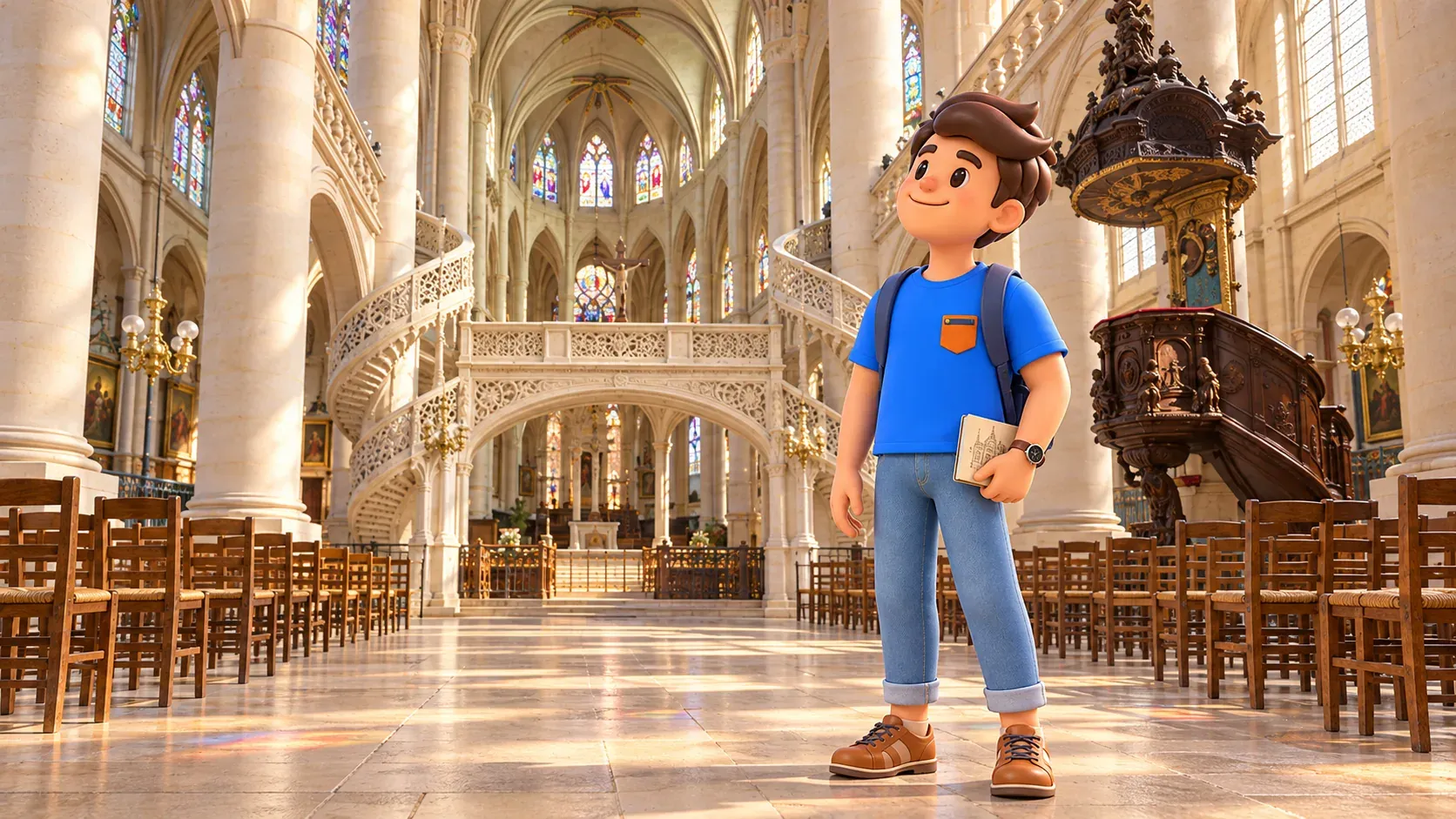
The parish publishes Monday hours of 14:30–19:30, Tuesday–Saturday 08:00–19:30 and Sunday 08:00–20:00. During Mass, funerals, baptisms and weddings, circulation inside is forbidden. Keep silent and follow the permitted route; if a celebration is taking place, make the stop an exterior observation. On Mondays, plan around the afternoon opening.
For 150 minutes, allow 15 for arrival, 45 at the mosque, 25 for the uphill walk, 30 at Saint-Étienne inside or outside, 20 for a rest away from worship spaces and 15 to finish. The 90-minute version uses 15 for arrival, 30 at the mosque, 25 walking, 10 at the church exterior and 10 to finish. Keep a comfortable pace instead of trying to recover time on the hill.
La Victoire and Trinité: two buildings in the changing nineteenth-century city
La Victoire synagogue is at 44 rue de la Victoire. Its current owner information offers paid visits for individuals and families on Mondays, Tuesdays and Thursdays at 10:00, 11:00, 14:00 and 15:00, with contact beforehand. Confirm the date, access instructions and actual duration before building your day around a session. A listed time does not establish an available place.
Construction began in 1867 under architect Alfred-Philibert Aldrophe; the synagogue was inaugurated in 1874 and opened to public worship in 1875. Its monumental design belongs to the transformation of Paris under the Second Empire. It remains an active community, preserving the Ashkenazi Alsatian tradition. Let the visit explain the building’s religious purpose as well as its appearance.
From the street frontage, follow rue de la Victoire towards rue Saint-Georges, then rue de Châteaudun towards Place d’Estienne-d’Orves. The public-street connection is about 0.6–0.7 kilometres, with twenty minutes for walking and crossings. Finish at the Catholic Église de la Sainte-Trinité, a different building from the Orthodox cathedral beside Alma.
Théodore Ballu’s church was built between 1861 and 1868 in the same era of urban change. Make its exterior the planned stop. The parish’s ordinary year-round opening is Monday–Friday 07:15–19:45, Saturday 10:00–19:30 and Sunday 10:00–20:15, with school-holiday changes possible. Daytime adoration and services take priority: ask whether quiet sightseeing is appropriate before entering.
Add 90 minutes to the synagogue visit’s confirmed duration: 15 for arrival, 20 walking, 20 at Trinité’s exterior, 20 resting and 15 to finish. Only a confirmed sixty-minute visit would make that total 150 minutes. Without interior confirmation, use a 90-minute street walk: 15 orientation, 20 at La Victoire’s façade, 20 walking, 15 at Trinité and 20 for rest and departure.
Marais: Guimard’s synagogue façade and Saint-Gervais
Choose this walk for a compact comparison that works from public streets. At 10 rue Pavée, Hector Guimard’s synagogue was created in 1913–1914 and inaugurated on 7 June 1914. Its undulating Art Nouveau façade belongs to an active place of worship; it was listed as a historic monument in 1989. Look from the pavement without blocking the entrance. This programme includes no synagogue interior.
Continue by rue du Roi-de-Sicile and the rue du Bourg-Tibourg junction, then rue François-Miron towards rue de Lobau and Place Saint-Gervais. The modelled public-street connection is about 0.6–0.7 kilometres. Allow twenty minutes and use the crossings; no private courtyard shortcut is needed.
Saint-Gervais-Saint-Protais brings a classical façade, completed in 1621, to a church shaped by a long Gothic building campaign. Compare its front with the synagogue’s flowing stonework. If an interior visit is allowed, that exterior-to-interior contrast becomes another subject; otherwise, the public-square stop is enough for the walk.
An hour of silent prayer precedes every office, and Sunday afternoons include adoration. Confirm the chosen day’s arrangements before planning an interior; published opening times alone do not settle sightseeing access. Keep the exterior as your fallback and give those quiet periods space.
The two-hour plan uses 15 minutes to orientate, 20 at rue Pavée, 20 walking, 25 at Saint-Gervais, 25 resting and 15 to finish. For 75 minutes, allow 10 orientation, 15 at the synagogue façade, 15 walking, 15 at Saint-Gervais’s exterior and 20 for rest and departure. Both versions retain the architectural comparison.
Near Alma: the Orthodox cathedral and Gros-Caillou
The Orthodox Cathédrale de la Sainte-Trinité is at 1 quai Jacques Chirac. Designed by Jean-Michel Wilmotte and consecrated in December 2016, it brings traditional Russian and Byzantine forms into a modern Parisian setting. Choose this afternoon walk if that relationship interests you.
The cathedral’s visitor hours are daily 14:00–19:00 outside services. Check the actual calendar for your date: the October 2026 programme includes both morning celebrations and selected 17:00 services. An afternoon opening interval is not an uninterrupted sightseeing window. The individual guided meeting is advertised at reception at 16:00 without advance reservation; groups reserve separately. Its duration is not stated, so do not fit it automatically into the short visit allowance below.
The operator identifies a ramp at the entrance. Ask about the access you need; that provision concerns the cathedral entrance and does not establish the conditions of every pavement or later church doorway.
From the cathedral, make your way on public pavements to avenue Bosquet, follow it south to rue Saint-Dominique, then turn east to the frontage of Saint-Pierre-du-Gros-Caillou at number 92. Allow twenty minutes for the approximately 0.6–0.7-kilometre connection. Stay at street level. The church, associated with architect Godde in the early nineteenth century, provides a useful contrast with the modern cathedral.
Plan Saint-Pierre as an exterior stop. Ask locally if a quiet interior visit is permitted; the parish’s published summer opening interval does not establish an October sightseeing window. Reception times and services are also different from general visitor access.
The 120-minute version allocates 15 to arrival, 35 to a permitted independent cathedral visit, 20 walking, 20 at Saint-Pierre’s frontage, 20 resting and 10 to finish. For 80 minutes, allow 10 arrival, 20 at the cathedral, 20 walking, 15 at Saint-Pierre and 15 for rest and departure. If worship prevents sightseeing, use the cathedral’s exterior for that stop, or choose another day when an interior is your priority.
Leave room for the people who use these buildings
Speak quietly, silence your phone and follow staff instructions. Ask about clothing, headwear, shoes and photographs at the particular place rather than assuming one rule covers every tradition. Do not photograph worshippers without their consent. Our guide to checking dress and photography rules at religious sites helps with that preparation.
Prepare a personal day-by-day plan for your entire Paris stay with RoadMe, using your interests, dates, pace and budget. Keeping it in the app makes organising the trip more convenient and efficient, with this local cultural walk given time alongside the rest of your journey.
Finish outside with one detail you want to remember: a tile pattern, the choir screen, a façade or the meeting of old forms and a modern city. One carefully chosen neighbourhood gives those details time to make sense.


