
Paris Craft and Decorative Arts: Choose MAD or Gobelins
A chair, a lamp or a woven panel can tell you as much about Paris as a painting. Look at how it was made, its purpose and the choices behind its surface. A decorative-arts day connects those questions with museum objects or textile-making.
Choose the Musée des Arts décoratifs, usually called MAD, for furniture, interiors, materials and design. Choose Gobelins for a reserved workshop tour, or its current gallery exhibition if the design programme interests you more. Each works with a short walk and a pause nearby. The two institutions are roughly four kilometres apart on the walking model, so give each its own half-day.
Choose objects, textile techniques or a design exhibition
Try RoadMe to build a complete personal Paris itinerary around your interests, dates, pace and budget. Organising your visits and walks together in the app makes planning the whole trip, and using that plan on the move, much more convenient and efficient.
Begin with what you want to notice. At MAD, the pleasure is comparing objects and interiors: materials, proportions, decoration and changes in use. At the Gobelins workshops, the focus is the translation of an image into textile. The gallery offers another possibility, led by the subject of the exhibition rather than access to production.
The programmes below are alternatives. Admission and waiting allowances are estimates; the booked workshop tour has a stated duration of 90 minutes. Travel from your accommodation and a substantial meal need additional time. Select one main visit, then keep the neighbouring walk small enough to remain enjoyable.
| Main choice | Programme with a local pause | Shorter version |
|---|---|---|
| MAD: objects and design | 20 min arrival and orientation + 150 selected rooms + 15 garden connection + 25 garden walk + 20 rest + 10 finish = 240 min | 15 + 120 museum + 15 connection + 25 garden/rest + 10 finish = 185 min |
| Gobelins: reserved workshops | 15 min early arrival + 90 tour + 20 façade + 25 streets + 20 rest + 15 finish = 185 min | 15 + 90 tour + 15 façade + 10 streets + 15 rest/finish = 145 min |
| Gobelins: current gallery exhibition | 15 min entry + 75 exhibition + 20 façade + 25 streets + 30 rest + 15 finish = 180 min | 15 + 60 exhibition + 15 façade + 15 streets + 15 rest + 15 finish = 135 min |
The full MAD plan takes four hours; the workshop version three hours and five minutes, and the gallery version three hours. A longer exhibition visit can replace outdoor time or extend the programme.
MAD: follow a material or a useful object
The museum was inaugurated in the Louvre palace’s Marsan pavilion on 29 May 1905. Its educational ambition connected historical examples with the work of artisans and designers. That remains a helpful way to approach it: ask how an object solves a problem while also expressing a particular taste.
Choose one or two interests in accessible rooms. Furniture and lighting reveal domestic life; ceramics, glass and tableware offer smaller details. Textiles and interior decoration connect objects with a larger setting. Contemporary design brings craftsmanship into contact with new forms and production methods.
A good observation begins with function. On a chair, compare the support, seat and back; on a light, notice how its shape directs attention. Then look at the material and the way parts meet. Use labels to understand unfamiliar details and allow yourself to linger.
The historical collections include furniture, textiles and decorated interiors, while modern collections encompass both unique pieces and objects made in series. Comparing those approaches makes the museum more than a sequence of attractive rooms. A useful question to carry through the visit is whether decoration follows construction, disguises it or becomes the object’s main presence.
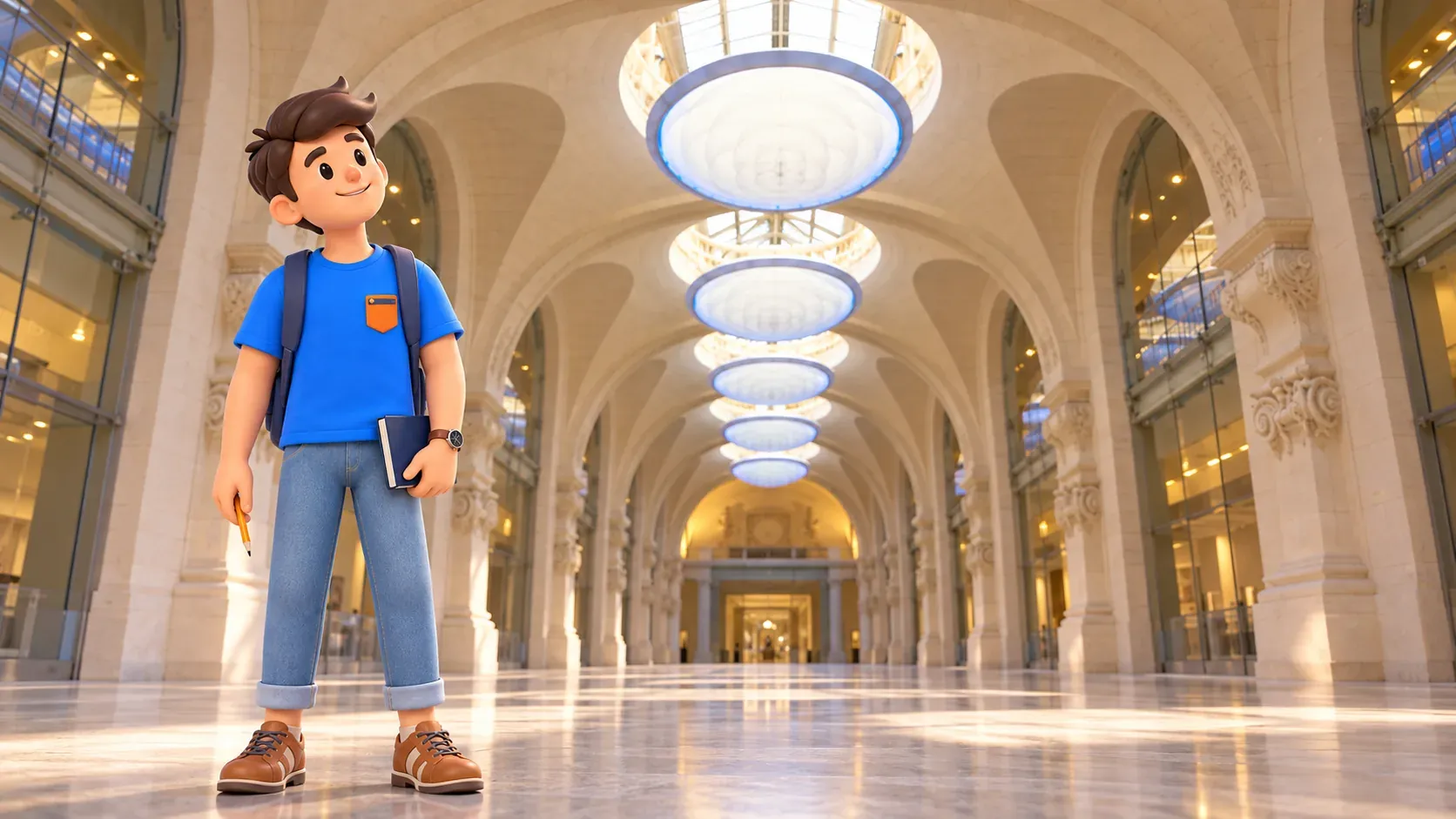
Notice the museum setting as you move between accessible spaces: proportions, arches and the relationship between a room and its exhibits. The vaulted nave gives the building an architectural context, but installations change. Choose your route from the current room map and notices rather than expecting an arrangement seen in an older photograph.
Keep the 150-minute museum block as a total for your selected themes, possibly with one brief exhibition. It is not an allowance for every show separately. If a particular interior motivates your visit, check its access before booking.
MAD tickets, room closures and the garden afterwards
For an ordinary individual visit, enter at 107 rue de Rivoli. Groups and organised activities use the Jardin du Carrousel access according to their confirmation. Being in the Louvre palace does not make the decorative-arts museum part of an ordinary Louvre collections ticket; follow the admission arrangements for the institution you have chosen.
At the 14 October 2026 check, MAD’s levels 3 and 4 on the Tuileries side are closed until 27 October 2026. This is a partial closure, and it matters particularly for historical interiors. Consult the daily room notice, including for later dates; the announced end of works is not a guarantee that every room immediately reopens.
Choose the specific ticket carefully. The Collections permanentes product covers permanent collections only. The Expositions ticket includes temporary exhibitions and permanent collections during the visit, subject to access conditions and capacity. Online booking is strongly recommended at weekends. Respect the selected date, time and activity, and remember that every exit is final.
One current connection with craftsmanship is Paris > Kyoto > Paris, scheduled from 10 September 2026 to 3 January 2027 within the permanent galleries. Four designers’ Japanese residencies inform work with materials and techniques. Room closures can affect individual installations; check the programme again for a later trip.
Permanent collections normally open Tuesday–Sunday, 11am–6pm, and close Monday. Only certain temporary exhibitions remain open on Thursday until 9pm; the permanent collections close for the evening opening. Cash desks close 45 minutes before the museum. Holiday exceptions also apply, so choose your actual date before fixing the timetable.
For the four-hour version, arriving around 10.40am, visiting from 11am to 1.30pm and finishing around 2.40pm is a planning example. After your final exit, follow Rue de Rivoli towards the Tuileries entrance facing Rue du 29 Juillet. With a modest garden detour, allow roughly 0.5–0.8km outdoors; movement inside the museum is additional.
Explore a small section and sit down for the allocated rest. Garden admission is free. Published hours are 7am–9pm in April, May, September and October; 7.30am–7.30pm November–March; and 7am–11pm June–August, with clearance starting 30 minutes before closing. Check current restrictions. The pause belongs after the museum, so you do not need to leave and attempt re-entry.
Gobelins: understand the work of turning images into textiles
The Gobelins name comes from a family of fifteenth-century dyers associated with the Bièvre. Colbert acquired the property and brought workshops together in 1662. Today, Gobelins uses vertical high-warp looms, known as haute lice, to make tapestries from contemporary artists’ designs. This continuity makes the site particularly interesting to someone who cares about skilled making.
The process involves interpretation as well as execution. An image becomes threads, texture and choices of colour; a woven surface responds differently from a painted one. Think about that change of medium during the tour. The site also contains distinct Beauvais and Savonnerie workshops, with different textile practices.
Production access requires a reserved guided tour. The current operator describes a 90-minute visit to two of the three active workshops. It is not unrestricted access to all ateliers, courtyards or restoration spaces, nor a hands-on craft lesson. The itinerary can vary, and seeing every artist working is not promised.
The operator’s product gives 42 avenue des Gobelins; the official tourism offer specifies reception in the Galerie. General site information also gives 1 rue Berbier-du-Mets. Follow the meeting point on your actual ticket. Individual visits are listed on Wednesdays in the owner information, but the chosen product and calendar determine the session you can book. Confirm the language as well as the time when reserving.
For a confirmed 1pm tour, arrive around 12.45pm and the 185-minute programme finishes around 3.50pm. The early 15 minutes are a planning allowance, not a universal admission rule. Late arrival is not accepted on the official tourism offer. Arrange your other stops around the confirmed tour, rather than assuming you can join when convenient.
The tour involves prolonged standing and is not adapted for visitors with reduced mobility. Suitcases are neither accepted nor stored. Follow the photography rules; the official tourism product prohibits photographing the artists. A lift listed for the gallery does not establish access through the working ateliers.
The Gobelins gallery is a separate choice
For an exhibition, choose the three-hour Galerie des Gobelins programme. It hosts temporary programmes, so there is no permanent historical tapestry display to assume will always be available. Choose its subject before visiting; gallery admission does not include production access.
The current Made in Situ programme by Noé Duchaufour-Lawrance runs from 9 October to 29 November 2026. It explores design through materials, place and craft traditions developed in Portugal. For this exhibition, use 42 avenue des Gobelins, Tuesday–Sunday from 11am to 6pm, with last admission at 5.15pm. A self-guided visit needs no advance reservation and can be paid for on site.
The workshop product currently includes admission to the temporary exhibition while one is running. Add time to use it: 60–75 minutes for the exhibition and its entry makes the workshop outing 245–260 minutes, or four hours and five to twenty minutes. A 1pm tour can work with this extension; a 3pm tour plus all outdoor stops and the full gallery visit does not fit by default.
Keep the Gobelins walk local and leave time to rest
From the public avenue, observe the gallery’s brick-and-stone façade. Sculpted decoration and medallions honour different stages of textile work. Choose one detail, then follow Rue des Gobelins and Rue Gustave-Geffroy towards Rue Berbier-du-Mets. These smaller streets give the visit a neighbourhood setting.
Use the listed alternative entrance at 1 rue Émile-Deslandres for Square René Le Gall: the Rue Croulebarbe access is closed. The garden occupies former land used by the manufacture’s tapestry workers, which makes a quiet pause thematically fitting. Keep to permitted accessible paths, then finish near Les Gobelins. Allow approximately 0.8–1.1km outside the tour, including a small garden wander.
For 1–24 October 2026, the square opens at 8am on weekdays and 9am at weekends, closing at 7.30pm. From 25 October 2026 to 28 February 2027, the same opening times lead to a 5.45pm closure. Accessibility is limited to certain areas and entrances. A late tour may work better with the rest before it.
If you want a longer outdoor programme, save our Gobelins neighbourhood walk to Saint-Médard for a separate outing or recalculate your day. Its full two-hour route is not an automatic extra after the programmes above. The shorter workshop version keeps only the façade and a brief street pause.
RoadMe can work out a personal plan for the whole trip, giving your craft interests, preferred pace, dates and budget their place. Keeping that complete itinerary conveniently organised in the app helps you fit museum visits, neighbourhood walks and proper breaks into a day you can enjoy.
Check your belongings before setting off: MAD prohibits suitcases and large bags. Choose one substantial experience, enjoy the nearby walk and let the making connect the day.


