
Paddington in Two Hours: the Bear, the Basin and Two Unusual Bridges
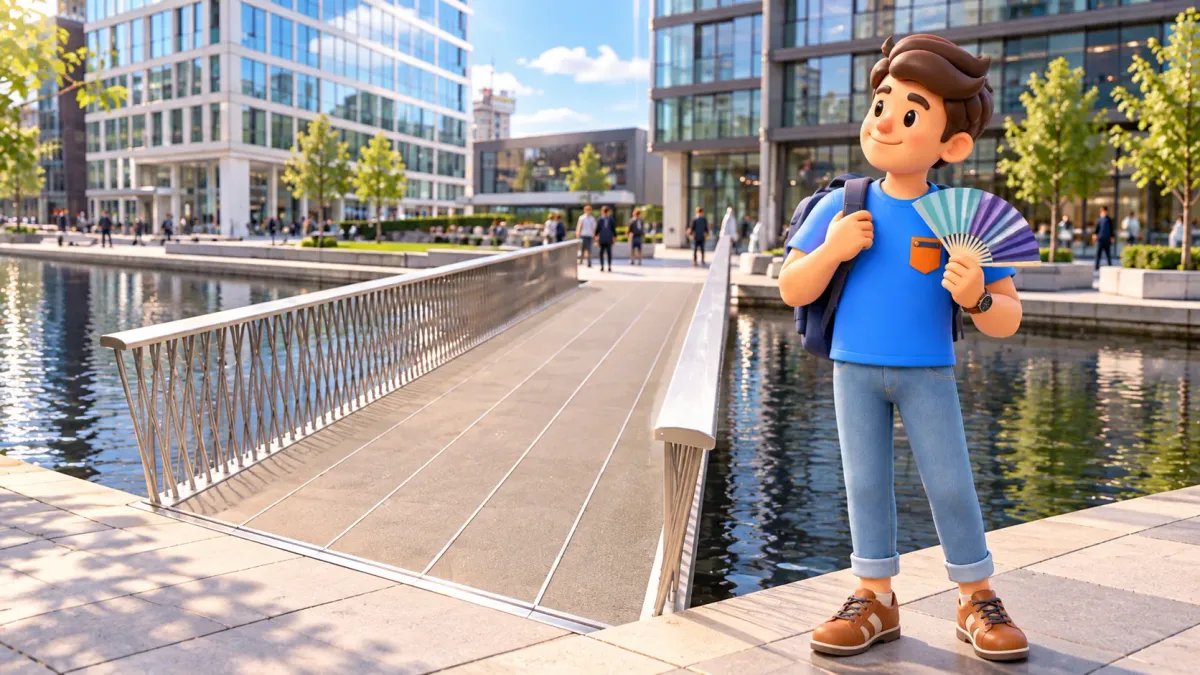
A two-hour Paddington walk can begin with the bronze bear at the station and continue to the water, the Rolling Bridge and the Fan Bridge at Merchant Square. It is a compact neighbourhood outing, combining a literary association with two very different pieces of engineering. You do not need to follow every filming location or book a boat to enjoy this corner of London.
There is one important condition: do not build the outing around seeing both bridges move. The district’s visitor information currently flags the Rolling Bridge as out of action, while older published demonstration times do not confirm a present-day show. Plan for looking from the public waterside, choose daylight and treat any confirmed movement on your actual date as a separate bonus.
A short route with time to notice things
Begin at Paddington station and ask staff for the current location and public approach to the Paddington Bear statue near the clock on Platform One. Then follow the public signs towards the Grand Union Canal and Paddington Basin. From the canal-side station area, head towards the basin to the east, using the signed public bridge and waterside paths. Continue to the Rolling Bridge and then the Fan Bridge at the eastern end of Merchant Square.
Try RoadMe to make your whole London day or trip easier to organise around your interests, dates, pace and budget. The app develops a personal programme that gives a gentle neighbourhood walk, longer visits and proper breaks a sensible place across your days.
Depending on the station exit and your movements along the basin, allow roughly one to one and a half kilometres. This is a planning estimate, not a measured track. A useful two-hour outline is twenty minutes for the bear and station, twenty-five for reaching and exploring the water, twenty-five for the Rolling Bridge area, twenty for the Fan Bridge and thirty for pauses and the connections between them.
Finish at Merchant Square rather than assuming you are already back at the train. If you need to return, add around twenty to thirty minutes as an initial planning allowance, then your operator’s required arrival time and any baggage arrangements. Those are separate from the two sightseeing hours. With a fixed departure, shorten the waterside part before using up your travel buffer.
Meet the bear, and separate story from sculpture
Paddington’s station association comes from Michael Bond’s fictional bear, whom the Brown family find after his arrival from Peru. The first book, A Bear Called Paddington, appeared in 1958. The real station gives that imagined meeting a recognisable setting. You can enjoy the connection whether you remember the original stories, a later screen version or simply the bear’s familiar hat and suitcase.
The bronze sculpture is a separate creation by Marcus Cornish, unveiled by Michael Bond in 2000. Look at its material and posture before treating it only as a photograph opportunity. Bronze turns a small literary character into a lasting object in a place of constant departures and arrivals. That contrast makes the stop interesting even for visitors who have not followed every adaptation.

Station arrangements have changed over time, including a relocation associated with the Elizabeth line opening in 2022. The relevant visitor information places the bear near the clock on Platform One, but an old photograph is not proof of the precise current position. Ask staff if needed and use the permitted approach. Do not block an entrance, evacuation route or the movement of passengers to recreate a remembered photograph.
This is a working station, not a themed attraction whose entire floor belongs to visitors taking pictures. A brief look can be enough when the area is busy. Give another person space for a photo, keep your group together and move away before checking the results. Buying a souvenir or entering a shop is optional, and it needs its own time if shopping matters to you.
From the railway to the basin
Follow the current public route towards the canal instead of attempting to cut through platforms or controlled passages. Paddington has several entrances and transport services, so the first exit you notice may not point towards the water. Use the basin or canal signs and ask for a suitable public approach if your group needs a route without steps. The short distance is less important than choosing a comfortable connection.
Once by the water, the setting changes to a mixture of paths, modern buildings and moored boats. Paddington Basin belongs to the canal network; this is not the Thames waterfront. Look along its length before concentrating on the bridges. The water gives the surrounding buildings a shared foreground and makes it easier to notice how a place once associated with transport can now support many everyday uses.
You do not need a boat trip to make the outing complete. A boat adds boarding arrangements, an operating timetable and extra time, so treat it as a different choice rather than a missing part of the walk. The same applies to a full lunch. Decide whether you prefer a short pause by the basin or a longer sit-down visit, and adjust the walking time openly.
Moored boats may be homes or businesses, not visitor displays. Stay on public paths and respect private entrances, ropes and decks. Looking at the water is different from being invited onto a boat. That small distinction helps preserve the relaxed character of the walk without assuming that everything picturesque is freely available for closer exploration.
The Rolling Bridge: understand the idea
The Rolling Bridge spans a small inlet beside the basin, rather than the whole main waterway. Heatherwick Studio completed it in 2004. Its eight linked sections were designed to curl towards one another until the ends meet in an octagonal form. The interest lies in the changing relationship between an ordinary-looking crossing and a compact sculptural shape.
During the source check for this article, the Paddington district website carried a clear notice that the bridge was out of action. It did not provide a confirmed restart date. That makes old weekly opening times unsuitable as a promise for your visit. Check the actual situation before travelling specifically for a demonstration, and let the wider waterside walk remain the reason to come.
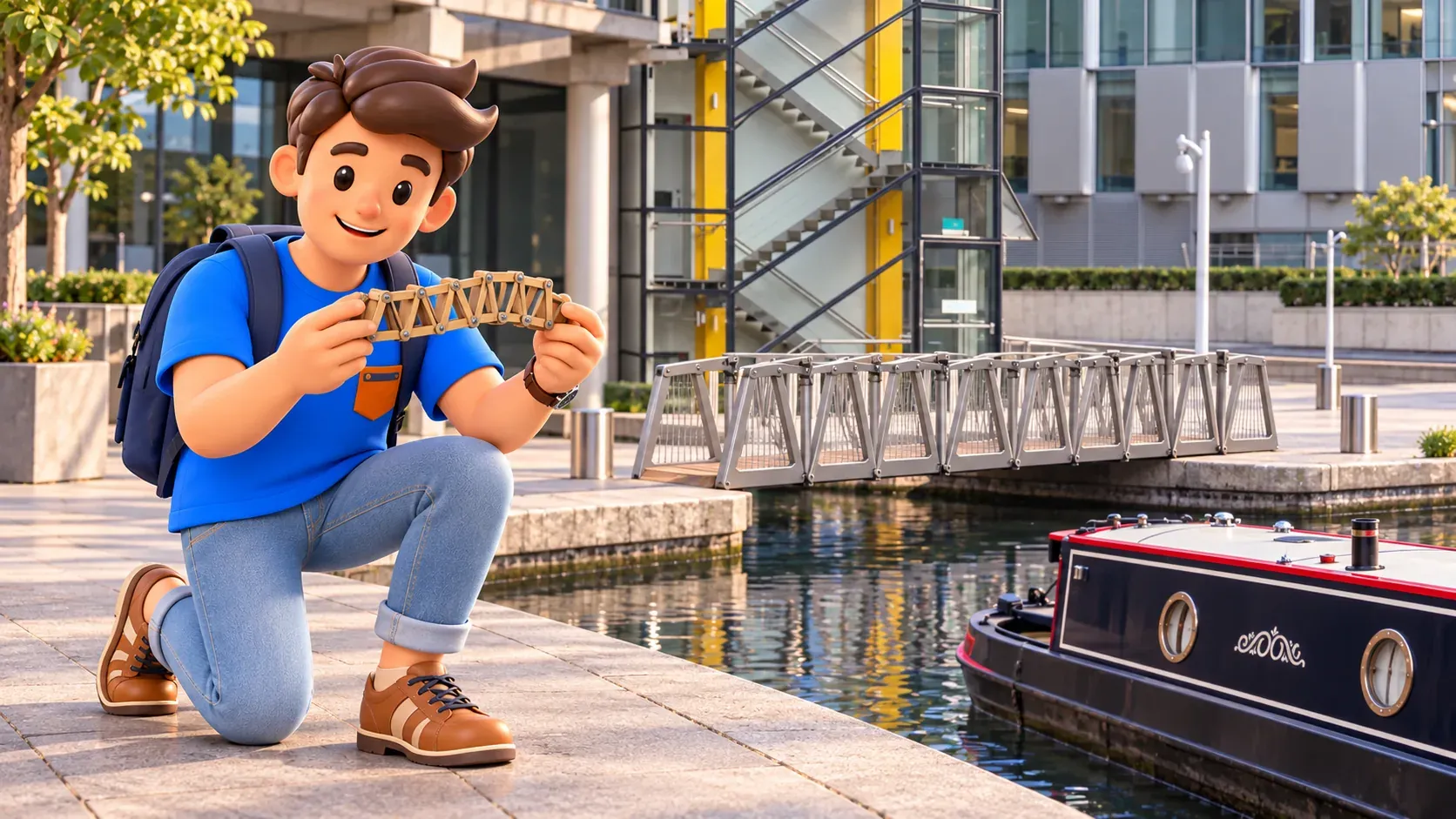
If the public viewpoint is available, look at the repeated sections and the joints between them. You can understand the design question without seeing the mechanism operate: how could a footbridge move out of the way while remaining connected to one bank? Notice where the deck is divided and how those divisions differ from a single solid slab. No access to the controls or machinery is needed.
Do not assume the bridge itself is an available crossing simply because you can see it. Follow closures and use the public route around the inlet where permitted. If the approach is also restricted, continue towards the next accessible part of the basin instead of trying to reach a closer angle. The stop is an opportunity to observe, not a requirement to occupy a particular piece of infrastructure.
The Fan Bridge: a different kind of movement
The Merchant Square Footbridge, usually called the Fan Bridge, offers a different answer. Knight Architects designed it with a deck divided lengthways into five steel sections. When operated, the sections rise in sequence to different angles, recalling an opening hand fan. This is not another rolling octagon: the two bridges make a useful comparison precisely because their movements were conceived differently.
The Fan Bridge dates from the 2012–2014 project period. You can look at the divisions in its deck and its relationship to the basin without expecting a performance. Older visitor pages advertise regular demonstration times, but those pages alone do not establish the current operating arrangements. Check information for your actual date if movement is important, rather than copying a timetable from an old guide.
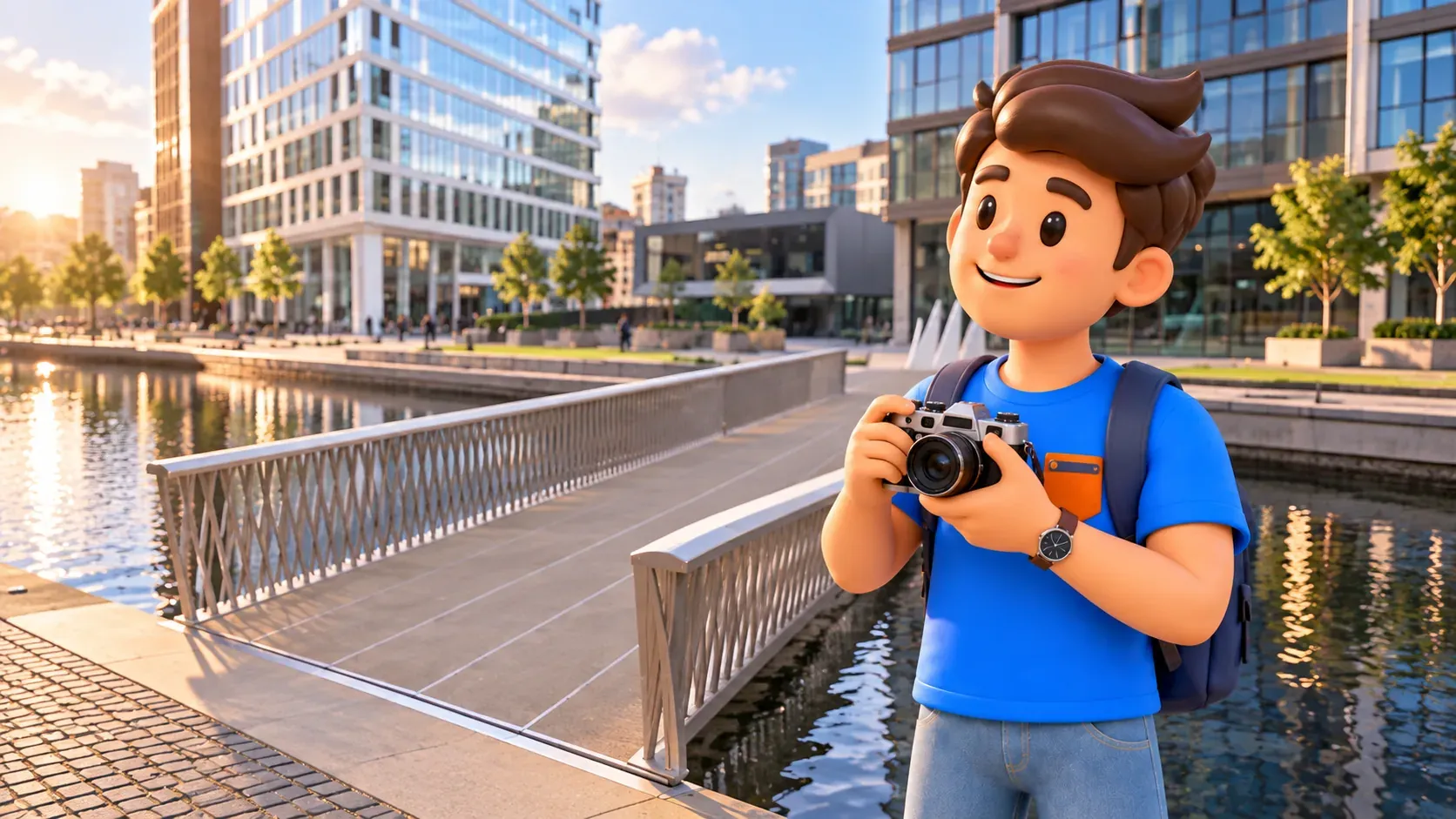
Choose a public place where you can see the structure without stopping in the route of people crossing. First consider the bridge as a connection between the sides; then look for the lines that reveal its segmented design. A lowered bridge may seem less dramatic than a raised photograph, but it can make the practical purpose clearer. Let the view you actually have determine what you notice.
Keep any comparison simple. The Rolling Bridge changes through linked sections curling across its length; the Fan Bridge separates the deck into neighbouring strips that rise. You do not need to memorise technical dimensions or reproduce the mechanisms in detail. The value of the pairing is seeing two designers turn a small everyday crossing into something worth a closer look.
Make the pace work for your group
For children, try a short observation game: find a repeated shape, a reflection and a detail that suggests movement. There is no need to run beside the water or climb any structure to answer. Adults can do the same exercise with photographs. Choose one overall view and one close detail, then put the camera away long enough to see how people use the space.
In wet weather, paving and changes of level deserve more attention, and a longer café pause may be preferable to completing every waterside stop. Use a real open business and include the time for ordering. The route is not a guarantee of a dry alternative throughout. If conditions are uncomfortable, a shorter walk with one bridge can still provide a coherent outing.
With RoadMe, it is more convenient to turn your preferred balance of literature, architecture, walking and rest into a complete personal trip plan. Let the app organise your days around your interests, pace and budget, so a short outing fits naturally into the wider journey.
Finish near the Fan Bridge at Merchant Square and check your next journey from your actual position. Little Venice, a longer canal walk or a tour of filming locations should be a deliberate extension with more time. For a separate day, our King’s Cross walk explores another railway district through its station fronts and former coal buildings. Paddington’s shorter story is already complete: a literary greeting, water and two inventive ways to bridge a small gap.


