
A Different Hollywood Half-Day: Paramount or Hollywood Forever
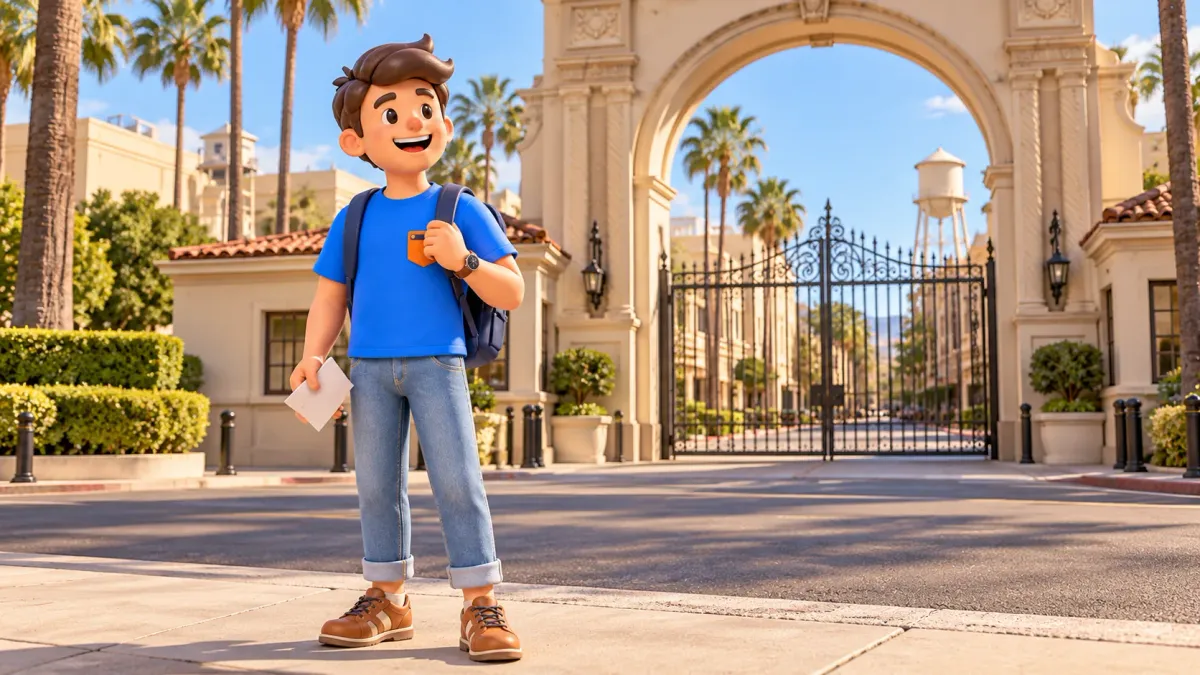
If Hollywood's main boulevard is already familiar, spend a half-day on a different side of the neighbourhood: the working Paramount studio or a quieter visit to Hollywood Forever. These neighbouring places serve different purposes. At the studio, you follow a scheduled tour and learn about filmmaking; at the cemetery, you choose your own pace while paying attention to people connected with the arts and the city's history.
Choose one main programme first. A studio tour takes a substantial part of a half-day, while Hollywood Forever deserves more than an obligatory quick stop afterwards. Combining both needs extra time, suitable access and respect for what is happening on the grounds. Sharing a boundary does not turn them into one freely accessible visitor complex.
Choose the anchor for your half-day
Paramount suits visitors who want a guided account of a studio and are ready to book a time. The standard Studio Tour is listed as a two-hour programme, with early arrival, travel and a pause in addition. Premier and VIP options are longer, so substituting one without changing the day does not work. Half-day here is an editorial planning framework rather than the name of a single ticket.
Choose Hollywood Forever if you prefer an independent visit, memorial architecture and the history of people. It is an active cemetery, not an entertainment park. For a first walk, roughly an hour to an hour and a half can be your own starting allowance, with room to finish earlier or linger. That estimate is not the advertised duration of an official guided tour.
To choose a convenient day that reflects your interests, try RoadMe: it develops a personal plan around your dates, interests, pace and budget. Select cinema or quieter cultural walks as a trip interest so your half-day has a clear place within the wider journey.
- Studio version: a booked Paramount time, early arrival, the tour and a pause afterwards.
- Quieter version: a daytime Hollywood Forever visit with your chosen depth of exploration.
- Studio Tour start: the Tour Center, 5515 Melrose Avenue.
- Hollywood Forever arrival point: 6000 Santa Monica Boulevard.
- Count the return and any connection between addresses separately from visiting time.
Base the choice on the group's interests as well as the available window. A fixed-start tour does not suit every pace. A cemetery visit also needs willingness to engage with its setting. If that does not appeal to someone, proximity to the studio is not a reason to insist. One suitable main experience is more useful than two visits made merely to complete a list.

Paramount: encounter the working side of cinema
Paramount's company history begins in 1912, while construction associated with the present studio lot dates to 1926. Those two reference points distinguish the company from the particular site. Its long film history is not separate from current production: this is a working studio where visitor activity follows established arrangements.
The standard tour description names Bronson Gate, the New York Street Backlot and the Prop Warehouse. They offer different ways to think about cinema: a historic entrance, built streets and the world of props. Treat the programme as an introduction led by a studio representative rather than a promise to see a particular production being filmed or meet a famous actor.
The tour has a two-hour format involving a tour vehicle. Guests cannot independently enter any soundstage that catches their interest. The rules require a guide to remain with visitors and restrict access to permitted areas. Staff determine arrangements on the day. If you expected to search freely for familiar sets, adjust that expectation before arriving.
According to the published FAQ, all studio tours are offered in English. The language of a blog article does not establish the language of a group on the lot. Consider how comfortably you can follow the account and instructions. A mainly visual interest is one way to judge the experience; detailed questions and conversation make language comprehension more significant.
Choose one interest before the visit: props, the construction of sets or studio history. That makes it easier to connect the guide's account with your own curiosity. You do not need to recognise every film mentioned along the way. Understanding how a filming environment is created can be more engaging than searching for a single familiar frame.
Booking, early arrival and the age requirement
The studio advises buying tickets in advance because places are limited. Accepting walk-up visitors does not guarantee space on the next departure. For a half-day with a clear structure, choose an available slot before travelling. Check the cost and conditions of your specific format when booking; old guidebook prices are a poor basis for a reliable budget.
Arrive thirty minutes before the scheduled start. That allows organisational steps and is separate from the tour's two hours. Add your journey from the accommodation and any pause before entry. For an early departure, prepare the confirmation and identification beforehand rather than searching for them at the studio gate.
Adults aged eighteen and over need government-issued photo identification. The current rules admit guests aged ten and above, with minors accompanied by a parent or legal guardian. These conditions matter more than a general suitable-for-children label in an attraction list. A family with a younger child needs a different main programme rather than relying on an exception at arrival.
Keep the different arrival addresses distinct. The Tour Center is at 5515 Melrose Avenue. For rideshare vehicles, the operator can specify Melrose Gate at 5555 Melrose Avenue and its own entry instructions. Choose your drop-off according to the current confirmation and studio directions rather than a general Paramount map pin.
Take photographs only where the guide permits them; video recording is not allowed. Your phone should therefore not set the pace of the visit. Listen to instructions first, then take pictures in approved places. For accessibility and specific requirements, the operator asks visitors to contact Guest Relations beforehand. The general tour format does not describe every individual's needs.
Hollywood Forever: a different mood for the visit
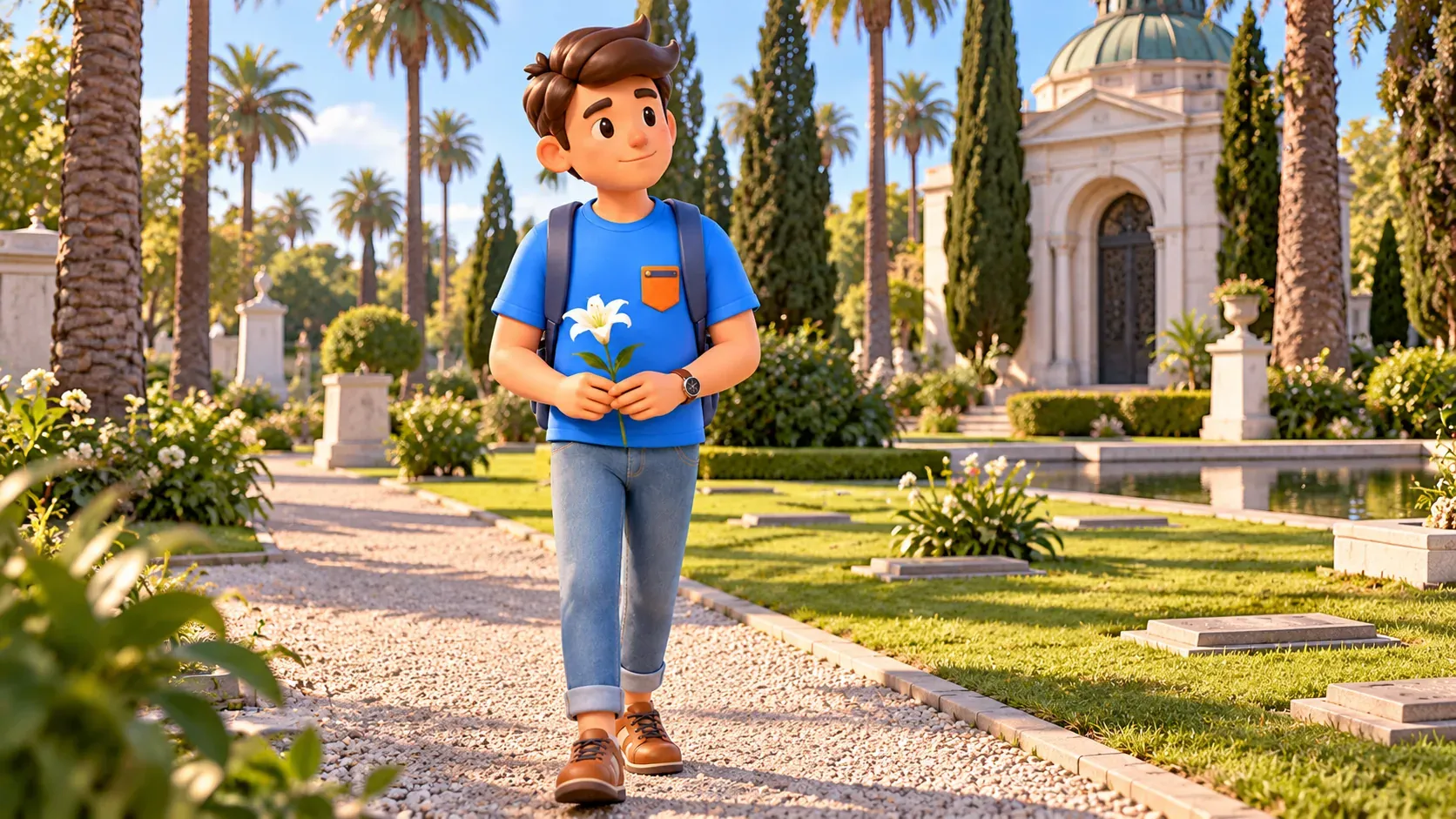
Hollywood Forever was founded in 1899. People connected with Hollywood history and the arts rest here, including Judy Garland, Rudolph Valentino and Cecil B. DeMille. A few familiar names explain the cultural significance, but an independent visit need not become a race between every well-known grave.
Choose a modest circuit on open permitted paths and one or two personal interests. You might look at memorial architecture, different forms of monuments or the relationship between a familiar name and a favourite film. The operator offers a map and printed walking guide at the flower shop. A more detailed guided historical account needs separate planning around its actual schedule.
The grounds remain a place for funerals and visits to loved ones. If a service is taking place, choose another area rather than waiting nearby with a camera. Staff directions and temporary restrictions take priority over your intended circuit. Do not enter active funeral, construction or maintenance areas, and do not use monuments as scenery for humorous poses.
A brief independent visit does not require encyclopaedic film knowledge. You can recall one familiar work and quietly consider the people who helped create it. If the names are unfamiliar, architecture and the memorial nature of the place remain an understandable basis. The quality of your attention matters more than the number of names ticked off.
Personal photographs follow the rules of private property; photography for publication or commercial use needs prior approval. Even a permitted picture is no reason to interrupt someone else's visit. Avoid family gatherings, ask before photographing people and leave personal objects at memorials untouched. These small choices preserve an appropriate tone.

Daytime access and evening events are different programmes
The operator welcomes daytime visitors, but check the actual gate hours and restrictions for your date before travelling. Choose the middle of the day for an independent walk rather than the last moment before darkness. Individual buildings and sections can have access different from the general grounds; Beth Olam, for example, has a stated Saturday closure.
Hollywood Forever also hosts cultural events. A concert or screening has a separate schedule, ticket conditions and rules. It cannot automatically be added to a daytime visit simply because the venue name matches. Items accepted at a particular evening event do not establish a general permission for an ordinary cemetery walk.
For a quiet visit, check the calendar and the situation at entry. If an event is your main interest, build the day around a real ticket and admission time. When access is temporarily restricted, do not look for a service entrance as an alternative. The purpose is a meaningful experience rather than entering at any cost.
Plan around the boundary rather than through it
The studio adjoins the cemetery's southern boundary, but the two visitor starting points are on different streets: Melrose Avenue and Santa Monica Boulevard. Do not plan to walk freely through production premises. Moving between the addresses requires an external city route or a separate ride, with the actual entrances checked.
After a studio tour, assess time, energy and daytime access. If they align, a short Hollywood Forever visit can become a continuation. Otherwise, finish after Paramount. Equally, an independent cemetery walk does not oblige you to try for any last-minute studio space afterwards.
To arrange these different experiences across a trip, you can use RoadMe, where your interests and preferred pace shape a personal itinerary. Try entering the whole travel period so a fixed-start tour and quieter walks receive suitable days.
What to check before leaving
For Paramount, save the confirmation, exact format, start and required early arrival, prepare identification and check everyone's age. For Hollywood Forever, confirm daytime access and decide between your own circuit and a separately organised tour. In both versions, choose the finish and return journey before leaving, independently of time spent inside.
When booking the studio version, work backwards from the latest time your half-day must finish. Choose a slot that leaves room for early arrival and returning. That is easier than buying the first appealing ticket and trying to fit everything else around it. Two hours describes the programme, not the entire period from your accommodation to the next appointment.
For the independent version, discuss how much history interests the group. One visitor may prefer architecture and a few names, while another wants time at a particular memorial. With children, explain the purpose before entry: quiet observation is appropriate, while games between monuments are not. A respectful shorter visit has value in its own right.
In hot weather, reduce additional walking and plan a pause away from memorial areas. Rain should not automatically be treated as cancellation of a studio programme; check the operator's instructions. A successful half-day offers the side of Hollywood that suits you, with filmmaking and remembrance receiving different but equally attentive treatment.


