
One Vatican Day: Museums, Basilica or an Outdoor Walk
A day around the Vatican works better when you choose its main experience first. The Sistine Chapel and museum collections call for one programme; Saint Peter’s Basilica calls for another. The square, colonnade and walk towards the Tiber can also make a complete outing when open space matters more than another interior.
These three options have different demands: around four hours in the museums, three hours for the basilica and square, or a two-hour outdoor walk. They are the main blocks of a day, with meals and return journeys additional. Treat the dome separately: it requires its own decision, ticket arrangements and willingness to climb stairs even when using the lift.
Choose the experience you actually want
If the Sistine Chapel is the priority, choose the Vatican Museums. The chapel belongs to that museum visit: this programme treats them as one connected outing rather than two independent admissions. If the Pietà, Baldachin and space of a working church matter more, choose the basilica. A high panorama belongs to the separate dome decision.
Try RoadMe to create a personal plan for the whole trip around your interests, dates, pace and budget. The app makes it more convenient and effective to distribute a major museum day, walks and proper rest across a programme you can use while travelling.
Sharing a district does not make every visit compulsory. The museum entrance and square have different approaches, while security and waiting contribute to the actual effort. Decide what you would like to have experienced by lunchtime: a concentrated encounter with art, an unhurried introduction to the basilica or a sequence of changing outdoor views.
| Main interest | Core allowance | Separate decision |
|---|---|---|
| Museum art and the Sistine Chapel | About 4 hours from museum entrance to exit | Basilica, dome and subsequent journeys |
| Saint Peter’s Basilica and square | About 3 hours with rest | Dome, museums and special programmes |
| Outdoor architecture and the Tiber | About 2 hours walking | Any interior, dome or castle museum |
These are planning estimates, not queue measurements or promises to see every room. Transport, the approach from accommodation, lunch and the return journey are additional. A long wait extends the finish or reduces the selected sightseeing. It does not disappear because the comparison gives the outing a convenient number of hours.
Museums: allow four hours for one substantial interest
Begin at the Vatican Museums entrance on Viale Vaticano according to your actual ticket. The basilica façade and Saint Peter’s Square are not the museum entrance. Ottaviano and Cipro on metro line A are useful approach references, with further walking required. Check the real entrance and visiting time rather than relying on the word Vatican in an offer’s title.
One four-hour outline allows twenty minutes for entry and orientation, seventy-five for a chosen museum theme and connecting galleries, twenty for rest, ninety-five for the remaining available route and Sistine Chapel, and thirty for the exit and cloakroom retrieval. The ninety-five-minute block does not mean that all that time is spent inside the chapel.
For example, a confirmed 10:00 entry suggests finishing around 14:00. The initial twenty minutes are a planning buffer, not a forecast of security. Avoid placing another reservation immediately at the expected exit time. Give lunch a separate allowance afterwards and leave the rest of the afternoon open rather than automatically adding another substantial admission.
Choose one interest, perhaps painting or the Gallery of Maps, and relate it to the current museum plan. Available connections and staff instructions matter more than an appealing sequence copied from elsewhere. The Pinecone Courtyard offers a change of scale between rooms. Several areas have rest seating, but a particular empty place cannot be guaranteed.
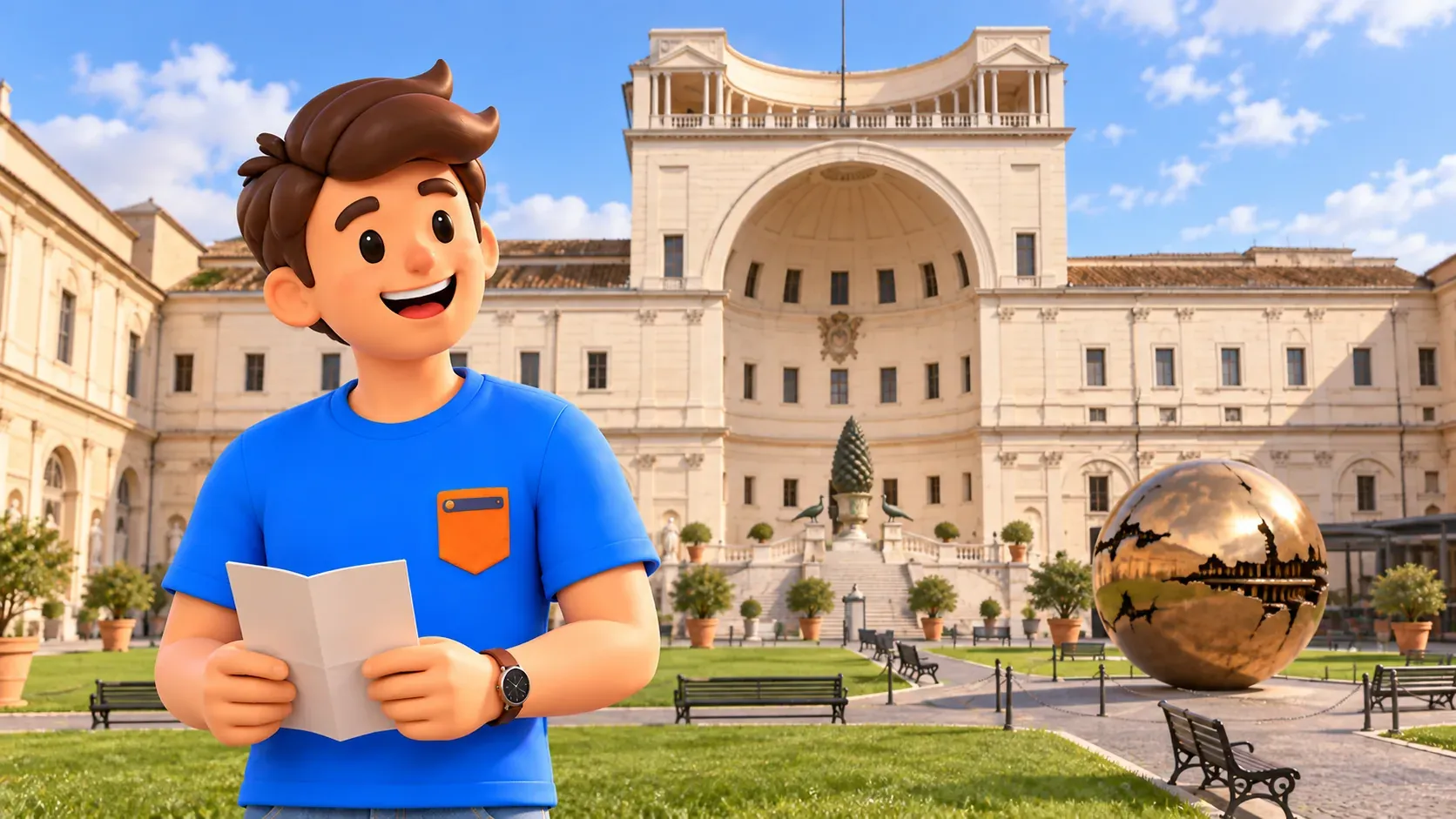
This is a selected museum visit, not a four-hour survey of every collection. Each name on the map need not become a compulsory stop. A few attentive encounters can preserve energy for the later part better than hurrying towards the chapel while simultaneously trying to miss nothing. Some rooms may be unavailable on the day.
The Sistine Chapel belongs to the museum visit
Michelangelo painted the ceiling in 1508–1512 and later created the Last Judgement on the altar wall in 1536–1541. They belong to different phases. The walls also contain works by fifteenth-century painters; the whole chapel is not one continuous project by one artist. This brief distinction gives a first visit useful direction without becoming a catalogue of scenes.
Absolute silence is required in the chapel. Photography, filming and phone use are forbidden. Read essential explanations beforehand and put the device away before entering. Making your own image should not become the purpose of the visit. Remembering the relationship between ceiling, walls and people can be more rewarding than searching hurriedly for one famous scene.
Do not base an independent programme on a promised internal passage straight to the basilica. Particular guided products and authorised routes have their own conditions. For an independent plan, allow the ordinary museum exit, a separate approach and new security procedures at the basilica. Items in the museum cloakroom also require returning to collect them.
Basilica and square: three hours with chosen highlights
This option begins at Saint Peter’s Square after your approach. Allow thirty minutes for orientation and entry procedures, seventy-five for selected parts of the basilica, twenty-five resting after leaving, thirty for the square and twenty finishing. The sum is 180 minutes, for example 10:00 to 13:00 when access conditions permit.
Again, thirty minutes is not a queue promise. Longer security procedures change the total. Inside, choose two artistic reference points: Michelangelo’s Pietà and Bernini’s Baldachin, if their areas are available. Look at them within the space of the church, respecting prayer and celebrations rather than treating every accessible section as a sightseeing requirement.
Construction of the present basilica began in 1506 and was completed in 1626, with several architects contributing. Its familiar appearance should not all be attributed to Michelangelo. His dome and Bernini’s colonnade address different architectural tasks. For an introduction, experiencing that change of scale can matter more than learning the full sequence of designers.
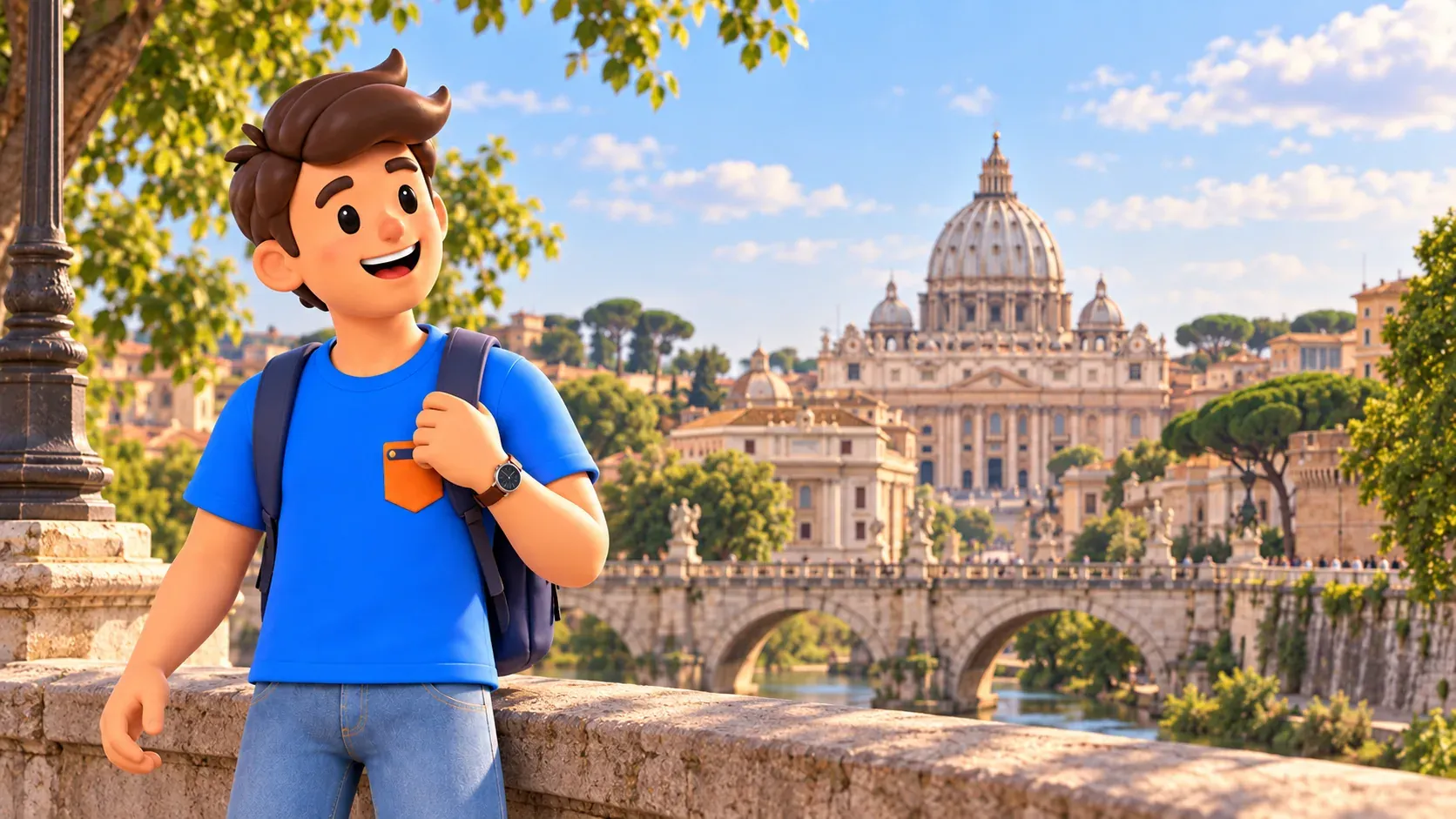
Ordinary basilica entry is free, with no mandatory advance reservation. A separate paid online booking service provides a particular visiting time and includes the digital audio guide. It does not remove obligatory security checks. Distinguish the price of that service from a charge for standard entry to the church itself.
Rest after leaving in a suitable available place, keeping circulation clear. This is a pause rather than a guaranteed café or empty bench. You can then consider the square and finish, leaving lunch separate. Having further hours available in the day does not mean that they must be filled with a climb.
The dome: the lift still leaves a demanding climb
The lift reaches the terrace level only. Reaching the outer ring above still requires 320 steps; the complete ascent from below has 551. The route includes narrow sections and slopes. Decide whether that effort suits this visit rather than reading lift as a promise of a stair-free journey to the upper panorama.
The dome requires its own ticket arrangements; a normal museum ticket does not cover it. Allow roughly another ninety minutes to two hours for the climb, its arrangements and completion, according to the chosen product and your pace. This is a planning allowance, not a fixed visiting duration. It changes the basilica option into a more demanding day.
For online programmes, the order can depend on your assigned route. The message accompanying the entry codes specifies whether you visit the basilica before or after the dome. Follow your own documents and the instructions on arrival. A universal rule to visit the basilica first is unreliable; do not mechanically append the climb to the end of our three-hour outline.
Only small personal bags are suitable for the ascent; large backpacks and suitcases are not. Do not rely on luggage storage inside the basilica. Resolve this before travelling, particularly when changing accommodation or leaving Rome. An architectural view from outside remains a complete experience without reaching the highest viewing area.
Choose outdoors when you want a freer day
Start in an available part of Saint Peter’s Square, observe the colonnade and obelisk, then use permitted public paths towards Via della Conciliazione and the Tiber. Our separate two-hour walk from the square to Castel Sant’Angelo and its bridge already includes rest, the castle exterior and a finish on the opposite bank.
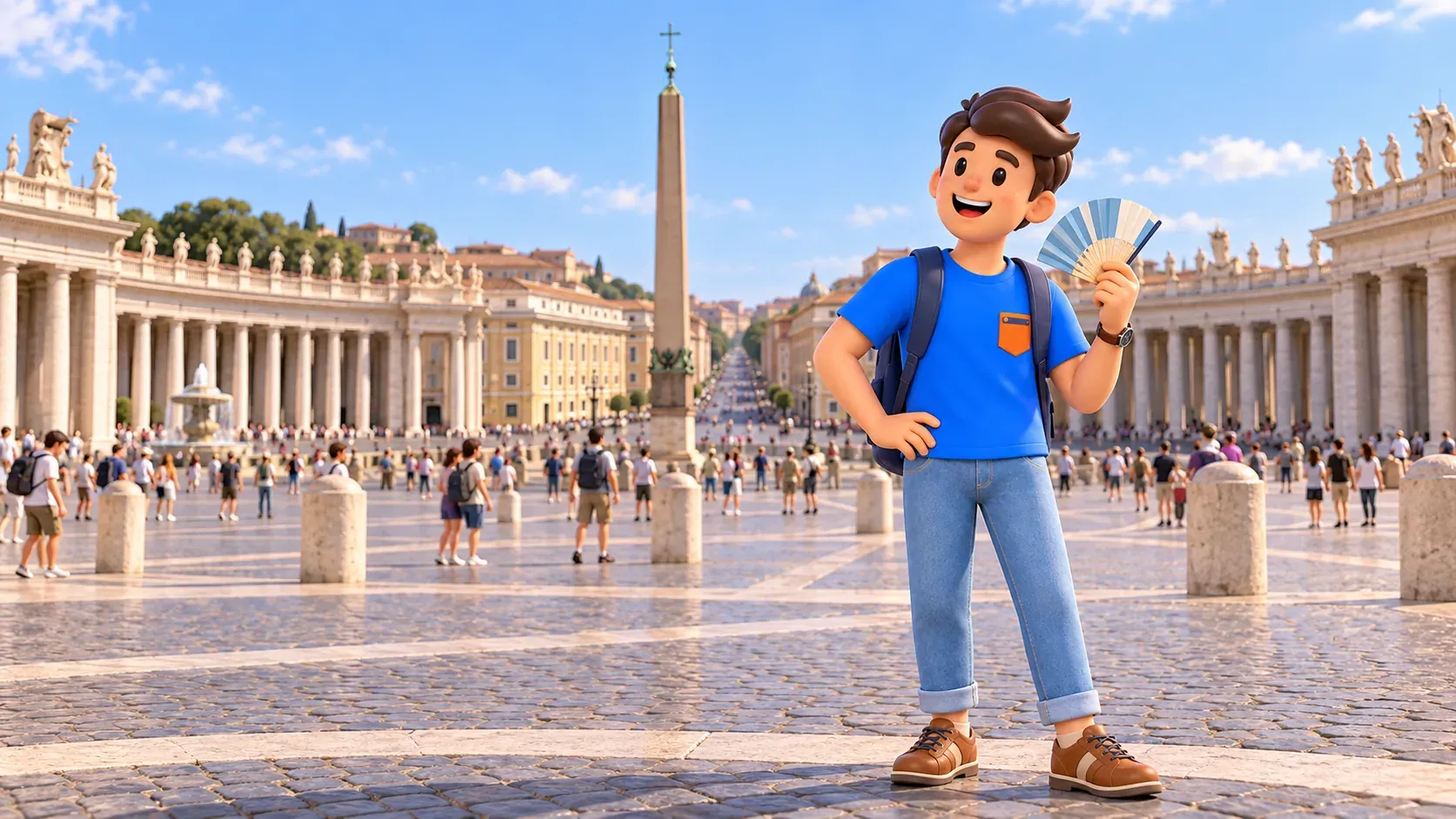
The result is different: open square, street perspective, fortress silhouette and river. This version includes neither basilica nor museums, dome nor unrestricted Vatican Gardens access. Walking near the Vatican does not give permission to explore all the territory behind its walls. The public urban sequence supplies the experience on its own.
Check the date even for an outdoor outing. Celebrations, audiences, event preparation and current works can change the available square and neighbouring spaces. If the square is unavailable, shorten the opening section or postpone. Do not retain the same two-hour promise when a substantial part has become waiting or an unfamiliar detour.
Check the calendar, clothing and final arrangement
The museums ordinarily open Monday to Saturday, 8:00–20:00, with final entry at 18:00; visitors leave the galleries thirty minutes before closing. The last Sunday of the month usually offers a shorter free opening, 9:00–14:00 with final entry at 12:30, subject to calendar exceptions. It does not fit our ordinary four-hour programme starting at 10:00.
When checked in October 2026, the basilica listed 7:00–20:00. The dome follows separate seasonal hours: 7:00–18:00 in summer and 7:30–17:00 in winter, with possible changes for celebrations or operational requirements. Check the precise date. Guided-tour, confession and individual service times should not be substituted for general visiting hours.
Keep shoulders and knees covered for sacred spaces; long trousers make preparation straightforward. Museum staff may require bulky belongings in the cloakroom, while the basilica has no luggage storage. Do not transfer one venue’s arrangements to another. Drawing displayed works in the museums also requires special authorisation, so a notebook does not establish permission to sketch in galleries.
Use RoadMe to shape a personal plan for the entire trip around art, architecture and walks at your preferred pace. Distributing these different experiences across days is more practical in the app; confirm current admission, tickets and the assigned order of a particular visit with its organiser.
Choose one principal option and give it an unhurried ending. A museum day can finish with lunch, a basilica visit with time to absorb the space, and an outdoor day with the river. Seeing less today can preserve attention for the very experience that brought you to this part of Rome.


