
Three Days in New York: Manhattan, Brooklyn and One Museum

Three days in New York can introduce you to several very different versions of the city: Midtown's monumental buildings, the tighter streets of Lower Manhattan, the open waterfront in Brooklyn, and the paths of Central Park. The useful starting point is deciding how much city belongs in each day. A schedule that repeatedly crosses Manhattan soon becomes a succession of journeys and queues.
This first-visit itinerary gives you three full days, one major museum, and one walk across the Brooklyn Bridge. Meals and pauses are part of the programme.
How to organise three days in New York
Give day one to Midtown: Grand Central Terminal, Bryant Park, Fifth Avenue, Rockefeller Center and Times Square. Spend day two in the Financial District and at the outdoor 9/11 Memorial before crossing the Brooklyn Bridge to DUMBO. On day three, combine Central Park with The Metropolitan Museum of Art. These are interchangeable days, rather than a fixed Friday-to-Sunday weekend.
For a trip shaped around your own interests and pace, try RoadMe: the app builds a personalised day-by-day plan using your dates and preferences. It makes arranging your own balance of architecture, museums and neighbourhood walks much easier.
Allow roughly six to eight hours including lunch and breaks on the first two days, and six to seven on the third. Every duration below is a planning estimate, not a measured walking time. Travel from your accommodation is additional.
Three nights do not necessarily mean three usable sightseeing days. If your flight arrives on the first morning, allow for getting into the city, leaving luggage and recovering from the journey. You may only want an evening walk. On departure day, subtract luggage collection and the airport journey before deciding what fits. Remove one complete block if necessary; shrinking every stop tends to make the whole trip feel hurried.
Day one: Midtown and the familiar skyline
Morning: Grand Central and Bryant Park
Begin around 9:30 at Grand Central Terminal on 42nd Street. Twenty to thirty minutes is enough for an introduction: pause in the Main Concourse, look up, then move towards its edge to take in the proportions. This is a working terminal. Keep entrances and passenger routes clear, particularly when stopping for photographs.
Continue west along 42nd Street towards Fifth Avenue, allowing fifteen to twenty minutes for an unhurried walk. The main New York Public Library building and Bryant Park make a useful next stop. Within a few blocks, a busy transport hall gives way to a formal library facade and then an outdoor space surrounded by tall buildings. That change of scale is part of the attraction.
The basic route treats the library as an exterior stop. Add an indoor visit only after checking the current visitor arrangements: access to the building does not automatically provide sightseeing access to every reading room. Rather than spending the morning waiting for one particular interior, take a seat in the park and decide how much energy you want to keep for the afternoon.

Afternoon: Fifth Avenue and Rockefeller Center
Head north along Fifth Avenue towards St Patrick's Cathedral and Rockefeller Center. Allow twenty to thirty minutes with pauses to look at buildings, followed by about an hour in the surrounding area. Look at the cathedral from across the avenue, then turn your attention to the neighbouring towers and plazas. Comparing their shapes is more rewarding than trying to remember every building name.
Take a proper lunch break before anything booked for a specific time. Forty-five minutes to an hour is a sensible allowance. Choose somewhere near the route rather than travelling across town for a restaurant selected from an unrelated list. Keeping meals geographically simple helps preserve the rest of the afternoon.
Leave one open block after lunch. You can use it for a single observation deck if you have selected one, checked its conditions and booked an appropriate slot. Set aside approximately ninety minutes to two hours including entry and waiting. Another deck can wait for another visit: seeing different streets at ground level will usually add more variety to this short trip.
Evening: Times Square, with room to stop
Finish the sightseeing portion around Times Square. Forty-five minutes to an hour gives you time to experience the screens and theatre district without making the entire evening depend on them. Daylight varies by season, and a short later return may work if your accommodation is conveniently placed.
A Broadway performance is a separate event. If you have tickets, check the actual start time, shorten the afternoon's flexible block and eat beforehand. Avoid stacking a show, a long dinner and another ticketed attraction into the same evening. One chosen highlight is enough for a first day, particularly after a recent long journey.
Day two: Lower Manhattan to Brooklyn
Morning: the Financial District and the memorial
Start around 9:30 at Bowling Green and walk towards Wall Street. Allow an hour to ninety minutes for the area around Federal Hall and Trinity Church, using exterior stops as the basis of the route. Narrower streets and short views between buildings give Lower Manhattan a different rhythm from Midtown. Slow down enough to notice that change.
Continue northwest towards the 9/11 Memorial. Allow fifteen to twenty minutes from the Trinity Church area, including street crossings. The reflecting pools and bronze name panels deserve an unhurried pause. This is a place of remembrance, so let the nature of the space determine your pace rather than treating it as another quick photograph.
The outdoor memorial and the museum are separate experiences. The memorial is free, with current regular hours of 8am to 8pm daily. The museum needs a separate ticket and a substantial time allowance; it is outside this itinerary's core plan. If visiting the museum is a priority, give it part of the day and reduce the Brooklyn portion rather than squeezing it between neighbouring stops.
You can also see the Oculus before lunch. Do not add a Statue of Liberty and Ellis Island ferry trip to this same morning: the crossing and island visits change the scale of the day. If those islands matter more to you, use them as a major replacement for the downtown programme and keep the remaining evening short.

Afternoon: across the bridge to DUMBO
After lunch, walk towards the Manhattan pedestrian approach to the Brooklyn Bridge near City Hall. Allow twenty to thirty minutes from the World Trade Center area. Follow pedestrian signs carefully. The bridge carries several kinds of traffic, and the protected cycle path is separate from the pedestrian promenade.
Allow roughly an hour to ninety minutes for the crossing, approaches and photographs. Crowds, weather and pauses affect that estimate more than the bridge's physical length. Bring water in warm weather and do not expect continuous shade. The wind can also feel stronger over the river than it did between buildings.
The bridge was built between 1869 and 1883 to a design by John A. Roebling. Its stone arches and suspension structure make the engineering of another era visible within the modern skyline. As you move, notice how the relationship between towers, cables and distant buildings changes. Step aside when stopping rather than blocking the full walkway.
On the Brooklyn side, continue towards DUMBO and the waterfront around Jane's Carousel. Leave ninety minutes to two hours for a waterside walk, a seat and something to eat. The carousel is a useful landmark; riding it is an optional activity subject to its own schedule. Brooklyn Bridge Park is free to enter, while individual facilities have their own operating arrangements.
Plan the journey back according to your accommodation. You have already spent several kilometres on foot, and the approaches add to the total. A relaxed pause beside the water may be a better ending than retracing your steps simply to make a complete loop.
Day three: Central Park and one major museum
Morning: a manageable park walk
Enter Central Park from the southeast near Fifth Avenue and 59th Street at about 9am. Walk through the southern section towards the Mall and Bethesda Terrace, allowing ninety minutes to two hours including stops. Today the park is part of a museum day. Trying to add the northern gardens or a complete reservoir circuit would turn it into a different outing.
Bethesda Terrace combines stairs, an arcade and open gathering space. Look for natural subjects and the seasons in its architectural carving. The details offer a reason to put the phone away for a moment and look closely at the stone. This is a place where built space organises movement while remaining part of a green landscape.
There is a current limitation: Bethesda Fountain has been switched off for restoration since August 2026. The terrace remains open, but a flowing fountain should not be part of your expectations. Continue towards the park's eastern side and The Met, allowing another thirty to forty minutes from Bethesda for the walk, finding your way and leaving the park.
Afternoon: The Met at a chosen pace
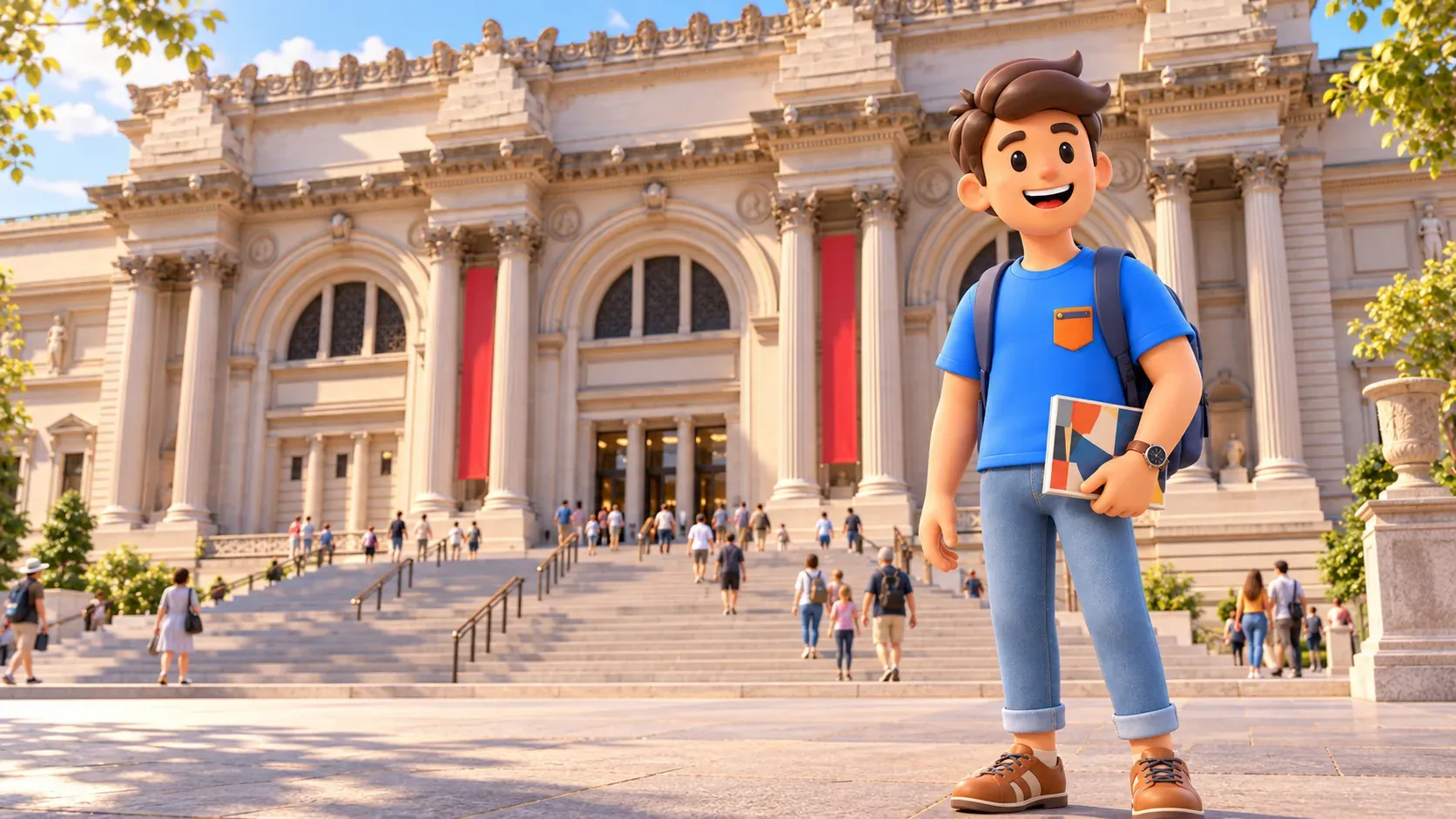
Eat before entering, then plan a museum block from roughly 1pm to 4:30pm. That leaves a buffer for entry and approximately three hours with the collection. Choose two or three themes that interest you: the ancient world, European painting or decorative arts, for example. Having a question to follow makes a visit more satisfying than attempting every famous object on a list.
If art, history or waterfront walks matter most to you, you can prepare the trip in RoadMe: its personalised plan starts with your interests and available time. Bringing those preferences into one day-by-day programme is more convenient than assembling disconnected recommendations yourself.
The Met is on the east side of Central Park. The American Museum of Natural History is on the west side and can replace it, but you should then change the park finish and approach to the entrance. Do not put both major museums into this day. Choosing one gives the afternoon a clear focus and leaves time to enjoy what you actually came to see.
At the time of checking, The Met is closed on Wednesdays. Normal opening is 10am, with closing at 5pm except Fridays and Saturdays, when it stays open until 9pm. Additional closures include Thanksgiving Day, December 25, January 1 and the first Monday in May. Individual tickets can be purchased ahead, but advance purchase is not required. Admission is paid; local concession arrangements do not automatically apply to every visitor.
Do not include the museum's roof garden in the plan: it is listed among spaces closed for renovation. Check any galleries that are particularly important to you before visiting.
Adjusting the plan for weather and pace
Fix the museum day around its calendar first, then choose suitable weather for the bridge. In persistent rain, shorten the park and put the museum first. If conditions are unpleasant by the river, exchange whole days so that each geographical grouping stays intact. An open outdoor space is not necessarily a comfortable outing in every season.
Before leaving, check the opening arrangements for your chosen visits, any timed tickets and the route back to your accommodation. Wear comfortable shoes and protect meal breaks. For a gentler trip, drop the first day's observation deck, shorten the Brooklyn waterfront walk or begin the third day directly at the museum. Each day will still have a clear purpose and room to enjoy the city.


