
One Day in New York: A First Walk through Midtown Manhattan
One day in New York works well as a walk through Midtown Manhattan, linking Grand Central Terminal, the Chrysler Building, the New York Public Library, Rockefeller Center and the southern edge of Central Park. The distances are manageable as part of a full day, and the setting keeps changing: a great railway hall, busy avenues, public spaces and water framed by trees.
Leave Times Square as an optional finish if you still want bright screens and crowds after the park. This itinerary assumes you already have a full day in the city. Airport journeys, hotel check-in and luggage storage need their own time outside the plan.
A realistic shape for your first day
Begin around 9am at Grand Central on East 42nd Street. See the nearby Chrysler Building from the street, walk west to the library and Bryant Park, then head north along Fifth Avenue after lunch. St Patrick’s Cathedral and Rockefeller Center come before a short visit to southeast Central Park. Times Square adds a deliberate return south at the end.
Allow roughly eight to nine hours with lunch, breaks and the optional final stop. Depending on your park loop and whether you continue to Times Square, expect approximately five to seven kilometres of walking. These are planning estimates rather than a route timed on the ground. Street crossings, photographs and your own pace all affect the day.
For a day shaped around what you actually enjoy, try RoadMe: the app builds a personal plan around your dates, interests, pace and budget. It makes combining architecture, walking and time to rest more convenient than arranging every part of the day yourself.
Choose one priority before setting out: street-level architecture, time inside the library, or a paid observation deck. A deck needs a separate booking and a change to the schedule. The basic walk includes neither a major museum nor a tower visit, leaving room to stop without constantly watching the clock.
9am: begin inside Grand Central Terminal
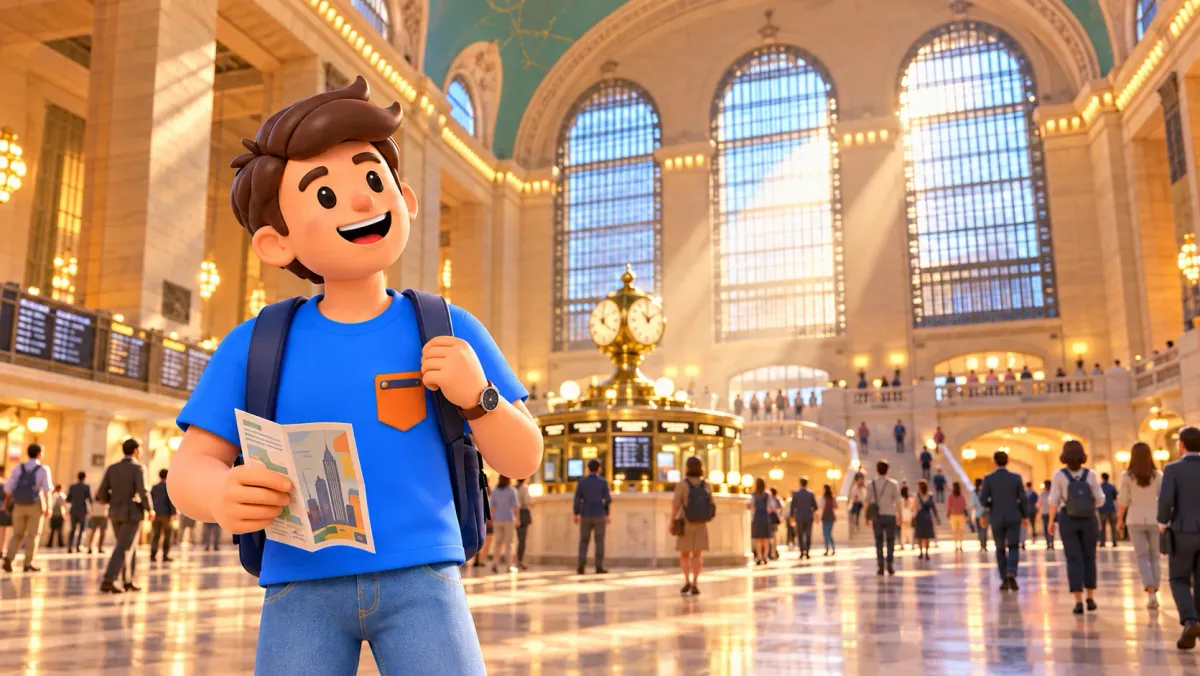
Grand Central Terminal stands at 89 East 42nd Street, served by subway lines 4, 5, 6, 7 and S. The terminal is open to the public daily from 5:15am to 2am, although individual businesses keep different hours. Give this first stop about forty-five minutes, including entering and finding your way back out.
In the Main Concourse, start with the scale of the room and the decorative ceiling, then look towards the clock above the information booth. The most interesting contrast is between the grandeur of the interior and the everyday business of catching trains. Stand clear of moving passengers when looking up or taking a photograph.
The present terminal opened in 1913. It belongs to a period when a railway building could serve as a statement of civic ambition as well as a working transport hub. You can appreciate that idea through the room itself, without trying to explore every passage or collecting a long list of architectural details.
A guided tour is a different visit, with its own arrangements. If transport history is the main reason you came, give it more time by shortening a later stop. A brief public-concourse visit does not include staff areas.
9:45am: the Chrysler Building from the street
Walk towards Lexington Avenue and 42nd Street for the Chrysler Building. Rather than remaining directly beneath it, find a street view that lets you see the crown. Allow around twenty minutes for the short transfer and a few changes of viewpoint. This is an exterior stop; the itinerary does not depend on lobby access.
William Van Alen’s skyscraper dates to 1930. Its familiar silhouette comes from the relationship between the vertical tower and its shining, patterned crown. Look at the outline first, then bring your attention down towards the lower part of the building.
Photographs of the lobby in an older guide are not a promise of entry on your date. Keep the exterior visit self-contained, then head west along 42nd Street towards Fifth Avenue. Allow about twenty minutes to reach the library, with time for crossings rather than treating the map distance as a stopwatch.
10:25am: the library and Bryant Park
The New York Public Library’s Stephen A. Schwarzman Building occupies the Fifth Avenue frontage between 40th and 42nd Streets. Its two stone lions, Patience and Fortitude, provide a memorable introduction. Their familiar names were given in the 1930s: a small piece of civic history you can carry into the rest of the walk.
Allow around fifty minutes if the building’s visitor spaces are open. Astor Hall and the McGraw Rotunda are possible highlights, subject to current access. The official Visitor Center lists the Rose Main Reading Room as accessible by tour. Do not build your day around simply walking into that famous room as an unrestricted sightseeing visitor.
Check the building’s hours for your particular day before leaving your accommodation, and read the arrangements for any tour you want. If it is closed when you arrive, enjoy the façade and spend longer outside. Continue without reorganising the whole day.
Bryant Park sits behind the library between Fifth and Sixth Avenues. Give it roughly forty-five minutes for a short walk and a proper pause. The change in scale matters here: a compact public space surrounded by tall buildings can make Midtown feel surprisingly different without requiring another journey.
The park has seasonal hours, rather than round-the-clock access. At the October check, its published hours were 7am to 10pm. Its central space also changes with seasonal uses, so a particular lawn arrangement or winter attraction should not be treated as a year-round promise. Use the park as a pause.

Noon: protect an hour for lunch
Have lunch around Bryant Park and give it approximately an hour. Choose somewhere that suits your budget and company rather than crossing town for one famous dish. Sitting down matters more at this point than adding another destination. If service takes longer than expected, shorten a later stop instead of squeezing the time allowed for walking.
Use the break to agree on the afternoon’s priorities. One person may want more buildings, another more time in the park or cathedral. Agree on quick stops and longer visits before continuing.
After lunch, follow Fifth Avenue north towards 50th Street. Allow about half an hour with crossings and brief street-level stops. Window displays and changing façades can be part of the walk; a substantial shopping session needs a separate place in your schedule and will reduce the time left outdoors.
1:30pm: St Patrick’s Cathedral and Rockefeller Center
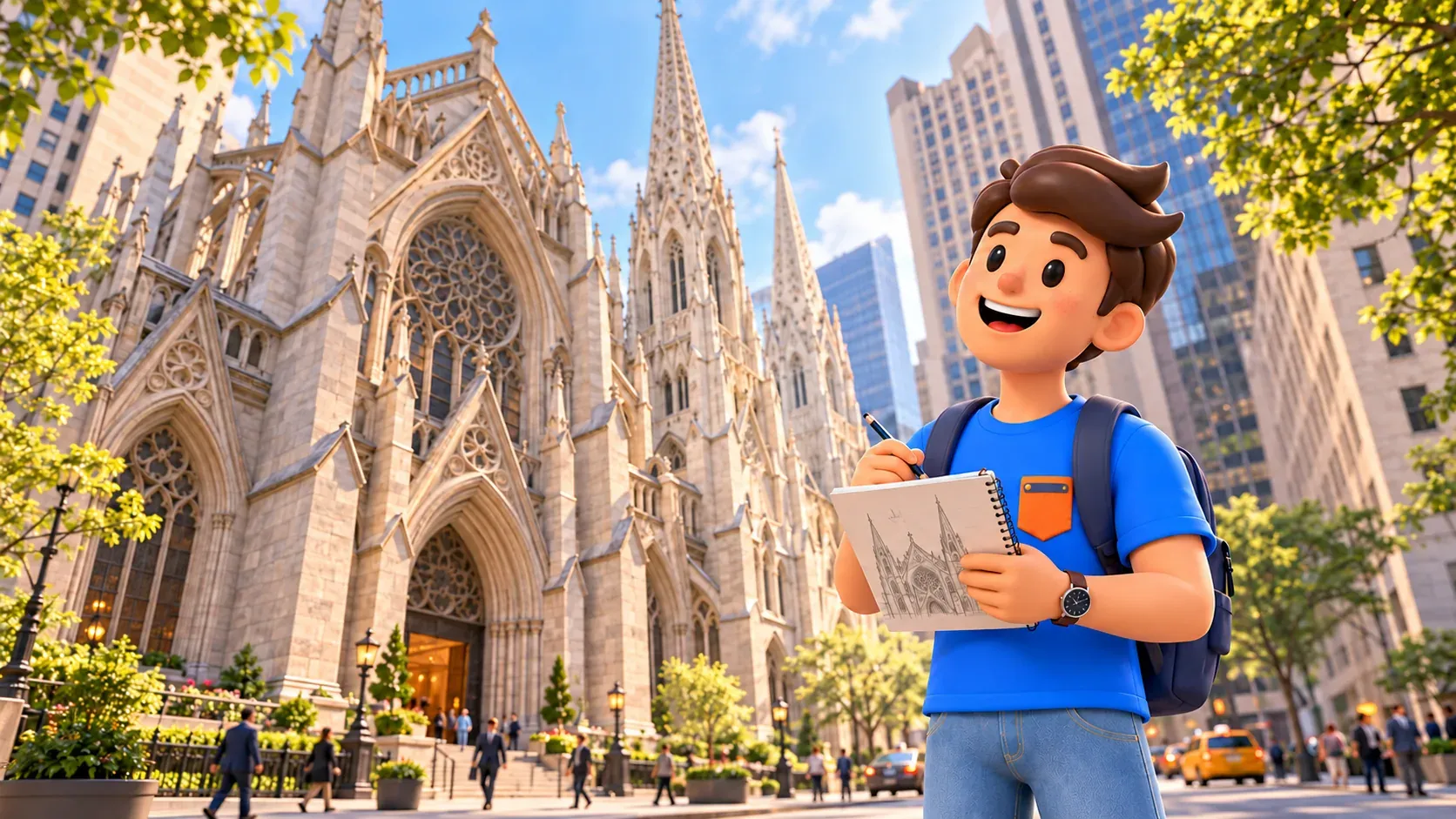
St Patrick’s Cathedral stands on Fifth Avenue between 50th and 51st Streets. Use a crossing to see its towers from the opposite pavement first. The contrast between nineteenth-century stone architecture and its later surroundings is immediately visible, giving this stop a different character from the morning’s skyscraper.
James Renwick designed the cathedral; its cornerstone was laid in 1858 and it formally opened in 1879. For a first encounter, concentrate on the height of the space and the light rather than trying to absorb a complete history. Allow around half an hour for a short interior visit when sightseeing is appropriate.
This remains a place of worship. The official FAQ currently gives opening hours of 6:45am to 8:45pm, but services and events affect the opportunity for a quiet look around. Bags may be searched, and telephone conversations inside are prohibited. If a service or other activity makes visiting unsuitable, appreciate the exterior and continue. Guided products have separate arrangements.
Cross towards Rockefeller Center and allow roughly forty-five minutes for its outdoor spaces and façades. Treat it as an ensemble rather than a single building: passages, plazas, artwork and tall volumes are part of the experience. Comparing its forms with the cathedral provides a simple thread through this section of the afternoon.
The complex developed around the idea of a “city within a city”, bringing work, public space and art together during the 1930s. That ambition is useful context for what you can see today. The famous Christmas tree and skating rink belong to seasonal visits; they are not necessary ingredients for enjoying the ensemble at another time of year.
3:10pm: a small piece of Central Park
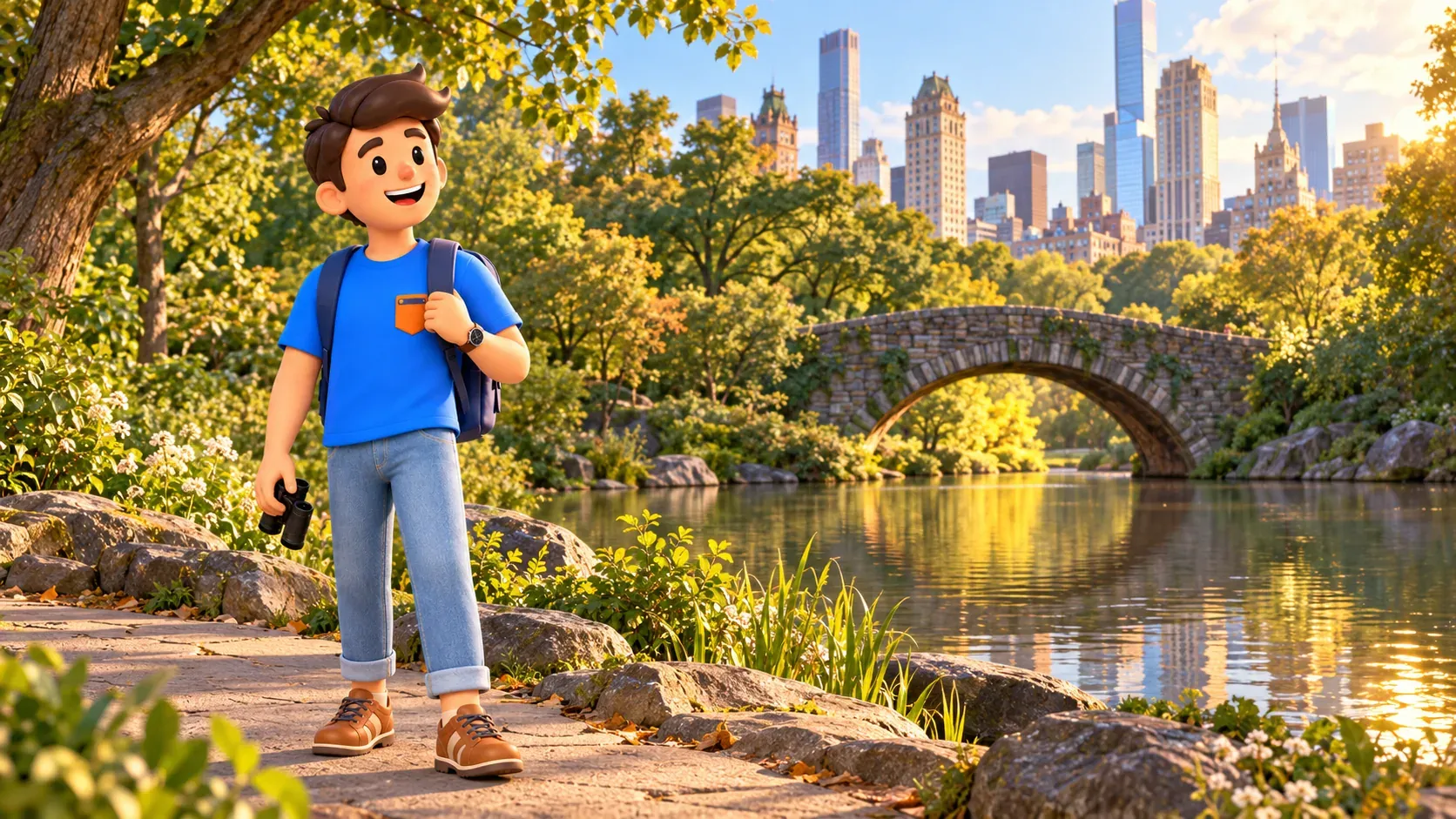
Return to Fifth Avenue and continue north to 59th Street, allowing about twenty-five minutes with brief stops. Enter the southeast corner of Central Park and choose a short walk around the Pond towards Gapstow Bridge. About an hour here gives the day a change of pace without turning it into a second major itinerary.
Slow down beside the water. The towers remain visible, but trees, paths and the shape of the landscape alter your relationship with them. The present stone Gapstow Bridge was built in 1896. Its modest size is a useful contrast to the large interiors and façades seen earlier: a small crossing can shape a memorable view.
Central Park is open daily from 6am to 1am, although daylight is the sensible choice for this first look at the landscape. Weather, seasonal conditions and temporary closures can affect paths. This stop does not include the zoo, Bethesda Terrace or a comprehensive park walk; choose the southern section and give it your attention.
If your ideal afternoon needs more greenery, architecture or time indoors, tell RoadMe what interests you. The app prepares a personal day or trip plan around your pace, making it easier to combine walks and worthwhile visits without assembling the whole programme manually.
Times Square as an optional finish
If you still have energy, leave through the park’s southern edge and head down Seventh Avenue towards Times Square. Allow thirty to forty minutes, depending on where you exit and the pedestrian flow. Another half-hour among the screens and theatre façades is enough for a very different final impression.
Do not assume it will already be dark. Summer daylight can outlast this itinerary, while winter evenings arrive much earlier. If seeing the lights after sunset matters, plan a long dinner or a separate evening outing rather than filling extra hours with stops you never wanted to make.
You can finish before the square, spend a short time there, or substitute a pre-booked performance. A show has its own arrival time and is outside the suggested eight-to-nine-hour day. Decide according to your remaining energy and evening plans rather than the number of famous names still available nearby.
Make these changes before you set out
For a skyline priority, select one observation deck and its actual admission slot. Top of the Rock, for example, is a separate paid attraction with timed admission. As a planning allowance, reserve roughly ninety minutes to two hours including organisational time, replacing part of the park or the optional ending. That estimate is not a prediction of a queue.
In heavy rain, shorten the park and outdoor pauses; any additional interior needs its own access check. After an overnight flight, start later and finish around Rockefeller Center. You still get a railway hall, a skyscraper exterior, the library frontage and varied public spaces, with less pressure to keep moving.
Hours and access conditions here were checked on 17 October 2026. Recheck the library, cathedral and any booked attraction for your travel date. Bring comfortable shoes, water and a charged phone. A successful first day leaves you with a clearer sense of which places deserve a longer visit when you return.


