
Five Days in New York: Beyond the Familiar Manhattan Sights

Five days in New York give you room for Manhattan’s familiar landmarks, one major museum and two quieter outings: Roosevelt Island and Long Island City in Queens. After the station halls, towers and Brooklyn Bridge, it is rewarding to look back across the water through a small memorial park, contemporary art and a former industrial waterfront.
This plan is for five full sightseeing days already in the city. Airport travel, hotel arrival and luggage collection need additional time. Five hotel nights do not always provide five complete days, so count the hours you can actually use before booking visits.
Build five days around different interests
The first three blocks cover Midtown, Lower Manhattan with a walk into Brooklyn, and Central Park with The Metropolitan Museum of Art. Two more outings take you to southern Roosevelt Island and Long Island City, combining MoMA PS1 with Gantry Plaza State Park. Move these blocks around your actual dates and the weather.
Allow roughly six to eight hours including lunch for each of the first two days, and six to seven for the museum day. Three to four hours on Roosevelt Island and four to five in Long Island City are enough for the selected visits. Travel from your accommodation is additional. All timings are planning estimates, rather than measurements made on the ground.
To shape the trip around your interests, try RoadMe: the app creates a personal day-by-day plan using your dates, pace and budget. It makes combining architecture, museums and waterfront walks more convenient than arranging every stop yourself.
Choose your priorities and check opening days before buying tickets. The museum, island park and art centre follow different calendars. The shorter outings leave useful space for rest, revisiting a neighbourhood or moving a walk affected by rain. There is no need to fill every afternoon simply because another attraction exists nearby.
Day one: Midtown’s interiors and public spaces
Begin around 9:30am at Grand Central Terminal on 42nd Street. Give the Main Concourse about half an hour: take in its scale, decorative ceiling and clock above the information booth. The present terminal opened in 1913. Its ceremonial character still shares space with everyday train travel, so keep passenger routes clear when stopping.
Walk west along 42nd Street to the New York Public Library’s Stephen A. Schwarzman Building and Bryant Park. Allow fifteen to twenty minutes. The basic plan uses the library exterior and a park pause. Add an indoor visit only after checking current arrangements: entry to the building does not mean unrestricted sightseeing access to every reading room.
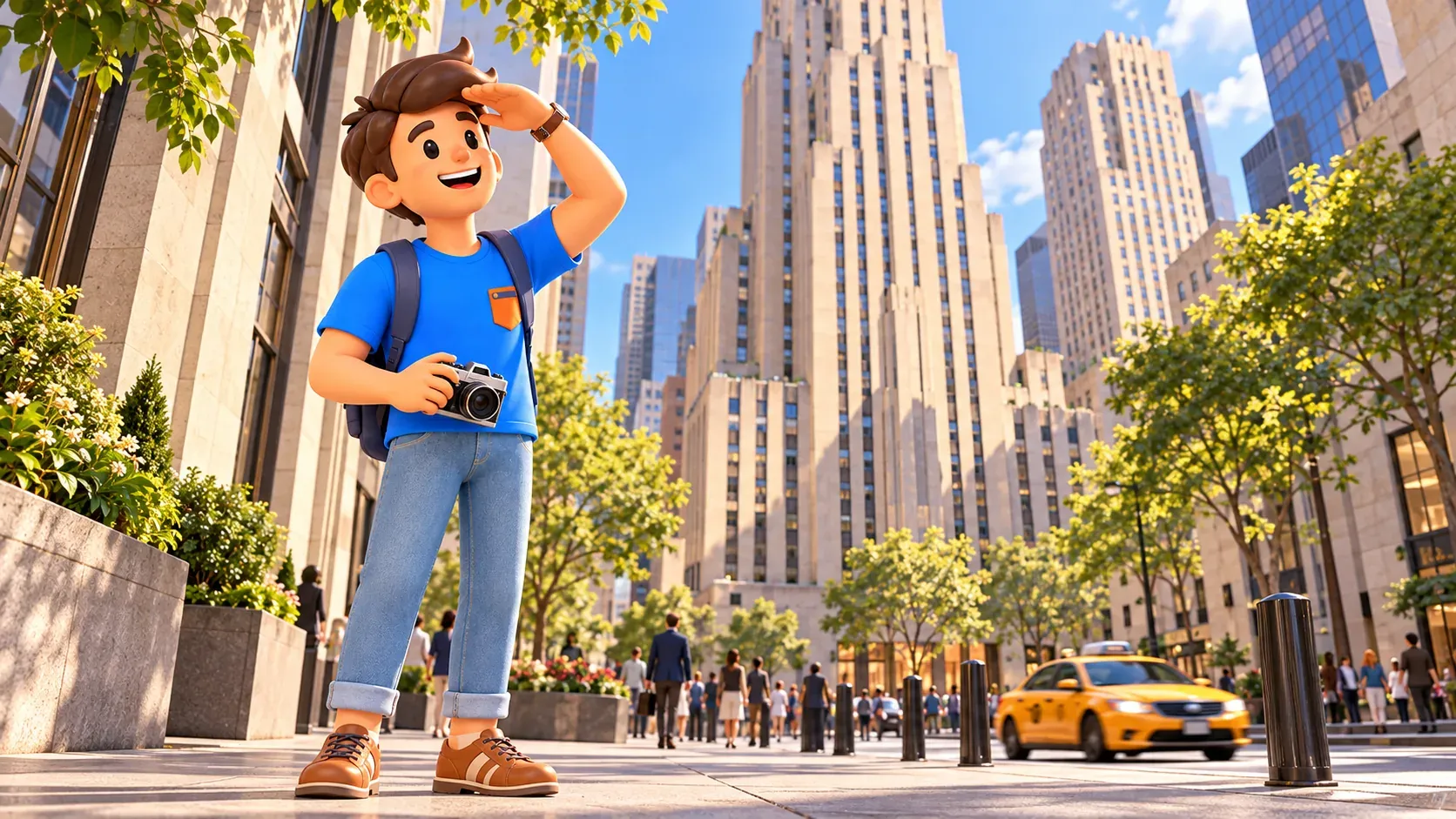
After lunch, follow Fifth Avenue north towards St Patrick’s Cathedral and Rockefeller Center. Allow approximately an hour around the façades and public spaces. Compare the cathedral’s forms with the neighbouring towers; different approaches to height and rhythm are visible without a comprehensive architectural tour.
Use the remaining flexible block for one observation deck if you have chosen it and checked its admission slot. Allow roughly ninety minutes to two hours with organisational time. Later, choose a short Times Square visit or a pre-booked performance. A show needs its own schedule; combining every possible addition would change the character of the day.
Day two: Lower Manhattan and the Brooklyn waterfront
Start around 9:30am at Bowling Green and head towards Wall Street, Federal Hall and Trinity Church. Allow an hour to ninety minutes for the streets and exterior stops. Views here often end at a nearby façade rather than running along a long avenue, creating a different walking experience from Midtown.
Continue northwest from Trinity Church to the 9/11 Memorial, allowing fifteen to twenty minutes. The outdoor memorial is free, with current regular hours of 8am to 8pm daily. Take time with the pools and name panels in the spirit of remembrance. The museum is a separate ticketed visit; if it matters most, shorten the later Brooklyn portion.
After lunch, head to the Brooklyn Bridge pedestrian approach near City Hall. Allow twenty to thirty minutes from the World Trade Center area. Follow pedestrian signs, keeping to the promenade rather than the separate protected cycle path. An hour to ninety minutes allows for approaches, the crossing and photographs, depending on crowds and weather.
Built between 1869 and 1883 to John A. Roebling’s design, the bridge brings stone arches and suspension engineering into the modern skyline. Notice how cables and distant buildings shift as you move. In Brooklyn, continue towards DUMBO’s waterfront around Jane’s Carousel. Leave ninety minutes to two hours for a walk, food and a seat, then plan the return around your accommodation.
Day three: Central Park and The Met
Enter Central Park near Fifth Avenue and 59th Street around 9am. Choose southern paths leading towards the Mall and Bethesda Terrace, allowing ninety minutes to two hours with pauses. The terrace’s stairs, arcade and carved stone show how a built space can direct movement while remaining part of a planted landscape.
Bethesda Fountain has been switched off for restoration since August 2026, although the terrace remains open. Do not plan around flowing water. Continue towards the park’s eastern edge and The Met, allowing another thirty to forty minutes from Bethesda for walking, finding your way and leaving the park.
Eat before entering and reserve a museum block from roughly 1pm to 4:30pm. This includes an entry buffer and approximately three hours with the collections. Choose two or three interests, such as the ancient world, European painting or decorative arts. A personal thread makes the visit more satisfying than working through a disconnected list of objects.
The Met is closed on Wednesdays. Normal opening is 10am, with closing at 5pm except Fridays and Saturdays, when it stays open until 9pm. Other closures include Thanksgiving Day, December 25, January 1 and the first Monday in May. Individual advance tickets are available but not required. Admission is paid; local concessions do not automatically apply to every visitor. The roof garden is closed for renovation and is outside this plan.
Day four: Roosevelt Island and a different view of the city
Choose an open day for Four Freedoms Park: its current hours are 9am to 5pm, with Tuesdays closed. December 25 and December 31 are also listed as closures. Arrive at Roosevelt Island station around 10am to 10:30am, then head south. The park’s official estimate is a fifteen-minute walk from the station; allow longer if you stop along the way.
Here, the towers become something to observe across the water. Within the park, pay attention to the sequence of garden, paths and the stone “Room” near the river. Built to Louis Kahn’s design, the park opened to the public in 2012. Its architecture provides a worthwhile focus without requiring an extensive checklist.
Give the park around an hour, then return towards the island’s central area with pauses beside the water. Three to four hours on the island leave room for an unhurried visit and a free afternoon. Lunch can come after your return or at a suitable place along the way; food inside the memorial park is restricted to designated areas.
Do not automatically add the northern lighthouse to this southern walk. That would extend the outing considerably. Blackwell House can be an exterior stop if you deliberately choose a longer continuation north, but covering the entire island is not the purpose of this day. Its value lies in the change of scale and pace.
If quieter outings appeal more than another observation deck, bring that preference into RoadMe. The app prepares a personal trip plan around your interests, making it easier to distribute walks, deeper visits and free time across your days.

Getting to the island
At the check on 17 October 2026, the M serves Roosevelt Island on weekdays from approximately 6am to 9:30pm. The F remains the service on weekends and during late nights. This follows the F/M route change introduced in December 2025; check service for your date, including temporary changes, rather than relying on an older guide.
The NYC Ferry Astoria Route is another option with a Roosevelt Island stop. Check its timetable, payment arrangements and your complete journey separately. Map proximity does not provide a walking connection: you cannot simply cross from the island’s southern tip to the neighbouring Queens waterfront.
Day five: Long Island City, art and the industrial waterfront
Long Island City is in Queens. Begin around noon at MoMA PS1, 22-25 Jackson Avenue. This contemporary art space occupies a former public school, rather than the main MoMA building in Midtown. Opening with the Rooms exhibition in 1976, it made the building itself a setting for artistic experimentation.
Allow about ninety minutes for selected exhibitions and check the programme before your trip. A visit depends on what is actually showing. Admission is currently free for everyone. Regular hours are noon to 6pm, with Saturday opening at 10am; Tuesdays and Wednesdays are closed. Thanksgiving, Christmas and New Year’s Day are additional closures.
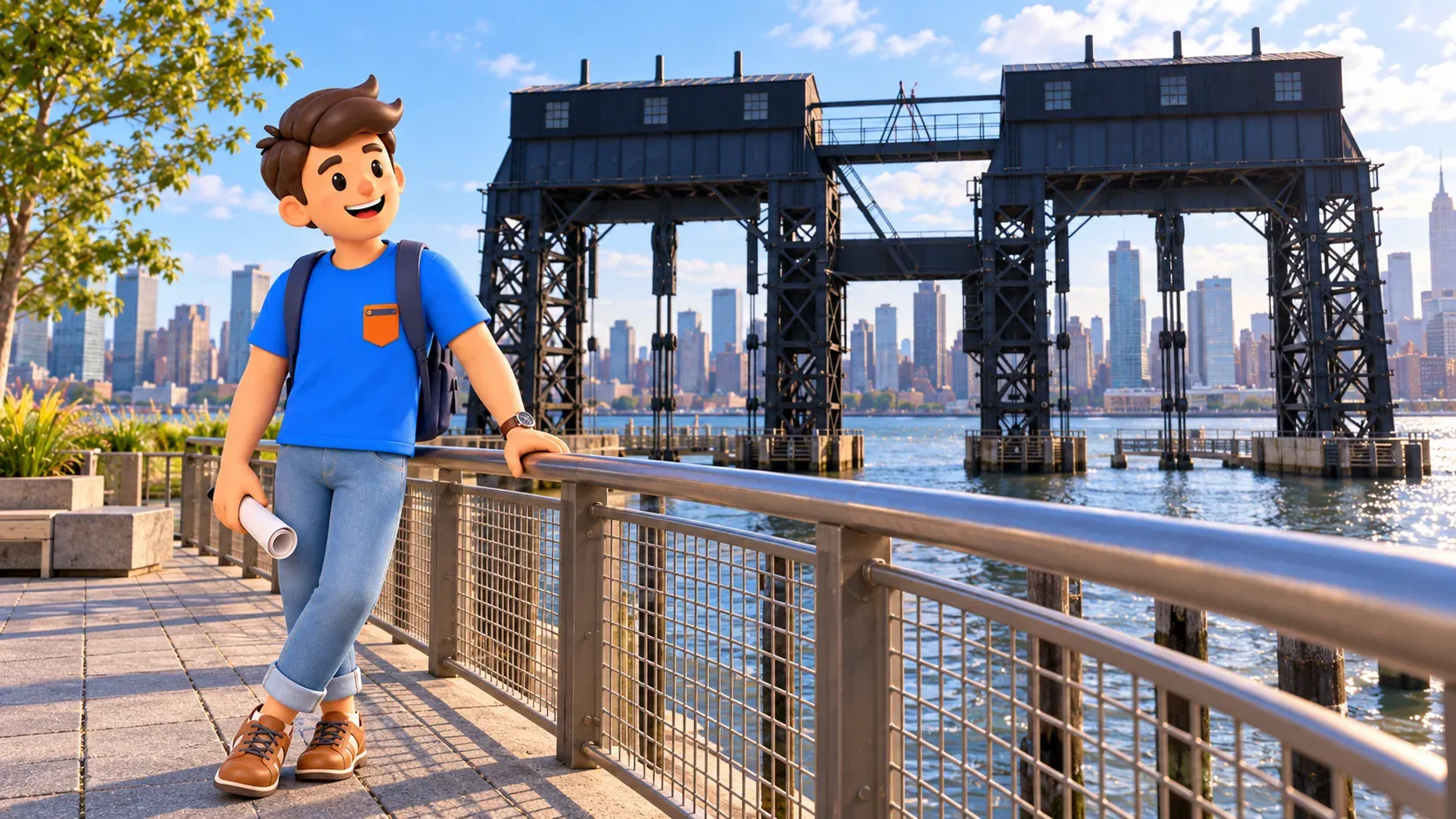
After an hour for lunch, walk towards Gantry Plaza State Park on the riverfront. Allow approximately twenty to thirty minutes on foot, then an hour to ninety minutes beside the water. The restored gantries once served railcar floats and barges. Their presence brings the working waterfront’s history into a view now dominated by Midtown’s towers.
Schedule this part in daylight and finish before dusk. The official park page contains conflicting opening information, so confirm separately before planning a late visit. Avoid adding Astoria and Flushing to this same outing: Queens extends far beyond one waterfront neighbourhood, and an open evening is already part of the plan.
Move whole days to fit the calendar
First place The Met away from Wednesdays and its holiday closures, PS1 away from Tuesdays and Wednesdays, and the island park away from Tuesdays. For a Saturday-to-Wednesday stay, one workable order is Midtown, Lower Manhattan with Brooklyn, Long Island City, Central Park with The Met, then Roosevelt Island. This illustrates calendar planning rather than a compulsory sequence.
Keep the bridge and island outings for suitable weather. In persistent rain, exchange whole blocks so their geographical groupings stay intact. Choose a ticketed alternative only after checking available times; a new purchase does not automatically refund an earlier booking.
Conditions were checked on 17 October 2026. Recheck opening days, exhibitions and transport before travelling. Wear comfortable shoes and leave time for meals and the journey back. The advantage of five days is the freedom to choose: a quiet waterfront and one attentive visit can give the trip more shape than filling every remaining hour.


