
Navona to Trevi via the Pantheon: Two Hours in Classic Rome
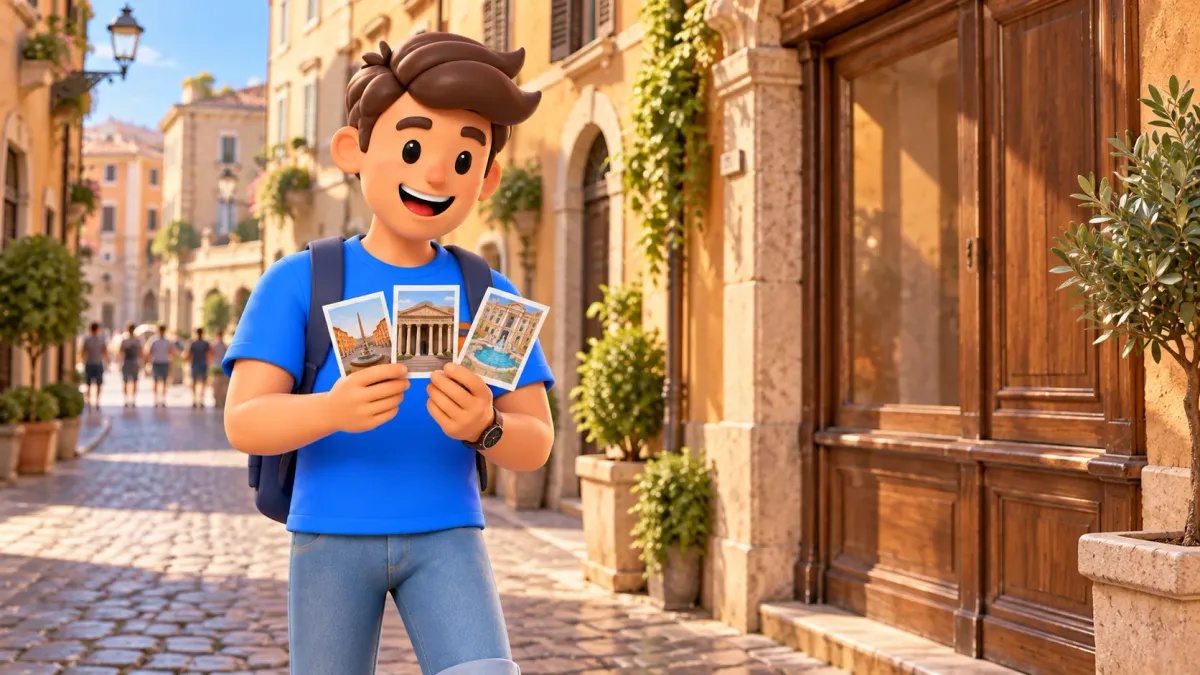
Piazza Navona, the Pantheon and Trevi make a compact walk through different scales of Rome: an elongated square, substantial ancient columns and a great composition of water and stone. The streets between them and a seated break are part of the experience. This stretch is enough for an introduction to the classic centre without a compulsory continuation towards the Colosseum or Vatican.
Start on Piazza Navona and finish in the public part of Trevi's square. All three main stops are exterior visits in the basic version. Pantheon admission and the fountain's controlled near zone are excluded. Two hours is an illustrative allocation including walking and rest, not a measured result. Travel to the start and the journey after the finish need separate time.
Choose your main interest before starting
This route suits a wish to see famous places without a major museum visit. It also works as an independent part of a first full day or a short return to the centre. Choose one priority: observing architecture, taking a few photographs or simply walking between squares. That makes it easier to decide where to linger and what to save for another occasion.
Build the walk into your whole trip more conveniently in RoadMe: the app prepares a personal plan around your interests, dates, pace and budget. With the itinerary and map together, the ideas are easier to use on the ground than separate notes that need connecting each time.
If the Pantheon interior matters most, begin with its actual admission arrangements and an available ticket. Then shorten an exterior stop or extend the outing. Saying that everything is nearby does not account for the entrance approach, checks and possible waiting. A building on the route still needs a proper allocation for a visit inside.
Look at the three squares on a map before setting out. The direction runs from Navona through Piazza della Rotonda to Trevi, without returning to the start. Agree on the finish and a meeting point if your group separates. A favourite café or final fountain will not necessarily provide the easiest return to every accommodation address.
A clear 120-minute outline
| Minutes from the start | Included activity |
|---|---|
| 0–25 | Navona: overall view, a short walk across the square and closer attention to one fountain |
| 25–40 | Walk towards Piazza della Rotonda beside the Pantheon |
| 40–60 | Pantheon exterior and its relationship with the square |
| 60–80 | A seated pause nearby, including the short approach |
| 80–105 | Walk towards Trevi with crossings and brief observations |
| 105–120 | A general view from Trevi's public square and finish |
Walking has its own blocks rather than disappearing between visits. People, traffic lights, available passages and photography affect the real pace. Shift the outline to your preferred start, perhaps after breakfast or a daytime rest. The table does not promise empty squares or identify the least crowded hour.
For slower walking, choose two stops and preserve the break. With a firm deadline, finish at the Pantheon: that already creates a complete outing between a Baroque square and an ancient building. If you want extended photography at every stop, allow longer from the outset. There is no need to hurry the last streets simply to record a Trevi finish.
Navona: the space before the details
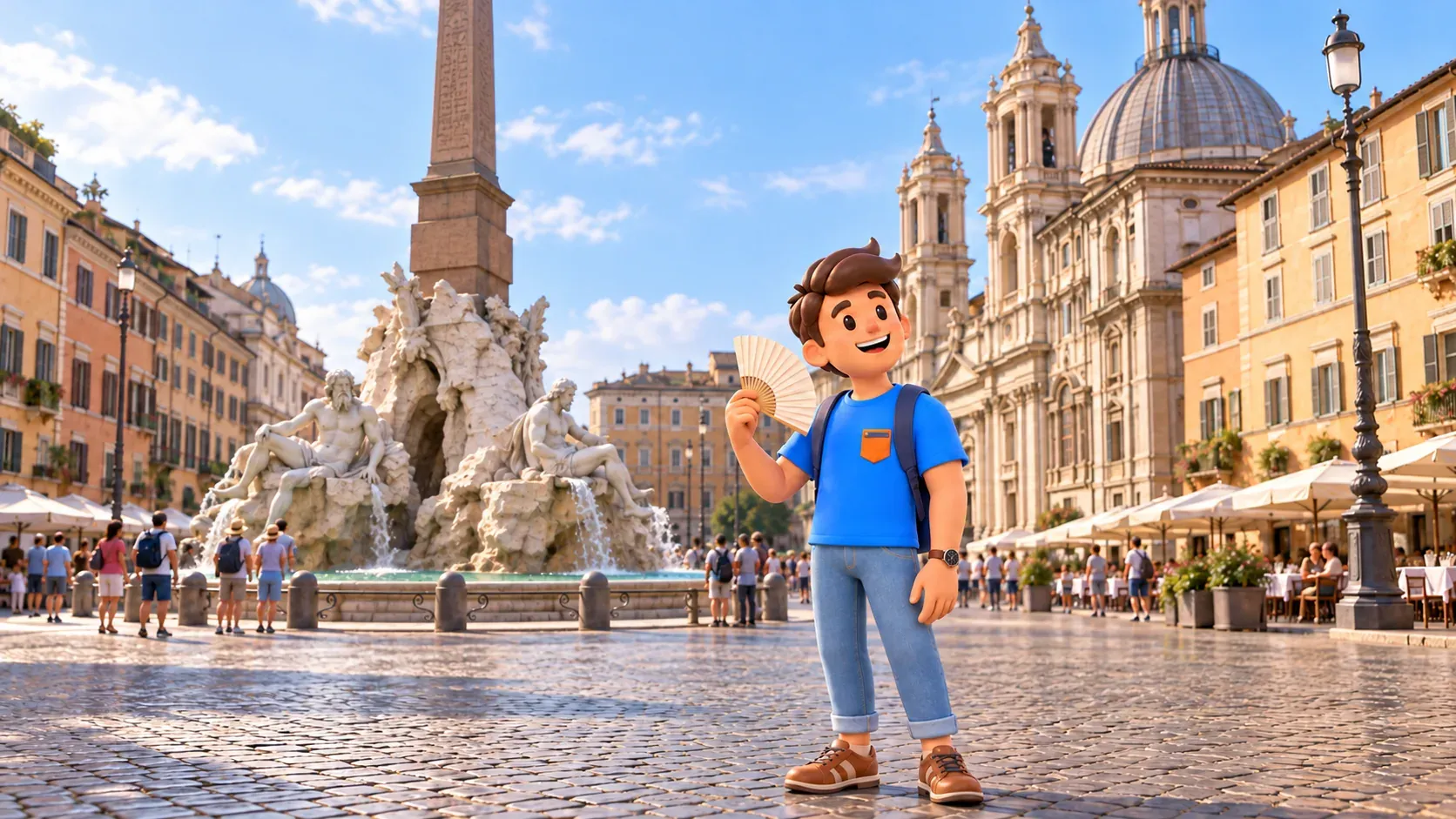
Begin with the square as a whole and walk along its length before stopping at each sculpture. Its elongated outline retains the shape of Domitian's stadium. The present space sits over an ancient foundation, a relationship that is visible in its unusual proportions. Later façades and fountains add another historical period.
Choose one fountain for closer attention. At Bernini's Fountain of the Four Rivers, look at the relationship between sculpture, rock-like forms and the tall obelisk. The aim is to notice how stone creates a sense of movement rather than memorise every figure. A few minutes of observation can make a familiar view more rewarding than repeated photographs from one position.
Compare the experience from farther away and closer up: first a long square reads as a whole, then separates into materials, water, shadows and sculpted gestures. One such change of scale is enough for this walk. Detailed accounts of every church, palace and fountain can remain for an individual monument visit.
The twenty-five-minute example excludes the stadium's archaeological remains and nearby interiors. If those become your priority, change the programme deliberately. Spend longer at Navona and finish at the Pantheon. A short outing offers the freedom to linger; it does not require leaving each place at the exact minute printed in a table.
Approaching the Pantheon: the city between landmarks
Head towards Piazza della Rotonda along available central streets, checking the direction on a map. Choose a clear line of movement before trying to follow every shop window and possible shortcut. Current signs and restrictions on the ground matter more than an imagined straight line between points.
This stretch also changes the experience. After Navona's open space, streets narrow the view and the next substantial building appears gradually. Notice the difference between approaching and emerging into a square. It makes the city a sequence of spaces rather than only names to locate on a screen.
Fifteen minutes is an indicative walking block with a little room to look around. A shop visit or lengthy pause needs time from elsewhere. Do not treat everything along the way as part of pure walking. With companions, agree whether such diversions are shared or whether you will continue after a brief meeting.
The Pantheon: look beyond the façade
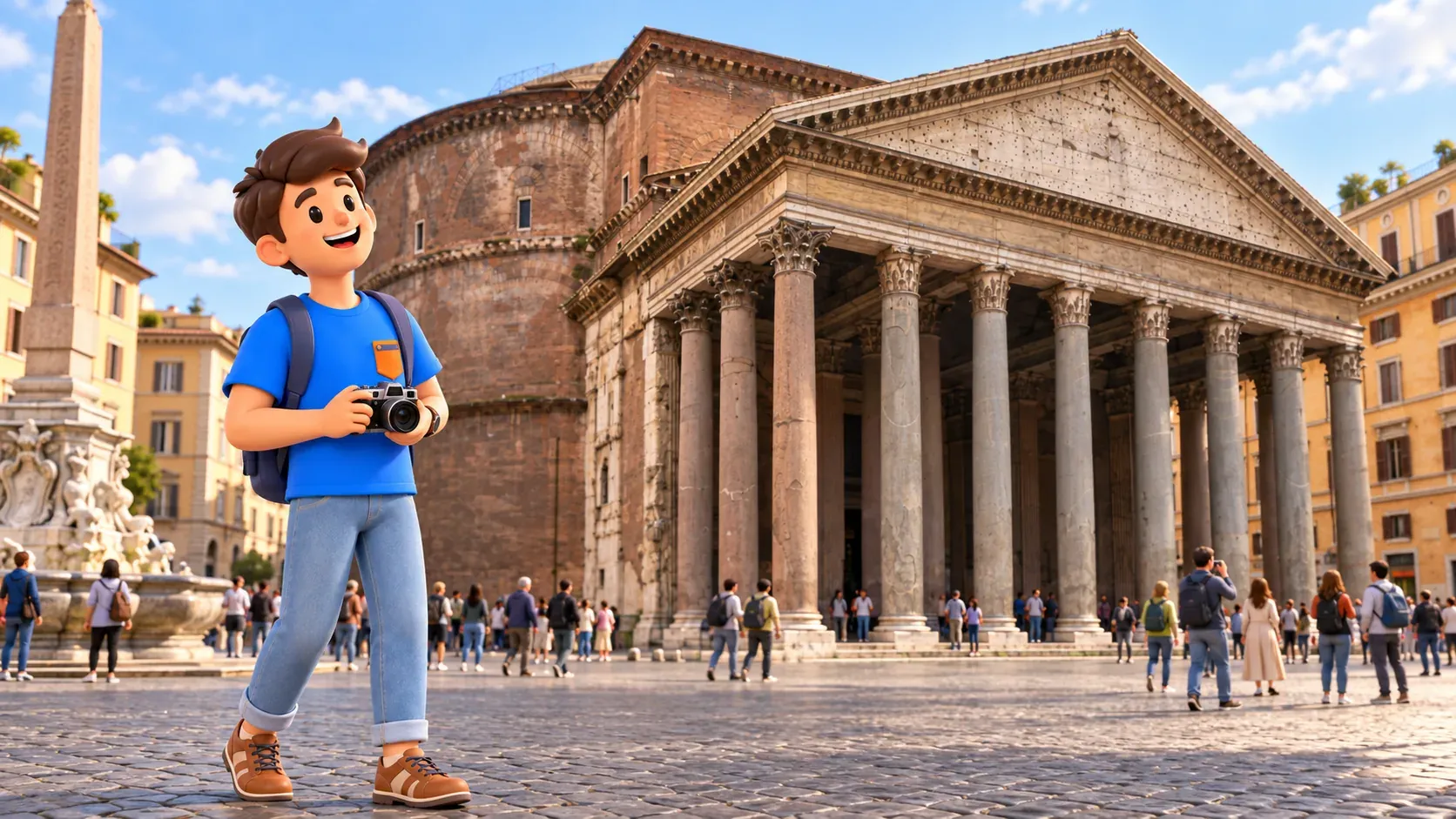
At Piazza della Rotonda, look first at the columned portico, then notice the circular body behind it. The Pantheon is more than an ancient frontage: its architecture joins different forms. The present building is associated with Hadrian's rebuilding, while the portico inscription recalls Agrippa and the earlier history of the site.
Choose one question: how do the columns change your sense of weight and height? Look from a little distance, then approach by an allowed route. The difference between the overall silhouette and a column beside a person helps explain the building without a long list of dimensions and construction terms.
The surrounding square contributes too. Observe how its buildings and daily movement relate to the ancient monument. A portico-only photograph often omits that relationship. Take one wider picture if you wish, then watch for a few minutes while leaving passages clear for other people.
For admission, check current arrangements at this active religious monument. The interior and dome deserve their own attention; the table includes only the exterior. Replace another part of the walk or extend the programme if you go inside. Access during a service cannot be assumed to match ordinary tourist visiting.
Twenty minutes of rest belong in the route
After two different squares, sit somewhere suitable and accessible or use a café. Rest helps restore attention: a tired visitor may reach the next place only to tick it off. The example allows twenty minutes including the approach. This is a small break rather than a guaranteed allocation for a full lunch.
If ordering coffee or food, assess the menu, queue and remaining time first. Service depends on the establishment, so avoid promising yourself that everything will finish within a few minutes. If an unhurried meal is what you want, extend this block and shorten Trevi. A break should not become a wait spent constantly checking the time.
Decide here whether to continue. With a partner or family, consider the person most tired rather than the original plan of the fastest walker. You can finish at the Pantheon and organise the return separately. Preserving the wish to explore tomorrow is more useful than one further stop made only through determination.
Towards Trevi: small streets and a large finish
Continue towards Trevi, checking a usable route through central streets and crossings. The twenty-five-minute block includes the journey and short observations. Further mandatory attractions are unnecessary after two strong experiences. Keep some attention for the way a small square reveals a large fountain composition.
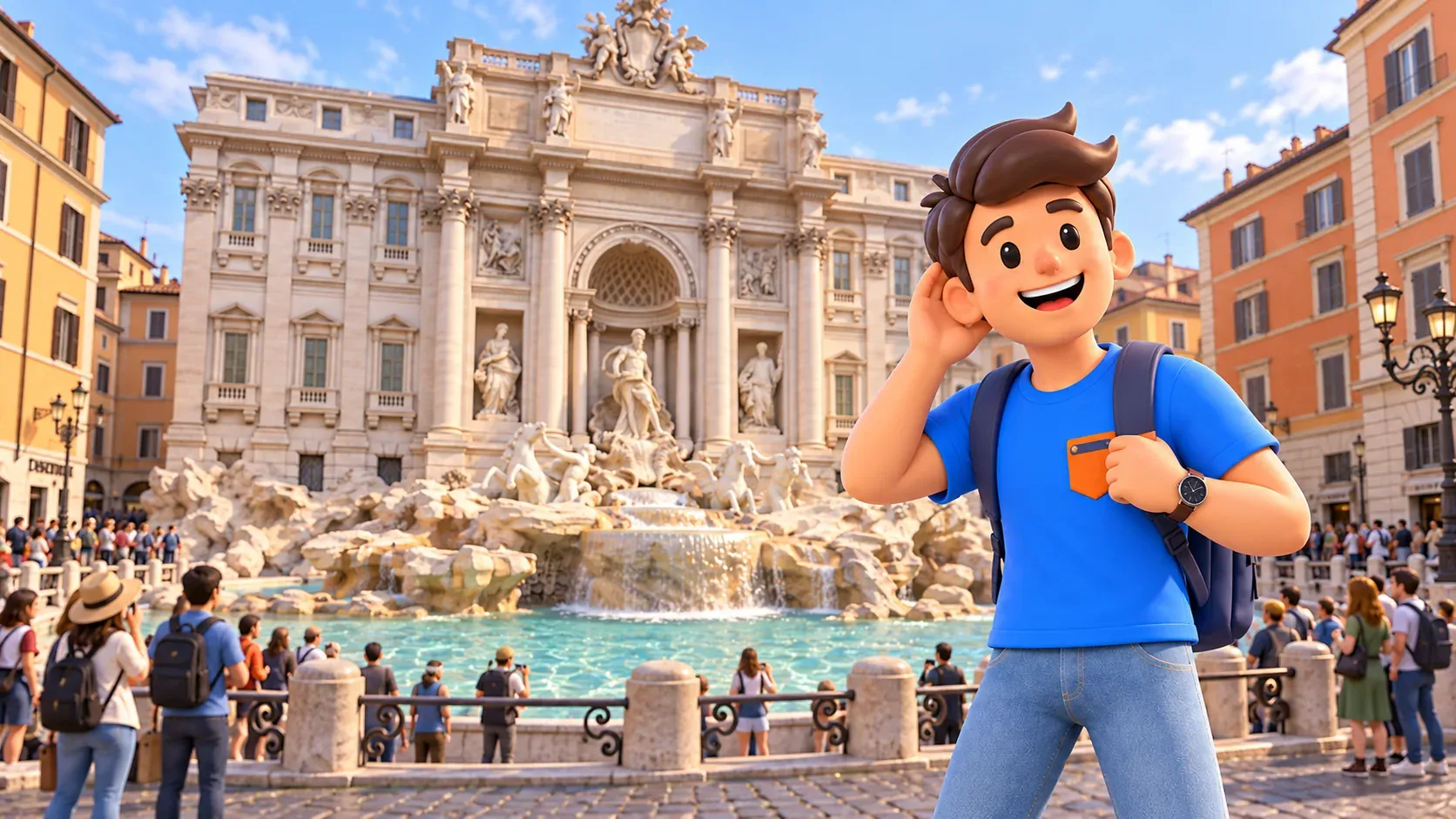
At Trevi, begin with the ensemble. The present design is associated with Nicola Salvi, with Palazzo Poli providing the architectural background. Water and sculpture form a shared scene. The central figure is Oceanus; avoid automatically calling him Neptune simply because sea creatures appear nearby.
The basic programme ends in the public part of the square. In 2026, the zone immediately beside the monument has separate paid access for tourists and non-residents, with stated exemptions. Check current arrangements and allow time for organised entry if you want that area. A general view and a near-zone visit are different versions of the stop.
The final fifteen minutes allow only a short introduction, with no promise of a particular viewpoint or absence of people. Follow organised flows and leave narrow passages clear. Plan travel from the finish to accommodation, dinner or another appointment separately. The walk ends here rather than at whichever transport stop you ultimately need.
Bring back a few different views
If photography is part of the pleasure, give the three stops different tasks. At Navona, make one broad view that explains the square’s length. At the Pantheon, compare the whole building with a detail of a column or surface. At Trevi, consider the relationship of fountain and façade rather than only a close portrait. These choices help avoid spending every stop repeating the same photograph. Select a position that leaves other people room, then put the camera away for a moment. You do not need an empty square to remember how the place felt. Keep the picture-making within each stop’s time rather than adding an uncounted session between blocks.
Adapt the walk around your interests
In heat, increase rest and reduce exposed time. In rain, do not assume every interior is available as shelter; check the specific place. Architecture enthusiasts may prefer longer at the Pantheon, while visitors interested in Baroque sculpture can linger at Navona. Choose one theme rather than several additional admissions.
RoadMe makes a personal programme for the whole trip easier to prepare, matching the itinerary to your interests, dates, pace and budget. The short walk becomes part of a thought-through plan that is more convenient and effective to use in the city.
For a longer introduction, use our one-day Rome walk. This two-hour stretch can remain a separate experience: an ancient stadium's shape, the weight of columns and moving water offer three different ways of seeing the same city.


