
Musical Paris: Plan a Museum, a Walk and an Evening Concert
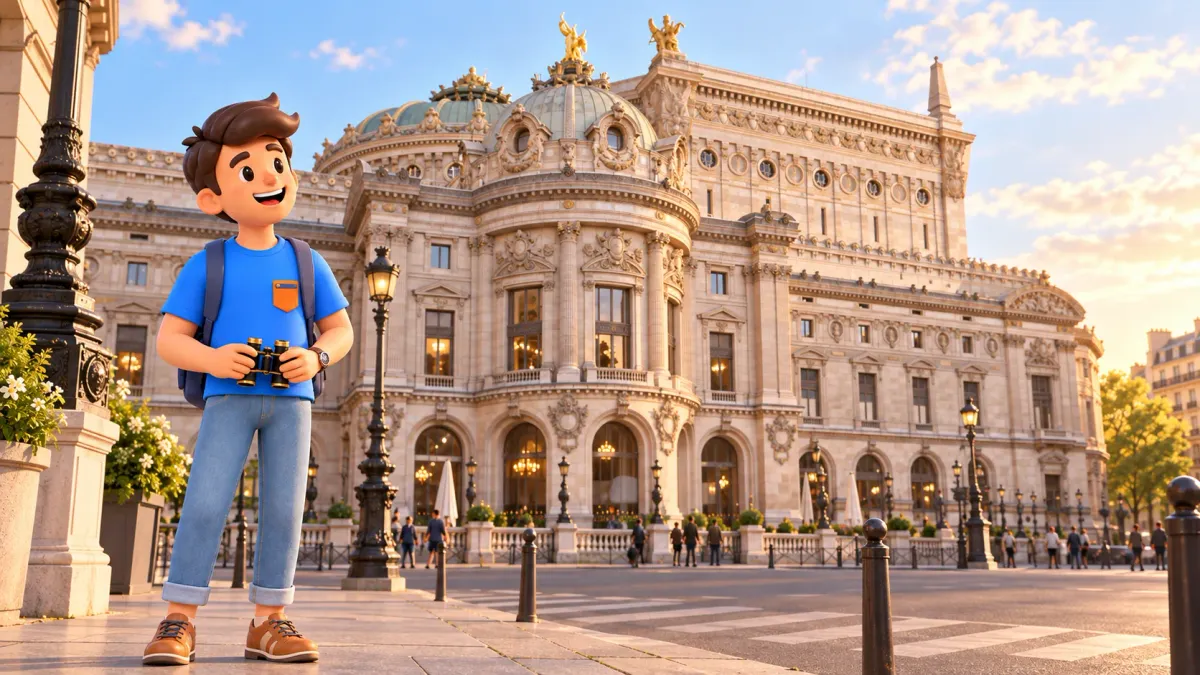
A musical day in Paris can begin with the shape of an instrument, the staircase of an opera house or the working history of a broadcasting building. In the evening, those details acquire another meaning when you hear musicians perform. The useful connection is between what interests you during the day and what you have chosen to listen to later.
Start with the evening booking, then select one nearby daytime visit. Palais Garnier suits an interest in theatrical architecture; the Musée de la musique offers instruments and recorded sound; Radio France combines broadcasting history with a scheduled architectural tour. These are three alternative programmes, each with a local walk, dinner and time to arrive calmly.
Choose the evening hall before planning the afternoon
Use RoadMe to build a complete personal Paris plan around your interests, dates, pace and budget. Keeping your visits, walks and evening plans together in the app makes preparing and following the trip much more convenient and efficient.
Read the event page for the exact venue, hall, starting time and duration. “Paris Opera” can mean Garnier or Bastille; “Philharmonie” covers activities in two distinct buildings; a Radio France event may take place somewhere else. Choose an evening you want to hear, rather than an institution whose name happens to match your daytime stop.
This matters particularly for the Opéra-Comique in the 2026–27 season. While its stage machinery is modernised, opera productions are presented at partner venues. Place Boieldieu remains an administrative and ticketing contact, with Foyer events announced from January 2027. Use the address of your actual performance and its own admission instructions.
The examples below assume an 8pm performance and compatible daytime bookings. They end at 8pm, including arrival before the show. The performance itself, any interval, departure and journey home are additional. Travel from your accommodation is also outside these budgets; an earlier curtain time requires rebuilding the afternoon.
| Choose one setting | Programme before the performance | Example window |
|---|---|---|
| Garnier and the central music district | 30 min arrival + 90 visit + 45 local walk + 30 rest + 60 dinner + 15 return + 15 spare + 45 performance arrival = 330 min | 2.30–8pm, with a booked 3pm visit |
| Music Museum and southern La Villette | 15 min arrival + 120 chosen visit + 45 walk + 45 rest + 60 dinner + 15 return + 15 spare + 45 arrival = 360 min | 2–8pm |
| Radio France and the Kennedy riverfront | 30 min arrival + 90 booked tour + 45 walk + 90 rest or listening preparation + 60 dinner + 15 return + 15 spare + 45 concert arrival = 390 min | 1.30–8pm, only with a compatible 2pm tour |
Walking distances below are route estimates, while the time allowances include looking, stopping and finding entrances. Confirm both bookings before relying on any example. A useful day can be shorter if you prefer more rest; its purpose is to leave you attentive for the evening.
Palais Garnier: understand the theatre before the curtain rises
Charles Garnier’s opera house opened on 5 January 1875. Its architecture made arriving at the theatre part of the spectacle: the grand staircase encouraged people to see and be seen, while the Grand Foyer offered a place for promenade and conversation during intervals. Look at how landings, balconies and long rooms organise that social choreography.
The daytime visitor entrance is at Rue Scribe and Rue Auber, behind the statue of Charles Garnier. The performance entrance is on Place de l’Opéra. Learning this distinction during the afternoon removes a small but unnecessary uncertainty when you return dressed for the evening.
Book the daytime visit online in advance: visit tickets are not sold on site. Allow about 90 minutes. The normal visiting day runs from 10am to 5pm, subject to the published calendar, daytime performances and closures; last admission is an hour before closing. A 3pm booking works for this example only when that date is offered.
Concentrate on the staircase, foyer and decorative details in accessible public areas. The auditorium can close unpredictably for rehearsals, and no visit ticket guarantees entry to it or a view of Chagall’s ceiling. You can still understand the building through the places where audiences gather. A daytime visit and an evening performance require separate bookings.
Afterwards, follow Rue Scribe south towards Boulevard des Capucines and look at the Olympia exterior at number 28. This gives the walk a different musical register without adding another interior visit. Return along the boulevard and Rue Scribe towards Garnier. The public street circuit is roughly 0.85–1km; its 45 minutes allow observation rather than continuous walking.
Take the allocated rest and an early dinner locally. Keep the return, spare time and 45-minute performance arrival intact: the Paris Opera advises arriving at least 45 minutes before the start. If your show is at the Olympia, finish at its actual entrance and follow its event rules. A Bastille performance or an off-site Opéra-Comique production needs a separately calculated transfer.
La Villette: choose instruments or one current exhibition
For a concert in the music complex, the Musée de la musique is a coherent daytime choice. Christian de Portzamparc’s Cité de la musique opened in 1995, followed by the museum in 1997. Jean Nouvel’s Philharmonie opened in January 2015 in a separate building. Use 221 avenue Jean-Jaurès and follow the signs for your booked activity.
The permanent collection traces musical history from the late sixteenth century to the present, connecting European instruments with traditions elsewhere. Select two threads: keyboard construction and electric sound, perhaps, or craftsmanship and the changing settings in which people performed. Compare an instrument’s visible shape with its sound through the included video guide, available in English, French and Spanish.
Regular collection hours are Tuesday to Friday, noon–6pm, and Saturday and Sunday, 10am–6pm; Monday is closed. Check exceptional and holiday arrangements for your date. Two hours support a considered introduction. If Pierre Henry’s reconstructed studio is your particular interest, its published opening is Wednesday to Sunday.
Alternatively, use the daytime block for one exhibition. At the October 2026 check, Hassan Hajjaj’s My Rock Stars, with music by Acid Arab, is scheduled at the museum from 22 September 2026 to 25 April 2027. Video Games & Music runs in the Philharmonie exhibition space from 2 April to 1 November 2026. Both require advance reservation and include access to the permanent collection under their published conditions.
That inclusion gives you a choice, not extra hours. Make the exhibition your main focus and keep any collection sampling brief, or extend the day. Exhibition hours can differ from collection hours. A current-season concert ticket can qualify for a reduced collection rate under the stated conditions; it is not automatic free museum admission.
Outside, pause in the Cité’s public covered approach and notice the rhythm of its red structure. Give yourself a moment to leave the museum’s explanations behind before returning to listening. The surrounding architecture makes this transition interesting without needing another ticketed room.
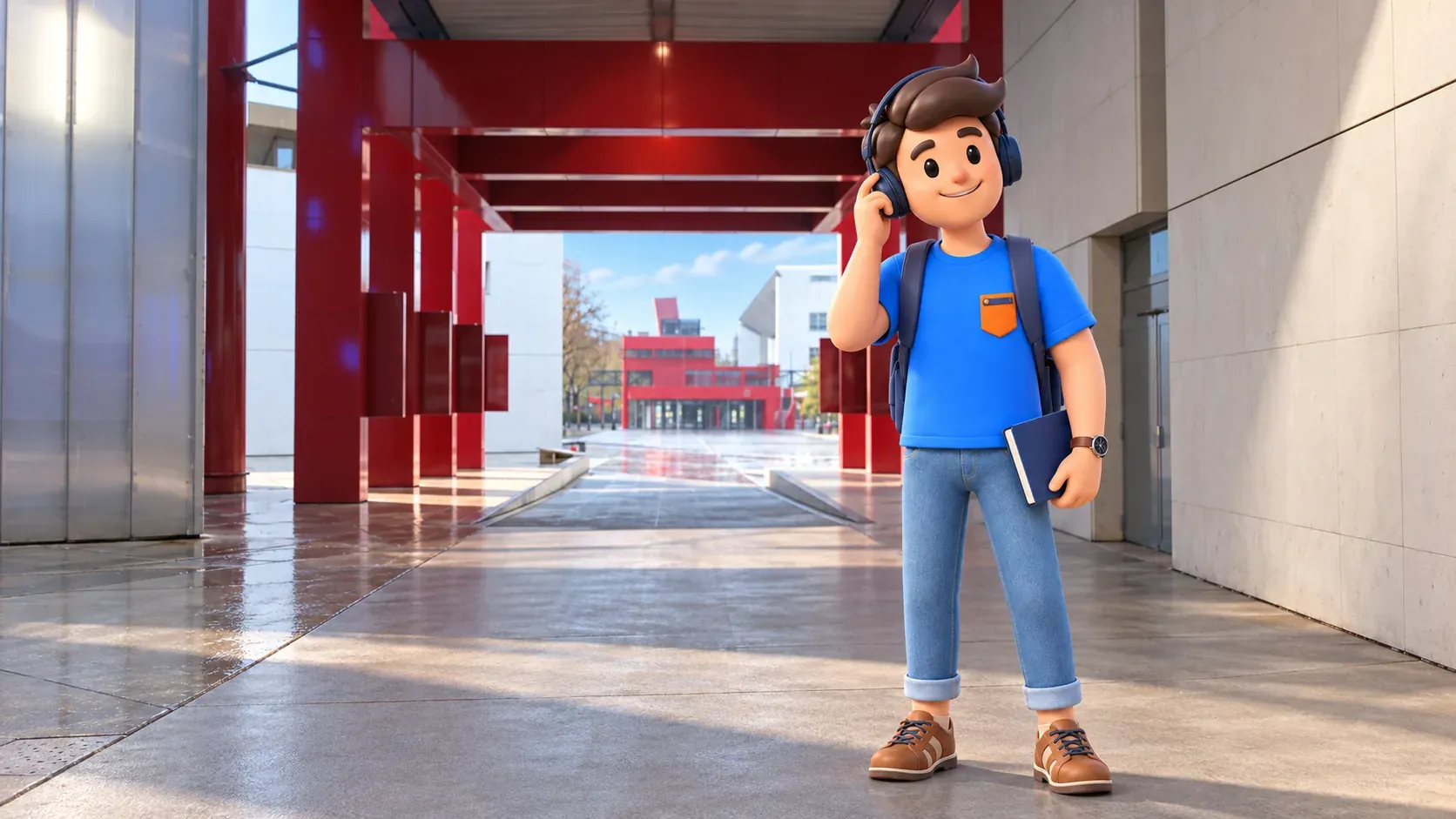
Use the 45-minute walk for the southern park: the area around the Fontaine aux Lions, the Grande Halle exterior and the Philharmonie exterior. A circuit of roughly 1.2–1.4km connects contrasting buildings and open space. The wider La Villette half-day walk belongs on another day if you want the canal crossing and northern science district.
The roof belvedere is optional, subject to its calendar and actual access. Its published season is April–October, Wednesday–Sunday, with winter closure November–March; from mid-September through October it runs from noon until sunset. The basic programme works without it. Add time or replace part of the walk if you decide to go up.
Find the right concert door at La Villette
Check the hall name as carefully as the repertoire. The Grande salle Pierre Boulez is in the Philharmonie, with its entrance on level 3. The Salle des concerts is on the ground floor of the Cité de la musique; its Amphithéâtre is downstairs. The Philharmonie’s Studio is also accessed via level 3. Museum reception is not the entrance to every evening event.
The Cité-to-Philharmonie outdoor connection is about 460m; allow around 15 minutes for the transfer and add whatever indoor orientation you need. The two main concert halls open their doors 30 minutes before performances; the Studio and Amphithéâtre open 20 minutes before. Our 45-minute arrival allowance includes orientation and checks, without promising earlier access to the hall.
Radio France: architecture, broadcasting and time by the river
The Maison de la Radio et de la Musique offers a different musical setting at 116 avenue du Président Kennedy. Henry Bernard’s circular building was inaugurated in December 1963. Its broad curve expresses the idea of bringing broadcasting activities together; a guided visit adds the working story behind a silhouette that can otherwise look simply monumental.
Choose the individual Histoire et architecture ticket and confirm its session. The checked booking product lists 90 minutes and admission from age nine; children under twelve need an accompanying adult with a ticket. Follow the conditions and meeting point of the product you buy. Tours are scheduled activities, rather than daily permission to explore studios independently.
The 390-minute example assumes a confirmed 2pm tour and an 8pm concert in the building. A later tour needs a different timetable. Likewise, distinguish the Auditorium from Studio 104 and check whether the advertised event is actually on site. Book the tour and concert separately; neither booking establishes availability for the other.
For the local walk, remain on the upper public pavement of Avenue du Président Kennedy, continue towards Avenue de Lamballe and return. Roughly 0.65–0.8km gives you river views and changing angles on the building. The route does not rely on a lower riverside path being open, or add an island crossing.
The generous 90-minute break is deliberate free time. Sit down, listen to a little of the evening’s repertoire on your own device, read the programme or simply rest. It is not a concealed second museum visit. Add the early dinner, then return to the actual concert entrance; Radio France advises arriving 45 minutes before concerts.
Keep the evening comfortable and shorten the right parts
Organise luggage before this musical day. Garnier’s visitor cloakrooms are closed during daytime visits, and suitcases and travel bags are prohibited. The Philharmonie does not accept luggage or travel bags in halls or cloakrooms. Radio France prohibits suitcases, travel bags and backpacks larger than A3. Check your belongings against the venue’s current rules rather than relying on storage at the door.
To shorten Garnier, omit the Olympia circuit first. At La Villette, reduce the park walk or choose a focused 90-minute collection visit. At Radio France, shorten the unallocated rest or riverfront walk while preserving the booked tour. Keep the return and arrival allowance: rushing the final approach can undo the pleasure of the afternoon.
RoadMe can turn your musical interests, preferred pace, travel dates and budget into a personal plan for the whole trip. Having that complete itinerary conveniently organised in the app makes it easier to give both discovery and rest their place in the day.
Finally, check the performance’s running time and intervals before arranging your journey home. A museum can prepare your ears, architecture can explain an audience’s experience, and a short walk can clear your attention. Leave enough energy for the event that made you choose this part of Paris.


