
Musical London: Handel, Hendrix, the Beatles or Instrument History?
Musical London can mean entering a musician’s former home, visiting a familiar record-cover location or discovering how instruments make and reproduce sound. Those are different pleasures. Choose Handel Hendrix House for two lives separated by centuries, Abbey Road for a short Beatles-related outdoor stop, the Musical Museum for mechanical music, or the Royal College of Music Museum for instrument history. One choice can give a day its character without becoming a tour across the whole city.
Start with the experience you would miss if you only saw a photograph. A fan may value the address of a favourite artist, while someone curious about sound may prefer a demonstration or a historical instrument. The places are in different parts of London and have different calendars. This guide helps you choose one main visit; the suggested visit lengths do not include hotel journeys, station approaches, platforms, waiting, meals or travel between venues.
Choose the kind of musical encounter
- Handel Hendrix House: a paid visit to two historic residences in Mayfair, with an editorial allowance of sixty to ninety minutes for selected rooms.
- Abbey Road: a free outdoor encounter with the crossing and studio exterior in St John’s Wood; allow twenty to thirty minutes locally, with any shop visit additional.
- The Musical Museum: a paid visit in Brentford, particularly rewarding around an available guided demonstration; allow roughly seventy-five to ninety minutes for a selected visit.
- Royal College of Music Museum: free ordinary admission in South Kensington, with sixty to seventy-five minutes for selected instruments and interpretation.
Try RoadMe to have the app develop a personal programme for your whole London trip around your musical interests, dates, budget and pace. It is much more convenient to give one chosen visit its place alongside neighbourhoods, other museums, meals and rest than to turn every promising address into another journey.
These are planning estimates, not standard tour durations or measured routes. A guided tour follows its actual start, and an event may take a visit beyond the range. Keep arrival, entry and departure time separate. Do not add the four numbers and call the result a day: the transfers, opening patterns and different kinds of admission would still need their own plan.
Handel and Hendrix: two homes, different centuries
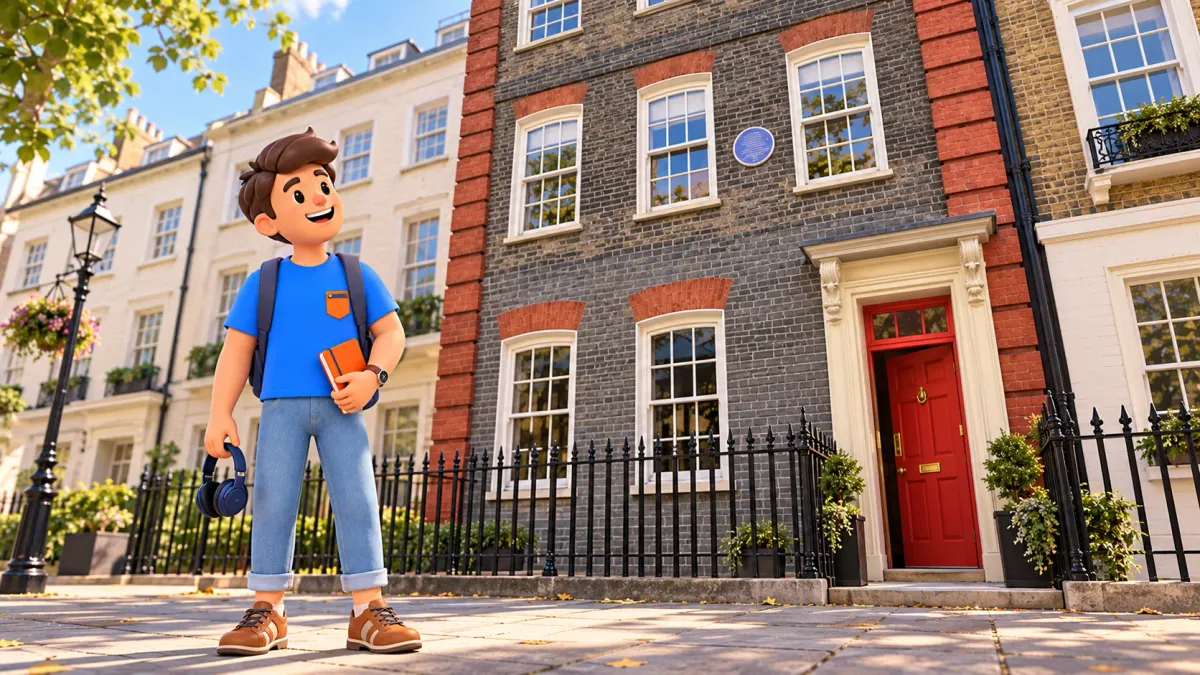
Handel Hendrix House connects Handel’s home at 25 Brook Street with Hendrix’s upper-floor flat at number 23. They were not contemporaneous neighbours and did not live in the same apartment. Handel lived and worked at number 25 from 1723 until 1759; Hendrix’s short Brook Street period was in 1968–69. Moving between these settings makes the city’s musical history feel less like one continuous style and more like successive generations making their own London.
Choose it when the setting of an artist’s life matters to you. Domestic rooms can make familiar names more approachable: where someone worked, received visitors or withdrew from public performance. Restored and recreated interiors help tell that story, so do not assume every object is an untouched possession left exactly as its owner placed it. The value lies in relating rooms, interpretation and music, rather than treating an entire house as a perfectly preserved time capsule.
The ordinary paid ticket covers both residences. Current opening is Wednesday to Sunday, 10:00–17:00, with last entry at 16:00; Monday and Tuesday are closed. A major access limitation overrides the general accessibility description: the lift is currently out of service. The entrance and exit are step-free, but that does not promise access to upper rooms. Contact the house about your requirements before committing, rather than arriving on the strength of an old accessible-venue label.
Original floors can be uneven, and some rooms have low lighting. Keep food outside; only bottled water is permitted in the museum. A live performance or talk is a separate calendar choice, not a guaranteed part of any ordinary visit. Volunteers can help explain the rooms, but the visit does not require a particular musician to be playing when you arrive.
Let the listening happen before or after
A little private listening can make a house visit more meaningful. At your accommodation, choose one piece you know and another you are curious about, and notice what you hear rather than trying to prepare a complete musical education. You might compare the role of a melody, the texture of an accompaniment or the feeling of a recorded performance. Use your own equipment and recordings. A personal listening scene does not imply permission to handle museum records or instruments.
Keep this outside the suggested visiting time. It is equally useful afterwards, when a room or detail gives you a reason to return to music.

Abbey Road: choose the association, not a studio tour
Abbey Road is the right choice when the Beatles’ 1969 album-cover association is itself the attraction. The crossing and studio exterior provide a brief encounter with a place already familiar from an image. They do not offer the same experience as a museum interior. Abbey Road Studios remains a working recording business without routine public access. Occasional separately ticketed events are exceptions; they should not be interpreted as a daily opportunity to enter the recording rooms.
Allow twenty to thirty minutes for looking from public space and using the crossing normally, with extra time if you want the shop. This is a public road with traffic. Keep anyone photographing you on the pavement, walk rather than hold a pose in the carriageway, and leave room for people making ordinary journeys. Recognising the place and understanding its continuing working role are already worthwhile.
The nearby station is St John’s Wood on the Jubilee line. Abbey Road DLR station is in another part of London and is not the arrival point for the studios. Check your actual journey rather than choosing a station from the name alone. A café pause or a longer neighbourhood walk needs additional time. The studio shop has its own hours, and being able to enter a shop does not establish access to the studios beside it.
The Musical Museum: curiosity about mechanisms
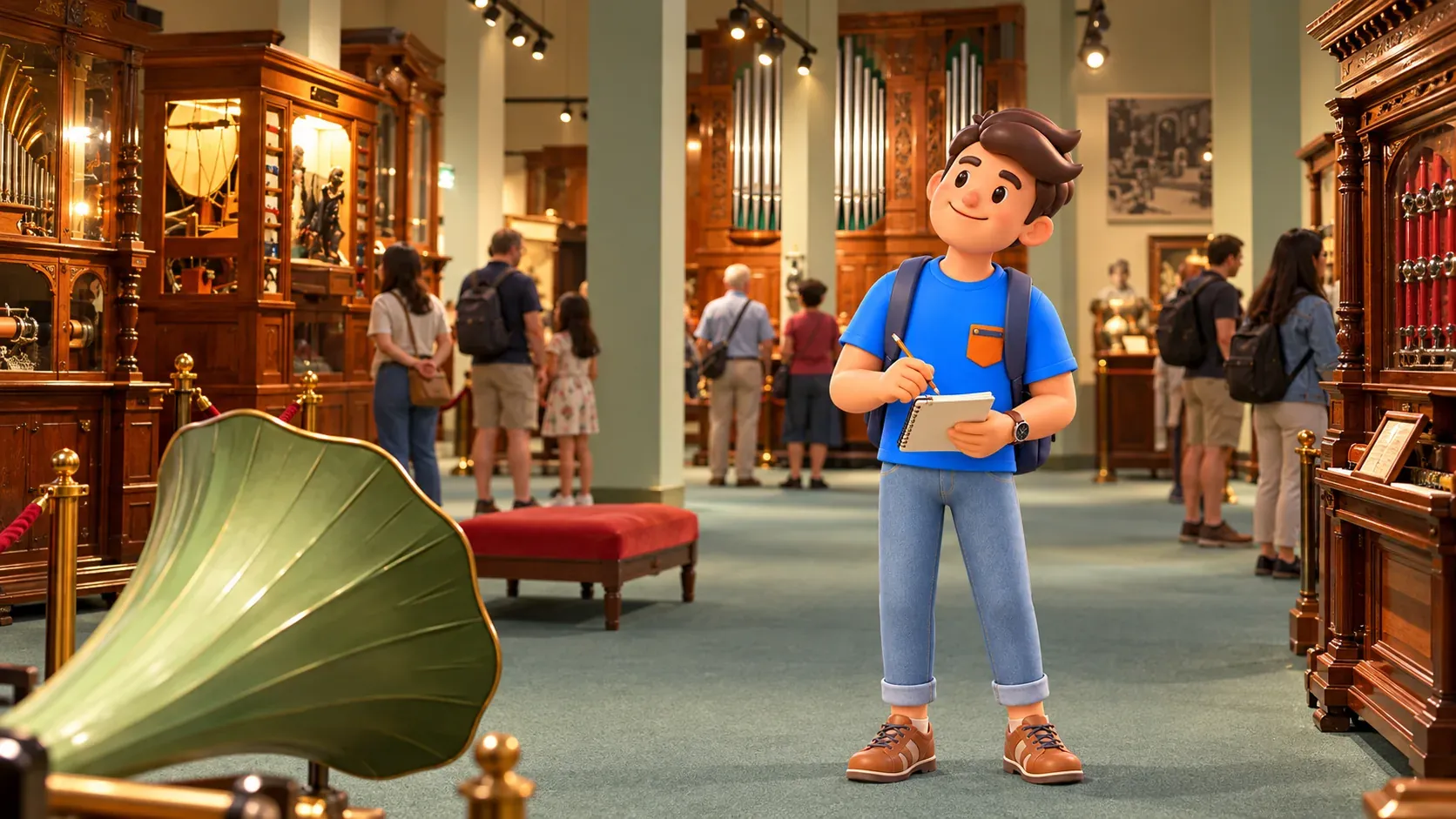
Choose the Musical Museum at 399 High Street, Brentford, when you want to understand how music can be recorded, reproduced or generated by devices. The attraction is not confined to the life of a single composer or band. Watching a mechanism work can help connect an unfamiliar object with an audible result. A volunteer’s demonstration and explanation are particularly useful here, giving you something more than the appearance of an ornate wooden cabinet or a keyboard.
Ordinary opening is Friday, Saturday and Sunday, 10:00–16:00. General admission is purchased at reception on the day. Tours are listed at 10:30, 12:30 and 14:30, but events can limit or cancel them, so confirm the actual session before travelling. The owner describes a tour as taking just over an hour. Our seventy-five-to-ninety-minute allowance is a planning range for a selected visit, not a promise that every tour finishes at a fixed minute.
A detailed Korg Gallery tour can be an alternative when a specialist guide is available, rather than an extra automatically attached to the ordinary tour. Tell the museum what interests you and check the option. You can also look around the collection, but do not expect every instrument to be operating continuously or available for visitors to play. Demonstration belongs to the museum’s arrangements. Keep hands away from displays unless staff explicitly invite an activity.
This is a separate Brentford outing, not a quick detour from central Mayfair. Kew Bridge railway station and Kew Gardens Underground station are different destinations. Allow the real approach and return independently. The café can provide a drink and cake if open, but a full lunch is another choice with its own time. For access needs, ask about the areas and facilities relevant to the particular tour, rather than treating the museum’s name as a guarantee of an effortless visit.
Instrument history at the Royal College of Music
The Royal College of Music Museum on Prince Consort Road in South Kensington suits someone interested in the objects behind performance. Its displays explore more than five centuries of music-making, including historical instruments and portraits. Look at the relationship between shape and purpose: an instrument’s body, keyboard or arrangement of strings suggests questions about how it was played. The displayed selection is only part of the wider collection.
Ordinary general admission is free and requires no ticket. Current hours are Tuesday to Friday, 10:15–17:45, with last entry at 17:15; Saturday and Sunday, 11:00–18:00, with last entry at 17:30. Monday is closed. The college’s general visitor page also lists a weekend lunch closure from 13:00 to 14:00, so choose a morning or a start after 14:00 and confirm the date’s arrangements. Check seasonal closures before applying the ordinary timetable to a holiday.
A guided tour is a different arrangement from free ordinary entry. Guided tours are listed for Wednesday at 12:30 and Saturday at 14:30; the Saturday option is restricted to term time, and both require booking. Check its actual calendar rather than assuming availability every visit. Performances likewise have separate arrangements. Seeing instruments in a museum does not mean a concert, a demonstration of every object or unrestricted playing is included in general admission.
The Royal College of Music is not the Royal Academy of Music on Marylebone Road. Check the institution and address before setting out. The college’s museum is reached using stairs or lifts, with assistance arrangements at the street entrance and for movement inside. If lifts are essential, contact the venue about your date and equipment needs. Nearby station names alone do not confirm a step-free journey from your accommodation to the museum floor.
Later, listening again or playing your own guitar in a suitable private setting can continue a question from the visit. Follow your accommodation’s rules and use your own instrument; this is not permission to play museum objects. That optional personal activity belongs outside the visiting allowance.

Give one choice a small complete outing
For example, make Handel Hendrix House the centre of three local hours on an ordinary open Wednesday to Sunday. Begin at 10:15 outside 25 Brook Street and finish around 13:15 back at street level there. Allow fifteen minutes for arrival, ninety for selected rooms, ten for leaving, twenty for all local public-pavement connections, thirty for a simple meal nearby and fifteen in reserve. Travel from your accommodation and all station activity are additional. This is an editorial example, not a booked package.
With RoadMe, you can turn these preferences into a personal programme for the whole trip that is easier to prepare and use. Let the app work through the balance of music, other interests, meals and recovery around your dates and pace, instead of trying to fit every musical address into the same afternoon.
For another day, our Mayfair walk with music, science and art uses a different mix of visits, while the Kew Bridge plan with water, steam and mechanical music expands the engineering theme. Each has its own time budget and conditions. Your musical London can start more simply: one well-chosen experience, enough time to understand it and space afterwards to notice what you want to hear next.


