
Mayfair in Three Hours: Music, Science and Art

A three-hour Mayfair walk can combine a selected visit to Handel Hendrix House, a short encounter with the Faraday Museum and an outdoor finish at the Royal Academy of Arts. Choose an ordinary Wednesday, Thursday or Friday when both museums are available, then follow the district from Brook Street towards Albemarle Street and Piccadilly.
The emphasis is two selected indoor visits and the Academy’s exterior, rather than three complete museum tours. Travel to the start, the journey after the finish, a full meal and an Academy exhibition require separate time. Check the actual dates before committing: the Royal Institution has additional closures, and the lift at Handel Hendrix House is currently out of service.
Choose a compatible weekday and one main interest
Make Handel Hendrix House the principal visit. Allow seventy-five minutes for a selection of its two musical homes, thirty-five for selected displays at the Faraday Museum and fifteen for the Academy’s outdoor setting. Add twenty-five for public walking connections, fifteen for a simple pause and fifteen as reserve. The total is three hours, using planning estimates rather than recorded walking times.
Try RoadMe to develop a personal programme for your whole London trip around your interests, dates, budget and pace. In the app, it is much more convenient to work through museum choices, neighbourhood walks, journeys and breaks as one complete plan shaped around what you enjoy.
Begin at the entrance to Handel Hendrix House, 25 Brook Street. Afterwards, use public pavements east towards New Bond Street, south to the Grafton Street connection and on to Albemarle Street for the Royal Institution at number twenty-one. Continue towards Piccadilly and the Academy’s Burlington House entrance. Finish in its courtyard when access permits, or at the street frontage if access is restricted.
The order gives the outing a direction without requiring every street to become an attraction. Keep the original time for the place that interests you most. If you already know that music deserves two hours or a science collection deserves a much longer visit, choose that honestly and shorten the rest. A compact route is useful only while its workload remains comfortable.
Brook Street: two musical lives in neighbouring homes
Handel Hendrix House brings together Handel’s home at number twenty-five and Jimi Hendrix’s flat at the top of number twenty-three. Their proximity is real, but they lived here in different centuries. George Frideric Handel occupied his house from 1723 until his death in 1759; Hendrix lived next door in 1968–1969. They were never contemporary neighbours listening through the same wall.
The setting makes two kinds of musical life approachable through domestic spaces. Think about where someone worked, received people or rested, rather than searching for a complete history of Baroque music and rock in one visit. Restored rooms help explain those lives, but their presentation is a museum interpretation. The furnishings should not be assumed to have remained untouched since the musician left.
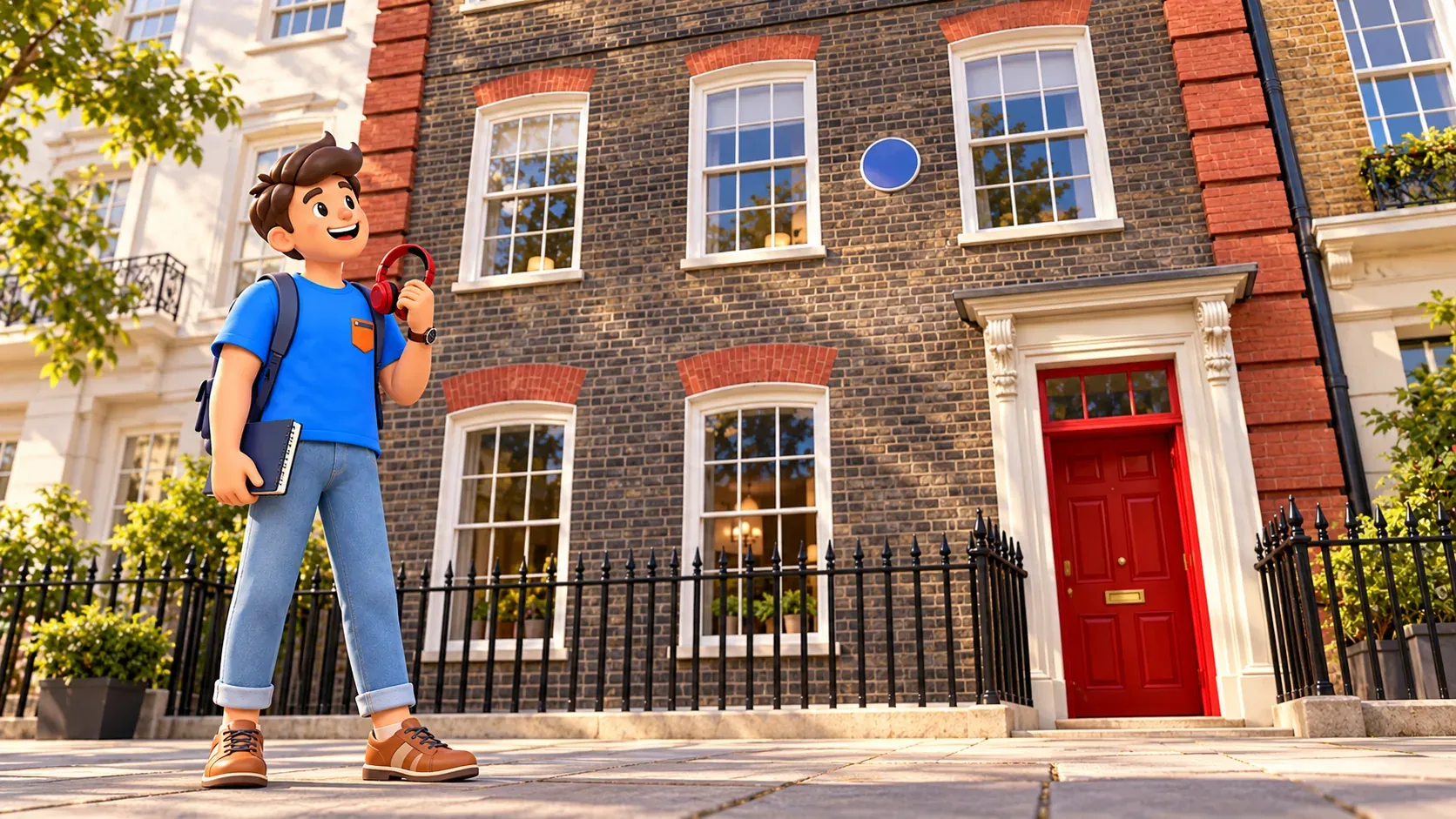
Use the seventy-five minutes as a selected introduction across the two residences. Choose the aspects that connect with your interests, and give a few rooms more attention than a quick photograph. If a volunteer is available, a specific question about the building or its presentation can be more useful than trying to absorb every fact. Time for a scheduled performance is additional.
You can prepare one listening choice before the outing, or return to it afterwards in your own space. A familiar piece may make a restored room more meaningful, while a new discovery may invite listening later. Keep any personal music outside the shared museum experience unless the venue itself provides the listening arrangement. The point is to make the encounter personal without disturbing other visitors.
Plan the house visit around its actual arrangements
General paid admission covers both residences. The usual opening pattern is Wednesday to Sunday, ten to five, with last entry at four; Monday and Tuesday are closed. Check your chosen date and available tickets before arranging the next stop. A late arrival near last entry is not the same as having seventy-five relaxed minutes and an unhurried onward connection.
The entrance is step-free, but the museum currently reports that its lift is out of service. Upper-floor access therefore needs particular attention before booking. Historic floors can be uneven, and some rooms have low lighting. Contact the house about your individual needs rather than relying on a general description of wheelchair access that does not reflect the lift’s present condition.
Small lockers are available, but large suitcases do not fit, and wheeled luggage cannot be taken around the historic floors. Food and drink are not allowed inside except bottled water. Plan your main meal elsewhere. These arrangements matter especially if the walk falls between accommodation checkout and a train: a small cultural outing does not automatically solve luggage storage for the whole day.
Walk towards a different kind of working room
Continue through the public street connections towards Albemarle Street. Let the short walk reset your attention between music and science. Compare the rhythm of windows and entrances, then give yourself time for the next reception desk. Shop browsing can be an enjoyable separate choice, but it should not quietly consume the selected museum time while the three-hour finish remains fixed.
The Royal Institution at 21 Albemarle Street is the setting for the Faraday Museum. Begin with the public visitor entrance and ask about the available displays. The thirty-five-minute allowance is deliberately focused: choose the magnetic laboratory and nearby material that helps you understand its work. It is an introduction to part of the collection, not a tour of every public floor.
Faraday: look at how experiments became possible
The magnetic laboratory is the actual basement room in which Michael Faraday worked on discoveries including the magneto-optical effect and diamagnetism. Its present arrangement is based on an 1850s painting by Harriet Moore. That distinction matters: you are encountering a historic room and apparatus presented to explain the past, rather than a room left entirely unchanged for nearly two centuries.
Look at the relationship between work surface, apparatus and the scale of the room. A major scientific idea can begin with careful observation in an ordinary-sized working space. Read the available explanation of a selected object before guessing how it worked. You do not need to master the physics during a short visit to appreciate the attention, patience and practical skill involved.
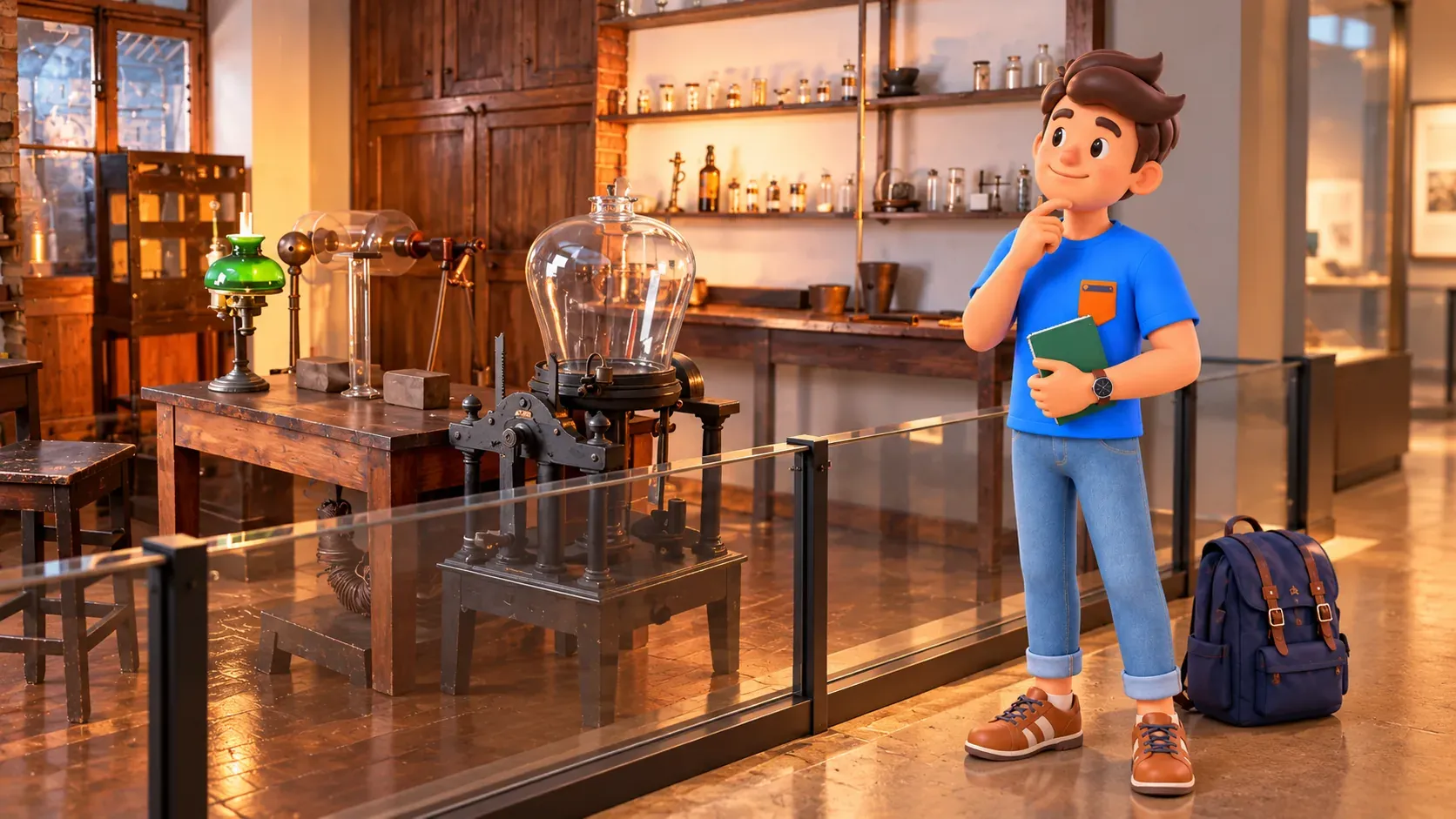
The museum is a place to look and learn, rather than an invitation to handle original equipment or enter working research laboratories. A theatre visit, guided welcome tour or public lecture has its own arrangements and time. The attraction of this short stop is the connection between a recognisable person, a room and the material things used to investigate questions about the world.
General museum entry is free. The Royal Institution normally opens Monday to Friday, nine to five, and closes on public holidays. Private events can limit access, and additional closure dates are listed by the institution. Check ahead before travelling. This is why the combined outing uses a suitable Wednesday, Thursday or Friday instead of promising that both museum doors work together every weekend.
Finish with art at Burlington House
Continue south towards Piccadilly and the Royal Academy’s Burlington House entrance. Use the available courtyard for a short exterior encounter with the institution; if access is restricted, keep the finish at the public street frontage. The scale changes again, from domestic rooms and a basement laboratory to a setting devoted to making, exhibiting and discussing art.
Allow the fifteen minutes for looking at the building and its relationship to the courtyard. An Academy exhibition is a separate substantial visit. Check the current programme, admissions and affected spaces before choosing one, since gallery access can change during building projects. Do not treat an old description of free collection displays as a promise that every collection space is open today.
If art is your main priority, our guide to choosing a London art museum can help shape another outing. Give a selected exhibition the time it deserves by replacing another interior or making the day longer. A short outdoor finish can still be worthwhile when it helps you understand where an institution belongs in the neighbourhood.
Carry one observation into your own time
Later, in your own accommodation, make a simple sketch of an ordinary cup, book or other personal object. Think about what you noticed in the three settings: how a room supports work, how an object helps someone investigate, and how a frame directs attention. This is a private reflection using your own belongings, not a promised Academy workshop or permission to draw inside a particular gallery.

You may find one interest becoming the reason to return. Music could lead to a properly planned performance on another date; science might invite a longer selected visit; art might deserve an afternoon of its own. Keep those possibilities for the programme rather than adding them all to the remaining minutes. The strongest memory need not come from the largest number of admissions.
Keep the shorter versions clear
On a weekend, the ordinary Faraday Museum visit is unavailable, so choose a shorter music-and-streets outing or another date for the combined route. If an event closes the Royal Institution on your weekday, make the same decision before leaving. A substantial lunch also lengthens the day. Check each venue’s access arrangements separately and preserve time for transport after the Academy finish.
With RoadMe, it is easier to develop these interests into a complete personal London trip with room for the visits that matter most. Let the app work through the programme for your dates and pace, combining focused cultural outings with the right journeys, meals and recovery time.
For another district, the three-hour Marylebone walk combines an exterior literary stop with a selected Wallace Collection visit. It is an alternative outing with its own journey, rather than an automatic extension to Mayfair. Choose which experience you want today, give it enough attention and let the walk finish while there is still time to enjoy the rest of London.


